
Review · ITáLICA ROMAN RUINS
Visit to Italica Roman Ruins Tour tickets included
Roman ruins, short and sweet, with great audio. This guided Italica stop in Santiponce is one of the easiest ways to get meaning out of the stones, with headsets and priority entrance doing most of the heavy lifting. The one thing I’d watch for is that the experience can stretch (or feel uneven) if the group ends up mixing languages.
I like that this is built for hearing your guide clearly and moving efficiently. A pro guide walks you through Roman daily life and what you’re looking at, and the amphitheater moment lands fast instead of feeling like a long hike with no payoff.
One more heads-up: transport back to Seville is not built-in. If you’re staying in the city center, plan for a return by bus and keep cash in mind, then you won’t feel rushed or stuck.
In This Review
- Key highlights worth planning for
- Why Italica feels different than most Roman stops
- Entering Santiponce: the meeting point and first minutes
- Priority entrance and why it can be worth the price
- Stop 1 in Santiponce: context before the amphitheater
- Stop 2 at the Anfiteatro de Italica: the amphitheater moment
- What you actually learn: more than just reading plaques
- Guides, group dynamics, and audio reality checks
- Duration and pace: why 2 hours can work (or feel too short)
- Price and logistics: the real value equation
- Who should book this Italica Roman Ruins tour
- Should you book? My decision rule
- FAQ
- Where do I meet for the Italica Roman Ruins tour?
- How long is the tour?
- Is the tour offered in English?
- Does the ticket include admission to Italica?
- Will I get a mobile ticket?
- Are headsets provided?
- What happens if the tour is canceled due to weather?
Key highlights worth planning for
- Headsets for clearer listening in a site with open spaces and crowd noise
- Priority entrance so you spend more time inside the ruins
- A 2-hour format that works well even if you’re traveling with kids
- Amphitheater focus at Italica’s Anfiteatro de Italica, often called the dragon pits by Game of Thrones fans
- Small group size with a maximum of 30 travelers
- English guide option plus a history-heavy explanation of what you’re seeing
Other Roman mornings out at Italica
- Historical Italica: Half-Day Guided Tour from Seville★ 4.5 · 416 reviews
- Seville: Game of Thrones and Roman Empire Italica Tour★ 4.3 · 372 reviews
- Visit to Italica Roman Ruins Tour tickets included★ 4.5 · 285 reviews
Why Italica feels different than most Roman stops
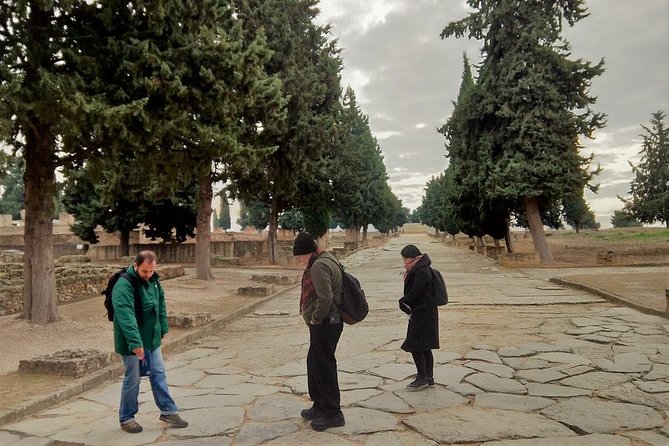
Italica is an ancient Roman city close to Seville, in Santiponce. Unlike some Roman ruins where you mostly wander and guess, this tour is designed to help you read the place. You get the “what am I looking at and why does it matter” part without needing a thick guidebook.
The whole experience is about 2 hours. That time limit is practical. You get a guided hit of the site, but you’re also likely to have energy left to walk around after. Several visitors love doing a second pass on their own to linger over the details that the guide can’t cover in a fixed schedule.
The value idea is simple: you pay for a guide plus smoother entry, not for a long, lecture-style museum session. If that matches your pace, you’ll probably feel good about booking.
Entering Santiponce: the meeting point and first minutes
You start at Av. Extremadura, 2, 41970 Santiponce, Sevilla, Spain. That address matters because Italica is spread out across a real working area, not a single fenced “attraction.” Arrive a bit early so you can find your group and settle in before the guide starts.
The opening moments are about getting your bearings and setting context. Expect your guide to connect the ruins to how Romans lived, how the city was planned, and what ongoing archaeology is trying to learn. This is useful because Italica is not all dramatic arches and movie sets. It’s a working city layout—temples, houses, and public spaces—so the meaning can be easy to miss if you’re seeing it for the first time.
A good tip: if you’re the type who likes to get oriented visually first, you might consider grabbing a quick look at the site’s nearby museum area on your own before the tour. Some people find a short overview video helps the ruins click faster once the guide begins speaking. You don’t have to do it, but it can turn a solid tour into a standout one.
Priority entrance and why it can be worth the price
This tour includes priority entrance, which is the headline benefit for anyone who dislikes waiting. Roman sites can have slow-moving ticket lines, and skipping that friction is real value, especially if you’re only in Seville for a few days.
Now, let’s talk money clearly. The tour costs about $19.36 per person, and it already includes admission. One review pointed out that entry fees at Italica can be low for some visitors (and sometimes free for EU residents), so if you’re eligible for cheaper self-entry, you might wonder why pay at all.
Here’s the honest tradeoff: if you go alone, you’ll read plaques and look around at your own speed. If you go with a guide, you’re paying for a human to connect the dots—plus headsets to keep the audio clear when groups bunch up.
So I’d judge this tour by what you want most:
- If you want quick context and less reading, book the guide.
- If you love wandering and don’t mind piecing things together from signs, you might be happier saving money for a DIY visit.
Still deciding? A few more Seville picks worth a look.

Stop 1 in Santiponce: context before the amphitheater
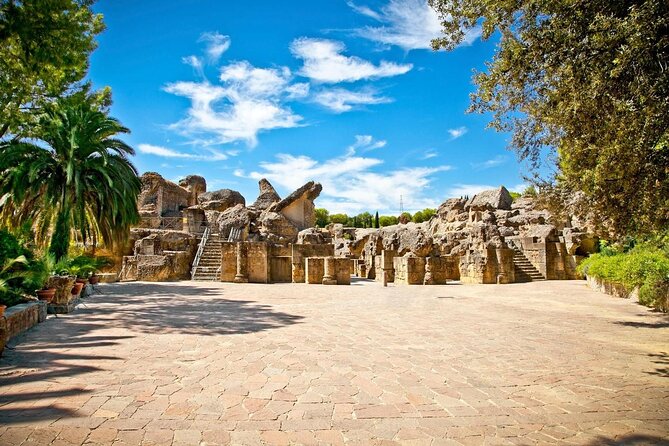
The tour’s first stop is in Santiponce, where you meet your guide and begin. This stage is short, roughly 10 minutes, and it’s meant to set the storyline. You’re not yet inside the biggest showpiece, so the guide’s job here is to explain what Italica was and how Romans used spaces like temples, homes, and entertainment buildings.
This matters because the amphitheater is impressive, but it’s also just one part of a larger city. A good guide can help you see relationships: where people gathered, how the city’s status was shown in public architecture, and how daily life played out around those civic spaces.
One common reaction you’ll likely have: the amphitheater can steal the spotlight, but the context you get at the start helps you avoid the “seen one Roman building, seen them all” feeling.
Potential drawback: depending on the guide and the group mix, the tour can sometimes feel more like a general introduction than a deep, detailed walk-through. If you want extremely granular archaeology, you may need to ask questions or plan to spend extra time on your own afterward.
Stop 2 at the Anfiteatro de Italica: the amphitheater moment
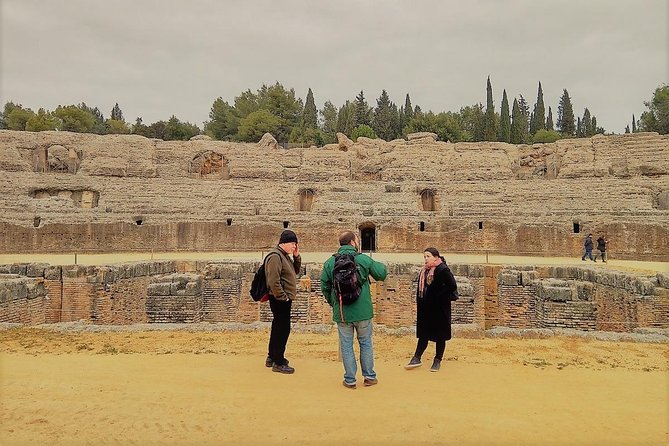
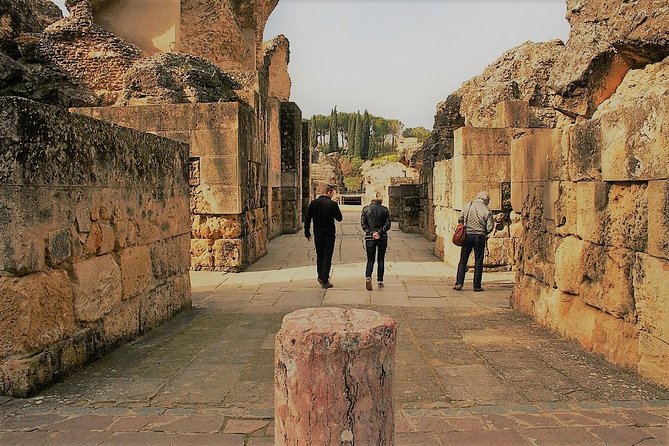
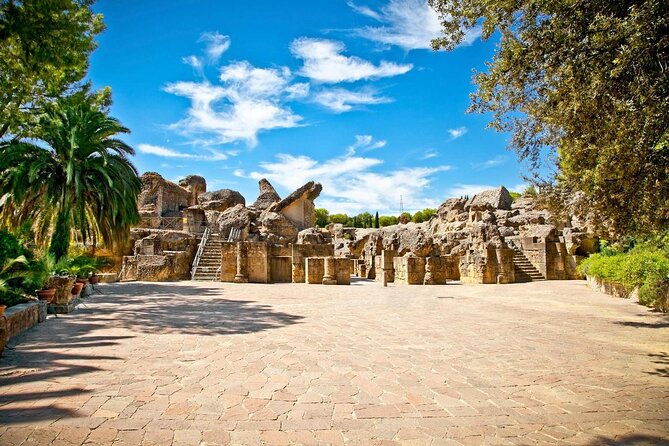
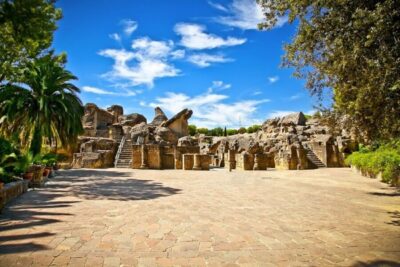
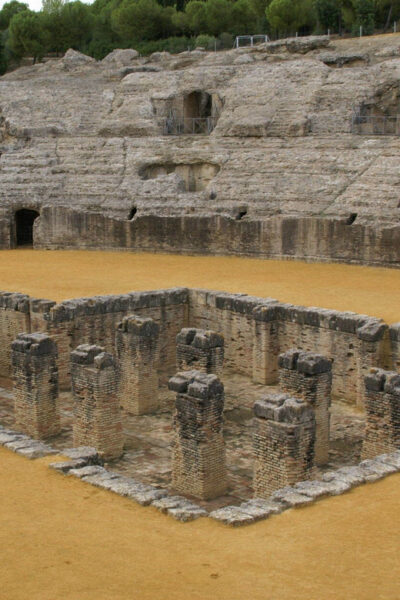
The centerpiece stop is the Anfiteatro de Italica, where the ruins of a huge amphitheater set the tone for the entire visit. This is the part you feel right away. Even if you’re not a Roman-history nerd, you can see scale and layout: where spectators would sit, and how the space shaped the experience of events.
If you’re a Game of Thrones fan, you’ll probably notice why people make that connection. Reviews mention the amphitheater as the sort of place fans call the dragon pits. Even if you don’t care about the show, the structure itself is cinematic in real life.
A practical point: this part of the site is not a studio with controlled lighting. One review specifically warned about limited shade, so plan around heat and sun exposure. If you’re visiting in warm months, aim for cooler hours and bring water.
Also, the amphitheater is where headsets can make the biggest difference. In open areas, it’s easy to lose voices, especially when other groups are nearby. The tour description says headsets are provided to help you hear clearly at social distance. If you’re worried about audio, it can’t hurt to be prepared and attentive at the start of the walk—good listening starts with good positioning.
What you actually learn: more than just reading plaques
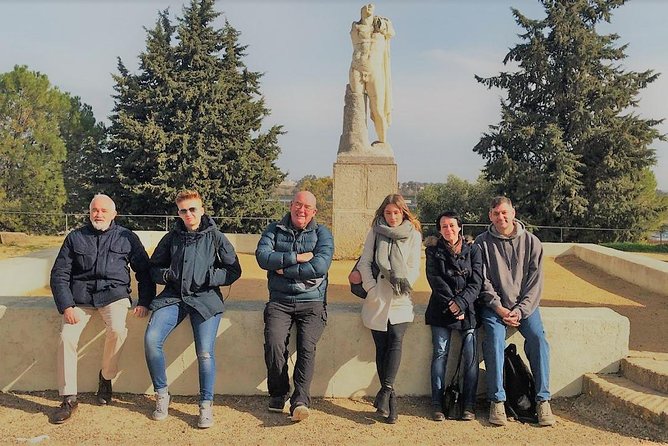
This tour is designed to teach, but in a human way. Your guide talks through Roman culture and what you see in front of you, including how the city worked and what archaeologists are still investigating. Several guides described in reviews use energy and humor, and that can help you remember details that you might otherwise forget.
Here are examples of what tends to land with visitors:
- Stories that connect ruins to Roman daily life, not just dates and names
- Explanations that help you recognize why certain rooms or structures matter
- Room-by-room interpretations that give meaning to what can look like scattered stone without context
Still, I think it’s fair to mention the downside that shows up occasionally. A few people felt the tour covered basics they could have read directly on signs or in a museum setting. That doesn’t mean it’s a bad tour—it means it may not be the right match if you’re expecting a highly specialized lecture or a very detailed route.
My advice: treat the guided part as your fast “orientation pass.” Then plan an extra self-walk afterward. That’s how you get the best of both worlds: direction from your guide, then freedom for your eyes to do their thing.
Guides, group dynamics, and audio reality checks
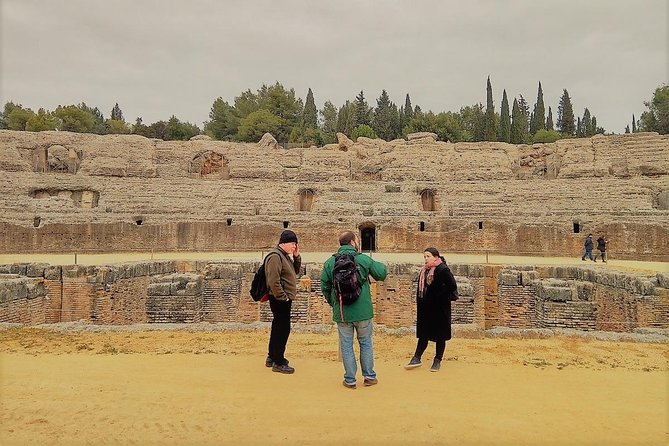
Your experience can depend on who’s leading you. Reviews name guides like Jesús, Alberto, Miguel, and Zarapico, and people consistently praised their delivery when the tour felt lively and clear. You’ll want an interpreter who can explain simply, slow down when needed, and answer questions.
Audio is the next big deal. The tour highlights promise headsets, and that’s a real advantage when you’re in a crowd. But one review complained that headsets were not supplied on that day and they only caught part of the explanation. I can’t promise what every single departure looks like, so if audio clarity is critical for you, ask about the headsets right at the start.
Group dynamics also matter. Some reviews mentioned situations where the tour time felt longer because the group mix pushed the guide into multiple languages. English is offered, but if you’re sensitive to language switching, keep a flexible mindset. A tour that feels slightly slower can still be worthwhile if the guide’s explanations are strong.
Duration and pace: why 2 hours can work (or feel too short)
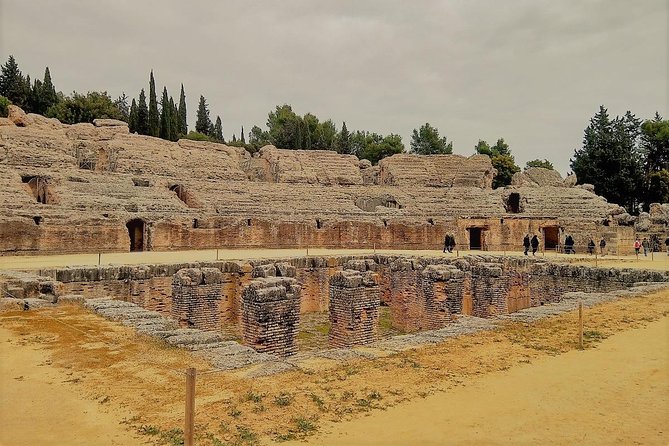
The tour runs about 2 hours. For many people, this is the sweet spot. You cover the main structures without losing a whole afternoon. It’s also long enough for a real guided arc: context first, amphitheater second, then wrap-up back at the meeting point.
However, if the guide spends lots of time on general facts that are already posted around the site, you might feel like the time could have been used better. That’s especially true when there are multiple louder school groups or other tours around.
My practical take: if you want to learn a lot, bring a few questions. Ask about how Italica related to Roman power and settlement in the region, or what archaeologists are trying to figure out now. A good guide can turn your curiosity into a richer walk.
Price and logistics: the real value equation
At about $19.36 per person including admission, this is priced like a guided experience, not like a museum-only ticket. If your main goal is to see the amphitheater and get the story straight, the math can work well.
But if you’re cost-focused, do the comparison honestly:
- Entry alone might be relatively low for some visitors.
- Your extra cost buys priority entrance plus a guide plus the promise of headsets.
- You also pay for the time-saving convenience of not having to navigate everything yourself.
Where logistics can bite is the return trip. One review warned that public transportation back to Seville may not be straightforward. Their experience described bus return only, cash needed, and a long ride with stops. While your exact situation could differ, treat that as a caution, not a trivia fact.
If you don’t have a car, you’ll want a plan before you leave Seville. Check bus schedules ahead of time, and if you think you might need cash, bring some. The last thing you want is a great amphitheater visit followed by a stressed scramble.
Who should book this Italica Roman Ruins tour
Book it if:
- You want a guided explanation that helps the ruins make sense fast
- You value clearer audio and priority entrance
- You like a structured 2-hour stop, then you’re ready to explore on your own
- You’re visiting with kids or mixed ages and want an easy, manageable length
Skip it or reconsider if:
- You prefer totally independent visits and are happy reading signs
- You expect an ultra-detailed archaeology lecture at every corner
- You know you have low tolerance for language switching in mixed groups
- You need a very smooth return to Seville and don’t want to think about transport at all
Should you book? My decision rule
If you’re aiming for an efficient, meaningful first look at Italica, I’d book this. The priority entrance plus headsets promise is exactly what makes tours worthwhile at sites where sound and lines can get messy. And the amphitheater stop is strong enough to justify the trip even if you only remember a handful of key stories by the end.
But if you’re an independent explorer who loves slow wandering, you may feel like you’ve paid extra for what signs could cover. In that case, consider pairing a short self-orientation (like that museum-style overview some visitors recommend) with a DIY walk, or budget more time for your own reading after the tour.
FAQ
Where do I meet for the Italica Roman Ruins tour?
You meet at Av. Extremadura, 2, 41970 Santiponce, Sevilla, Spain. The tour ends back at the same meeting point.
How long is the tour?
The tour is about 2 hours.
Is the tour offered in English?
Yes, it’s offered in English.
Does the ticket include admission to Italica?
Yes. The tour includes the admission ticket for the site.
Will I get a mobile ticket?
Yes, the tour includes a mobile ticket.
Are headsets provided?
The tour highlights say headsets are provided to help you hear the guide clearly.
What happens if the tour is canceled due to weather?
The experience requires good weather. If it’s canceled due to poor weather, you’ll be offered a different date or a full refund.
More Tours in Seville
- Seville: Alcázar, Cathedral & Giralda Skip-the-Line Tour
★ 4.8 · 11,525 reviews - Seville: Cathedral, Giralda & Alcazar Entry With Guided Tour
★ 4.6 · 8,560 reviews - Seville: Priority Access Cathedral, Giralda & Alcázar Tour
★ 4.8 · 7,563 reviews - Seville: Alcázar and Cathedral Entry Ticket and Guided Tour
★ 4.6 · 5,056 reviews - Seville: City Sightseeing Hop-On Hop-Off Bus Tour
★ 4.0 · 4,633 reviews
More Tour Reviews in Seville
- Seville: Live Flamenco Dancing Show Ticket at the Theater
★ 4.7 · 16,396 reviews - Seville: Alcázar, Cathedral & Giralda Skip-the-Line Tour
★ 4.8 · 11,525 reviews - Seville: 1-Hour Guadalquivir River Sightseeing Eco Cruise
★ 4.2 · 10,281 reviews - Seville: Setas de Sevilla Entry Ticket
★ 4.6 · 8,901 reviews - Seville: Cathedral, Giralda & Alcazar Entry With Guided Tour
★ 4.6 · 8,560 reviews
Roman Seville: More of Italica
- From Seville: Italica Roman City & Medieval Monastery Tour
★ 4.5 · 1,051 reviews - Historical Italica: Half-Day Guided Tour from Seville
★ 4.5 · 416 reviews - Seville: Game of Thrones and Roman Empire Italica Tour
★ 4.3 · 372 reviews - Seville: Italica Roman Ruins City Tour
★ 4.2 · 147 reviews - From Seville: Italica Roman City Tour
★ 4.4 · 139 reviews
Just added to the Seville list




Itálica Roman Ruins, compared.
 ★ 4.5Italica Roman City & Medieval Monastery TourFrom $461,051 reviews
 ★ 4.5Historical Italica: Half-Day Guided Tour from SevilleFrom $47416 reviews
 ★ 4.3Game of Thrones and Roman Empire Italica TourFrom $21372 reviews
 ★ 4.2Italica Roman Ruins City TourFrom $21147 reviews
 ★ 4.4Italica Roman City TourFrom $51139 reviews
 ★ 4.9Half-Day Guided Bike Trip to ItalicaFrom $53126 reviews
 ★ 5.0Private hald day tour to the historic roman city of ItalicaFrom $9343 reviews
 ★ 5.0Private Theatrical Journey with Roman Emperor in ItalicaFrom $9540 reviews
Browse the lists this tour appears in