
Review · ITáLICA ROMAN RUINS
From Seville: Half-Day Guided Bike Trip to Italica
A Roman day trip, minus the car stress. Riding out from Seville on an electric bike to Italica turns a “check the ruins” stop into a half-day story you can actually follow. You’ll also roll through countryside and small-town life in the village of Santiponce.
What I like most is the mix of movement and meaning. I love the smooth cycle paths that make the trip feel safe and not exhausting, and I love how the guide connects the big names—Trajan and Hadrian—with what you’re standing in front of at Italica.
One thing to plan for: the bike ride can feel cold in cooler months (wind + open stretches), so bring layers you can slip on and off.
In This Review
- Key highlights at a glance
- The 5-Hour Rhythm: Seville to Italica on Electric Bikes
- Starting at ATD BIKES: What to Expect Before You Roll
- Riding Seville’s Cycle Network (and the Surprising Side Trips)
- Why Italica Matters: Trajan and Hadrian’s Birthplace Context
- Italica’s Amphitheater: Seeing the Crowd in Your Head
- Roman Houses and Mosaics: Wealth You Can Still See
- The Santiponce Stop: Traditions Beyond the Ruins
- Biking Comfort Details That Actually Matter
- Price and Value: Why $53 Often Feels Fair
- Who This Tour Suits Best (and Who Might Skip It)
- What the Guides Add: Friendly Storytelling You Can Follow
- Should You Book This Italica E-Bike Trip?
- FAQ
- How long is the guided bike trip to Italica from Seville?
- What’s included in the tour price?
- Is lunch included?
- Do I need to pay for entrance to Italica separately?
- Where do we meet in Seville?
- What language is the tour guide?
- Is the tour suitable for wheelchair users?
- What’s the cancellation policy?
- Can I book without paying right away?
- What should I bring for the bike ride?
Key highlights at a glance
- Electric bikes make the ride doable: you can cruise with less effort and still feel like you rode.
- Italica’s amphitheater is the star: you get context for what gladiator crowds came to see.
- Trajan and Hadrian have real place connections: you’re visiting their hometown area, not just generic Rome talk.
- Santiponce adds local flavor: you stop in a living village to hear about traditions and culture.
- Guided explanations beat wandering alone: you’ll connect mosaics, buildings, and Roman routines into one picture.
- The pace stays relaxed: most of the experience is time at the sites, not battling traffic.
Other Roman mornings out at Italica
- Historical Italica: Half-Day Guided Tour from Seville★ 4.5 · 416 reviews
- Seville: Game of Thrones and Roman Empire Italica Tour★ 4.3 · 372 reviews
- Visit to Italica Roman Ruins Tour tickets included★ 4.5 · 285 reviews
The 5-Hour Rhythm: Seville to Italica on Electric Bikes
This half-day tour is built for people who want a Roman site day without losing the morning to buses, lines, or road noise. You start at the ATD BIKES shop on a pedestrian street in Seville. After a quick setup and helmet (included), you’re soon rolling out as a group with a live English-speaking guide.
The ride is one of the biggest reasons to do it. Reviews consistently flag that the route uses bikeways and cycle networks, not a constant diet of busy streets. That matters because it keeps the focus on scenery and conversation instead of white-knuckle cycling. Even better: because it’s an electric bike tour, you can choose how much effort you want. If you want an easy cruise, you can use the assist. If you feel like it, you can still pedal for a little workout.
Timing-wise, you’re out for about 5 hours total. That’s enough time to get past the “drive-by” feeling and still have a relaxed return into Seville. For many people, the value comes from that balance: transport + guidance + meaningful time on site, all in one package.
Starting at ATD BIKES: What to Expect Before You Roll
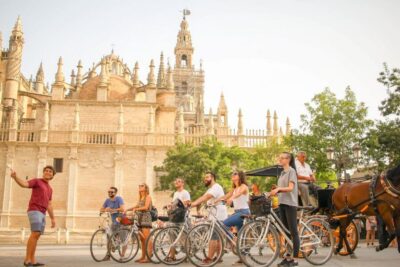
The meeting point is straightforward: ATD BIKES shop on the pedestrian street. Once you arrive, you’ll get the electric bike, helmet, and bottled water. That set-up sounds simple, but it removes the usual friction of rental logistics, like finding the right shop, getting the right seat height, or figuring out how you’ll carry water and belongings.
A detail that shows up in guest feedback: you’ll have a place to stash personal items while riding. In cold or windy weather, that’s not a luxury—holding your phone, gloves, and layers while biking can get annoying fast.
If you’re visiting in shoulder season or winter, plan for the ride to feel chilly even if Seville’s daytime temperatures are pleasant. The route includes open stretches, so wind can sneak in. Bring layers you can peel off later at Italica.
Riding Seville’s Cycle Network (and the Surprising Side Trips)
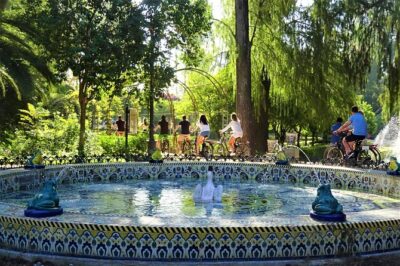
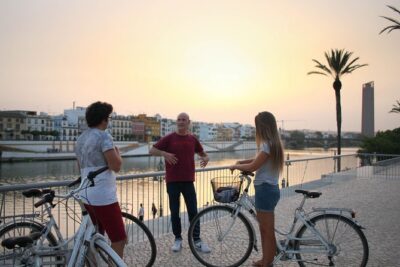
The best part of biking out of Seville isn’t just getting out of town. It’s how you get there—by seeing neighborhoods and routes you’d normally skip when you’re only hopping between major sights.
The tour is designed so you can watch the city change as you ride. You move from urban streets into countryside, and that shift is part of the experience. Reviews mention routes that include riding along or near long-distance paths—one group even noted a stretch along the Camino de Santiago trail. You shouldn’t count on that exact detail every time, but it gives you an idea of the type of “kept-alive by locals” paths the bike route can use.
This matters for your decision because it changes what you’re doing. A lot of day trips treat transport like dead time. Here, transport becomes part of the sightseeing. You’re not just transporting yourself to a ruin; you’re learning how Seville connects to the wider region.
Still deciding? A few more Seville picks worth a look.

Why Italica Matters: Trajan and Hadrian’s Birthplace Context
At Italica, you’re visiting a Roman city that still feels bigger than most people expect. The site connects to emperors Trajan and Hadrian, who were born in this area. That alone makes the ruins more than a pretty walk, because the guide’s job is to turn the names into something physical: where they would have lived, what kind of city it was, and why Romans built and maintained places like this.
Even if your Roman knowledge is limited, you’ll likely leave with a clearer mental map. The guide is there to explain Roman traditions and what you’re seeing—how amphitheaters worked, how houses were laid out, and what mosaics and bathing facilities can tell you about everyday life for wealthy residents.
One key value here: this is a guided “read” of the ruins. Italica is only partially excavated, and a lot of major artworks have moved to museums over time. A guide helps you avoid the common disappointment of thinking you’re missing the big pieces. Instead, you focus on what remains: the structure, the scale, and the rooms you can still walk through.
Italica’s Amphitheater: Seeing the Crowd in Your Head
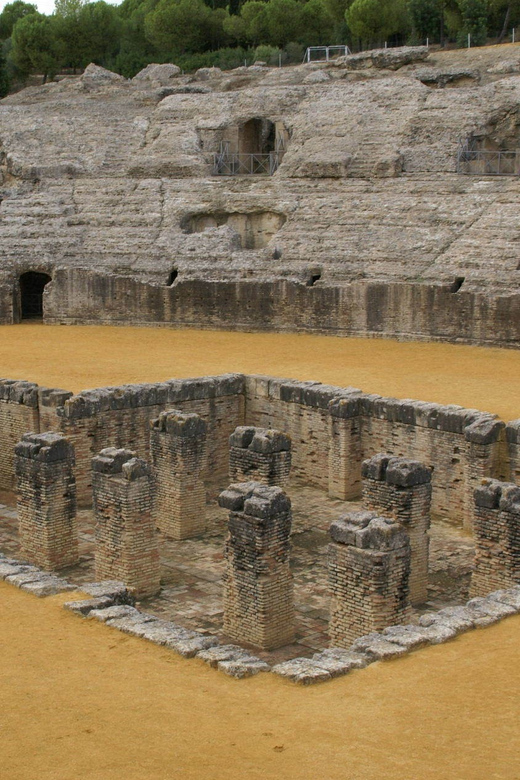
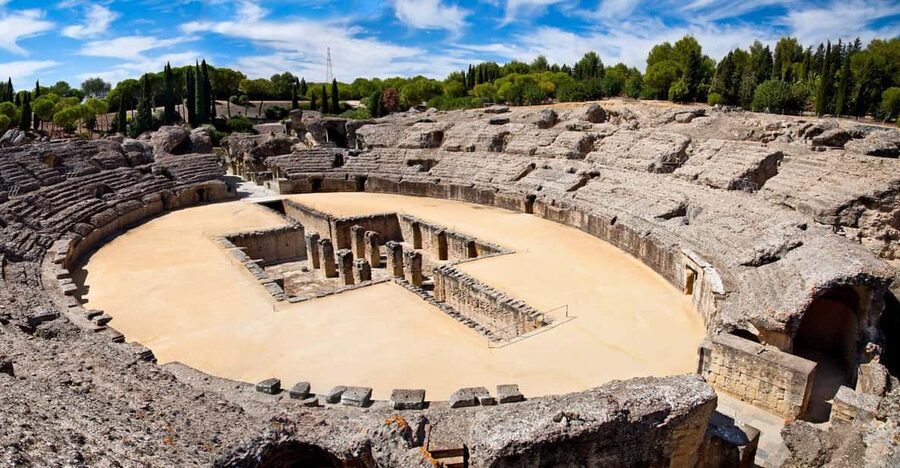
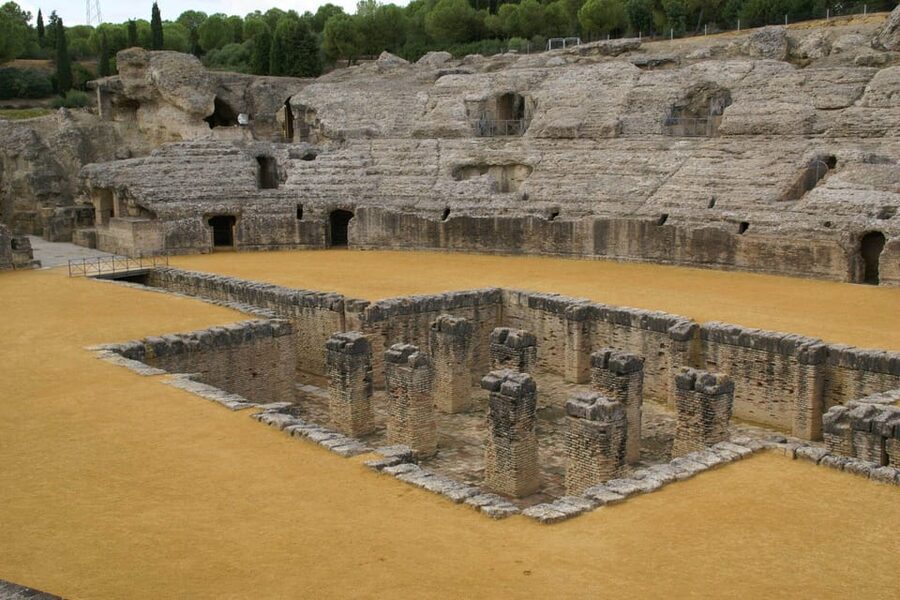
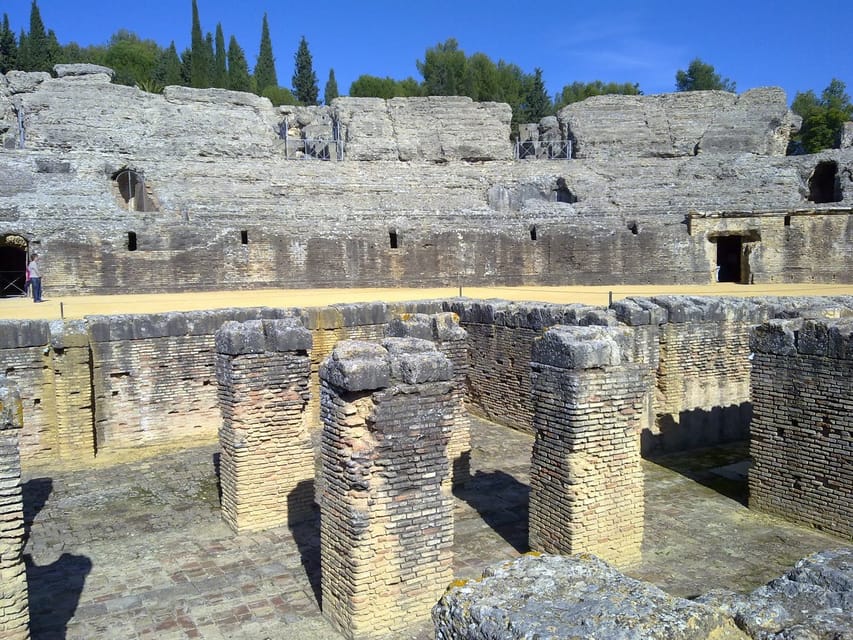
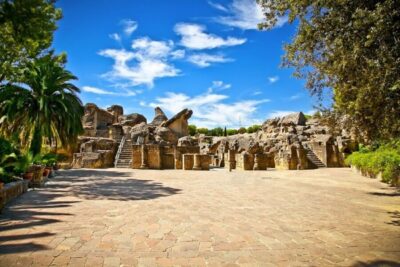
The ancient Roman amphitheater at Italica is the headline attraction, and it’s easy to see why. People describe it as large and unusually well preserved, and the context is what makes it hit.
When you’re at an amphitheater, you’re really standing at a machine built for spectacle: entrances, waiting spaces, and seating that supported large crowds. The guide’s explanations are what help you picture gladiator fights and the rhythm of the day in the arena, instead of just snapping photos and moving on.
One practical tip: plan on walking around the amphitheater area a bit. The experience isn’t only standing and looking. You want to take your time to orient yourself to how the building is laid out so the stories make sense.
Also note the vibe of the site. Italica is famous, but it’s not as crowded as the “headline Roman” sites. That means you can actually hear the guide and have space to slow down—especially helpful if you like history but hate feeling rushed.
Roman Houses and Mosaics: Wealth You Can Still See
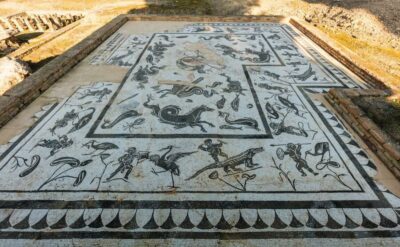
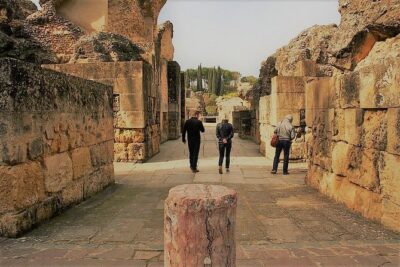
Italica isn’t just stone walls. A lot of what impresses visitors comes from what’s left behind in the homes of wealthy Romans—rooms with mosaic floors and the sense of daily life that those floor designs still carry.
Here’s what to watch for when you’re there:
- Look for mosaics as “decorated statements,” not just artwork. They show status and taste.
- Notice that excavation is incomplete, so parts of the story are visible and parts are missing. A guide helps you interpret that.
- Pay attention to how rooms connect. It makes the site feel lived-in rather than like a ruin collage.
You’ll likely hear about Roman routines too, including bathing culture. One guest specifically called out a communal bath house (even though some sites are only partly excavated, the footprint and surviving elements help you understand how Romans socialized and cared for public life).
If you’re the type who loves “how did they live?” history, this is where the tour earns its keep.
The Santiponce Stop: Traditions Beyond the Ruins
A big reason to choose a guided bike format: you don’t only visit monuments. You also visit the village of Santiponce, where the tour focuses on traditions and culture.
This stop matters because it connects past and present in a grounded way. You’re not just moving between “old stones” and leaving again. You get a real-world sense of how the region lives today, and you can hear the guide’s framing of local identity alongside the Roman footprint.
One option included in the pacing: before entering the archaeological center, you may have time for a classic Andalusian breakfast in Santiponce (not included in the tour price, so you’d pay for it yourself). If you’re hungry and want a local flavor, this is a great moment to do it. If you’d rather skip extra costs, you can simply wait for the main site time.
Biking Comfort Details That Actually Matter
On paper, this tour includes an electric bike, guide, helmets, and bottled water. In real life, comfort is what makes the day enjoyable.
From guest feedback, the bikes tend to be in good condition, and the ride is described as comfortable and easy to handle. That’s important because “bike tour” can scare people who don’t feel confident on two wheels. With an e-bike, you can keep your energy for the sites, not for steering.
I’d also plan for a bit of “bike day” thinking:
- Wear comfortable clothes you can ride in.
- Bring or pack gloves if it’s cold.
- Consider a light layer you can remove later.
And one more thing: the tour isn’t stated as suitable for wheelchair users. If mobility is a concern, you’ll want to check with the operator before booking.
Price and Value: Why $53 Often Feels Fair
At $53 per person for about 5 hours, the price makes sense when you break it down into what you’re actually paying for:
- Transport + bike rental (electric bike included)
- A live English guide to connect the dots at Italica and during the village stop
- Safety basics (helmets) and water
- The advantage of not having to figure out how you’ll get out there on your own
It helps that Italica’s own admission has been mentioned by guests as very low—around €1.50. Even with a small separate entry fee, the total still tends to feel like good value because you’re not paying only for “a ticket to ruins.” You’re paying for the experience to make sense.
If you’re deciding between DIY public transit and a guided bike day, the bike tour often wins because it adds context and saves time and hassle. You get a structured experience without turning your half day into a logistics headache.
Who This Tour Suits Best (and Who Might Skip It)
This is a strong fit if you:
- Want a Roman site experience but prefer it explained rather than self-guided wandering
- Like biking or at least don’t mind cycling at an easy pace
- Want to see more than just the big, obvious Seville sights
- Enjoy history when it’s tied to a specific place (Trajan and Hadrian, Italica, then Santiponce)
Skip it or consider alternatives if:
- You can’t comfortably ride a bike for several hours (even with electric assist)
- You hate being outdoors in cooler weather and don’t want to dress for wind
What the Guides Add: Friendly Storytelling You Can Follow
One of the most consistently praised parts is the guide experience. Names that come up include Rigo, Natasha, Danny (also spelled Dani), Teun, Tim, Luce, and Eduardo.
What you’re paying for isn’t just facts. It’s pacing and clarity:
- Guides answer questions along the way.
- They point out the “why” behind what you’re seeing at the amphitheater and homes.
- They keep the ride moving at a human speed so you don’t arrive exhausted.
Some guides also bring humor into the storytelling, which helps if Roman history usually feels too serious for your taste.
Should You Book This Italica E-Bike Trip?
If you want a half-day that feels like more than a ticket, I’d book it. The combo of electric biking, a guided Roman site walkthrough, and a Santiponce village stop makes this tour feel efficient without feeling rushed. It also earns points for making the trip doable for a wide range of fitness levels.
I’d only hesitate if you’re very sensitive to cold or wind, or if cycling itself is a hard no for you. Otherwise, this is exactly the kind of outing that turns an easy day in Seville into a memorable one—because you’re not just looking at Italica. You’re understanding it.
FAQ
How long is the guided bike trip to Italica from Seville?
The tour runs for about 5 hours.
What’s included in the tour price?
You get an electric bike, a live guide, helmets, and bottled water.
Is lunch included?
No. Lunch and other food or drinks are not included.
Do I need to pay for entrance to Italica separately?
The tour includes the guided visit, but the site’s entry is not listed as included in the tour details you provided.
Where do we meet in Seville?
You meet at the ATD BIKES shop on a pedestrian street.
What language is the tour guide?
The tour is offered with a live guide in English.
Is the tour suitable for wheelchair users?
No, it is not suitable for wheelchair users.
What’s the cancellation policy?
Free cancellation is available up to 24 hours in advance for a full refund.
Can I book without paying right away?
Yes. You can reserve now and pay later.
What should I bring for the bike ride?
Wear comfortable clothes you can ride in, and bring layers if the weather is cool.
Seville by Bike
- Seville Highlights Bike Tour (English)
★ 5.0 · 2,225 reviews - Seville: Highlights City Bike Tour
★ 4.8 · 2,168 reviews - Seville: Relaxing City Bike Tour with a Tour Guide
★ 4.8 · 1,588 reviews - Seville: City Sightseeing and Local Culture Bike Tour
★ 4.9 · 1,120 reviews - Seville Electric Bike Tour – Small Group
★ 5.0 · 841 reviews
More Tour Reviews in Seville
- Seville: Live Flamenco Dancing Show Ticket at the Theater
★ 4.7 · 16,396 reviews - Seville: Alcázar, Cathedral & Giralda Skip-the-Line Tour
★ 4.8 · 11,525 reviews - Seville: 1-Hour Guadalquivir River Sightseeing Eco Cruise
★ 4.2 · 10,281 reviews - Seville: Setas de Sevilla Entry Ticket
★ 4.6 · 8,901 reviews - Seville: Cathedral, Giralda & Alcazar Entry With Guided Tour
★ 4.6 · 8,560 reviews
Roman Seville: More of Italica
- From Seville: Italica Roman City & Medieval Monastery Tour
★ 4.5 · 1,051 reviews - Historical Italica: Half-Day Guided Tour from Seville
★ 4.5 · 416 reviews - Seville: Game of Thrones and Roman Empire Italica Tour
★ 4.3 · 372 reviews - Visit to Italica Roman Ruins Tour tickets included
★ 4.5 · 285 reviews - Seville: Italica Roman Ruins City Tour
★ 4.2 · 147 reviews
Just added to the Seville list



Itálica Roman Ruins, compared.
 ★ 4.5Italica Roman City & Medieval Monastery TourFrom $461,051 reviews
 ★ 4.5Historical Italica: Half-Day Guided Tour from SevilleFrom $47416 reviews
 ★ 4.3Game of Thrones and Roman Empire Italica TourFrom $21372 reviews
 ★ 4.5Visit to Italica Roman Ruins Tour tickets includedFrom $19285 reviews
 ★ 4.2Italica Roman Ruins City TourFrom $21147 reviews
 ★ 4.4Italica Roman City TourFrom $51139 reviews
 ★ 5.0Private hald day tour to the historic roman city of ItalicaFrom $9343 reviews
 ★ 4.5Italica Roman City Tour from SevilleFrom $4640 reviews
Browse the lists this tour appears in