
Review · BARRIO SANTA CRUZ & JEWISH QUARTER
Seville Jewish Quarter Small Group Tour with Tapas and Drinks
Seville’s Jewish Quarter is like a history lesson you can walk through. This small-group tour focuses on the stories in the streets, tied to the Alcázar area and Seville’s changing faiths. Along the way, you get plenty of chances for photos in quiet lanes and small squares.
I love the pacing here: it feels compact and doable, with a clear trail of ideas instead of random facts. I also like that the tapas stop is built into the experience, with a proper meal (three tapas plus two drinks) and Spanish wine, and the food can be adjusted for common allergies and restrictions when you flag them ahead of time.
One thing to consider: you’re spending a lot of time on foot, in narrow, old streets that can feel damp or slippery in rain. Also, if you’re expecting big, obvious ruins everywhere, you’ll need to lean on the guide’s storytelling to “see” the past.
In This Review
- Key highlights you’ll care about
- Walking Seville’s Jewish Quarter like a map, not a museum
- Plaza del Triunfo start: get your bearings fast
- Urban changes that explain the 21st-century Seville around you
- Susona and the Street of Death: the legend you’ll remember
- Fortified edges and the Alcázar boundary: power with walls
- The medieval Jewish cemetery and the preserved strange-structure site
- One place, many faith layers: worship spaces across centuries
- House walls and a hotel secret: the past you can book into
- The square that gives the neighborhood its name, then the first church
- Tapas and Spanish wines: three courses that end the night right
- Timing, walking comfort, and rainy-night reality
- Who should book this Jewish Quarter + tapas tour
- Should you book the Seville Jewish Quarter tour with tapas?
- FAQ
- How long is the Seville Jewish Quarter small-group tour with tapas?
- What group size should I expect?
- What is included with the tapas dinner?
- Can you accommodate dietary allergies or intolerance?
- Is the tour offered in English?
- What is the cancellation policy?
Key highlights you’ll care about
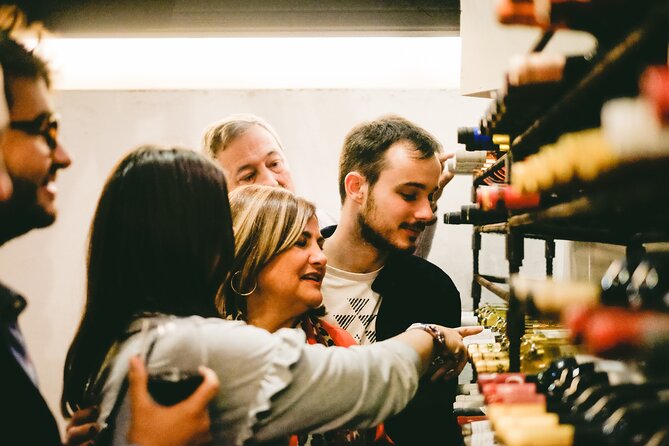
- Small group (max 10) for easier questions and a calmer walk
- Susona and the Street of Death legend turned into a real route through Santa Cruz
- Medieval cemetery + preserved worship-space layers tied to the three cultures of the Mediterranean
- Fortified walls and the Alcázar connection explained as Seville’s power story
- Tapas meal with two drinks plus practical help for allergies and dietary needs
Deeper into the lanes of Santa Cruz
- Seville: Small-Group Jewish Quarter Discovery Walking Tour★ 4.9 · 499 reviews
- VIP Guided Seville Alcazar Pre-Opening, Cathedral & Old Town★ 5.0 · 191 reviews
- Santa Cruz Jewish Quarter Guided Tour in Seville★ 4.0 · 144 reviews
Walking Seville’s Jewish Quarter like a map, not a museum
This part of Seville is famous, but it can also be hard to decode if you’re wandering alone. The streets are narrow, the landmarks are easy to miss, and the neighborhood’s biggest “evidence” is sometimes what’s hiding in plain sight: structures, street shapes, and reused spaces.
That’s why a guided walk matters. You don’t just hear dates. You learn how this area changed role over time, why certain walls and borders mattered, and how daily life would have felt inside the old medieval layout. It also helps that the atmosphere is photo-friendly. Think corner views, small plazas, textured stone, and the kind of street perspective where your camera actually feels useful.
And yes, Seville layers everything. You can see it in the way the same spaces served different communities, and in how religion and power left physical clues.
Plaza del Triunfo start: get your bearings fast
The tour kicks off near Plaza del Triunfo, a smart starting point because it helps you orient yourself before you slip into tighter streets. From there, your guide builds a bridge from the city’s bigger story into the Jewish Quarter—one section at a time—so you’re not lost when you turn the first corner.
A key part early on is the link to the Alcázar area. You’ll hear how the Alcázar’s origins connect to the neighborhood you’re about to explore. Even if you’ve been to the Alcázar already, this framing can change how you notice the surrounding walls and defenses as you walk.
One extra bonus: starting with context makes the later legends and sites make sense instead of sounding like random folklore.
Urban changes that explain the 21st-century Seville around you
As the walk moves along, you’ll get focused explanations about the neighborhood’s urban changes—how the layout shifted and why. This part isn’t just academic. It’s practical.
When you know what got reorganized over centuries, you stop trying to force today’s streets to match an old map. Instead, you understand why certain areas feel slightly “off,” why the neighborhood seems to fold in on itself, and why some locations feel hidden unless you’re looking with a guide’s eye.
This is also where you learn to read Seville like a puzzle: a bend in a street, a small square that feels like an empty pause, a wall segment that looks too sturdy for its surroundings. The tour teaches you what to notice—then gives you stories that attach to those details.
Still hungry? More tapas crawls to book

Susona and the Street of Death: the legend you’ll remember
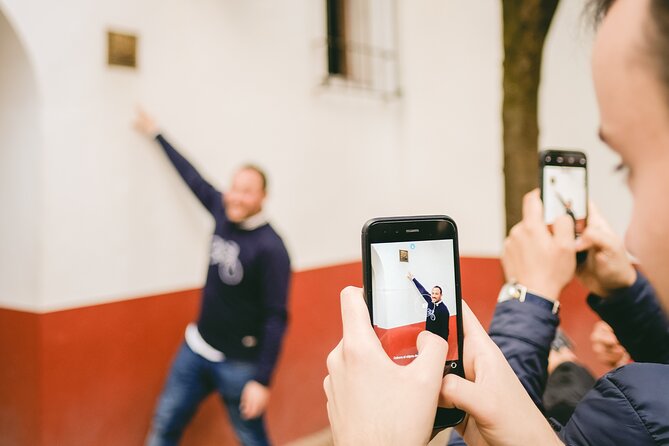
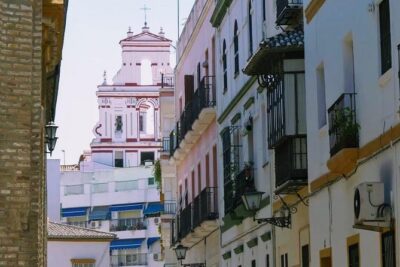
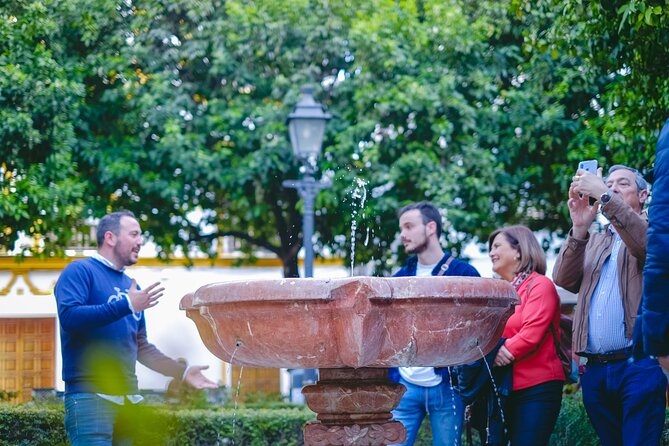
One of the most talked-about elements is the medieval storytelling—especially the legend of Susona and the Street of Death. This isn’t just a dramatic tale thrown at you on the move. It’s woven into the route so it lands where the story would have mattered.
I like this approach because it turns a legend into wayfinding. Instead of hearing it once and forgetting it, you connect the narrative to physical space: where you are, what kind of street it is, and why people would have experienced the neighborhood in that way.
And if you’re the kind of person who loves dark stories, this segment delivers. If you’re not, it still works because it’s also about fear, memory, and how communities lived with uncertainty—then left traces in what came after.
Fortified edges and the Alcázar boundary: power with walls
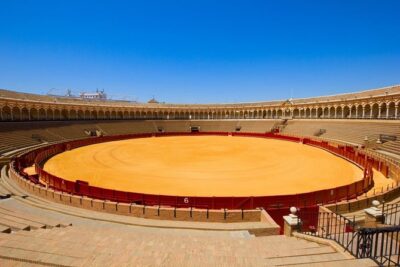
Another stop focuses on why the area was fortified and what that meant for life around the Alcázar. Seville didn’t protect itself with vibes. It did it with boundaries, walls, and controlled spaces.
This part helps you understand the neighborhood as a defensive system as much as a residential one. You’ll connect the dots between the Alcázar’s role and the Jewish Quarter’s place in the city. The result is that the Quarter doesn’t feel like a postcard. It feels like a real place where safety and limits mattered.
If you like military history, you’ll probably enjoy this section more than you expect. Even if you don’t, you’ll come away knowing why certain stretches look the way they do and why the neighborhood feels like it has “edges” even when you’re in the middle of it.
The medieval Jewish cemetery and the preserved strange-structure site
There’s a stop that takes you to the location of an old medieval Jewish cemetery, preserved today at a curious structure. Even without huge visible ruins, this kind of site hits emotionally because it’s quiet and specific.
This is the part where the walking tour feels most respectful. The guide’s explanations matter, because the cemetery’s significance can be easy to overlook if you’re just scanning for sightseeing targets.
You’ll also learn how the neighborhood’s religious history extends beyond one group. That sets you up for the next layer: worship spaces that were used by the three cultures of the Mediterranean.
One place, many faith layers: worship spaces across centuries

Seville’s Jewish Quarter area includes a preserved site that has served as a place of worship for different communities over time. You’ll hear how this area played a role in the broader Mediterranean cultural mix, not just one isolated chapter of local history.
What I like here is the balance. The tour doesn’t pretend the past was harmonious or simple. It shows how spaces changed function and how history left physical proof that communities came, adapted, and were replaced by later realities.
If you’re the type who likes to understand how old cities worked, this is a strong section. It gives you a lens that makes Seville’s other neighborhoods make more sense too.
House walls and a hotel secret: the past you can book into
One of the cleverest stops is about hidden secrets preserved in the houses of the medieval Jewish Quarter—now kept in a format you might recognize as part of today’s hospitality scene. You’re shown how medieval life is still “inside” the architecture, not just in standalone monuments.
This is where you really feel the value of a guide. Left to your own devices, you might walk right past a doorway or passage and never realize you’re near something historically meaningful.
It’s also a great reminder for your future sightseeing: in older cities, history often lives in structures you’re not supposed to notice. The tour trains your eye.
The square that gives the neighborhood its name, then the first church
The walk then lands at the square that gives the neighborhood its name. This section also connects to the origin of the first church in the area—then how it evolved across the centuries.
This is a smart transition: it ties together the neighborhood’s identity, how community spaces shifted, and how religious and cultural power rebranded physical locations. The square works as a natural “reset” point, too. You can breathe, take photos, and absorb what you’ve learned so far before heading to dinner.
If you like urban history, you’ll appreciate how the guide explains what changed and what stayed consistent in the neighborhood’s spirit.
Tapas and Spanish wines: three courses that end the night right
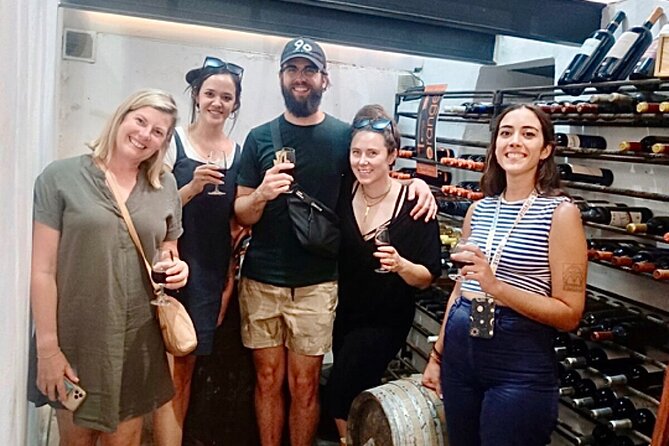
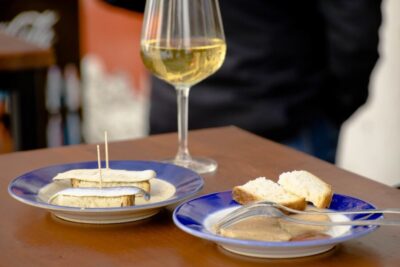
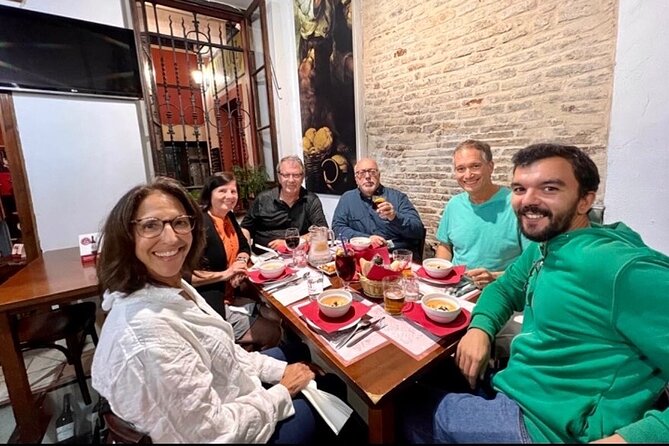
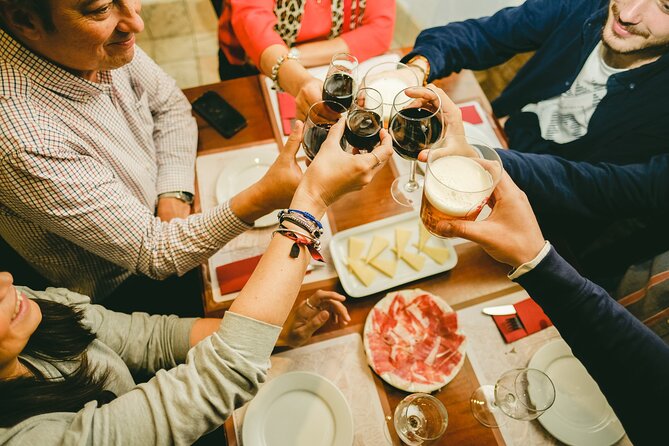
Dinner is the payoff: you head to a local tapas bar where you get a complete meal—three tapas with two drinks included. The format is designed so you can slow down after the walking without feeling like you’re stuck in a long restaurant lecture.
The food is classic Andalusian, and the menu is different each session. Expect combos that can include items like salmorejo, croquetas, oxtail, spinach with chickpeas, pisto, pork cheeks, aubergines, anchovies, calamari, gazpacho, and mushrooms.
Even better for practical travelers: if you have allergies or intolerance, you can advise at booking, and the restaurant is informed accordingly. That’s not just “nice to have.” It matters because tapas bars can be complicated places for ingredient swaps.
From what you’ll experience on the night, the guide’s storytelling also improves the food part. You’re not just eating. You understand why these dishes fit the region and what they tell you about daily life and local flavors.
Timing, walking comfort, and rainy-night reality
The total tour time is about 3 hours. Within that, the walking section is usually around an hour and a half, so you’re not stuck out there all evening. It’s described as not difficult, and the pace is set up so you can keep up without constantly sprinting to the next corner.
Still, take the streets seriously. They’re old, narrow, and sometimes uneven. If weather turns, you’ll appreciate proper shoes and maybe a compact umbrella. One rainy night can make the experience feel more “storybook,” but you don’t want to slip while chasing a photo.
Also, because you’ll be walking and then eating, plan to treat this as a real activity, not a casual stroll between other stops.
Who should book this Jewish Quarter + tapas tour
This is a great fit if you want:
- A small-group history walk where you can ask questions
- A focused route through Santa Cruz’s Jewish Quarter with legends like Susona
- A tapas dinner that includes drinks and can handle dietary limits when you tell them ahead of time
It’s also ideal if you like authenticity over checklists. This tour doesn’t just name sites. It teaches you how to see them in context: why they’re there, how they changed, and what the neighborhood tried to protect.
If you only want major museums or big, flashy ruins, you might find the pace more story-led than monument-led. Here, the value is in interpretation and route clarity.
Should you book the Seville Jewish Quarter tour with tapas?
Yes, if your ideal Seville evening includes good walking, strong local storytelling, and a genuinely satisfying end-of-night meal. At $71.35 per person for about 3 hours, the price makes sense because you get both: a guided route plus a full tapas-style dinner with drinks, not just a snack stop.
I’d book it early in your trip if possible, because it helps you understand what you’ll later see on your own. And if you care about dietary restrictions, be proactive during booking—you’ll get better results that way.
Bottom line: if you want Seville’s past to feel human and specific, this is a smart way to spend a few hours—then enjoy Andalusian food while the stories are still fresh.
FAQ
How long is the Seville Jewish Quarter small-group tour with tapas?
It runs for about 3 hours.
What group size should I expect?
The tour is limited to a maximum of 10 travelers.
What is included with the tapas dinner?
You’ll have a meal at a local tapas bar that consists of three tapas per guest and two drinks included.
Can you accommodate dietary allergies or intolerance?
Yes. If you have any food allergy or intolerance, you should advise at the time of booking so the restaurant can be informed.
Is the tour offered in English?
Yes, the tour is offered in English.
What is the cancellation policy?
You can cancel for a full refund up to 24 hours before the experience start time.
More Tour Reviews in Seville
- Seville: Live Flamenco Dancing Show Ticket at the Theater
★ 4.7 · 16,396 reviews - Seville: Alcázar, Cathedral & Giralda Skip-the-Line Tour
★ 4.8 · 11,525 reviews - Seville: 1-Hour Guadalquivir River Sightseeing Eco Cruise
★ 4.2 · 10,281 reviews - Seville: Setas de Sevilla Entry Ticket
★ 4.6 · 8,901 reviews - Seville: Cathedral, Giralda & Alcazar Entry With Guided Tour
★ 4.6 · 8,560 reviews
Seville, One Plate at a Time
- Sevilla Food Tour: Tapas, Wine, History & Traditions
★ 5.0 · 3,468 reviews - Ultimate Seville Tapas, Wine & History Small Group Tour
★ 5.0 · 1,766 reviews - Seville: Tapas Crawl
★ 4.9 · 1,705 reviews - Authentic Flamenco Show with Tapas & Wine Guided Tour
★ 5.0 · 1,476 reviews - Flamenco Show at Tablao El Arenal with Drink and Optional Dinner or Tapas
★ 4.5 · 1,415 reviews
Further Into Santa Cruz
- Seville: Small-Group Jewish Quarter Discovery Walking Tour
★ 4.9 · 499 reviews - VIP Guided Seville Alcazar Pre-Opening, Cathedral & Old Town
★ 5.0 · 191 reviews - Santa Cruz Jewish Quarter Guided Tour in Seville
★ 4.0 · 144 reviews - Seville: 1-Hour Walking Tour Barrio de Santa Cruz
★ 4.5 · 131 reviews - Private Tour Jewish Quarter, center and Plaza de España
★ 5.0 · 127 reviews
Just added to the Seville list




Barrio Santa Cruz & Jewish Quarter, compared.
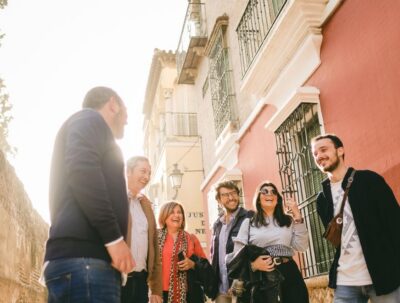 ★ 4.9Small-Group Jewish Quarter Discovery Walking TourFrom $29499 reviews
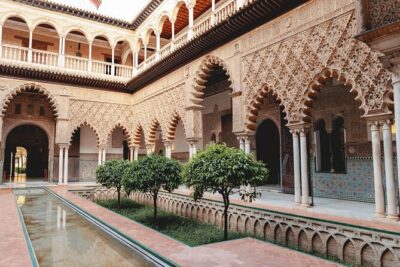 ★ 5.0VIP Guided Seville Alcazar Pre-Opening, Cathedral & Old TownFrom $138191 reviews
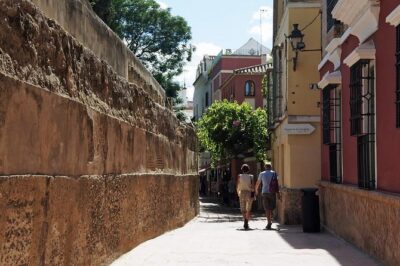 ★ 4.0Santa Cruz Jewish Quarter Guided Tour in SevilleFrom $24144 reviews
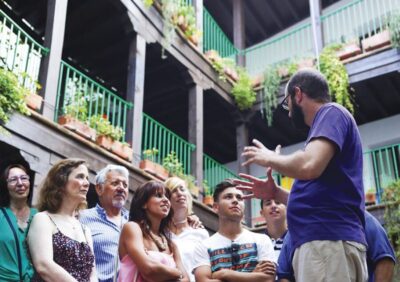 ★ 4.51-Hour Walking Tour Barrio de Santa CruzFrom $18131 reviews
 ★ 5.0Private Tour Jewish Quarter, center and Plaza de EspañaFrom $189127 reviews
 ★ 5.0Small Group Jewish Quarter Tour with Tapas & DrinksFrom $59119 reviews
 ★ 5.0Seville Former Jewish Quarter Walking Tour: Santa CruzFrom $18105 reviews
 ★ 4.8Seville Jewish Quarter walking tour: Santa Cruz DistrictFrom $15104 reviews
Browse the lists this tour appears in