
Review · BARRIO SANTA CRUZ & JEWISH QUARTER
Private Tour Jewish Quarter, center and Plaza de España
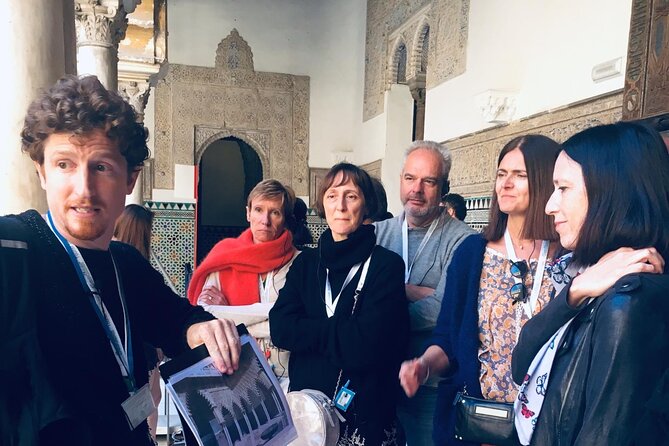
Seville tells its Jewish story in footsteps. This private, 2-hour walk connects the Jewish Quarter to the grand finish at Plaza de España, with constant context—religions, rulers, art, and the city’s changing streets.
I love how the route turns “history” into places you can actually picture: a shared square where a mosque, synagogue, and church all point to layered faiths, plus Murillo details that make the art feel tied to everyday life.
One thing to consider: the pace is brisk. If you want long museum time or deep reading, you may feel the 2 hours moves fast, but that’s also why it’s such a good orientation tour.
In This Review
- Key things to know before you go
- Where the stories start: Plaza de Santa Cruz to the shared faith square
- Santa Maria la Blanca: the synagogue site you can walk into
- Walls, gates, and gates again: understanding where the Sephardim lived
- Narrow streets, courtyards, and the Seville behind the theatre
- Pogroms, expulsion, and the legend of Susona
- From opera-city streets to a UNESCO-style skyline frame
- Torre del Oro and the Ibero-American Exposition makeover
- Royal Tobacco Factory ties to Carmen, then Forestier gardens to Plaza de España
- Price, timing, and value for your group
- Who this tour is best for (and who should skip it)
- Should you book this Jewish Quarter to Plaza de España tour?
- FAQ
- How long is the tour?
- Is this tour private?
- How many people can be in the group?
- What language is the tour offered in?
- Where do we meet and where does it end?
- Are tickets included for any stops?
- Is there a mobile ticket?
- Can I bring a service animal?
- Can I cancel for a full refund?
- Is the meeting point near public transportation?
Key things to know before you go
- A square that mirrors Seville’s layered past: the visit frames how Jewish life existed alongside other communities in the same urban space.
- Murillo shows up more than once: you’ll connect the painter to key religious sites and local plaques.
- Gates, walls, necropolis, and the Sephardic enclosure: city defenses aren’t just background—they explain where communities lived and why.
- Courtyards, balconies, and a theatre-like Seville: you’ll see spots that link literature and opera traditions to real streets.
- A strong UNESCO view moment: you’ll reach a skyline view anchored by the cathedral, Giralda, Real Alcázar, and the Archivo de Indias.
- French influence at the university and garden: you’ll see why French artists and garden designers shaped what you’re looking at.
More of the tiled plaza and its shady park
- Seville: Professional Photoshoot at Plaza de España★ 4.9 · 211 reviews
- Make Seville unforgettable: Private Photoshoot at Plaza de España★ 5.0 · 45 reviews
- Secretos del Parque María Luisa & Plaza de España Tour en Español★ 5.0 · 36 reviews
Where the stories start: Plaza de Santa Cruz to the shared faith square
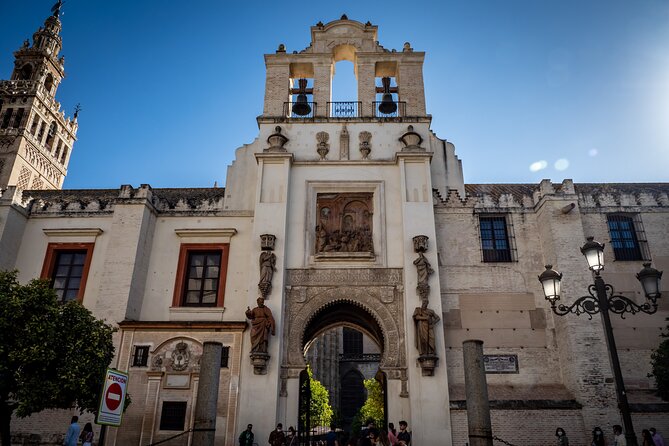
Your walk begins in the historic center at Plaza de Santa Cruz, an easy launching point for understanding why Seville matters in Spanish Jewish history. From here, your guide sets the tone: you’re not just sightseeing—you’re building a map in your head of how communities interacted, overlapped, and changed over time.
A highlight early on is the idea of one square representing different faiths across different eras. You’ll be shown how the same urban space could include a mosque, a synagogue, and a church, and you’ll hear how those layers weren’t random. They reflect how Seville grew, how power shifted, and how neighborhoods got reshaped.
This opening also does something practical. You get quick orientation for how the city’s Jewish sites are scattered—but still connected by the way streets funnel into courtyards, gates, and later monuments. By the time you move deeper, you’re not lost in a maze. You’re following a storyline.
Santa Maria la Blanca: the synagogue site you can walk into
One of the most memorable stops is Iglesia de Santa Maria la Blanca. You’ll start by understanding what used to be here—an old synagogue—then you’ll transition from explanation to the real physical space by entering the current temple.
What I like about this stop is how it makes the invisible visible. Instead of treating it as a standalone church, the visit frames it as part of a broader network of Jewish quarters across Spain, tied to plaques connected to Caminos de Sefarad. That’s useful even if you’ve never heard the term before, because it gives you a way to connect Seville to other places without needing a textbook.
Murillo adds a second layer. The church’s connection to his work helps you “see” Seville’s religious history and artistic culture at the same time. You’re not just learning dates; you’re learning how art and faith lived side-by-side in the city’s public spaces.
Practical note: this is one of the stops marked with free admission in the experience details, so it’s a nice win if you’re trying to keep costs under control.
Walls, gates, and gates again: understanding where the Sephardim lived
After the early focus on places of worship, the tour shifts to the city itself—walls, gates, and the enclosure where the Sephardim lived. This section helps you stop thinking of “the Jewish quarter” as one neat block.
Instead, you learn it as a bounded environment shaped by defense, access, and city planning. You’ll locate the necropolis, which is a grounding moment. It reminds you that community life wasn’t only about buildings you can enter—it was also about how people marked time, memory, and burial.
Then the route brings in a literary-and-history crossroad: you’ll pass discussion tied to the Spanish Golden Age, including Don Juan next to his statue. Even if you don’t care about myths, this is smart wayfinding for understanding how later Seville tried to brand itself. The city turns past themes into symbols you can point at on a map.
Deeper into the lanes of Santa Cruz
Narrow streets, courtyards, and the Seville behind the theatre
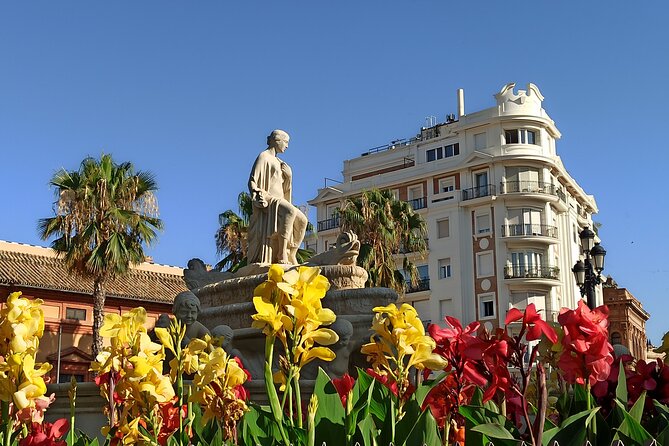
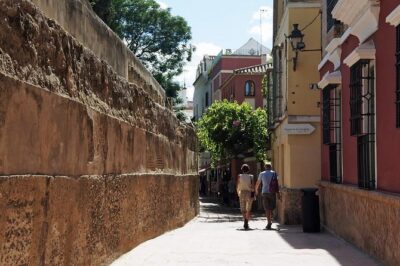
This walking stretch is where Seville starts to feel cinematic. You’ll pause at courtyards inside the neighborhood alleys, walk along narrow lanes, and be shown the kind of architecture that makes the city feel intimate—almost like you’re inside a set.
The tour leans into cultural memory with references that travel through pop culture and opera. You’ll look out toward Rosina’s balcony and connect it to The Barber of Seville—then you’ll hear how those ideas show up in the city’s atmosphere. It sounds playful, but it’s actually a good learning method: when you attach history to recognizable stories, you remember more.
You’ll also be shown the old aqueduct, another stop that’s easy to miss if you’re walking quickly on your own. Here, it becomes a clue. Water systems explain how neighborhoods could survive and grow, which matters when you’re trying to understand why communities formed where they did.
Overall, this portion is valuable because it turns the “static past” into “how people lived.” If you love cities where the buildings still behave like buildings—courtyards for shade, alleys for movement—this is the part that will make you look up and slow down.
Pogroms, expulsion, and the legend of Susona
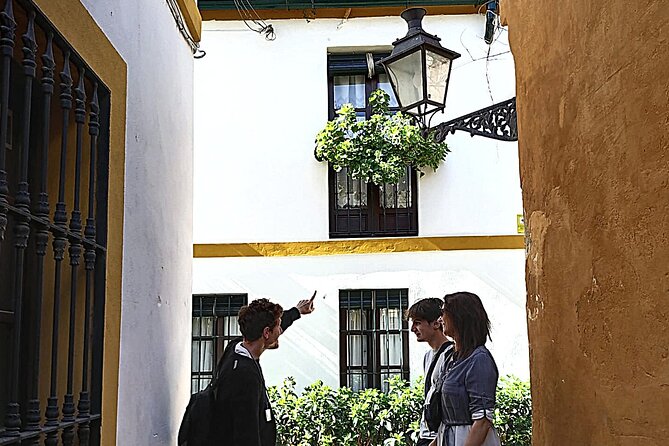
This is the emotional center of the route. You’ll move through the 14th and 15th century story with a clear focus on the vicissitudes that Hebrew communities faced—especially pogroms and the definitive expulsion ordered by the Catholic Monarchs.
Even when you know the broad outline, hearing it placed into specific Seville locations makes it heavier. You start to understand why these neighborhoods still carry weight in local memory, not just in museum exhibits.
Then comes Susona, described through both who she was and the legend surrounding her. This part matters because it balances the harsh political timeline with human narrative. Instead of only “what governments did,” you get “what stories people carried,” which helps the city feel lived-in instead of curated.
From opera-city streets to a UNESCO-style skyline frame
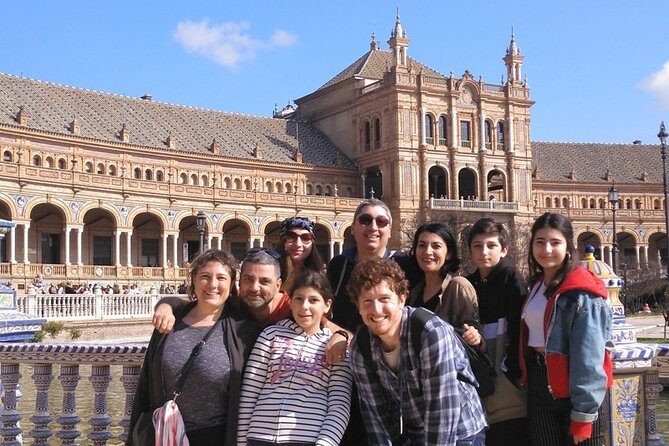
Later, the route shifts tone again. You’ll walk through what’s described as the most bucolic and picturesque neighborhood, a setting that drew European artists to stage plots for novels and plays. You’ll step into the old passages of the quarter and hear about the so-called City of Opera connection tied to UNESCO.
After all that walking, the payoff comes from a best-view moment: a viewpoint that frames Seville’s big hitters together—the Cathedral, Giralda, Real Alcázar, and the Archivo de Indias (all recognized as World Heritage). This is one of those “now I get it” stops.
For practical travelers, it helps you plan what to prioritize after the tour. If you’re thinking about which monument to revisit later, the skyline view gives you an instant visual checklist. You’ll also see how the city’s layout pulls attention toward these monumental landmarks even when you’re walking down tiny streets.
Torre del Oro and the Ibero-American Exposition makeover
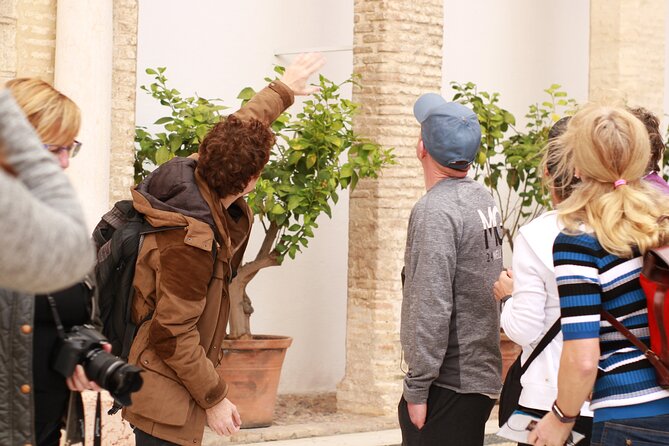
At some point, you’ll leave the tight historic fabric and understand Seville’s later transformation. The tour helps you connect the older city to its 20th-century reconfiguration tied to the Ibero-American Exposition, when Seville expanded and reorganized parts of its streets.
You’ll learn the relevance of the Torre del Oro, then you’ll pass notable buildings such as the Alfonso XIII hotel and key avenues like Constitution. This is useful because many visitors only see the “old Sevillian postcard” side. Here you also get the civic logic of Seville’s newer face: how grand events and modern planning changed the way the city moves.
If you like cities that show multiple eras at once, you’ll probably enjoy this section more than you expected. It keeps the story from freezing in the medieval period.
Royal Tobacco Factory ties to Carmen, then Forestier gardens to Plaza de España
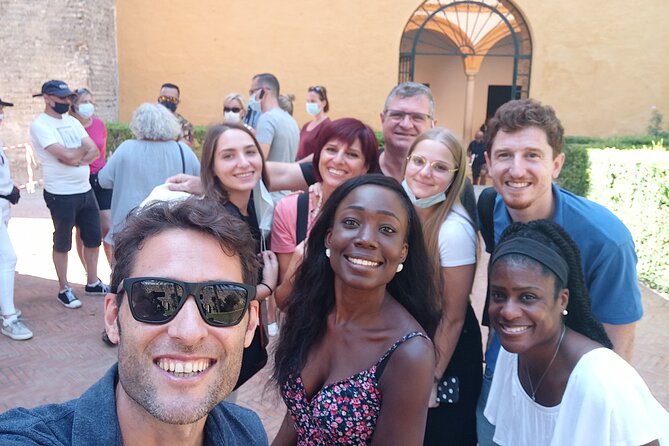
Two of the final stops make the tour feel like a bridge between cultures.
First is Universidad de Sevilla, located in the old Royal Tobacco Factory. You’ll hear a literary angle: Mérimée was inspired to create Carmen there, and French politics and administration influenced how this kind of manufacturing took hold in Spain during Bourbon rule. The tour even ties in literary details tied to renowned French authors, so it’s not just an architecture stop—it’s a cultural explanation.
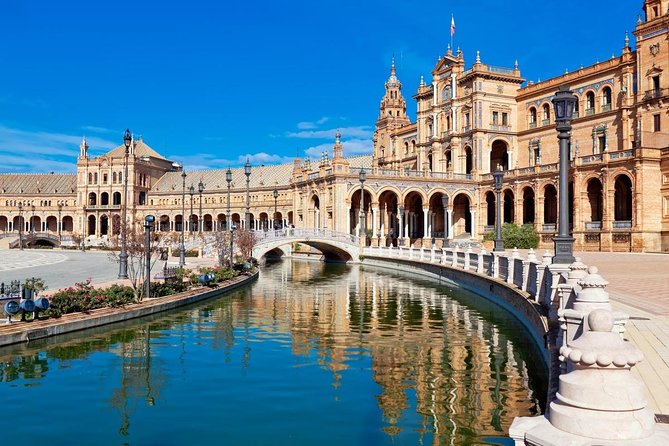
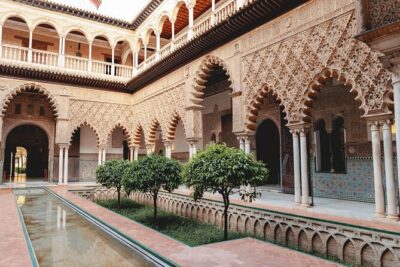
Then you’ll finish with Parque de Maria Luisa and the build-up to Plaza de España. You’ll learn the park owes its look to French garden architect Forestier, and later it hosted the Ibero-American Exhibition, leaving behind older pavilions. The Spain pavilion is specifically connected to the name of today’s Plaza de España, which helps the final scenery feel earned, not random.
This ending is also practical. The gardens and plaza are easier to linger in after your guided walk. You can take your time soaking up the views, snapping photos, and deciding if you want to return for a longer stroll.
Price, timing, and value for your group
This is priced at $189.87 per group (up to 12), for about 2 hours in English. That “per group” setup is where the value often appears.
If you’re traveling as a family or a small circle, the cost per person drops fast. Even with a private tour, you’re not paying for separate tickets for each person, and you get a guide who can adjust as you go. The route also includes stops marked with free admission in the experience details, which helps keep the total cost from creeping up.
A small timing tip: this kind of tour is usually popular. The experience is often booked well ahead (on average, 122 days), so if your dates are fixed, I’d reserve early.
Also, the tour uses a mobile ticket and is private, meaning only your group participates. That matters in Seville because the Jewish Quarter streets can get crowded and narrow. A private pace makes the walk more comfortable.
Who this tour is best for (and who should skip it)
I’d point you toward this private walk if you want:
- A structured way to understand the Jewish Quarter without wandering aimlessly.
- A route that mixes architecture, political history, and art references like Murillo.
- A guided bridge from medieval Seville to the Ibero-American Exposition era and ending in a major landmark plaza.
You might want a different style of tour if:
- You’re the type who wants a museum-first day and long indoor viewing.
- You prefer a slow “let’s stop for every photo” pace for hours at a time.
For most people, the sweet spot is clear: you get the big story arc, the key sites, and the skyline finish—all in time to still enjoy Seville afterward.
Should you book this Jewish Quarter to Plaza de España tour?
Yes, if your goal is orientation plus story, and you like walking guided by context. The tour’s strength is that it doesn’t treat Jewish history as an isolated subject—it connects it to city planning, religious layers, famous art, and later cultural branding. That makes the city make more sense when you’re off the route.
Book it especially if you’re traveling with 2–6 people and want the comfort of a private group, plus an English guide who can keep the history clear and the pace steady. If you show up expecting a quick highlight reel, you’ll leave with a much better grasp of why Seville looks the way it does—from cramped courtyards to the broad geometry of Plaza de España.
FAQ
How long is the tour?
It’s listed as approximately 2 hours.
Is this tour private?
Yes. It’s a private tour/activity, and only your group participates.
How many people can be in the group?
The price is per group for up to 12 people.
What language is the tour offered in?
It’s offered in English.
Where do we meet and where does it end?
You meet at Plaza de Santa Cruz and the tour ends at Plaza de España, in the gardens of María Luisa.
Are tickets included for any stops?
The experience details note free admission for specific places like Iglesia de Santa Maria la Blanca, Universidad de Sevilla, and Parque de Maria Luisa.
Is there a mobile ticket?
Yes, it’s listed as having a mobile ticket.
Can I bring a service animal?
Yes, service animals are allowed.
Can I cancel for a full refund?
Yes. Free cancellation is available if you cancel up to 24 hours in advance.
Is the meeting point near public transportation?
Yes, it’s listed as near public transportation.
A Guide of Your Own in Seville
- Seville: Private City Tour by Eco Tuk Tuk
★ 4.8 · 963 reviews - Seville Private Walking Tour with Alcazar & Cathedral Tickets
★ 5.0 · 332 reviews - Private Walking Tour Alcazar and Cathedral in Sevilla
★ 5.0 · 172 reviews - Alcazar and Cathedral of Seville Private Tour
★ 5.0 · 149 reviews - Private personalized Seville street tour of 2.5 hours
★ 5.0 · 116 reviews
Further Into Santa Cruz
- Seville: Small-Group Jewish Quarter Discovery Walking Tour
★ 4.9 · 499 reviews - VIP Guided Seville Alcazar Pre-Opening, Cathedral & Old Town
★ 5.0 · 191 reviews - Santa Cruz Jewish Quarter Guided Tour in Seville
★ 4.0 · 144 reviews - Seville: 1-Hour Walking Tour Barrio de Santa Cruz
★ 4.5 · 131 reviews - Seville: Small Group Jewish Quarter Tour with Tapas & Drinks
★ 5.0 · 119 reviews
The Plaza and Its Park, Revisited
- Seville: Professional Photoshoot at Plaza de España
★ 4.9 · 211 reviews - Make Seville unforgettable: Private Photoshoot at Plaza de España
★ 5.0 · 45 reviews - Secretos del Parque María Luisa & Plaza de España Tour en Español
★ 5.0 · 36 reviews - Yoga at María Luisa Park in Seville
★ 5.0 · 17 reviews - Secrets of Maria Luisa Park and Plaza de Espana
★ 4.5 · 9 reviews
Just added to the Seville list


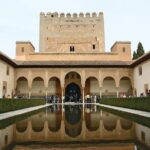
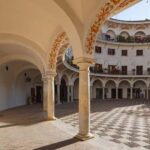
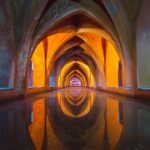

Barrio Santa Cruz & Jewish Quarter, compared.
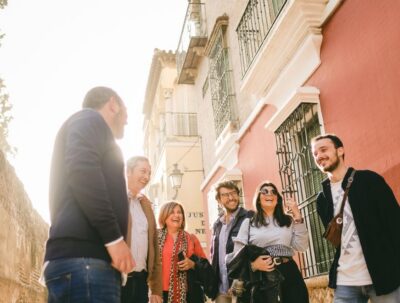 ★ 4.9Small-Group Jewish Quarter Discovery Walking TourFrom $29499 reviews
 ★ 5.0VIP Guided Seville Alcazar Pre-Opening, Cathedral & Old TownFrom $138191 reviews
 ★ 4.0Santa Cruz Jewish Quarter Guided Tour in SevilleFrom $24144 reviews
 ★ 4.51-Hour Walking Tour Barrio de Santa CruzFrom $18131 reviews
 ★ 5.0Small Group Jewish Quarter Tour with Tapas & DrinksFrom $59119 reviews
 ★ 5.0Seville Jewish Quarter Small Group Tour with Tapas and DrinksFrom $71110 reviews
 ★ 5.0Seville Former Jewish Quarter Walking Tour: Santa CruzFrom $18105 reviews
 ★ 4.8Seville Jewish Quarter walking tour: Santa Cruz DistrictFrom $15104 reviews
Browse the lists this tour appears in