
Review · ITáLICA ROMAN RUINS
Seville in roman times: Italica
Roman ruins outside Seville hit differently. In just a few hours you’ll see how Italica was built for spectacle, daily life, and power.
I especially like the private, guided format—the kind where a good guide (like Jesus, Patricia, or Javier) helps you read the place instead of just passing by stones. One thing to keep in mind: it’s a short, focused visit that centers on Italica, so if you want lots of additional stops around Seville’s Roman layers, you may want extra time.
In This Review
- Key highlights before you go
- Italica’s amphitheatre: where Roman theatre meets real scale
- Hotel pickup and a private group: smoother than you’d expect
- Italica vs. Híspalis: the Roman story behind Seville
- The Archaeological Ensemble of Italica: 90 minutes that actually feel enough
- What makes the guide the difference: Jesus, Patricia, and Javier’s approach
- Price and value at $167.68 per person
- Who should book this Italica Roman times tour?
- Should you book it?
- FAQ
- What time does the tour start?
- How long is the experience?
- Is pickup included in the price?
- Is this a private tour?
- What’s included in the tour besides the guide?
- Where is the main stop?
- Do I need to buy tickets separately?
- Is there free cancellation?
- Is lunch included?
Key highlights before you go
- Hotel pickup in Seville helps you start at 10:00 without juggling taxis
- 1.5 hours on site at Italica with your admission included
- An expert guide who can make the ruins feel human, not dusty
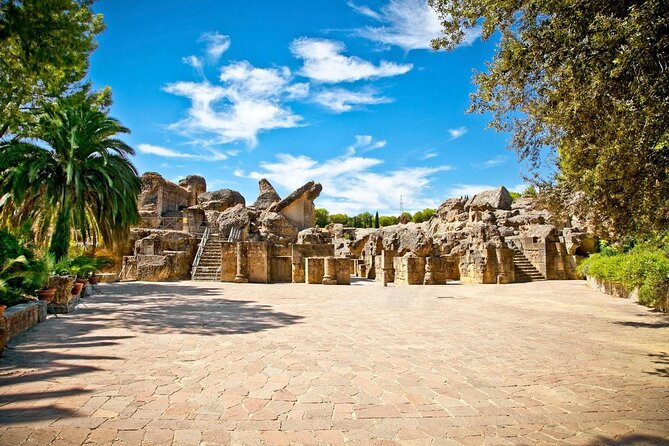
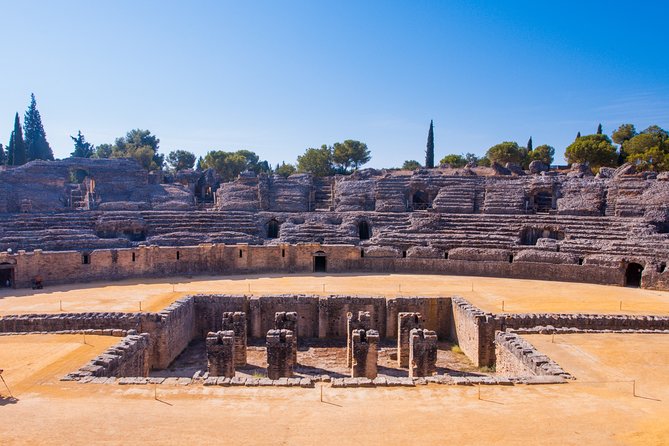
- A dramatic amphitheatre finale with entrances and a maze-like layout
- Italica plus the context of Híspalis, so you understand the Roman map around Seville
Other Roman mornings out at Italica
- Historical Italica: Half-Day Guided Tour from Seville★ 4.5 · 416 reviews
- Seville: Game of Thrones and Roman Empire Italica Tour★ 4.3 · 372 reviews
- Visit to Italica Roman Ruins Tour tickets included★ 4.5 · 285 reviews
Italica’s amphitheatre: where Roman theatre meets real scale
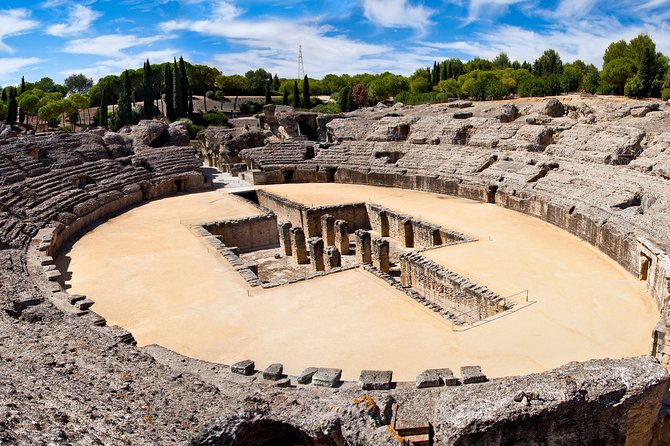
Italica is one of those places where the guide does more than explain. The amphitheatre is the payoff, and it’s built for a kind of viewing that feels familiar even today: big spaces, controlled entrances, and routes that guide you where you’re meant to go. You’ll walk through the entrances and follow part of the labyrinth-like layout, which makes the structure click in a way that photos can’t.
What I like here is the pacing of discovery. Instead of forcing you to race from one “point” to another, the visit naturally builds toward the amphitheatre. That means when you reach it, you’re not seeing it as isolated ruins—you’re understanding how it fits into the city’s Roman identity.
Also, there’s a quiet emotional side. The ruins are impressive, and you may also notice how much effort goes into preserving what’s left. That sense of awe can turn into a bit of worry when you look at exposed surfaces and surviving decoration.
Hotel pickup and a private group: smoother than you’d expect
This tour is set up to be easy to manage. It starts at 10:00 am, lasts about 3 hours, and includes pickup from your hotel or accommodation in Seville. You’re not left hunting a meeting point or wondering how to get out to Italica on your own.
Because it’s a private visit (only your group participates), the experience tends to feel less rushed and more adjustable. If you have questions, your guide can shape the pace. If your group wants to pause for photos, you’re not constantly negotiating around strangers.
You’ll travel by air-conditioned vehicle and your tour uses a mobile ticket, which helps cut down on paperwork. And since there are daily departures, you’re more likely to find a time that fits your Seville schedule.
Italica vs. Híspalis: the Roman story behind Seville
One of the best parts of this experience is that it doesn’t treat Italica like a standalone “ruins stop.” You’ll get the connection between Italica and Híspalis—two Roman cities in close proximity that relate to each other geographically and historically.
Even if your main on-site time is at Italica, the guide’s job is to make the bigger Roman map make sense. You’ll learn that Italica was on the outskirts, while Híspalis sat in what’s now the city of Seville. That framing matters because it changes how you picture the area: not just ruins scattered in a field, but a region where Roman life, politics, and population were layered.
If you’re visiting Seville for the first time, this kind of context is gold. It helps you connect modern streets and landmarks to the earlier Roman setting—without turning the day into a history lecture.


The Archaeological Ensemble of Italica: 90 minutes that actually feel enough
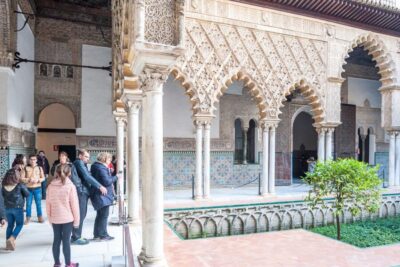
Your main stop is the Archaeological Ensemble of Italica, with about 1 hour 30 minutes on site. The admission ticket is included, which saves you a step and keeps the schedule tight.
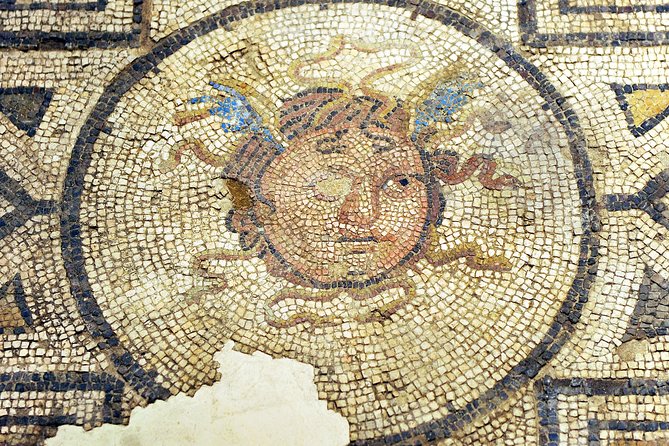
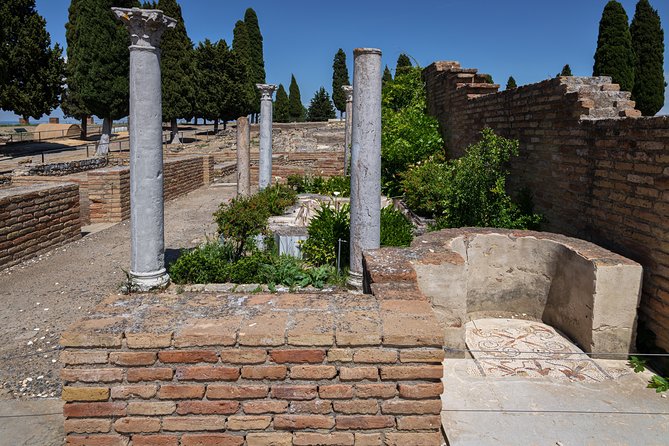
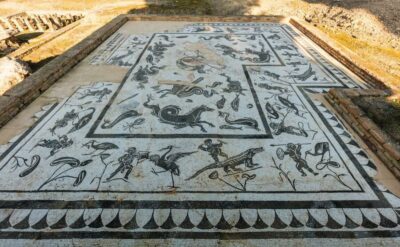
This is where you’ll spend your time moving through the Roman remains and focusing on what survives. The standout, according to the experience highlights people remember most, is the decoration—especially mosaics. Seeing mosaics in place (not in a museum case) changes your sense of what everyday life could look like: the patterns, the care, and the fact that these buildings weren’t just functional; they were meant to impress and last.
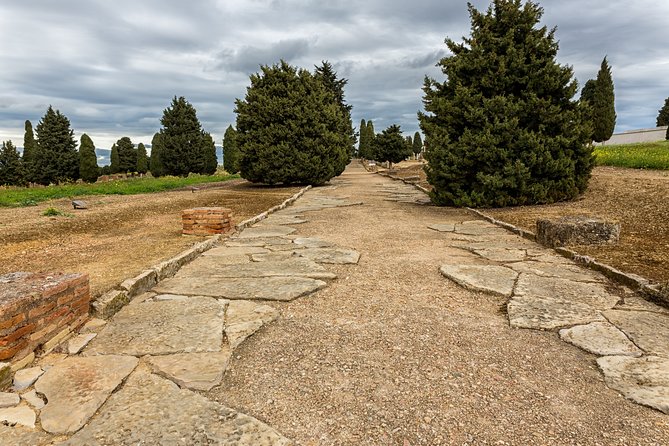
At Italica, the ruins also reward attention to layout. As you walk, you can start to sense how buildings connected and how spaces were used. A good guide matters most here. If you only read signs, you get facts. If you have a guide, you get meaning.
One practical consideration: because it’s an amphitheatre-focused day, you should expect some walking on uneven ground. The visit is still manageable for most people, but comfortable shoes help.
What makes the guide the difference: Jesus, Patricia, and Javier’s approach
The most consistently praised element is the guiding. Names like Jesus, Patricia, and Javier come up for a reason: they don’t just recite. They explain in a way that makes the Roman world feel present.
People also highlight three guide strengths:
- Enthusiasm that keeps energy up even when you’re surrounded by stone
- Humor and a conversational tone that makes the information easier to hold onto
- Interaction, where questions are welcomed instead of discouraged
That matters because Roman ruins can feel disconnected if you don’t have a thread. A skilled guide gives you that thread—how to look, what to notice first, and how the amphitheatre fits into the wider urban story.
So when you’re deciding if this is worth it, ask yourself this: do you want to be the kind of visitor who reads and connects, or do you want a quieter walk with less explanation? For the first type of traveler, the guide is the main attraction.
Price and value at $167.68 per person
At $167.68 per person, this isn’t the cheapest way to see ruins. But you are paying for a package, not just entry.
Here’s what supports the value:
- Official guide included
- Admission ticket included
- Hotel/accommodation pickup included
- Private transportation in an air-conditioned vehicle
- Private group format so you’re not stuck in a large crowd experience
You’re also getting a very time-efficient format: about 3 hours total, with a focused 1.5 hours on-site. In a city like Seville, where your time window can get eaten by heat, logistics, and planning, that kind of structure can be worth real money.
When might it feel less worth it? If you’re the type who enjoys wandering slowly, spending extra time on your own, and you don’t mind arranging transport out to Italica. In that case, you could choose independent entry. But if you value guided clarity and a smooth start, the price starts to look more reasonable.
Who should book this Italica Roman times tour?
This one fits best if you:
- Like archaeology when it comes with explanations that make the ruins legible
- Want a short, high-impact experience rather than a half-day that turns into a scavenger hunt
- Enjoy amphitheatres and public architecture
- Prefer a setup with pickup and private attention
It also suits first-timers to Italica. The amphitheatre payoff and the guide’s ability to connect pieces make it a strong introduction.
If you’re a serious “only give me the deepest details” history person, you might want to pair this with additional Roman-focused time in Seville. The experience is designed to be compact, not endless.
Should you book it?
I think you should, if you want Italica to feel like more than ruins. The guided approach, the amphitheatre finale, and the simple logistics (pickup, air-conditioned transport, admission included) make it a good value for the time you spend.
Skip it or add something else if you’re chasing a super long list of Roman sites. This is concentrated. It’s designed to land you at the amphitheatre with your questions answered and your attention ready.
If that sounds like your kind of day in Seville, book it and let the stones make sense.
FAQ
What time does the tour start?
The tour starts at 10:00 am.
How long is the experience?
It’s approximately 3 hours total.
Is pickup included in the price?
Yes. Pickup from your hotel or accommodation in Seville is included.
Is this a private tour?
Yes. It’s a private tour/activity, and only your group participates.
What’s included in the tour besides the guide?
You get official guidance, private transportation in an air-conditioned vehicle, and the admission ticket for the Archaeological Ensemble of Italica. A mobile ticket is also used.
Where is the main stop?
The main stop is the Archaeological Ensemble of Italica.
Do I need to buy tickets separately?
No. Admission ticket is included.
Is there free cancellation?
Yes. You can cancel for a full refund up to 24 hours before the experience’s start time.
Is lunch included?
No. Lunch is not included.
More Tour Reviews in Seville
- Seville: Live Flamenco Dancing Show Ticket at the Theater
★ 4.7 · 16,396 reviews - Seville: Alcázar, Cathedral & Giralda Skip-the-Line Tour
★ 4.8 · 11,525 reviews - Seville: 1-Hour Guadalquivir River Sightseeing Eco Cruise
★ 4.2 · 10,281 reviews - Seville: Setas de Sevilla Entry Ticket
★ 4.6 · 8,901 reviews - Seville: Cathedral, Giralda & Alcazar Entry With Guided Tour
★ 4.6 · 8,560 reviews
Roman Seville: More of Italica
- From Seville: Italica Roman City & Medieval Monastery Tour
★ 4.5 · 1,051 reviews - Historical Italica: Half-Day Guided Tour from Seville
★ 4.5 · 416 reviews - Seville: Game of Thrones and Roman Empire Italica Tour
★ 4.3 · 372 reviews - Visit to Italica Roman Ruins Tour tickets included
★ 4.5 · 285 reviews - Seville: Italica Roman Ruins City Tour
★ 4.2 · 147 reviews
Just added to the Seville list



Itálica Roman Ruins, compared.
 ★ 4.5Italica Roman City & Medieval Monastery TourFrom $461,051 reviews
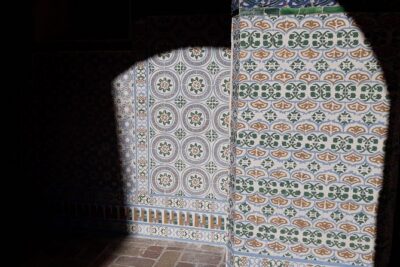 ★ 4.5Historical Italica: Half-Day Guided Tour from SevilleFrom $47416 reviews
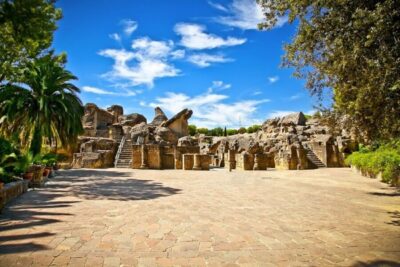 ★ 4.3Game of Thrones and Roman Empire Italica TourFrom $21372 reviews
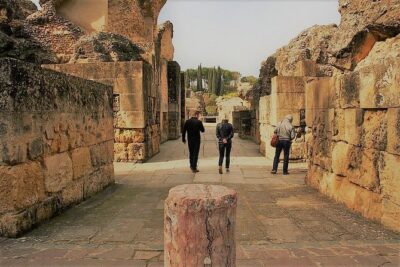 ★ 4.5Visit to Italica Roman Ruins Tour tickets includedFrom $19285 reviews
 ★ 4.2Italica Roman Ruins City TourFrom $21147 reviews
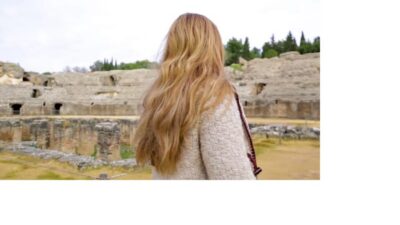 ★ 4.4Italica Roman City TourFrom $51139 reviews
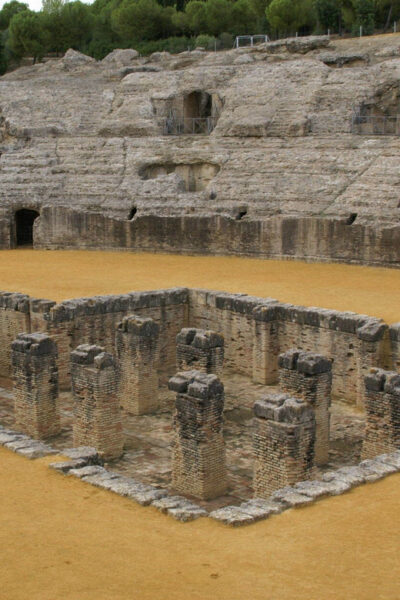 ★ 4.9Half-Day Guided Bike Trip to ItalicaFrom $53126 reviews
 ★ 5.0Private hald day tour to the historic roman city of ItalicaFrom $9343 reviews
Browse the lists this tour appears in