
Review · ITáLICA ROMAN RUINS
Seville: 4–Hour Italica Tour
Seville’s Roman story starts just outside the city. This 4-hour bike tour pairs a low-stress ride from the Seville parks to Italica with a real payoff inside the ruins: mosaics, sculptures, and the amphitheatre. I like that it mixes active sightseeing with a guided walk through the parts that are easy to miss on your own, especially if you’re also trying to figure out where everything is. One drawback to plan for: it’s not suitable if you have mobility impairments, and the cycling portion can feel a bit tight in narrow streets with traffic near the end.
I also love the human touch. When the guide I had—Rigo—kept the pace comfortable and explained what you’re seeing in context, the site felt less like random rubble and more like a place that mattered. If you get an active guide with good stories, that makes the Roman art and big amphitheatre land much harder. The other consideration: you’ll want to be comfortable riding a bicycle as part of the experience, not just “getting there.”
In This Review
- Key highlights you’ll actually feel during the tour
- From Centerbici Stire to Seville’s parks and river
- The bike ride is the secret sauce (not just transportation)
- San Isidoro del Campo: the monastery stop that adds depth
- Entering Italica: Trajan and Hadrian’s hometown setting
- The mosaics and sculptures that still look astonishing
- The Italica amphitheatre: one of Rome’s big ideas, in Seville’s backyard
- Pacing and group reality: what four hours feels like
- Who should book the Seville–Italica bike tour
- Value check: is $57 worth it?
- Should you book this 4-hour Italica tour?
- FAQ
- FAQ
- How long is the Seville–Italica tour?
- Where does the tour start?
- What time does it end?
- How much does it cost?
- What’s included in the tour price?
- Do you skip the ticket line for Italica?
- What languages are the guides available in?
- Is the tour suitable for people with mobility impairments?
- What should I know about cancellation and refunds?
- Can I book without paying right away?
Key highlights you’ll actually feel during the tour
- A guided ride through Seville’s parks and toward the river so you get more than just old stones
- Crossing the river by bike, with parkways that break up the trip nicely
- San Isidoro del Campo monastery stop to connect the modern city with the historic area around Italica
- Entrance to Italica included plus skipping the ticket line
- Preserved mosaics and sculptures once you step into the Roman ruins
- The Italica amphitheatre, one of the largest in the Roman Empire
Other Roman mornings out at Italica
- Historical Italica: Half-Day Guided Tour from Seville★ 4.5 · 416 reviews
- Seville: Game of Thrones and Roman Empire Italica Tour★ 4.3 · 372 reviews
- Visit to Italica Roman Ruins Tour tickets included★ 4.5 · 285 reviews
From Centerbici Stire to Seville’s parks and river
The tour starts at Centerbici Stire, on C/ Espronceda 5, in central Seville. That matters because you’re not piecing together transfers on your own—you’re rolling right into the city and getting your bearings fast. The guide is live and speaks Spanish, English, French, German, and Italian, so you’re not stuck listening to a “mostly works” translation.
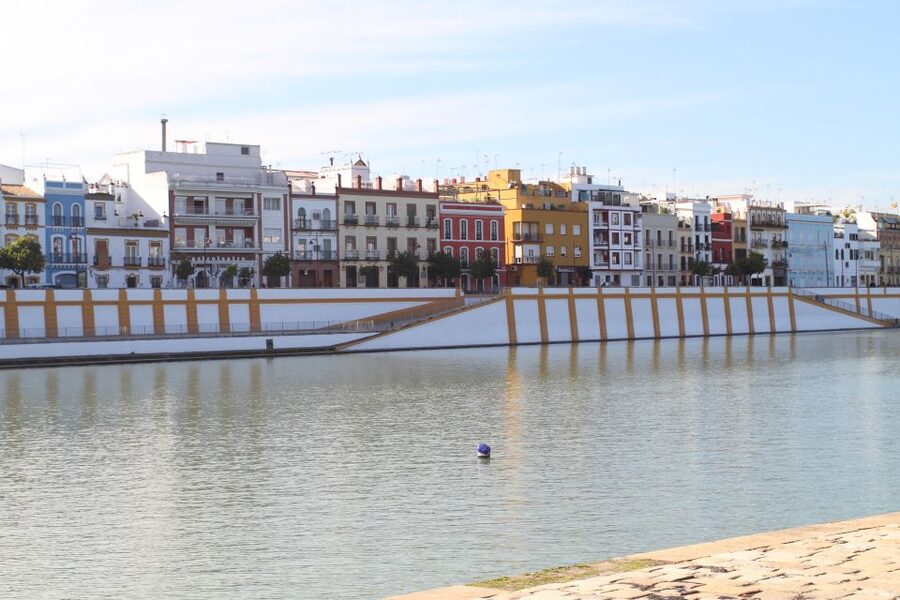
The first part is a ride through the center of Seville, then out toward the city’s parks and the river areas. I like how this sets the stage. You’re seeing Seville as a living city while you gradually shift from modern streets to the quieter historic fringe where Roman Italica sits.
And yes, you should expect this to feel like a bike tour, not a slow promenade. In one case, the cycling aspect surprised someone who booked expecting more walking, and the route still worked out—but they did find the last stretch on narrow streets with traffic a bit challenging. That tells me it’s best if you’re comfortable riding in real urban conditions, even if the guide keeps things manageable.
The bike ride is the secret sauce (not just transportation)
A big part of the value here is that the ride is planned to make the day smoother and more interesting. You’ll bike along a path that crosses the river and continues along parkways, which helps you avoid the “get to the site, then scramble around” feeling that can sink half-day outings.
There’s also a smart tradeoff: because you’re biking, the tour can cover more ground in four hours. You end up seeing the river and park areas without spending your whole time shuffling between viewpoints. That’s time you’d otherwise spend waiting for transit or walking longer distances.
If you’ve never been on a bike tour before, here’s what I’d watch for. The tour includes bicycle rental, so you don’t need to worry about bringing your own equipment. It also includes a water bottle. You’re not walking thirsty across the city before reaching the ruins. And because the guide is bilingual in multiple languages, you can ask questions in a language you actually speak—helpful when you want details about what you’re looking at rather than just a high-level overview.
The only caveat is that the narrow streets portion can be more demanding than the park paths. If you prefer wide lanes and zero traffic pressure, this might not be your kind of ride. Still, the guide’s job is to keep the pace comfortable, and that pacing is one of the reasons the tour earns such strong ratings.
San Isidoro del Campo: the monastery stop that adds depth
At some point on the way, you’ll pass the Monastery of San Isidoro del Campo, with the tour route designed so it connects to the historic lead-up to Italica. Even if you don’t get a long, full monastery visit, the stop matters because it changes how you read the area around Italica.
Roman sites don’t exist in a vacuum. They sit in a landscape where later eras—religious communities included—kept shaping how people lived, moved, and built. That’s why this stop feels more meaningful than a random photo break. It’s a clue that you’re heading into a region with layers of history, not just a single “Roman ruins” ticket.

Entering Italica: Trajan and Hadrian’s hometown setting
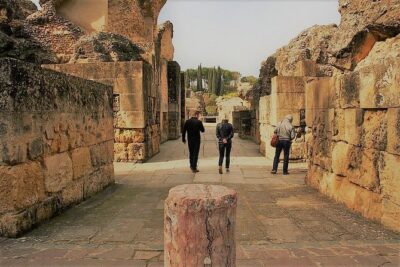
Once you reach Italica, the tour includes entrance to the site and a skip-the-ticket-line experience. That’s not glamorous, but it’s practical. Ruins often involve waiting around at entry points, and skipping that time helps you spend more of your four hours actually looking.
Italica itself is special for a simple reason: it was the first city in the Roman Empire built outside the Italian peninsula. That one fact reshapes the whole visit. You’re not just visiting Roman buildings in a Roman style—you’re seeing Roman ambition setting down roots far from Rome.
Italica is also described as the cradle of emperors Trajan and Hadrian. That detail helps you understand why this place mattered. When you know the emperors came from here, the scale of what you’re seeing starts to make more sense, especially the major public spaces like the amphitheatre.
And here’s what I like about the guided entry: instead of treating the ruins like isolated highlights, the guide helps you connect what you’re seeing to how Romans lived—how they staged community life, how art was used for status and identity, and why big buildings were worth the expense.
The mosaics and sculptures that still look astonishing
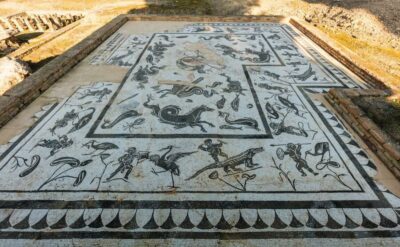
Inside Italica, the focus shifts to what’s preserved—and it’s impressive. You’ll admire mosaics and sculptures that are described as perfectly preserved. I take that seriously, because mosaics can be heartbreaking when they’ve eroded or been damaged. When mosaics and sculptural details are still readable, the ruins stop feeling like “wreckage” and start feeling like a museum space with echoes.
This is also where a great guide makes a difference. On my tour, Rigo’s excitement about sharing what matters at Italica was noticeable, and it shaped how the visit felt. Instead of watching people pass by stones, you slow down for the details that connect to Roman craftsmanship and taste.
If you’re someone who likes art as much as architecture, prioritize staying near the guide during mosaic-focused moments. It’s easy to rush when there’s a lot to see, but these are the pieces that give the site personality. The mosaics and sculptures are the parts you’ll remember later—not just the big outline of the amphitheatre.
The Italica amphitheatre: one of Rome’s big ideas, in Seville’s backyard
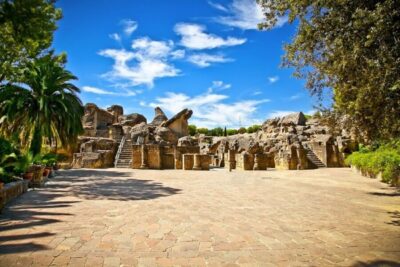
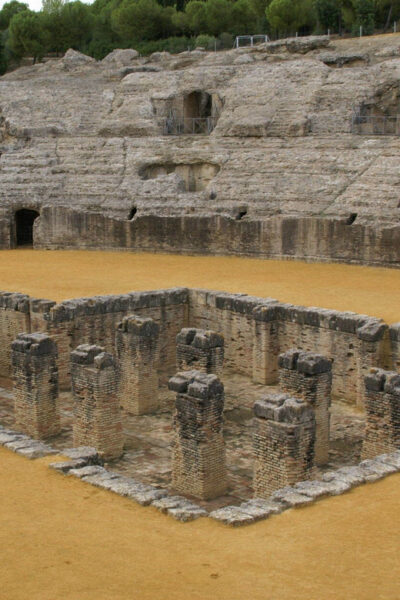
The star stop is the amphitheatre. This is one of the largest in the entire Roman Empire, and it’s not just impressive because it’s large. It’s impressive because you can still understand how it worked: it was built to hold crowds and stage spectacle.
In practical terms, this is where your brain finally clicks from “I’m visiting Roman ruins” into “I’m seeing public entertainment as a Roman institution.” Even if you don’t know the names of every part of the structure, the scale tells you what the Romans expected from a major city. A place that hosts that kind of audience had to be important—politically, socially, and economically.
If you like photos, this is also your best moment. But don’t treat it as a backdrop only. Take a minute to look at how the space opens up and how the architecture shapes sightlines. Standing there longer than you think you need is worth it, especially since the tour is only four hours total.
Pacing and group reality: what four hours feels like
Four hours is a sweet spot for a half-day tour. It’s long enough to cover city cycling, a monastery landmark on the way, and a meaningful time inside Italica. It’s short enough that you’re not stuck in a slow tour marathon.
Still, this is a shared experience with a live guide and bike time. The route includes biking along center streets and then more path-like parkways, so the feeling can change during the ride. One review flagged that the last bit through narrow streets with traffic could become challenging. I’d take that as a heads-up: don’t assume every meter of the bike portion feels like a bike trail.
The upside is pacing. The guide I heard about kept things at a comfortable pace and checked in on how people were doing. That makes the difference between feeling “I’m managing” and feeling “I’m surviving.” If you’re moderately fit and comfortable biking in a city, you’re likely to enjoy this format a lot.
Who should book the Seville–Italica bike tour
This tour is a strong match if you want:
- A single half-day outing that mixes Seville city life with Roman ruins
- A guided visit so you’re not trying to decode Italica alone
- Bicycle time that adds variety instead of just getting you to the site
- Art-and-architecture focus, especially mosaics and sculpture details
It’s not a fit if:
- You have mobility impairments and can’t do the cycling portion (the tour isn’t suitable for mobility impairments)
Value check: is $57 worth it?
For $57 per person, you’re getting a bundle: bike rental, helmet rental for children, a bilingual live guide, entrance to Italica, water bottle, and a skip-the-ticket-line experience. That bundle is the real value—because you’re paying for logistics that can otherwise eat time and money while you figure things out.
You’re also paying for interpretation. The best part of the tour isn’t just seeing the amphitheatre; it’s understanding what you’re looking at—especially with a guide like Rigo, who brings energy and a thoughtful pace. In a place like Italica, where the site can feel spread out, that guidance helps you make the most of a limited four-hour window.
If you’re the type who hates waiting in lines, the skip-the-ticket-line inclusion also matters. It keeps momentum.
The only “cost” you’ll pay is effort on the bike. If you’re set on an entirely walking-based outing, you might feel this is more physical than you want. But if you like light exertion and want a fuller Seville-to-ruins day, the pricing feels fair.
Should you book this 4-hour Italica tour?
I’d book this if you want a memorable blend: cycling through Seville’s parks and river areas, then stepping into Italica with a guide who can point out what matters—especially mosaics, sculptures, and the amphitheatre.
Skip it only if biking in city traffic pressure would stress you out, or if mobility needs make cycling unrealistic. Otherwise, it’s a smart way to see Roman history without spending your whole day stuck in transit or wandering without context.
FAQ
FAQ
How long is the Seville–Italica tour?
The tour lasts 4 hours.
Where does the tour start?
The meeting point is Centerbici Stire, C/ Espronceda. 5 -41004 – Sevilla.
What time does it end?
The activity ends back at the meeting point (Centerbici Stire).
How much does it cost?
It costs $57 per person.
What’s included in the tour price?
You get a bike tour of Seville, bicycle rental, entrance to Italica, a bilingual live guide, a water bottle, and helmet rental for children.
Do you skip the ticket line for Italica?
Yes, the tour includes skipping the ticket line.
What languages are the guides available in?
The live guide is offered in Spanish, English, French, German, and Italian.
Is the tour suitable for people with mobility impairments?
No, it is not suitable for people with mobility impairments.
What should I know about cancellation and refunds?
Free cancellation is available up to 24 hours in advance for a full refund.
Can I book without paying right away?
Yes. The listing offers reserve now & pay later, so you can book your spot and pay nothing today.
More Tours in Seville
- Seville: Alcázar, Cathedral & Giralda Skip-the-Line Tour
★ 4.8 · 11,525 reviews - Seville: Cathedral, Giralda & Alcazar Entry With Guided Tour
★ 4.6 · 8,560 reviews - Seville: Priority Access Cathedral, Giralda & Alcázar Tour
★ 4.8 · 7,563 reviews - Seville: Alcázar and Cathedral Entry Ticket and Guided Tour
★ 4.6 · 5,056 reviews - Seville: City Sightseeing Hop-On Hop-Off Bus Tour
★ 4.0 · 4,633 reviews
More Tour Reviews in Seville
- Seville: Live Flamenco Dancing Show Ticket at the Theater
★ 4.7 · 16,396 reviews - Seville: Alcázar, Cathedral & Giralda Skip-the-Line Tour
★ 4.8 · 11,525 reviews - Seville: 1-Hour Guadalquivir River Sightseeing Eco Cruise
★ 4.2 · 10,281 reviews - Seville: Setas de Sevilla Entry Ticket
★ 4.6 · 8,901 reviews - Seville: Cathedral, Giralda & Alcazar Entry With Guided Tour
★ 4.6 · 8,560 reviews
Roman Seville: More of Italica
- From Seville: Italica Roman City & Medieval Monastery Tour
★ 4.5 · 1,051 reviews - Historical Italica: Half-Day Guided Tour from Seville
★ 4.5 · 416 reviews - Seville: Game of Thrones and Roman Empire Italica Tour
★ 4.3 · 372 reviews - Visit to Italica Roman Ruins Tour tickets included
★ 4.5 · 285 reviews - Seville: Italica Roman Ruins City Tour
★ 4.2 · 147 reviews
Just added to the Seville list


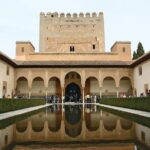
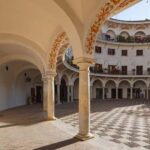
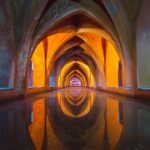
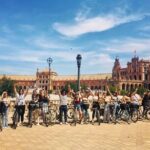
Itálica Roman Ruins, compared.
 ★ 4.5Italica Roman City & Medieval Monastery TourFrom $461,051 reviews
 ★ 4.5Historical Italica: Half-Day Guided Tour from SevilleFrom $47416 reviews
 ★ 4.3Game of Thrones and Roman Empire Italica TourFrom $21372 reviews
 ★ 4.5Visit to Italica Roman Ruins Tour tickets includedFrom $19285 reviews
 ★ 4.2Italica Roman Ruins City TourFrom $21147 reviews
 ★ 4.4Italica Roman City TourFrom $51139 reviews
 ★ 4.9Half-Day Guided Bike Trip to ItalicaFrom $53126 reviews
 ★ 5.0Private hald day tour to the historic roman city of ItalicaFrom $9343 reviews
Browse the lists this tour appears in