
Review · ITáLICA ROMAN RUINS
Italica, city of emperors
Roman emperors walk on these stones. Italica is a compact, super-readable way to see Spain’s Roman past, with a Spanish guide bringing the ruins to life and an amphitheater that’s genuinely jaw-dropping. One thing to plan for: the monument entry isn’t included for non-EU citizens.
I like that this is built as a clear 120-minute circuit inside the archaeological enclosure, so you get context without feeling like you’re wandering alone. You’ll hear why Italica mattered—first as a home for Roman veterans, then as the “city of emperors” thanks to Trajan and Adriano. If you want a long, slow museum-style visit, this shorter format may feel quick.
In This Review
- Key Things You’ll Notice at Italica
- Why Italica Is Called the Cradle of Emperors
- Price and What $15 Really Buys You
- Getting There: Conjunto Arqueológico de Itálica, Red Flag Meet-Up
- What You’ll See Inside the Roman Enclosure
- The Big Highlight: The Amphitheater (and the Game of Thrones Connection)
- How the Roman Baths and Public Buildings Fit the Story
- Tips to Get the Most From 1.5 Hours
- Who This Tour Fits Best
- Should You Book This Italica Tour?
- FAQ
- How long is the Italica tour?
- What’s included in the price?
- Is the entrance ticket included?
- What language is the guide?
- Where do we meet?
- Is the tour wheelchair accessible?
- Can I cancel for a refund?
Key Things You’ll Notice at Italica
- Cradle-of-emperors story: Veterans settled here after the Second Punic War, and later emperors turned it into a showpiece.
- Trajan and Adriano influence: You’ll hear how these rulers shaped the city’s big public works and grand homes.
- One big enclosure, smart pacing: A 1.5-hour guided route keeps you oriented fast.
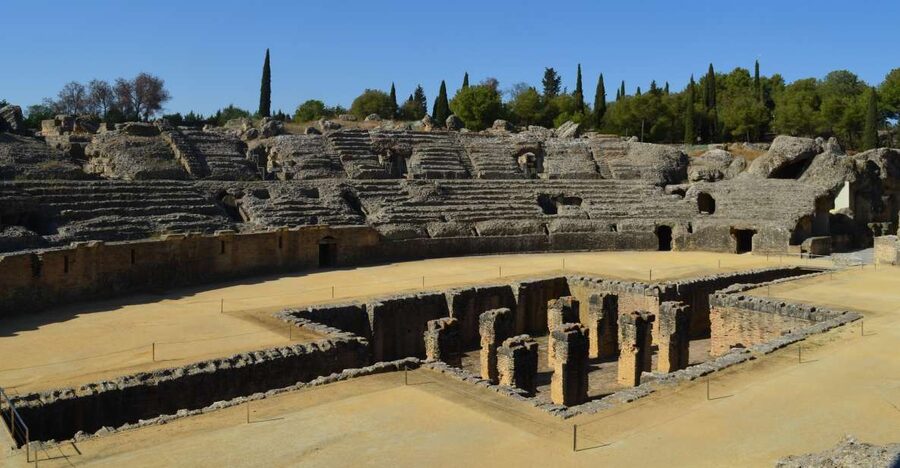
- The amphitheater’s Roman scale: It’s described as the second-largest in the Roman Empire, only behind the Colosseum.
- Game of Thrones filming connection: The tour specifically points out this arena as a filming location.
- Spanish-language live commentary: You’ll get spoken explanation while you’re standing where it happened.
Other Roman mornings out at Italica
- Historical Italica: Half-Day Guided Tour from Seville★ 4.5 · 416 reviews
- Seville: Game of Thrones and Roman Empire Italica Tour★ 4.3 · 372 reviews
- Visit to Italica Roman Ruins Tour tickets included★ 4.5 · 285 reviews
Why Italica Is Called the Cradle of Emperors
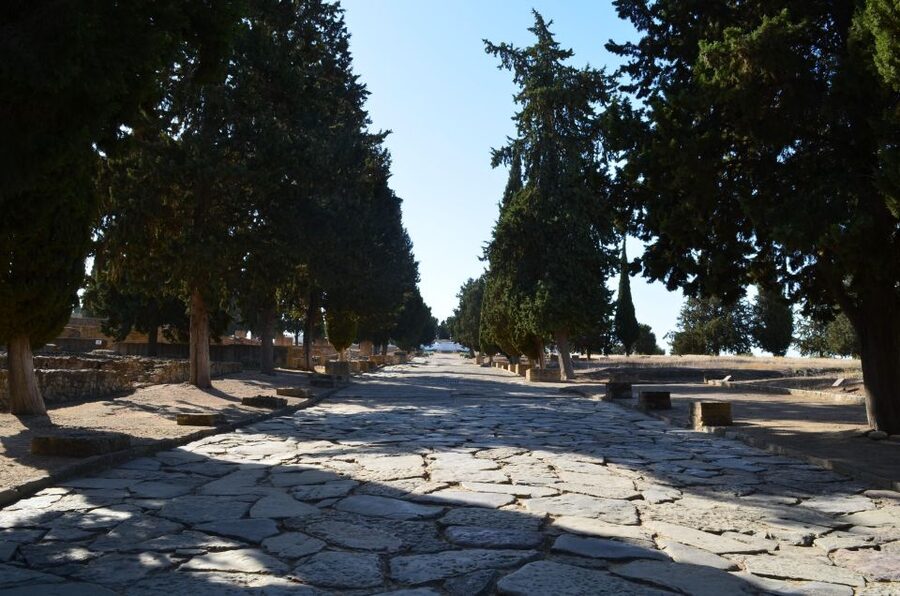
Italica was founded in 206 B.C., making it one of the earliest Roman settlements on the Iberian Peninsula. It started as a practical solution: after Rome won the Second Punic War over Carthage, Roman veterans were settled here. Many soldiers stayed, and the city grew from that mix of military and civilian life.
Then the story changes. Italica becomes “the city of emperors” because it connects to Trajan and Adriano (Hadrian), rulers linked to the Betic region. When emperors are involved, money and prestige show up in the street plan—bigger public spaces, better buildings, and more impressive architecture. That’s what you’re seeing when you walk through the ruins.
This is why a guided visit helps: Italica isn’t just stones. It’s a timeline you can walk through, from veterans’ settlement to imperial splendor.
Price and What $15 Really Buys You
The tour price is $15 per person, and that’s mainly paying for a live, Spanish-language guide over about 120 minutes. You’re not just buying “access to ruins.” You’re buying interpretation—so you understand what you’re looking at instead of guessing.
One important detail: monument entry rules depend on where you’re from. The tour notes that entry is free for EU citizens, but not included for non-EU citizens. So if you’re visiting from outside the EU, budget a bit more for the site ticket. In practice, you’re still likely to feel the value because a good guide can save you time and confusion inside a large archaeological space.
Also, the tour is described as suitable for all audiences, which usually means the guide work is geared toward clarity, not technical lectures. That’s a strong match if you want history you can actually absorb in a short window.
Getting There: Conjunto Arqueológico de Itálica, Red Flag Meet-Up
The tour starts at the Conjunto Arqueológico de Itálica. Your meet-up is simple: the guide will be at the entrance with a red flag so you can spot the group right away.
The practical win here is less uncertainty at the start. Italica is an archaeological enclosure, and it’s easy to waste time trying to find the right entrance or the right path. A flagged meet-point keeps you from doing the “where is everyone?” dance.
If you’re coming with mobility needs, the tour is listed as wheelchair accessible, which matters because many archaeological sites can be uneven. Still, on-site conditions can vary, so if you have a specific chair or walking aid, it’s smart to be ready for some real-ground surfaces.
Still deciding? A few more Seville picks worth a look.

What You’ll See Inside the Roman Enclosure
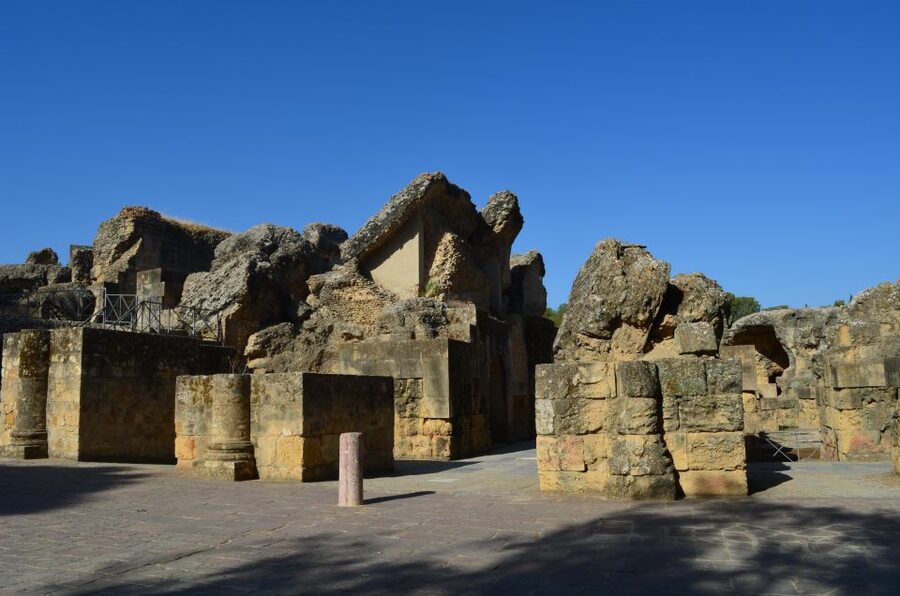
This is a guided tour inside the archaeological enclosure, and the emphasis is on understanding how the city worked. The tour description points to great mansions and public buildings, so you’re not limited to one type of ruin.
As you walk, you’ll hear the city’s evolution: Italica began as a settlement for Roman veterans after major conflict, then expanded when imperial influence brought larger construction projects. The guide’s job is to connect the dots—why there’s a place for civic life here, why certain areas feel more “important,” and what those structures likely meant day to day.
Two building categories are specifically highlighted in the tour info:
- Domus and major residences: big private homes that reflect wealth and social standing.
- Public works, including larger hot springs (Roman baths) and other civic spaces.
Even if you’ve read about Roman life before, a guide can help you see patterns—how Roman cities mixed practical utilities with status symbols. That’s what turns “ruins” into a living city in your head.
The Big Highlight: The Amphitheater (and the Game of Thrones Connection)
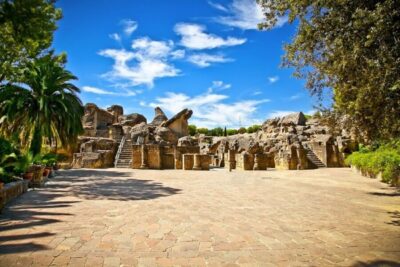
If you do just one thing with your time, make it the amphitheater. The tour explicitly calls it out and notes a Game of Thrones filming link—meaning the arena isn’t only famous for Roman engineering, it’s also part of modern screen history.
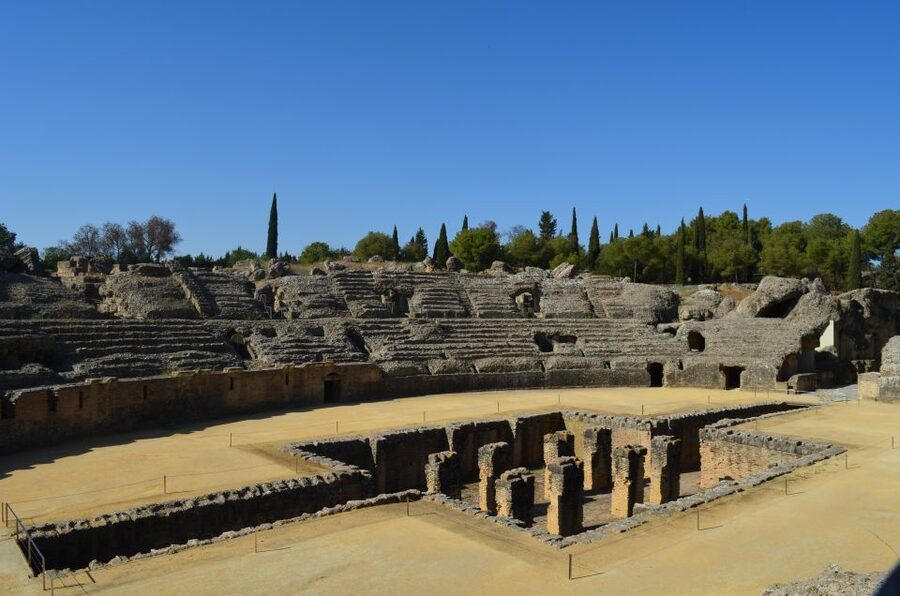
Size matters here. The amphitheater is described as the second largest in the Roman Empire, behind the Colosseum in Rome. That claim changes how you should look at the site. You’re not just seeing “a big ruin.” You’re standing in a structure designed to impress crowds with scale and acoustics.
Roman amphitheaters were central to public life—an arena for spectacle and communal energy. When you’re there, you can start noticing how seating and sightlines would work, even without everything intact. A good guide will help you imagine movement: how people entered, where events took place, and why the design was so effective for mass gatherings.
And then the tour brings in that pop-culture angle. Whether you’re a Game of Thrones fan or not, it’s a helpful hook. It gives your brain an easy reference point while you study the architecture like an engineer, not just like a tourist.
How the Roman Baths and Public Buildings Fit the Story
Italica isn’t presented as a single monument stop. It’s about a whole civic system, and that’s why the description includes important public buildings and hot springs.
Roman baths weren’t only about hygiene. They were social hubs—places where people discussed news, settled relationships, and spent time as a community. When the tour notes larger hot springs, it hints that Italica wasn’t a backwater. It had the infrastructure of a serious city, with amenities that matched imperial expectations.
This matters for your visit because it changes how you interpret ruins around you. If you understand baths and civic buildings as “daily life and social life,” the stones feel more immediate. They stop being background and become part of a routine.
Tips to Get the Most From 1.5 Hours
You only have about 120 minutes, so you’ll want to work smart. Here’s how I’d approach it so you come away feeling you learned something real.
First, keep your questions ready for the guide. The tour is focused on customs in different buildings, so ask what differs between a residence and a civic space, or what the guide thinks you should notice first in the amphitheater.
Second, plan your pace. A short tour is great, but it can tempt you to rush to photos. Slow down when you reach the biggest landmarks. That’s where your understanding clicks, especially if the guide explains the city’s imperial turning point.
Third, wear comfortable shoes. Archaeological enclosures can involve uneven ground and lots of walking. You’ll be moving between ruins, not sitting in one classroom.
Finally, if you’re visiting in hot weather, treat water like part of the plan. You’ll likely be walking under open sky near major structures.
Who This Tour Fits Best
This experience is recommended for all audiences, and the structure supports that. If you’re traveling with mixed interests—someone wants Roman facts, someone else wants the famous filming connection—Italica manages both.
You’ll likely get the most value if:
- You want Roman context without reading a guidebook for hours.
- You only have a short window (about 1.5 hours) and still want the top highlight.
- You prefer tours in Spanish and want spoken explanations on-site.
If you’re the type who loves long museum sessions with lots of time per room, you might wish you had more hours. But as a focused, high-impact introduction to Italica, this format is hard to beat.
Should You Book This Italica Tour?
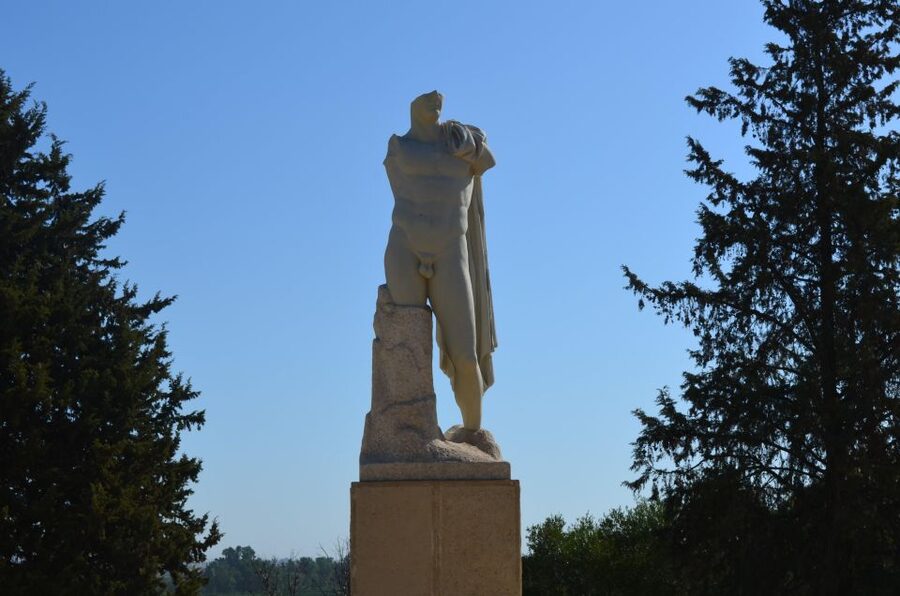
I think you should book it if you want a clear, guided Roman overview and you care about understanding what you’re seeing—not just collecting photos. The value is strongest when the guide’s explanations help you read the city: veterans’ beginnings, the imperial boom with Trajan and Adriano, and the scale of the amphitheater.
Also, the amphitheater highlight plus the Game of Thrones link makes it easier to stay engaged, even if you’re not a hardcore Roman-architecture person.
One reason to hesitate is the entry-ticket nuance. If you’re a non-EU citizen, monument entry is not included, so check your total cost before you commit. If you’re EU, the pricing feels especially straightforward.
If you show up ready to listen and walk with purpose, this tour is a very efficient way to experience why Italica became the Roman world’s “city of emperors.”
FAQ
How long is the Italica tour?
The guided tour lasts approximately 120 minutes.
What’s included in the price?
You get a guided tour in Spanish inside the archaeological enclosure.
Is the entrance ticket included?
Entrance is listed as free for EU citizens, but it is not included for people outside the EU.
What language is the guide?
The tour guide provides the tour in Spanish.
Where do we meet?
You’ll meet at the Conjunto Arqueológico de Itálica entrance, and the guide will be holding a red flag.
Is the tour wheelchair accessible?
Yes, the activity is listed as wheelchair accessible.
Can I cancel for a refund?
Yes. It’s listed as free cancellation up to 24 hours in advance for a full refund.
More City Tours in Seville
- Seville: City Sightseeing Hop-On Hop-Off Bus Tour
★ 4.0 · 4,633 reviews - Seville: Highlights City Bike Tour
★ 4.8 · 2,168 reviews - City Sightseeing Seville Hop-On Hop-Off Bus Tour
★ 4.0 · 1,782 reviews - Seville: Relaxing City Bike Tour with a Tour Guide
★ 4.8 · 1,588 reviews - Seville: Small-Group City Highlights Walking Tour
★ 5.0 · 1,204 reviews
More Tour Reviews in Seville
- Seville: Live Flamenco Dancing Show Ticket at the Theater
★ 4.7 · 16,396 reviews - Seville: Alcázar, Cathedral & Giralda Skip-the-Line Tour
★ 4.8 · 11,525 reviews - Seville: 1-Hour Guadalquivir River Sightseeing Eco Cruise
★ 4.2 · 10,281 reviews - Seville: Setas de Sevilla Entry Ticket
★ 4.6 · 8,901 reviews - Seville: Cathedral, Giralda & Alcazar Entry With Guided Tour
★ 4.6 · 8,560 reviews
Roman Seville: More of Italica
- From Seville: Italica Roman City & Medieval Monastery Tour
★ 4.5 · 1,051 reviews - Historical Italica: Half-Day Guided Tour from Seville
★ 4.5 · 416 reviews - Seville: Game of Thrones and Roman Empire Italica Tour
★ 4.3 · 372 reviews - Visit to Italica Roman Ruins Tour tickets included
★ 4.5 · 285 reviews - Seville: Italica Roman Ruins City Tour
★ 4.2 · 147 reviews
Just added to the Seville list




Itálica Roman Ruins, compared.
 ★ 4.5Italica Roman City & Medieval Monastery TourFrom $461,051 reviews
 ★ 4.5Historical Italica: Half-Day Guided Tour from SevilleFrom $47416 reviews
 ★ 4.3Game of Thrones and Roman Empire Italica TourFrom $21372 reviews
 ★ 4.5Visit to Italica Roman Ruins Tour tickets includedFrom $19285 reviews
 ★ 4.2Italica Roman Ruins City TourFrom $21147 reviews
 ★ 4.4Italica Roman City TourFrom $51139 reviews
 ★ 4.9Half-Day Guided Bike Trip to ItalicaFrom $53126 reviews
 ★ 5.0Private hald day tour to the historic roman city of ItalicaFrom $9343 reviews
Browse the lists this tour appears in