
Review · ITáLICA ROMAN RUINS
Itálica: 3-Hour City of Emperors Tour from Seville
Itálica is the Roman plot twist. In just 3 hours, you get a guided walk through one of the Peninsula’s important early Roman cities, with Game of Thrones film connections and real surviving ruins that still feel powerful.
What I like most is the focus: you see the amphitheatre up close, then you move on to the everyday side of Roman life with thermal baths and mosaics. I also love the small-group pace, plus the hassle-free round-trip transfers from Seville.
One thing to consider: your time in the amphitheatre can vary a bit depending on how the group is split by language on the day. If you’re tightly scheduling your sightseeing, that’s worth keeping in mind.
In This Review
- Key highlights at a glance
- From Seville pickup to the ruins: what makes the transfers worth it
- The Roman city story: Trajan, Adriano, and the rise-and-fall thread
- Itálica’s amphitheatre: where GoT fantasy meets real stone
- Thermal baths and mosaics: Roman everyday life, not just monuments
- Thermal baths
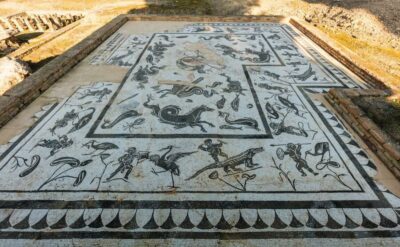
- Mosaics
- The 3-hour format: how to get the most out of every stop
- The guides: clarity, patience, and keeping it moving
- Price and value: why $59 can be a fair deal
- Who should book this Itálica tour (and who should skip it)
- Should you book Itálica from Seville?
- FAQ
- How long is the Itálica tour from Seville?
- What does the tour price include?
- Are food and drinks included?
- Where do I meet the guide in Seville?
- Is this a small-group tour?
- What languages are offered?
- Is the tour suitable for people with mobility impairments?
Key highlights at a glance
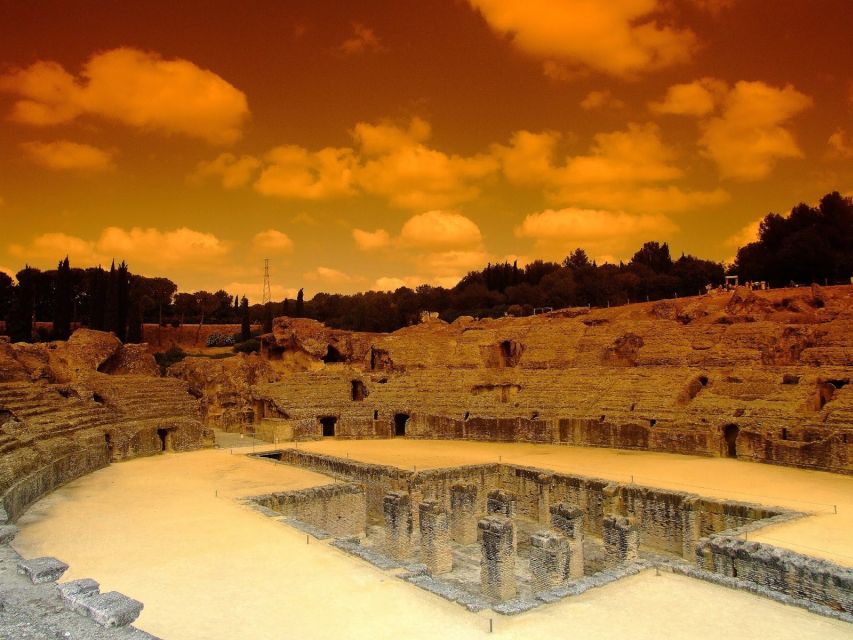
- Amphitheatre with Game of Thrones filming ties, set inside a well-preserved Roman bowl
- Thermal baths and mosaics that make Roman life feel less like a textbook
- Small group up to about 7 people, which usually means more questions and less rushing
- Round-trip transport from Seville plus entrance ticket and skip-the-line entry
- Guides in Spanish and English, so you can follow the story without translating in your head
Other Roman mornings out at Italica
- Historical Italica: Half-Day Guided Tour from Seville★ 4.5 · 416 reviews
- Seville: Game of Thrones and Roman Empire Italica Tour★ 4.3 · 372 reviews
- Visit to Italica Roman Ruins Tour tickets included★ 4.5 · 285 reviews
From Seville pickup to the ruins: what makes the transfers worth it
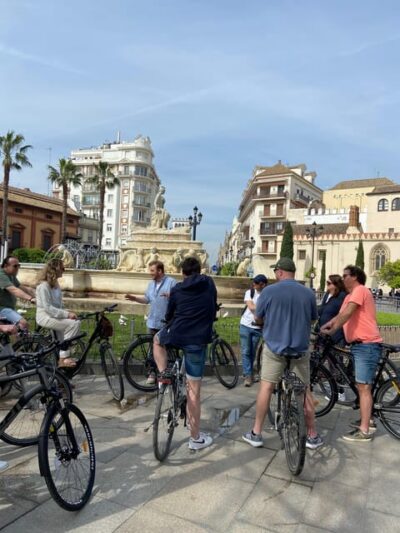
Starting in Seville with round-trip transport is a big deal here. It’s about 7 km outside Seville, so you’re not dealing with parking stress, bus confusion, or timing your own entrance. Instead, you meet at the City Expert shop corner of Av. de la Constitución and Calle Miguel Mañara, then you’re off.
The tour is built around being efficient without feeling like a cattle drive. You’ll spend your energy looking at stonework, not hunting for your stop or standing in a ticket line. If you’re visiting Seville and want your archaeology time to feel like a focused outing, this structure makes it easy.
Also, the group size is limited (the listing notes up to 7 participants). In plain terms: fewer voices, more chances to hear the guide clearly, and a better chance of keeping a steady pace through the site.
The Roman city story: Trajan, Adriano, and the rise-and-fall thread
The best tours don’t just show you ruins. They connect them into a story you can actually remember on your walk back to your hotel. This one does that by framing Itálica as a city with a long arc: growth, influence, and eventual decline.
As you walk through the archaeological area, your guide explains how Itálica became important enough to be tied to major emperors—Trajan and Adriano (Hadrian) come up in the narrative. That’s the kind of name-dropping that’s usually empty on tours. Here, the point is to help you understand why a Roman city mattered: power, planning, and money moved along lines you can still trace in stone.
You’ll also hear about major political and economic decisions connected to the site in the 3rd century BC, which gives you a wider angle than the typical “Roman = big arena” pitch. Even if you’re not a Roman-history expert, that context helps you see why the city is laid out the way it is and why certain buildings were worth constructing and maintaining.
One useful thing: you’ll be walking through the same kind of space people once navigated—streets and public areas—so the story doesn’t stay stuck in one building. You’re not just looking at an amphitheatre; you’re learning how the city functioned around it.
Itálica’s amphitheatre: where GoT fantasy meets real stone
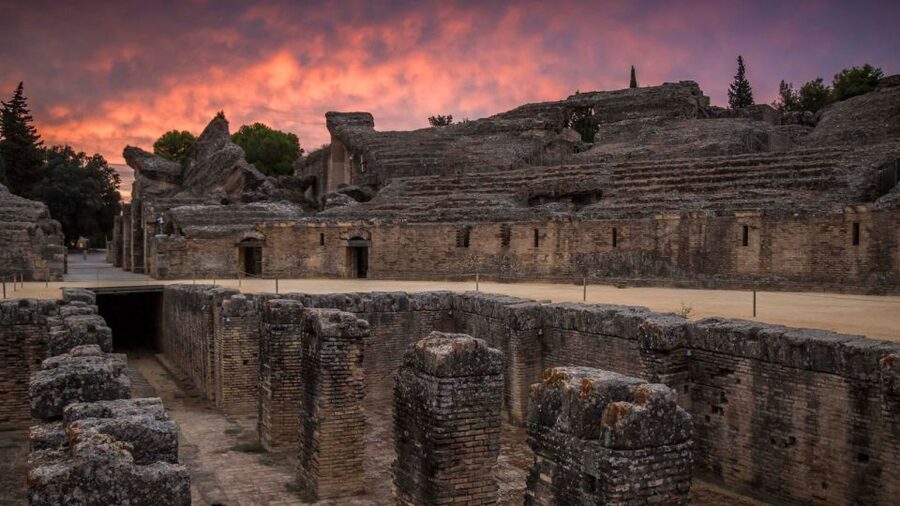
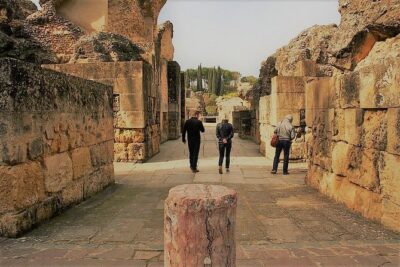
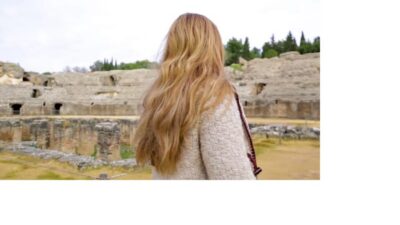
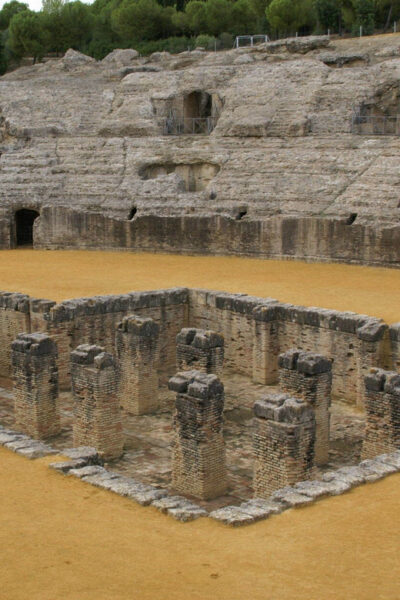
The amphitheatre is the headline for a reason. It’s one of the best-preserved parts of the site, and it’s tied to Game of Thrones filming—so you’re not only seeing Roman architecture, you’re also seeing a set location that TV audiences instantly recognize.
What you should pay attention to:
- The way the structure holds shape despite age
- The seating tiers that once held crowds for public spectacles
- How the scale feels different when you’re standing in the bowl, not staring at it from a distance
This is where the tour can be most emotional for pop-culture fans and most satisfying for history lovers at the same time. Roman entertainment wasn’t random; it was political theater, social glue, and a way to project control. When your guide connects the building to that idea, it clicks fast.
Timing can be the only weak spot. One review mentioned that, in a mixed-language situation, the amphitheatre time got squeezed to roughly 10 minutes, which is not enough if the amphitheatre is what you came for. If your must-do is the amphitheatre, do yourself a favor: keep your phone camera ready, and go in expecting a quick-but-good look. Then, if you’re hungry for more, plan extra time later on your own.
Still deciding? A few more Seville picks worth a look.



Thermal baths and mosaics: Roman everyday life, not just monuments
Roman ruins can go two ways: either it’s all big columns and “look how grand” energy, or it becomes oddly human. Here, the tour leans human—especially with thermal baths and mosaics.
Thermal baths
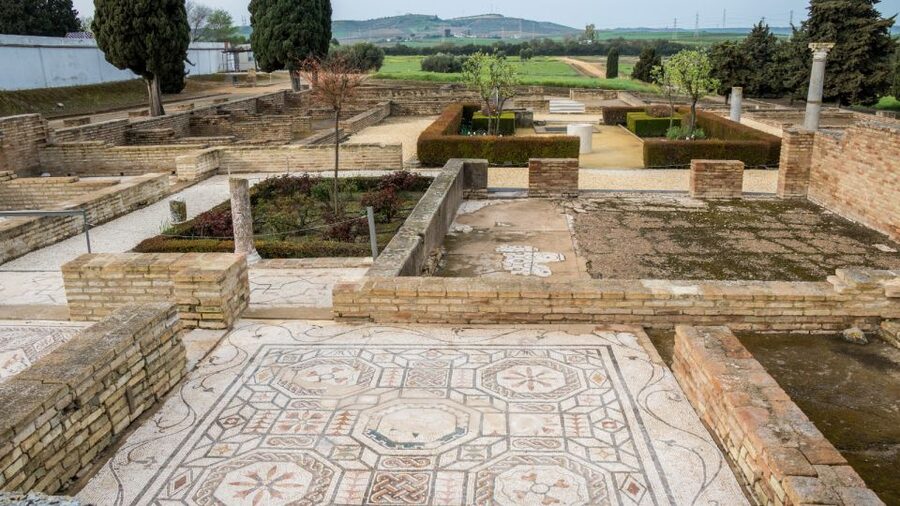
The baths are important because they show you how Romans spent time—socially, not just practically. You get a sense of Roman comfort: heating, routines, and spaces built for conversation as much as hygiene.
What helps on a tour like this is the guide’s pacing. You don’t just walk past walls; you learn what you’re looking at and why it mattered to daily life. That turns the site from scenery into a place that functioned.
Mosaics
The mosaics are called out as a highlight, and that tracks. Mosaics are one of those things where your brain goes: this detail doesn’t belong in a pile of rubble. Even when the design is partly worn, you can still appreciate the care in the workmanship.
On a good guide-led visit, you don’t just see the patterns—you learn what they signaled, how decoration fit into status, and why Romans cared about surfaces as much as buildings. It’s also a nice break from the amphitheatre intensity: baths and mosaics invite slower attention.
Note on behavior: touching exhibits isn’t allowed, so keep your hands to yourself and let the detail live on the ground where it belongs.
The 3-hour format: how to get the most out of every stop
A 3-hour tour is a sweet spot for archaeology. Long enough to get a real story. Short enough to still enjoy Seville afterward.
Still, there’s a timing reality you should understand. This site isn’t enormous compared to larger Roman complexes, so you’re not going to feel like you got “everything.” You’re getting the best narrative stops: amphitheatre first, then thermal baths and mosaics, plus enough street-walk context to connect it all.
A practical way to plan:
- Wear comfortable shoes. The site involves walking on uneven, outdoor surfaces.
- Bring breathable clothing. Andalusian heat can hit fast, even when you’re only out for a short window.
- If you care about photos or want a careful look at mosaics, don’t talk to the group too long before your next stop. The tour is designed to keep movement steady.
One more small tip from the way the day can go: if you love browsing souvenirs, don’t assume you’ll have loads of time for it. The amphitheatre is a magnet, and the schedule can feel tight at the end.
The guides: clarity, patience, and keeping it moving
A tour’s quality lives and dies with the guide, and this one has a strong track record in that department. Names like Carmen, Maria, and Lara come up in recent experiences, and the common thread is a friendly, structured approach: explain the site, keep the group moving, and still answer questions.
I also like when guides add practical extras for the rest of your day in Seville. One recent account highlighted that the guide offered advice on where to go and what to try in Seville after the tour. That’s the kind of bonus that actually helps you plan.
One thing to be aware of: because the tour runs in Spanish and English, you may end up in a group where languages mix. When that happens, repetition can slow the flow—especially if you want maximum time in one key spot like the amphitheatre.
Price and value: why $59 can be a fair deal
At $59 per person, you’re paying for more than a guide walking you around. You’re getting:
- Round-trip transport from Seville
- Skip-the-ticket-line entry
- A live guide
- An organized route that fits into a 3-hour window
That value adds up if you’d otherwise spend time and money sorting out transport and entry on your own. Also, skip-the-line matters more at popular sites than people expect, because it protects your time in daylight and keeps the tour on schedule.
What’s not included: food and drinks. So don’t assume you’ll be “fed” during those three hours. If you’re doing this on a day you also plan a big lunch (or a tapas crawl), just adjust your timing. A snack before you go or something after you return makes the whole day feel smoother.
Who should book this Itálica tour (and who should skip it)
This tour is a great match if you:
- Want an easy win from Seville without logistics headaches
- Prefer a small group and a guided narrative instead of wandering alone
- Care about both Roman ruins and a bit of pop-culture context
- Have limited time and want the highlights—amphitheatre, thermal baths, mosaics—covered well
It’s also ideal for families. One experience specifically noted patience with young children, and that’s a sign the guide is used to adjusting the pace without losing the story.
You should probably skip it if:
- You have mobility impairments, since it’s listed as not suitable for that
- You need maximum time in only one place. With just 3 hours, you’ll get an overview of the key sites, not an all-day museum-style experience
If you’re the type who wants to read every plaque and linger for hours, you might pair this with some independent time later. But if your goal is to get oriented fast and see the big beats, this fits nicely.
Should you book Itálica from Seville?
If you want Roman ruins with a clear story—and you’d rather not fuss with transport—this is a smart booking. The combination of round-trip transfers, entrance ticket, and a small-group guided route makes it good value for a short visit.
I’d especially recommend it if the amphitheatre is on your “must see” list and you’re a Game of Thrones fan. Just go in knowing the time inside the amphitheatre can be tight on some days, especially if the group’s language mix affects the schedule.
Skip it only if accessibility is a concern for you, or if you want a slow, self-paced tour where you can spend half a day at one stop.
FAQ
How long is the Itálica tour from Seville?
The tour lasts 3 hours.
What does the tour price include?
It includes round-trip transport from Seville, a guide, and an entrance ticket. It also includes skip-the-ticket-line entry.
Are food and drinks included?
No. Food and drinks are not included.
Where do I meet the guide in Seville?
Meet at the City Expert shop at the corner of Av. de la Constitución and Calle Miguel Mañara.
Is this a small-group tour?
Yes. It’s listed as a small group limited to up to 7 participants.
What languages are offered?
The live guide offers Spanish and English.
Is the tour suitable for people with mobility impairments?
No. It’s listed as not suitable for people with mobility impairments.
More Tours in Seville
- Seville: Alcázar, Cathedral & Giralda Skip-the-Line Tour
★ 4.8 · 11,525 reviews - Seville: Cathedral, Giralda & Alcazar Entry With Guided Tour
★ 4.6 · 8,560 reviews - Seville: Priority Access Cathedral, Giralda & Alcázar Tour
★ 4.8 · 7,563 reviews - Seville: Alcázar and Cathedral Entry Ticket and Guided Tour
★ 4.6 · 5,056 reviews - Seville: City Sightseeing Hop-On Hop-Off Bus Tour
★ 4.0 · 4,633 reviews
More Tour Reviews in Seville
- Seville: Live Flamenco Dancing Show Ticket at the Theater
★ 4.7 · 16,396 reviews - Seville: Alcázar, Cathedral & Giralda Skip-the-Line Tour
★ 4.8 · 11,525 reviews - Seville: 1-Hour Guadalquivir River Sightseeing Eco Cruise
★ 4.2 · 10,281 reviews - Seville: Setas de Sevilla Entry Ticket
★ 4.6 · 8,901 reviews - Seville: Cathedral, Giralda & Alcazar Entry With Guided Tour
★ 4.6 · 8,560 reviews
Roman Seville: More of Italica
- From Seville: Italica Roman City & Medieval Monastery Tour
★ 4.5 · 1,051 reviews - Historical Italica: Half-Day Guided Tour from Seville
★ 4.5 · 416 reviews - Seville: Game of Thrones and Roman Empire Italica Tour
★ 4.3 · 372 reviews - Visit to Italica Roman Ruins Tour tickets included
★ 4.5 · 285 reviews - Seville: Italica Roman Ruins City Tour
★ 4.2 · 147 reviews
Just added to the Seville list






Itálica Roman Ruins, compared.
 ★ 4.5Italica Roman City & Medieval Monastery TourFrom $461,051 reviews
 ★ 4.5Historical Italica: Half-Day Guided Tour from SevilleFrom $47416 reviews
 ★ 4.3Game of Thrones and Roman Empire Italica TourFrom $21372 reviews
 ★ 4.5Visit to Italica Roman Ruins Tour tickets includedFrom $19285 reviews
 ★ 4.2Italica Roman Ruins City TourFrom $21147 reviews
 ★ 4.4Italica Roman City TourFrom $51139 reviews
 ★ 4.9Half-Day Guided Bike Trip to ItalicaFrom $53126 reviews
 ★ 5.0Private hald day tour to the historic roman city of ItalicaFrom $9343 reviews
Browse the lists this tour appears in