

Review · BARRIO SANTA CRUZ & JEWISH QUARTER
Seville Jewish Quarter Small-Group Walking Tour: History & Gems
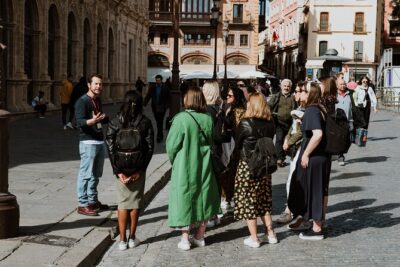
Jewish Seville survives mostly in stories. This 90-minute, small-group walk (max 10 people) puts medieval context around the streets most visitors rush past, with a guide telling the who-and-why behind what’s still standing. I like that it keeps the group tight enough for real questions, not just a lecture.
I also like the way the route is built like a guided puzzle. You start at the Alcázar area to frame Seville’s medieval layers, then move square by square toward the Jewish Quarter sites, ending at the Church of Santa María la Blanca. The best part is storytelling that helps you connect the dots even when physical traces are scarce.
One thing to consider: there isn’t much left to see. You will need your imagination at times, because the Jewish Quarter’s surviving footprints are limited.
In This Review
- Key reasons this walk works
- Entering Seville’s Medieval World Without Getting Lost
- Why the Alcázar surroundings are a smart first step
- Plaza squares that teach you how the neighborhood was organized
- Jardines de Murillo: the calm break that clarifies the story
- Calle Cano y Cueto: where the past becomes physical (and unusual)
- Santa María la Blanca: finishing at a key landmark
- The human factor: guides and the difference they make
- What you’ll learn here: context over spectacle
- Price and value: $32.65 for a focused 90-minute story
- Logistics that make this easy to fit into a first visit
- My take: should you book this Jewish Quarter walk?
- FAQ
- FAQ
- How long is the Seville Jewish Quarter small-group walking tour?
- How many people are in the group?
- Is the tour in English?
- Where do I meet the guide and where does the tour end?
- Do I need to buy tickets for the stops?
- Do I get a mobile ticket?
- How soon should I book?
- What’s the cancellation policy?
- Are service animals allowed and is it suitable for most travelers?
Key reasons this walk works
- Max 10 people means you hear everything and can ask questions.
- Free admission at each stop keeps the experience focused on the walk and context.
- A route that starts at the Alcázar area helps you understand Seville before you enter Santa Cruz.
- Plazas and the synagogue story thread move the narrative forward instead of repeating general facts.
- Calle Cano y Cueto shows the rare physical remains, including an archaeological site beneath a parking area.
- Guides with strong personal style have been praised for humor, pacing, and clear explanations (names like Miguel, Marta, José, Clara, Valentín, and others have led past departures).
Deeper into the lanes of Santa Cruz
- Seville: Small-Group Jewish Quarter Discovery Walking Tour★ 4.9 · 499 reviews
- VIP Guided Seville Alcazar Pre-Opening, Cathedral & Old Town★ 5.0 · 191 reviews
- Santa Cruz Jewish Quarter Guided Tour in Seville★ 4.0 · 144 reviews
Entering Seville’s Medieval World Without Getting Lost
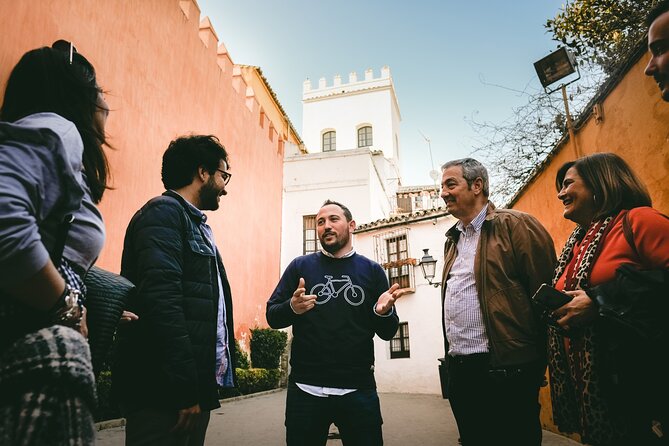
This tour is designed for one main job: orient you in Seville’s historic center while telling the Jewish story in context. You get about 1.5 hours of walking and listening that doesn’t feel like sprinting, because the group size is capped at 10.
The meeting point is the Monumento a la Inmaculada Concepción, in Casco Antiguo (C. Joaquín Romero Murube). You finish at the Church of Santa María la Blanca (C. Sta. María la Blanca, 5). That start-to-finish arc matters. It helps you understand the city as a connected whole, not a checklist of plaques.
Why the Alcázar surroundings are a smart first step
You begin near the Alcázar area, at the Plaza Patio de Banderas. The Alcázar is described as a royal palace used since Moorish times, so starting here gives you a medieval baseline before you step into the Jewish Quarter story.
This first stop is a quick set-up, but it’s more useful than it sounds. If you only jump straight into Santa Cruz, you miss the bigger picture of how different communities and eras shaped the same streets. Here, the guide frames Seville’s medieval history so the later stops land harder.
It’s also a practical warm-up: you’re not committing to long walking right from the gate. The first segment is about 15 minutes, so you settle in with time to get your bearings and tune your ears to the guide’s rhythm.
Plaza squares that teach you how the neighborhood was organized
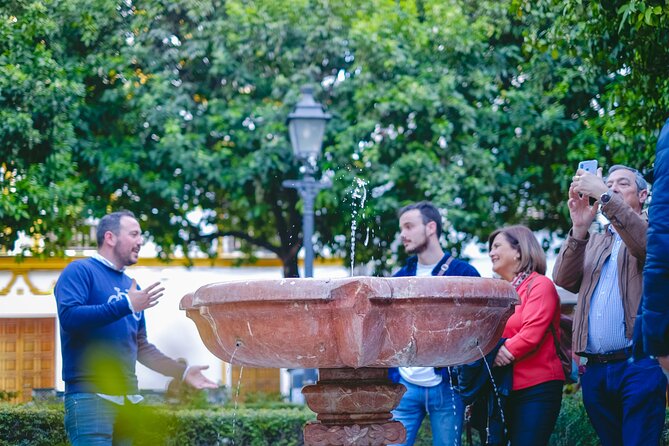
From the Alcázar area you head to Plaza de Doña Elvira. This is one of those small squares that feels local even in the middle of a historic district. The point of this stop is history tied to the communities that inhabited the area, so you learn how the Jewish Quarter fits into the fabric of surrounding neighborhoods.
Then you move to Plaza de Santa Cruz. This stop focuses on the past synagogues of the city. Even if you can’t see a synagogue standing in the modern streetscape, you still get a sense of where the story belonged. The square setting matters because it gives you a pause-point: you can look around, absorb the scale of the streets, and let the guide explain what used to be there.
These plaza stops work best if you slow down for a moment. Look left, look right. Imagine daily life in a place you’re seeing in snapshot form now. The tour is built to make that mental shift feel doable.
Seville on foot, a few more walks




Jardines de Murillo: the calm break that clarifies the story
Next is Jardines de Murillo. Yes, you’ll be walking through gardens. But the real value here is how the greenery gives your brain a reset between history beats.
The tour uses this section to explain the neighborhood’s story as you pass through. In other words, the guide isn’t just reciting dates. They’re shaping a sense of place—how communities moved through the city, and how the Jewish Quarter’s story connects to nearby spaces.
This stop is also about pacing. With 15 minutes per stop, you’re getting regular story anchors. That pacing shows up in the feedback too, with people praising guides for keeping a relaxed tempo and answering questions as you go.
Calle Cano y Cueto: where the past becomes physical (and unusual)
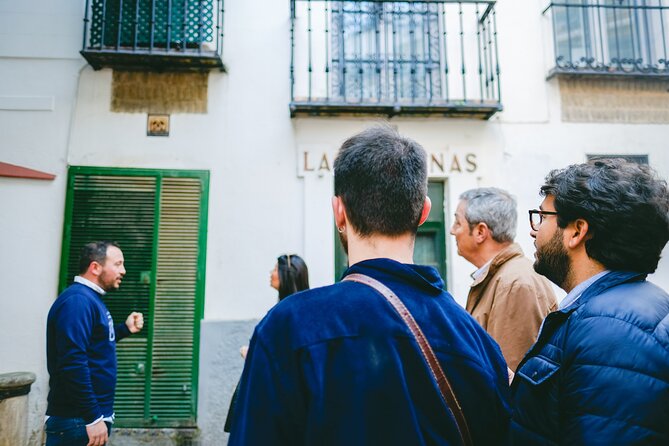
Then you hit Calle Cano y Cueto, and this is the part that tends to stick with people. This stop is described as the only physical remains of the medieval Jewish Quarter, found at an archaeological site inside an underground car park.
That alone makes the experience different. You’re not just hearing history from street corners. You’re seeing how the past can survive in unexpected modern infrastructure. It’s also a reminder of how thin the visible layer of history can be, even when the story is big.
A quick note on expectations: because there are limited remnants, your guide will likely help you “see” what you can’t fully reconstruct from buildings alone. This is where the tour can feel most profound if you’re okay with learning through context, not only through monuments.
Santa María la Blanca: finishing at a key landmark
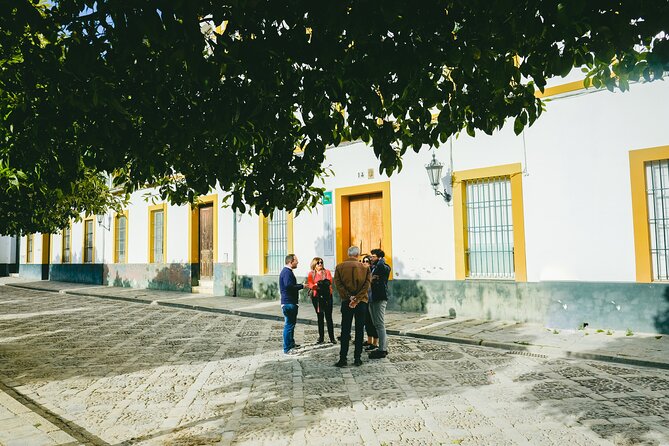
The tour ends at the Iglesia de Santa María la Blanca. Finishing there gives the walk a built-in conclusion point—one last landmark for the guide to tie your understanding together.
It’s a strong way to close because it doesn’t end in an anonymous street. You end in front of a recognizable church, with the Jewish Quarter story already placed in your mental map. If you’ve been paying attention during the plaza and garden stops, this final location helps you connect Seville’s layers instead of treating them as separate eras.
The human factor: guides and the difference they make
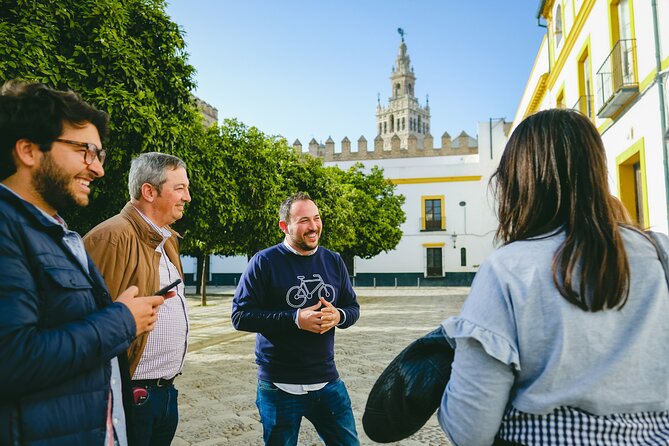
What really elevates this walk is the style of the guide. Many past departures have been led by guides who get praised for personality, pace, and strong Q&A, with names that include Miguel, Marta, José, Guillermo, Clara, Valentín, Barbara, Carmen, and others.
You’ll see a few recurring themes in how these guides lead:
- Clear explanations that keep the facts understandable
- A relaxed walking pace that gives you time to ask questions
- Storytelling that helps you imagine the Jewish Quarter when physical evidence is limited
- In some cases, humor and even small language moments, such as Ladino expressions
If you care about a guide who can handle follow-up questions without rushing you out, this tour’s small size is a big part of why it works.
What you’ll learn here: context over spectacle
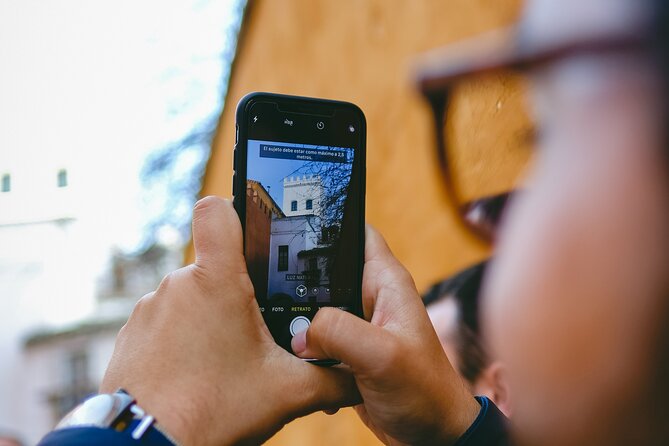
This isn’t a tour built around big-ticket monuments. It’s built around understanding. The Jewish Quarter’s medieval presence in Seville is treated as a story you reconstruct from places, plazas, and the rare physical remains you can still locate today.
That approach shows up in how the tour handles difficult history. You may hear about the expulsion of Jews from the city and how little survived afterward. That part can be heavy. It’s not a feel-good walk.
At the same time, some people leave wishing there was more room for everyday life during the community’s peak. That’s a fair consideration. The route is structured to cover what can be supported by remaining traces and place-based evidence, so the balance may tilt toward the tragedy and aftermath rather than day-to-day scenes.
If you come wanting both sides—place-based story plus a sense of daily rhythms—you’ll probably appreciate the way your guide gives context along the way, even if the tour can’t conjure vanished details where records and remnants are limited.
Price and value: $32.65 for a focused 90-minute story
At $32.65 per person for about 1 hour 30 minutes, the value is mostly in the guidance and organization. You’re not paying for multiple paid admissions at the stops; each listed stop is marked as free admission.
That matters because it keeps your spending aligned with the real product: a guided walking format with explanations at multiple points. With a small group capped at 10, you’re also buying interaction, not just proximity.
You can think of it as paying for a guided way to make sense of an area where much of the Jewish Quarter survives more in memory and layout than in intact architecture. If that’s what you want from Seville, this price feels reasonable.
Logistics that make this easy to fit into a first visit
This is an English-language small-group tour with a mobile ticket. Confirmation is received at booking, and it’s near public transportation, which helps if you’re juggling plans across the city.
The route is short and segmented. Each stop is about 15 minutes, so you’re not committing to one long slog without breaks. Service animals are allowed, and most travelers can participate.
One practical mindset: arrive a few minutes early so you start calmly. Then during the walk, don’t try to photograph your way through every explanation. Let the guide’s story do its job while you orient your eyes to the streets.
My take: should you book this Jewish Quarter walk?
Yes, if you want a guided Seville that pays attention to the layers people often skip. This tour is especially worth booking if:
- You like small groups and real Q&A
- You want context about Jewish Seville even when physical evidence is limited
- You’re okay using imagination to understand what’s no longer visible
- You enjoy guides who bring story, pacing, and even a bit of humor into history
Maybe skip or pair it with something else if:
- You’re hoping for lots of intact monuments to see up close
- You want a stronger focus on everyday Jewish culture during the heyday rather than the expulsion and aftermath
FAQ
FAQ
How long is the Seville Jewish Quarter small-group walking tour?
It lasts about 1 hour 30 minutes.
How many people are in the group?
The tour has a maximum of 10 travelers.
Is the tour in English?
Yes, it’s offered in English.
Where do I meet the guide and where does the tour end?
The meeting point is near Monumento a la Inmaculada Concepción on C. Joaquín Romero Murube in Casco Antiguo. The tour ends in front of Iglesia de Santa María la Blanca on C. Sta. María la Blanca, 5.
Do I need to buy tickets for the stops?
Admission tickets for the listed stops are marked as free.
Do I get a mobile ticket?
Yes. The tour includes a mobile ticket.
How soon should I book?
On average, it’s booked about 17 days in advance.
What’s the cancellation policy?
Free cancellation is available up to 24 hours in advance for a full refund.
Are service animals allowed and is it suitable for most travelers?
Service animals are allowed, and most travelers can participate.
More Tour Reviews in Seville
- Seville: Live Flamenco Dancing Show Ticket at the Theater
★ 4.7 · 16,396 reviews - Seville: Alcázar, Cathedral & Giralda Skip-the-Line Tour
★ 4.8 · 11,525 reviews - Seville: 1-Hour Guadalquivir River Sightseeing Eco Cruise
★ 4.2 · 10,281 reviews - Seville: Setas de Sevilla Entry Ticket
★ 4.6 · 8,901 reviews - Seville: Cathedral, Giralda & Alcazar Entry With Guided Tour
★ 4.6 · 8,560 reviews
More Walks Through the Old Town
- Seville: Small-Group City Highlights Walking Tour
★ 5.0 · 1,204 reviews - Cultural Walking Tour of Seville Monumental
★ 5.0 · 861 reviews - Seville: Tapas, Taverns, and History Walking Tour
★ 4.9 · 676 reviews - Seville: Tapas, Taverns and History Guided Walking Tour
★ 4.9 · 515 reviews - Seville: Small-Group Jewish Quarter Discovery Walking Tour
★ 4.9 · 499 reviews
Further Into Santa Cruz
- Seville: Small-Group Jewish Quarter Discovery Walking Tour
★ 4.9 · 499 reviews - VIP Guided Seville Alcazar Pre-Opening, Cathedral & Old Town
★ 5.0 · 191 reviews - Santa Cruz Jewish Quarter Guided Tour in Seville
★ 4.0 · 144 reviews - Seville: 1-Hour Walking Tour Barrio de Santa Cruz
★ 4.5 · 131 reviews - Private Tour Jewish Quarter, center and Plaza de España
★ 5.0 · 127 reviews
Just added to the Seville list






Barrio Santa Cruz & Jewish Quarter, compared.
 ★ 4.9Small-Group Jewish Quarter Discovery Walking TourFrom $29499 reviews
 ★ 5.0VIP Guided Seville Alcazar Pre-Opening, Cathedral & Old TownFrom $138191 reviews
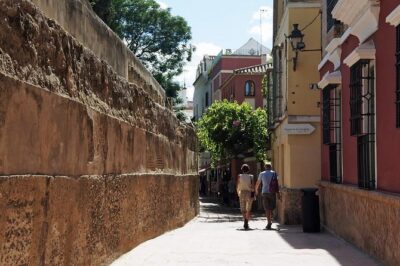 ★ 4.0Santa Cruz Jewish Quarter Guided Tour in SevilleFrom $24144 reviews
 ★ 4.51-Hour Walking Tour Barrio de Santa CruzFrom $18131 reviews
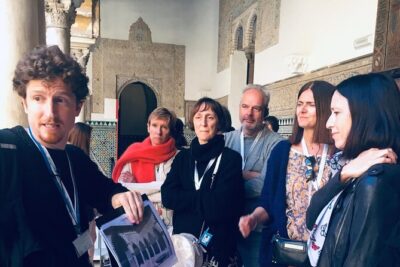 ★ 5.0Private Tour Jewish Quarter, center and Plaza de EspañaFrom $189127 reviews
 ★ 5.0Small Group Jewish Quarter Tour with Tapas & DrinksFrom $59119 reviews
 ★ 5.0Seville Jewish Quarter Small Group Tour with Tapas and DrinksFrom $71110 reviews
 ★ 5.0Seville Former Jewish Quarter Walking Tour: Santa CruzFrom $18105 reviews
Browse the lists this tour appears in