
Review · BARRIO SANTA CRUZ & JEWISH QUARTER
Seville : Jewish Quarter & Santa Cruz Walking Tour
Seville’s past shows up in every corner. This 2-hour Jewish Quarter & Santa Cruz walking tour strings together the sights you want and the stories that make them click, from Plaza de Santa Cruz to a former synagogue site. I like the guide-led focus that turns landmarks into real context, and I also like that the route goes beyond only the top photo stops into quieter lanes and courtyards.
One thing to consider: it’s a tight loop for 2 hours, so you’ll get the most if you like moving at a steady walking pace and hearing the plan quickly rather than lingering for long stretches in one place.
In This Review
- Key highlights you’ll feel on the walk
- Entering Seville’s Jewish Quarter in just two hours
- Meeting at Hotel Fernando III and getting oriented fast
- Plaza de Santa Cruz: where different communities met
- Plaza de los Refinadores: Sephardic walls, gates, and street-level clues
- Iglesia de Santa María la Blanca: a former synagogue with Murillo inside
- Plaza Alfaro and Calle Susona: courtyards and narrow lanes that feel lived-in
- Plaza de Doña Elvira and Plaza del Triunfo: charm plus viewpoints
- Don Juan, Torre del Oro, and Puerta de Jerez’s major transformation
- Universidad de Sevilla in the old Royal Tobacco Factory
- Parque de María Luisa: ending where the city breathes
- What makes the guides shine: anecdotes, pace, and real help
- Price and value: why $22 can feel like more than a quick walk
- Who this tour suits best (and who might want to go solo)
- Should you book the Seville Jewish Quarter & Santa Cruz tour?
- FAQ
- Where does the tour start?
- How long is the Seville Jewish Quarter & Santa Cruz walking tour?
- What languages are available?
- Is the tour wheelchair accessible?
- What is included in the price?
- Is there free cancellation?
Key highlights you’ll feel on the walk
- A tight 2-hour route that still covers big-name stops and lesser-visited lanes
- Former synagogue time at Iglesia de Santa María la Blanca, with art by Murillo
- Sephardic quarter walls and gates discussed around Plaza de Los Refinadores
- Courtyards and narrow streets at Plaza Alfaro and Calle Susona
- Panoramic viewpoint stops around Plaza del Triunfo for the city’s wider picture
- Strong guide rapport, with guides like Sarah, Francesco, Pedro, Rossella, and Virginia noted for being prepared and very helpful
Deeper into the lanes of Santa Cruz
- Seville: Small-Group Jewish Quarter Discovery Walking Tour★ 4.9 · 499 reviews
- VIP Guided Seville Alcazar Pre-Opening, Cathedral & Old Town★ 5.0 · 191 reviews
- Santa Cruz Jewish Quarter Guided Tour in Seville★ 4.0 · 144 reviews
Entering Seville’s Jewish Quarter in just two hours
Seville’s old neighborhoods don’t work like a museum grid. Streets bend, plazas open up, and the meaning of a building changes across centuries. That’s exactly why this tour is such a good use of limited time: you get a guided path that links Jewish heritage in Seville to the city’s later identities, including moments from the Spanish Golden Age and major international events.
For $22 per person and a 2-hour format, the value is mostly about interpretation. You’re not paying to watch a person point at things. You’re paying for a guide to explain why these particular places matter and how Seville’s multicultural past shaped daily life and architecture.
The tour is built as a walking experience, with public transport used when it helps save time (unless you choose an option that changes that mix). If you’re the type who likes “see it, then understand it,” this works well.
Meeting at Hotel Fernando III and getting oriented fast
The tour begins at the front of Hotel Fernando III, near Calle San José 37. That matters more than it sounds. A good start location means fewer minutes spent guessing where you’re supposed to meet, and you can get into the neighborhood right away.
Once you’re on the route, the guide’s job becomes orientation. You’ll get a clear sense of how Santa Cruz fits into the larger story of Seville, and how to navigate the area even after the tour ends. Many visitors eventually return to this part of the city on their own; the tour is a shortcut to understanding what you’re walking through.
Also, the guide can chat in multiple languages: English, Spanish, French, and Italian. So if you’re trying to keep things comfortable rather than pushing through a second language, you’ll have options.
Plaza de Santa Cruz: where different communities met
You start at Plaza de Santa Cruz, and the tour frames it as a place shaped by coexistence. Instead of treating the square like a pretty stop, the guide focuses on what the square represented in the past and why it became part of Seville’s shared urban identity.
This is one of the best early moments of the walk, because it sets your expectations. When you understand that communities overlapped here, you notice details you might otherwise miss: the way streets feed into plazas, the feeling of a neighborhood that evolved over time, and the sense that major buildings weren’t isolated from everyday life.
Even if you already know Seville’s basics, Santa Cruz is where the “why” starts. It’s a good mental warm-up before you move into the more specific landmarks tied to Jewish life.
Seville on foot, a few more walks

Plaza de los Refinadores: Sephardic walls, gates, and street-level clues
Next you head to Plaza de los Refinadores, where the tour discusses the walls and gates of the Sephardic quarter. This stop is useful because it turns geography into a story. You’re not just reading about boundaries; you’re learning how they show up in the urban layout.
Seville’s Jewish heritage is often talked about in broad strokes. Here, you get something more practical: how built borders affected movement, where entry points mattered, and how a quarter’s identity could be expressed through access and architecture. That kind of explanation makes the rest of your self-guided wandering easier.
If you’re the kind of traveler who likes historical cause-and-effect, this is where you’ll feel it. The guide’s local familiarity helps you understand why certain streets feel like corridors and why some plazas work as natural meeting points.
Iglesia de Santa María la Blanca: a former synagogue with Murillo inside
One of the tour’s core highlights is Iglesia de Santa María la Blanca, a former synagogue. This is where the experience gets real in a visual way, because you’re stepping into a building tied to Jewish worship and later transformation.
The tour also points out works by Murillo inside the church. That’s important because it connects the site to the wider artistic story of Seville, not just to one religious chapter. You’ll come away with a better sense of how Seville reused sacred spaces over time, and how art and architecture can reflect shifting eras.
A practical note: churches and historic interiors can vary a lot in visitor flow. Plan to stay close to your group so you don’t lose the thread of the guide’s explanation. If you’re short on time, this kind of guided “what you’re looking at” moment is a major reason to book.
Plaza Alfaro and Calle Susona: courtyards and narrow lanes that feel lived-in
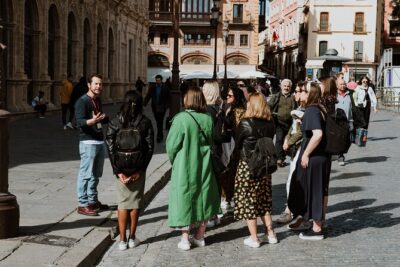
After the synagogue stop, the tour moves into Plaza Alfaro and then Calle Susona, two areas that help you feel the neighborhood scale. The guide focuses on courtyards and narrow streets, giving you context for the history of the Jewish community in Seville through spatial details you can actually experience on foot.
Courtyards matter here because they show how daily life didn’t always revolve around big streets and landmark facades. In places like this, your experience is shaped by transitions: from open plaza space into tighter corridors, then back into a courtyard rhythm that changes the sound and the pace of walking.
Calle Susona is the kind of street that rewards attention. The tour helps you notice patterns and understand that narrow doesn’t mean unimportant. It often means practical, shaped by how people lived, traveled, and gathered.
Plaza de Doña Elvira and Plaza del Triunfo: charm plus viewpoints
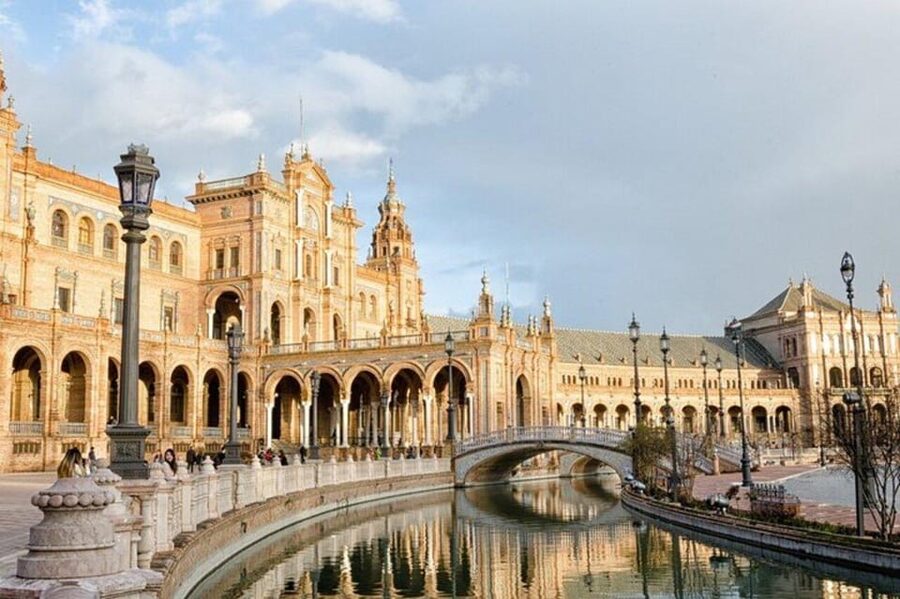
The route then includes Plaza de Doña Elvira and Plaza del Triunfo, which add two things visitors often want: charm and a chance to look out over the city.
Plaza de Doña Elvira is presented as a place to slow down a bit and appreciate the neighborhood vibe. Then Plaza del Triunfo brings in the wider view. When a guide adds a viewpoint stop, it helps you “reset” your mental map. After walking tight streets, seeing the city from above makes everything feel connected instead of scattered.
This is also where good guiding becomes visible. In a crowded city, it’s easy to feel like you’re always moving. Viewpoint moments give your brain a place to store what you just learned.
Don Juan, Torre del Oro, and Puerta de Jerez’s major transformation
One of the stops includes a statue of Don Juan, tying into the Spanish Golden Age theme. You’ll then move toward Puerta de Jerez, where the tour brings in the city’s transformation during the Ibero-American Exposition. That storyline matters because it shows how Seville’s identity kept shifting, even as historic quarters remained part of the city’s core.
The tour also references the Torre del Oro, which helps anchor your understanding of Seville’s river-world and landmark geography. For many visitors, Torre del Oro is a “seen it once” sight. Here, it becomes a marker that supports the explanation rather than just being a photo.
Puerta de Jerez is a strong pivot point in the walk: you’re leaving the older neighborhood mood and moving toward a more public, civic-scale Seville. If you want a tour that doesn’t freeze time in the medieval past, this is the kind of stop that keeps the story moving.
Universidad de Sevilla in the old Royal Tobacco Factory
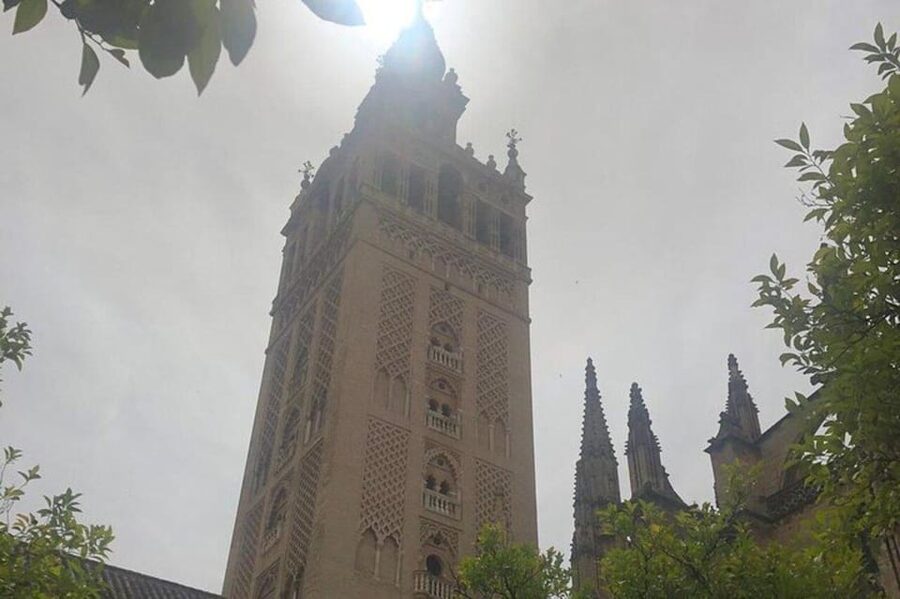
Next you reach Universidad de Sevilla, located in the old Royal Tobacco Factory. This is an effective stop because it shows how Seville repurposed major industrial-era buildings into new roles.
Even if you’re not a campus person, the “literary connections” angle gives you a different way to look at the building. It ties the place to how Seville communicates, studies, and preserves ideas, not just how it trades and builds.
This is also where the tour’s advice component becomes useful. A guide who understands the city can suggest what to pair with your next day: where to wander for atmosphere and which streets might connect to your interests—art, architecture, or that “city that feels like a story” feeling.
Parque de María Luisa: ending where the city breathes
The tour concludes at Parque de María Luisa, designed by French architect Forestier. This is a smart ending location because it gives you a transition out of dense streets into open air.
Parks are often treated like a break, but on a tour like this they do more than rest your feet. The guide explains the park’s history and ties it to the Ibero-American Exhibition, which helps you remember that Seville’s big events left physical fingerprints across the city.
If you’ve got evening plans, this stop is also practical. You’re finishing near an area many people use as a springboard for dinner strolls, and the park setting gives your last takeaway a calm feeling.
What makes the guides shine: anecdotes, pace, and real help
The tour is only as good as the guide, and here the track record looks strong. Guides including Sarah, Francesco, Pedro, Rossella, and Virginia have been highlighted for being prepared, sharing lots of useful anecdotes, and adjusting to what the group wanted to see.
One pattern stands out: the guides don’t just tell facts; they help you connect the dots. That’s why people come away saying they saw things they wouldn’t have found alone. In a city where everything is photographed, interpretation is the differentiator.
Another practical win is responsiveness. In some cases, guides have been praised for meeting guests right in front of where they’re staying, and for being attentive to requests during the walk. If you’re nervous about navigating a historic area, that kind of “we’ve got you” energy makes a difference.
Price and value: why $22 can feel like more than a quick walk
At $22 per person for about 2 hours, this tour is priced like a budget-friendly add-on. But the value comes from how much thinking the guide puts into the route and the explanation.
You’re getting:
- A guided walk through key Seville Jewish heritage sites and nearby landmarks
- A focus on both the Jewish past and the later city transformations
- Advice about what else to do in Seville beyond this specific route
- Options for different languages, plus a private-group possibility
Also, the tour includes help from the team to book tickets for desired visits. Historic sites sometimes have entry rules, so having assistance reduces stress and helps your plan stay intact.
If you’ve only got one day for neighborhoods like Santa Cruz, or if you’ve seen Seville’s major monuments already and want meaning, this is the kind of tour that turns your remaining time into something memorable.
Who this tour suits best (and who might want to go solo)
This tour fits best if you:
- Like walking tours that give you historical context, not just sightseeing checklists
- Want a route that covers multiple landmark types in a short window (synagogue site, courtyards, viewpoints, major gates)
- Prefer a guide to help shape your choices for the rest of your trip
It may be less ideal if you:
- Want to spend long stretches inside churches or prefer a slow, unstructured pace
- Expect a full-day deep dive into one building or one neighborhood section
For many first-time visitors, it’s a strong “orientation + meaning” combo. For repeat visitors, it’s a way to catch a side of Seville that’s easy to miss without context.
Should you book the Seville Jewish Quarter & Santa Cruz tour?
If you’re aiming for value, clarity, and a route that makes Seville’s Jewish heritage feel connected to the rest of the city, I’d book this. The big reason is the mix: major landmarks plus the smaller streets and courtyards that give the neighborhood its real atmosphere.
Choose it especially if you want a guide who can answer questions and tailor the experience. With guides praised for preparation and helpfulness, and with the itinerary focused on a tight set of high-impact stops, this is the kind of tour that helps you leave Seville not just with photos, but with understanding.
FAQ
Where does the tour start?
You meet your guide at the front of Hotel Fernando III, near Calle San José 37.
How long is the Seville Jewish Quarter & Santa Cruz walking tour?
It lasts about 2 hours.
What languages are available?
The live tour guide is available in English, Spanish, French, and Italian.
Is the tour wheelchair accessible?
Yes, the tour is wheelchair accessible.
What is included in the price?
It includes a guided walking tour, plus public transport depending on the option you select, along with help from the team to book tickets for desired visits.
Is there free cancellation?
Yes. You can cancel up to 24 hours in advance for a full refund.
More Tour Reviews in Seville
- Seville: Live Flamenco Dancing Show Ticket at the Theater
★ 4.7 · 16,396 reviews - Seville: Alcázar, Cathedral & Giralda Skip-the-Line Tour
★ 4.8 · 11,525 reviews - Seville: 1-Hour Guadalquivir River Sightseeing Eco Cruise
★ 4.2 · 10,281 reviews - Seville: Setas de Sevilla Entry Ticket
★ 4.6 · 8,901 reviews - Seville: Cathedral, Giralda & Alcazar Entry With Guided Tour
★ 4.6 · 8,560 reviews
More Walks Through the Old Town
- Seville: Small-Group City Highlights Walking Tour
★ 5.0 · 1,204 reviews - Cultural Walking Tour of Seville Monumental
★ 5.0 · 861 reviews - Seville: Tapas, Taverns, and History Walking Tour
★ 4.9 · 676 reviews - Seville: Tapas, Taverns and History Guided Walking Tour
★ 4.9 · 515 reviews - Seville: Small-Group Jewish Quarter Discovery Walking Tour
★ 4.9 · 499 reviews
Further Into Santa Cruz
- Seville: Small-Group Jewish Quarter Discovery Walking Tour
★ 4.9 · 499 reviews - VIP Guided Seville Alcazar Pre-Opening, Cathedral & Old Town
★ 5.0 · 191 reviews - Santa Cruz Jewish Quarter Guided Tour in Seville
★ 4.0 · 144 reviews - Seville: 1-Hour Walking Tour Barrio de Santa Cruz
★ 4.5 · 131 reviews - Private Tour Jewish Quarter, center and Plaza de España
★ 5.0 · 127 reviews
Just added to the Seville list




Barrio Santa Cruz & Jewish Quarter, compared.
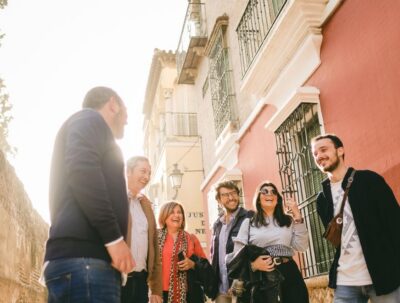 ★ 4.9Small-Group Jewish Quarter Discovery Walking TourFrom $29499 reviews
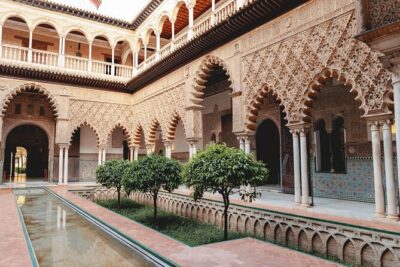 ★ 5.0VIP Guided Seville Alcazar Pre-Opening, Cathedral & Old TownFrom $138191 reviews
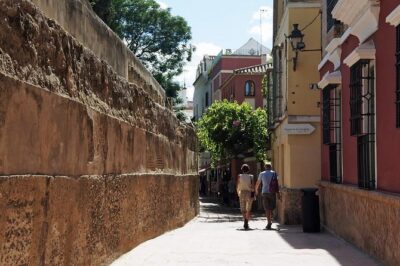 ★ 4.0Santa Cruz Jewish Quarter Guided Tour in SevilleFrom $24144 reviews
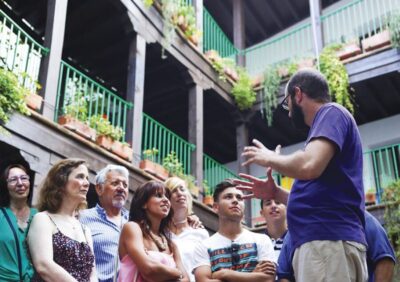 ★ 4.51-Hour Walking Tour Barrio de Santa CruzFrom $18131 reviews
 ★ 5.0Private Tour Jewish Quarter, center and Plaza de EspañaFrom $189127 reviews
 ★ 5.0Small Group Jewish Quarter Tour with Tapas & DrinksFrom $59119 reviews
 ★ 5.0Seville Jewish Quarter Small Group Tour with Tapas and DrinksFrom $71110 reviews
 ★ 5.0Seville Former Jewish Quarter Walking Tour: Santa CruzFrom $18105 reviews
Browse the lists this tour appears in