
Review · PRIVATE SEVILLE TOURS
Private Tour with Local Guide to know the Seville Essential
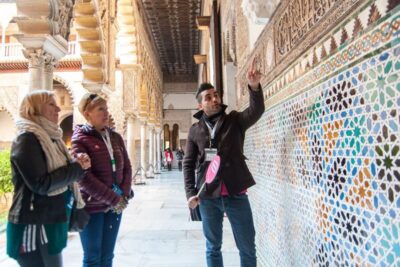
Seville makes sense with a plan. This private Seville Essential route strings together the city’s biggest landmarks with the backstory that turns photos into understanding. I like that it’s private (only your group), and I like that you start at Archivo de Indias so the rest of Seville feels connected instead of random.
The other big win: your guide is Lorena, and you’ll get practical tips plus context you’d never piece together on your own. One thing to consider is pickup: it’s offered only if you’re in the immediate vicinity of the area to be visited, so don’t assume it works for far-off cruise or port locations.
In This Review
- Key things that make this tour worth your time
- Getting your bearings at Archivo de Indias (and why this start matters)
- Royal Alcázar: the oldest palace still in use (and why you should notice the mix)
- Catedral de Sevilla: biggest Gothic cathedral, and the mosque layer beneath
- Barrio Santa Cruz: narrow lanes, orange blossoms, and the real historical context
- Murillo Gardens and Prado de San Sebastián: the quiet power of “small” stops
- Plaza de España and Parque de María Luisa: architecture you can feel
- Real Fábrica de Tabacos: where work, power, and opera history intersect
- Real Alcázar’s neighbors: Saint Telmo’s Baroque and the Golden Tower’s shifting roles
- The Guadalquivir river walk: Arabic names and the story of Elcano
- Price and logistics: what you’re really paying for
- Who this tour suits best (and who might want something else)
- Should you book this Seville Essential route?
- FAQ
- How long is the Seville Essential private tour?
- What is the meeting point for the tour?
- Is the tour offered in English?
- How much does it cost?
- Does the price include monument entrance fees?
- Is pickup available?
- What does skip-the-lines priority access mean here?
- What’s the cancellation policy?
- What are the Archivo de Indias opening hours listed for this tour period?
- Can service animals join the tour?
Key things that make this tour worth your time
- Start at Archivo de Indias so the Indies trade story explains Seville’s power and wealth
- Skip-the-lines, with priority access through a local guide for the places that require tickets
- Catedral de Sevilla plus the old mosque layer around the minaret location
- Santa Cruz context that gives the Jewish quarter its proper historical weight
- Plaza de España and Maria Luisa Park in one smooth sweep, with ceramic and garden details
- Real Fabrica de Tabacos history tied to women workers and the inspiration behind Carmen
More days with a guide of your own
- Seville: Private City Tour by Eco Tuk Tuk★ 4.8 · 963 reviews
- Seville Private Walking Tour with Alcazar & Cathedral Tickets★ 5.0 · 332 reviews
- Private Walking Tour Alcazar and Cathedral in Sevilla★ 5.0 · 172 reviews
Getting your bearings at Archivo de Indias (and why this start matters)
You begin at the Archivo General de Indias, Av. de la Constitución, at the main entrance fountain (Casco Antiguo, 41004). This is a smart starting point because it sets the theme of Seville: the city didn’t just build pretty streets. It built an empire of paperwork, trade, and shipping routes.
This building was originally a former merchants’ market house, and today it’s where much of the documentation about trade with the Indies is kept. Even with only about 10 minutes at Stop 1, you get the key idea: Seville’s architecture, wealth, and even its confidence make more sense when you understand the role it played in sending goods across the ocean.
If you want the day to feel efficient, show up a little earlier. The tour is scheduled for about 3 to 4 hours, and you’ll spend much of that time walking. A fast start helps you stay relaxed rather than hustling through your must-sees.
Royal Alcázar: the oldest palace still in use (and why you should notice the mix)
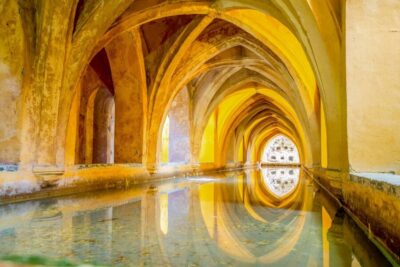
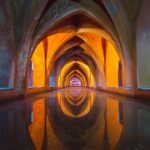
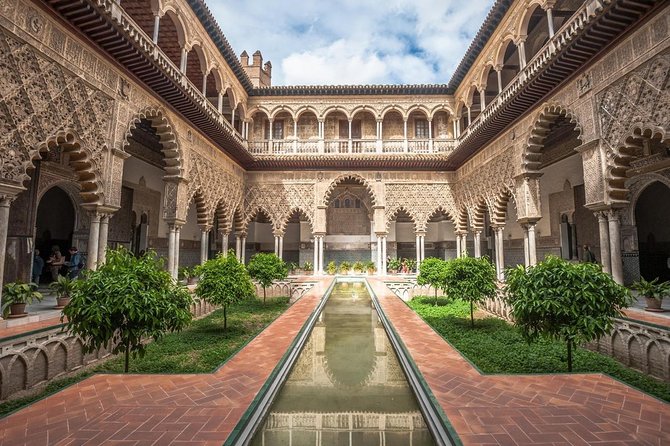
Next up is the Real Alcázar de Sevilla. This palace complex is described as the oldest royal palace still in use in Europe, with royal court life established here since the 10th century. That’s not just a fun fact. It’s your guide to what you’ll actually see: the complex is a mix of buildings from different styles and eras.
You’ll get about 10 minutes here—short, but enough to know what you’re looking at before the details blur together. Think of this stop as a “pattern detector” lesson. With a local guide, you’ll notice transitions between eras and styles instead of treating it like one long hallway of history.
One practical note: entrance fees are not included. The tour offers priority access with your guide, so you may spend less time waiting than you would on your own, but you should still plan for ticket costs if you want to go inside the palace grounds.
Catedral de Sevilla: biggest Gothic cathedral, and the mosque layer beneath
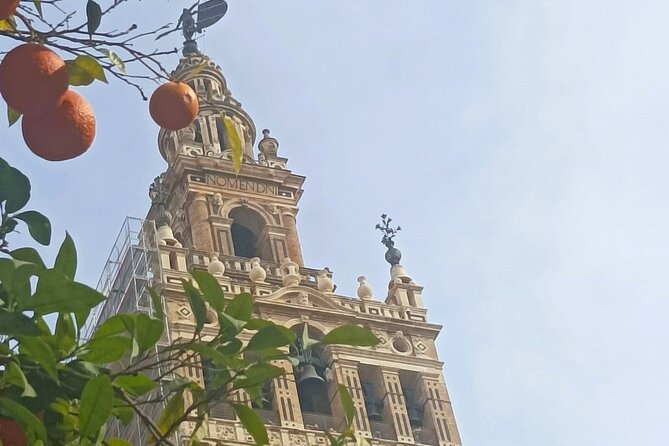
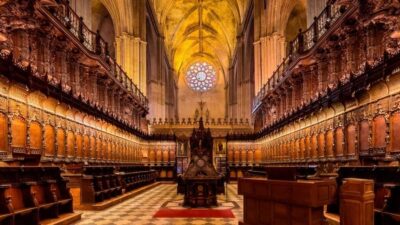
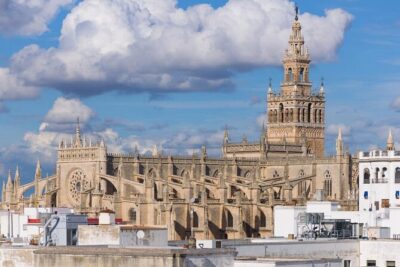
After the Alcázar, you head to the Catedral de Sevilla (Santa Maria de la Sede). This is where the scale gets real: it’s described as the largest Gothic cathedral in the world. But the best part is what the guide connects to it.
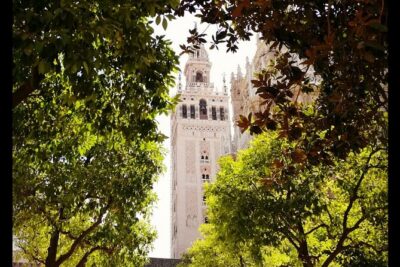
The cathedral sits on the spot where the Aljama Mosque once stood. The site is important not only for what changed, but for what still remains—especially the fact that the complex preserves the minaret of the earlier mosque.
You’ll have about 15 minutes at this stop. That’s plenty of time to get oriented on the exterior and key layout points, as long as you accept that this is an essential highlights tour, not a slow museum day.
Like the Alcázar, entrance fees are not included here too. If you’re the type who likes to linger, you might want to reserve a little extra time on a separate day for deeper cathedral time.
More days made easy by a local guide
Barrio Santa Cruz: narrow lanes, orange blossoms, and the real historical context
Now the tour softens into the charm of Barrio Santa Cruz, one of Seville’s most famous neighborhoods. You’ll get around 20 minutes here, which is the right length for walking narrow lanes, pausing at squares, and letting the “postcard streets” actually work on you.
The key difference on this tour: you don’t just get scenery. The route is designed to help you understand the neighborhood’s past, including its importance as the ancient Jewry—not always as ideal and radiant as it looks today.
In spring, the orange blossoms are a real sensory perk, but even if it’s not peak blossom season, the neighborhood still delivers. The guide’s context helps you see why people fall in love with these streets rather than just taking the same Instagram path as everyone else.
Murillo Gardens and Prado de San Sebastián: the quiet power of “small” stops
After Santa Cruz, you hit Jardines de Murillo. These gardens are located in the old orchards linked to the palace complex and are named after the painter Murillo. There’s also a specific highlight tied to local identity: the Paseo de Catalina de Ribera, a noblewoman described as important to the city.
This stop is brief—about 10 minutes—but it works as a breath. You’re resetting your brain after cathedral and palace intensity. A short garden pause is exactly what keeps a 3–4 hour tour from feeling like a checklist marathon.
Then you’ll pass by Jardines del Prado de San Sebastián. It’s now a nerve point of local transport, but the name and history matter. The description points out that this is where you probably can’t imagine the fires of the Inquisition once stood. That kind of line-from-the-past is why a local guide changes the day.
Both these garden stops are free to visit. Even so, they’re not filler. They’re the quiet places where Seville’s story has room to land.
Plaza de España and Parque de María Luisa: architecture you can feel
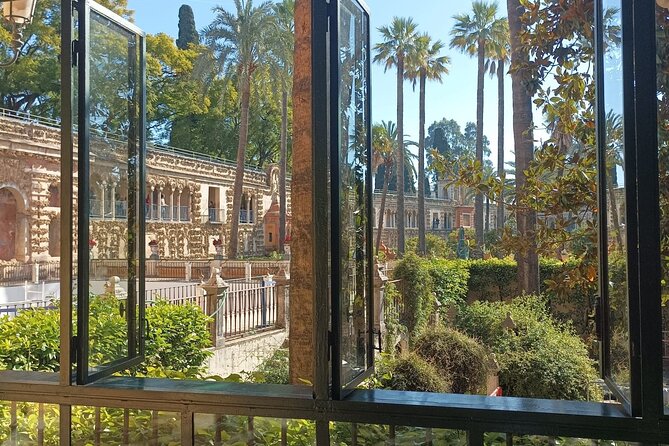
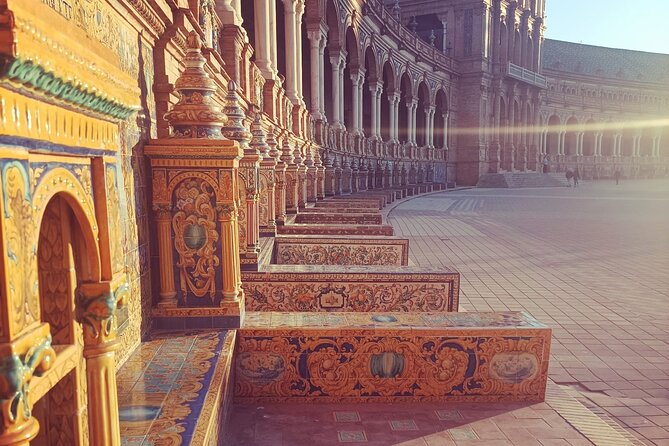
Next comes the stop most people picture already: Plaza de España. It’s described as one of the best examples of regionalist architecture and one of Seville’s best-loved monuments for locals and visitors alike.
Here’s the detail I’d point you to: you’re not just looking at buildings. You’re seeing trianera ceramics, with an extensive variety of techniques. That’s the kind of thing that’s easy to miss when you just glance and move on. With a guide, you’ll know what to look for so it’s more than a pretty panorama.
You’ll get about 20 minutes here, which is enough to walk key edges, soak up views, and understand the layout without feeling rushed.
Then you continue to Parque de María Luisa, connected through the park space in front of the Spanish Steps. This park is tied to the donation story of Infanta María Luisa de Borbón, who gave the gardens to the city at the end of the 19th century.
The park stop is around 15 minutes. It’s a solid length for photos, people-watching, and a brief rest—especially after Plaza de España’s open-air intensity.
Real Fábrica de Tabacos: where work, power, and opera history intersect
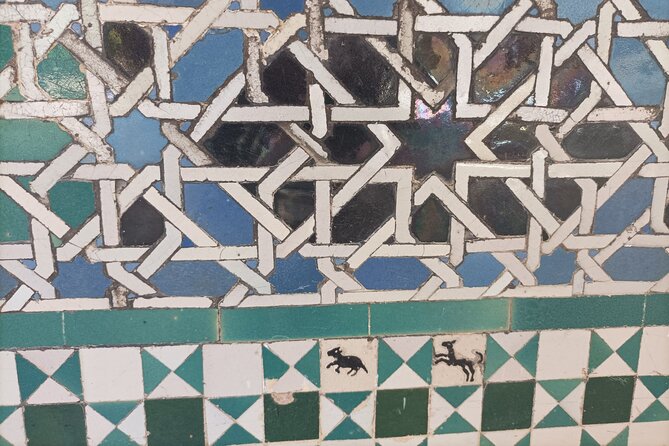
Your next landmark stop is the Real Fábrica de Tabacos. This is one of those places where Seville’s global reach shows up in architecture.
The description emphasizes that it was one of the most prolific and profitable tobacco factories on the continent, with cigars sold beyond Seville’s borders. But the best angle is the human one: the cigarette makers were brave and independent women, and their story inspired one of the most famous operas, Carmen. The description also notes they were creators of Europe’s first women’s union.
This stop is short—about 10 minutes—so don’t expect a full factory museum experience. But you will leave with the right frame. Instead of thinking, Wow, another old building, you’ll think, This is where labor and empire meet culture.
The tour lists this stop as free. Even better: when the ticket isn’t part of the deal, you can spend more energy on what your guide is telling you.
Real Alcázar’s neighbors: Saint Telmo’s Baroque and the Golden Tower’s shifting roles
As you continue, you visit the Palace of Saint Telmo, described as a Sevillian Baroque jewel. It was the residence of Infanta Maria Louise de Bourbon and her husband Antoine de Orléans, Duke of Montpensier. The design is credited to Leonardo de Figueroa, and today the palace houses the seat of the Government of Andalusia.
This is one of those “wait, that’s a palace?” moments that a highlights tour is good at. You learn who lived here and why the building matters, not just what it looks like.
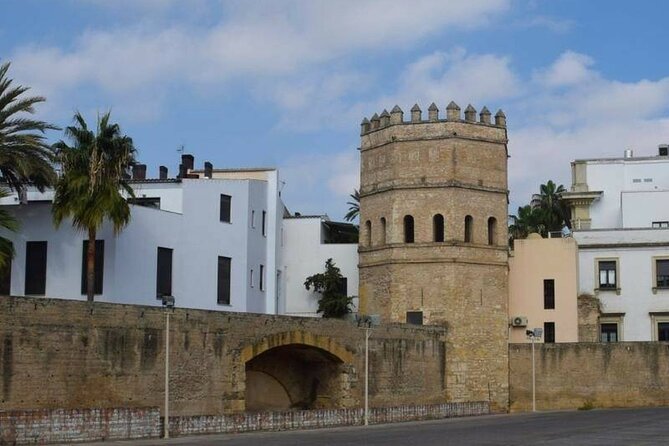
Then you finish this stretch at Torre del Oro (Golden Tower). It’s a Seville symbol built in the 12th century as a defense tower, part of the city wall. Over time, it served different roles, including jail for nobles and warehouse use.
Your time here is about 10 minutes, and the entrance fee isn’t included. Still, the value is in understanding why the tower looks the way it does and what it guarded.
The Guadalquivir river walk: Arabic names and the story of Elcano
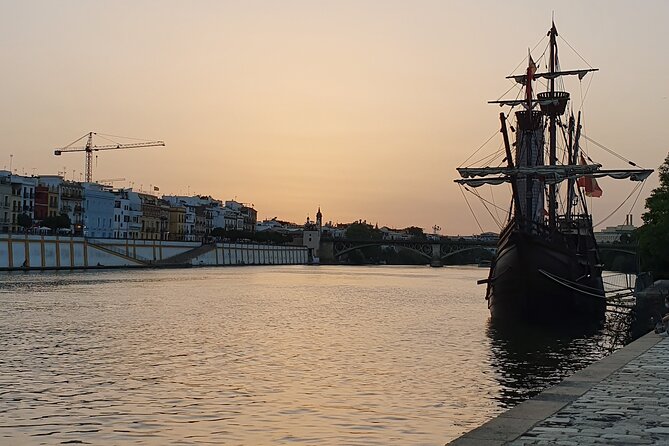
One of the best “in-between” parts of the day is the riverbank walk along what’s called Paseo Alcalde Marques del Contadero. Even with only about 15 minutes, this is where Seville connects into geography.
The route notes the Arabic name for the Guadalquivir: wadi al-kabir, translated as big river. It also points out how the river became Puerto de Indias, linking Seville’s power to movement of goods.
There’s also a navigation-and-exploration thread: the tour mentions contemplating the arrival of Elcano after more than two years of crossing at sea. Whether you know the story already or not, having a local guide tie the river to the wider world makes the walk feel purposeful.
This stop is free, so you’re paying for interpretation, not access.
Price and logistics: what you’re really paying for
The price is $312.41 per group (up to 6) for about 3 to 4 hours. That works out differently depending on your group size:
- If you fill all 6 spots, it’s roughly $52 per person.
- If it’s a smaller group, your per-person cost goes up, and you’re paying for the private benefit and guide time.
Where the value lands best is families, friend groups, and anyone who prefers a guide-led route over self-guided wandering. You’re also getting mobile tickets, English-language guidance, and priority access with a local guide for places that typically take time to enter.
What’s not included is entrance fees to monuments. So if Alcázar, Cathedral, and Torre del Oro are on your must-do list (they are on the essentials route), budget ticket costs separately.
Also, the tour notes pickup is offered only if you’re in the immediate vicinity of the area to be visited. That’s common for city-center walking tours, but it matters. There was a serious issue reported involving a pickup expectation tied to a cruise port far from the meeting point, where the guide couldn’t meet that pickup arrangement. Your takeaway: if you need a pickup, confirm what your pickup means for your exact location before you rely on it.
Who this tour suits best (and who might want something else)
This tour is ideal if you want a fast, guided hit of Seville’s top landmarks plus the “why it matters” context. It’s also a good choice if you want to start early in your trip so the city’s story forms a mental map for later self-guided exploring.
It’s less ideal if you want long ticketed time inside each monument. The itinerary times each stop fairly tightly—mostly 10 to 20 minutes—so you’ll likely want to return on a separate day for deeper time at the Alcázar and Cathedral.
Since it’s private and “only your group will participate,” it’s also a flexible option for couples and small families, assuming everyone is comfortable with walking through the historic center.
Should you book this Seville Essential route?
I’d book it if you want your Seville day to feel organized and meaningful, not like a random order of sights. Starting at Archivo de Indias gives you a storyline, and Lorena’s approach—friendliness plus strong context—makes the big stops click, especially the mix of power, religion, and daily life around the city.
Skip it or ask extra questions first if your travel plans involve a complicated pickup far from the center. Pickup expectations need to match the tour’s actual pickup area, and it’s better to clarify than to gamble.
If you’re aiming for value, the group pricing helps a lot when you have up to 6 people. Even for smaller groups, the priority access and tight context can still be worth it—just plan for monument ticket costs.
FAQ
How long is the Seville Essential private tour?
It runs about 3 to 4 hours.
What is the meeting point for the tour?
You start at Archivo de Indias, Av. de la Constitución, s/n, Casco Antiguo, 41004 Sevilla. The guide meets next to the fountain at the main entrance on avenue of the Constitution.
Is the tour offered in English?
Yes, the tour is offered in English.
How much does it cost?
It’s $312.41 per group, up to 6 people.
Does the price include monument entrance fees?
No. Entrance fees to monuments are not included.
Is pickup available?
Pickup is offered if you are in the immediate vicinity of the area to be visited.
What does skip-the-lines priority access mean here?
You get priority access with a local guide for the stops that require entry, along with a mobile ticket.
What’s the cancellation policy?
You can cancel for free up to 24 hours in advance for a full refund.
What are the Archivo de Indias opening hours listed for this tour period?
Monday through Sunday, 9:00 AM to 5:00 PM.
Can service animals join the tour?
Yes, service animals are allowed.
More Tours in Seville
- Seville: Alcázar, Cathedral & Giralda Skip-the-Line Tour
★ 4.8 · 11,525 reviews - Seville: Cathedral, Giralda & Alcazar Entry With Guided Tour
★ 4.6 · 8,560 reviews - Seville: Priority Access Cathedral, Giralda & Alcázar Tour
★ 4.8 · 7,563 reviews - Seville: Alcázar and Cathedral Entry Ticket and Guided Tour
★ 4.6 · 5,056 reviews - Seville: City Sightseeing Hop-On Hop-Off Bus Tour
★ 4.0 · 4,633 reviews
More Tour Reviews in Seville
- Seville: Live Flamenco Dancing Show Ticket at the Theater
★ 4.7 · 16,396 reviews - Seville: Alcázar, Cathedral & Giralda Skip-the-Line Tour
★ 4.8 · 11,525 reviews - Seville: 1-Hour Guadalquivir River Sightseeing Eco Cruise
★ 4.2 · 10,281 reviews - Seville: Setas de Sevilla Entry Ticket
★ 4.6 · 8,901 reviews - Seville: Cathedral, Giralda & Alcazar Entry With Guided Tour
★ 4.6 · 8,560 reviews
A Guide of Your Own in Seville
- Seville: Private City Tour by Eco Tuk Tuk
★ 4.8 · 963 reviews - Seville Private Walking Tour with Alcazar & Cathedral Tickets
★ 5.0 · 332 reviews - Private Walking Tour Alcazar and Cathedral in Sevilla
★ 5.0 · 172 reviews - Alcazar and Cathedral of Seville Private Tour
★ 5.0 · 149 reviews - Private Tour Jewish Quarter, center and Plaza de España
★ 5.0 · 127 reviews
Just added to the Seville list



Private Seville Tours, compared.
 ★ 4.8Private City Tour by Eco Tuk TukFrom $33963 reviews
 ★ 5.0Seville Private Walking Tour with Alcazar & Cathedral TicketsFrom $276332 reviews
 ★ 5.0Private Walking Tour Alcazar and Cathedral in SevillaFrom $171172 reviews
 ★ 5.0Alcazar and Cathedral of Seville Private TourFrom $241149 reviews
 ★ 5.0Private Tour Jewish Quarter, center and Plaza de EspañaFrom $189127 reviews
 ★ 5.0Private personalized Seville street tour of 2.5 hoursFrom $54116 reviews
 ★ 5.0Private Half Day Walking Tour of SevilleFrom $133101 reviews
 ★ 4.5Alcazar of Seville Private TourFrom $11693 reviews
Browse the lists this tour appears in