
Review · TOURS
Seville Orientation Tour
Start Seville on the right foot. This orientation tour is built to help you get your bearings fast while seeing the city’s big-ticket landmarks and the lived-in neighborhoods around them. I especially like the way it stitches Santa Cruz to the riverfront so the city actually makes sense as you walk.
What I also like is that you’re not just snapping photos from the outside—you get guided context for places like the Cathedral and Alcázar (viewed from outside), plus the famous Torre del Oro and why it matters. The one drawback to plan for: it’s a 121-minute overview, so it’s more about orientation and key sights than deep time inside every monument.
If you want a compact first day plan, this is the kind of tour that fits. The group is private (up to 15), the guide shares stories in several languages (German, Spanish, English, French, Italian, Portuguese), and guides you may encounter include Moses, Estela, and Elena.
In This Review
- Key things to know before you go
- Hotel lobby meet-up and a tight 2-hour rhythm
- Santa Cruz and Sierpes: where Seville’s oldest streets teach you the city
- Cathedral & Alcázar from the outside: learning what you’re looking at
- Salvador Square and El Salvador: one plaza, two different Seville moods
- Setas de Sevilla (Metrosol Parasol): understanding Seville’s modern center
- Guadalquivir River and Torre del Oro: the story behind the view
- Real Maestranza de Caballería de Sevilla: the bullring as cultural landmark
- How the guide’s style can make the difference (Moses, Estela, Elena)
- Walking vs adding a cab ride: how to choose your comfort level
- Who this tour suits best (and who might want a different plan)
- Should you book this Seville orientation tour?
- FAQ
- How long is the Seville Orientation Tour?
- Where does the tour start?
- Is this tour a walking tour?
- What places will I see?
- Does the tour include skip-the-line access?
- What languages are available?
- Is it a private group?
- How big is the group?
Key things to know before you go
- Santa Cruz first, then river sights so the route follows Seville’s layout instead of random wandering
- Outside views of the Cathedral and Alcázar paired with practical explanations you can use later
- Torre del Oro and the Guadalquivir with the origin of the tower’s name and Roman-era naming (Betis)
- Salvador Square, El Salvador church, and El Sierpes for a mix of major architecture and everyday street life
- Setas de Sevilla (Metrosol Parasol) to understand the modern landmark that reshaped La Encarnación’s center
Not sure yet? See what else in Seville is worth your time.
- Seville: Live Flamenco Dancing Show Ticket at the Theater★ 4.7 · 16,396 reviews
- Seville: Alcázar, Cathedral & Giralda Skip-the-Line Tour★ 4.8 · 11,525 reviews
- Seville: 1-Hour Guadalquivir River Sightseeing Eco Cruise★ 4.2 · 10,281 reviews
Hotel lobby meet-up and a tight 2-hour rhythm
This starts with a hotel lobby meet-up, which matters more than it sounds. In Seville, you can lose time just figuring out where to begin, especially on your first day, so having a clear starting point helps.
The tour is 121 minutes long and paced in short guided blocks (think roughly 10–20 minutes at a time). That’s ideal if you want to see a lot without feeling like you’re stuck in one long lecture. It also keeps you moving through different parts of the center—old neighborhood streets, major plazas, and riverfront viewpoints.
Price-wise, you’re paying $258 per group up to 15. That usually works out well if you’re booking with friends or family. If you’re traveling solo and still want a guided orientation, it can be pricier per person than a big group tour—but you gain privacy and the chance to ask questions during the walk.
Santa Cruz and Sierpes: where Seville’s oldest streets teach you the city
Santa Cruz is Seville’s classic maze neighborhood—popular, compact, and full of corners that make you want to wander on your own. On this tour, you don’t just pass through. You get the kind of orientation that helps you tell where you are and what to look for later.
You’ll also spend time around the city center and Sierpes Street, one of the main shopping streets. The value here isn’t shopping itself; it’s the street-level feel. Sierpes has that “locals and visitors at the same time” energy, and your guide points out what makes it distinct—like seeing some of the older shops that still give the street its character.
A practical tip: because Santa Cruz is busy, going with a guide helps you avoid the dead-end detours that happen when you’re trying to self-navigate. You’ll learn a route that’s easy to repeat afterward if you want to return for photos or a longer break.
Cathedral & Alcázar from the outside: learning what you’re looking at
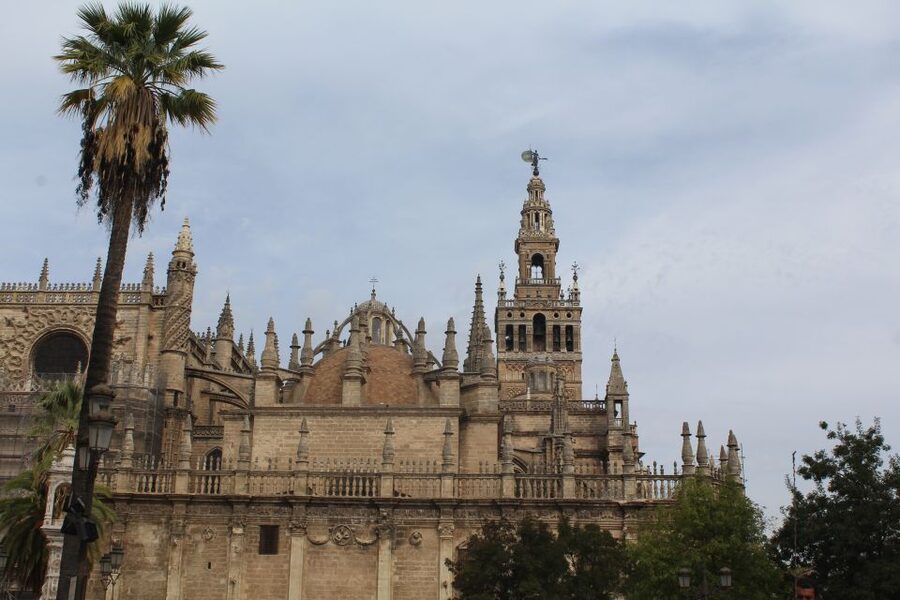
One of the smarter ways to do Seville early is to treat the big monuments like anchors. You may not go deep inside here, but you get guided framing for two of the city’s most important stops: the Christian Gothic cathedral and the Real Alcázar.
Even when you’re looking from the outside, the explanations help. The cathedral is described as having the largest area in the world, and the Alcázar is presented as one of the oldest palaces still in use worldwide. Those aren’t trivia lines for trivia’s sake—they help you understand why people line up and why this area is the heart of the city’s “must-see” map.
There’s also a skip-the-line option through a separate entrance included. That’s a meaningful value add because these monuments can be time-consuming to reach if you’re doing it solo on a first trip. Even if you don’t spend all your time inside during this tour, the orientation makes it easier to plan a return visit later.

Salvador Square and El Salvador: one plaza, two different Seville moods

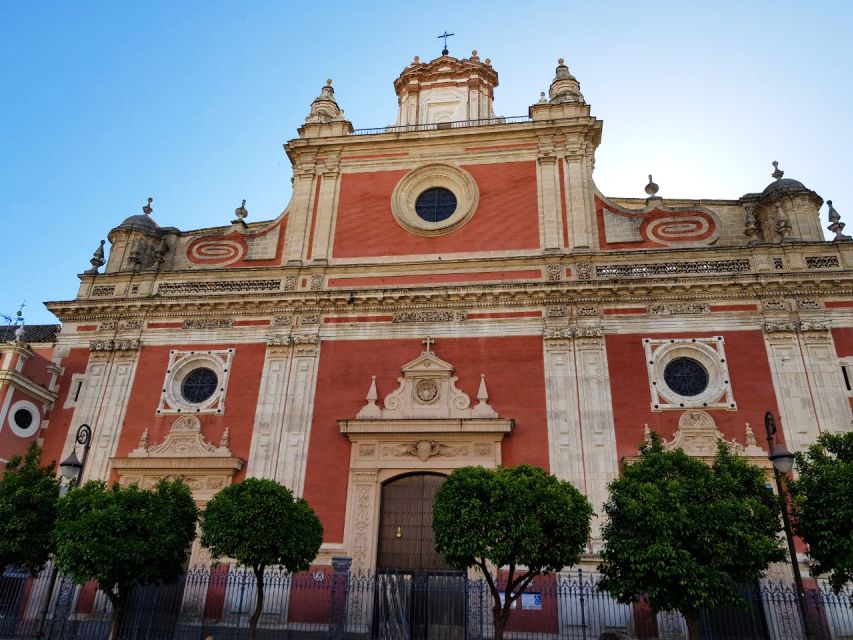
Salvador Square is one of the busiest squares in Seville, and that’s exactly why it’s a good orientation stop. This tour shows you how the city’s energy concentrates in public space—people move through, meet up, pause for photos, and continue on.
Here, you’ll see the Church of the Divine Salvador (El Salvador). The guide frames it as the second largest temple in the city, which gives you a yardstick when you compare it to other landmarks you’ll see later. It’s the kind of detail that helps your brain store what you’re seeing instead of just marking it as “pretty church, next!”
One possible consideration: if you’re sensitive to crowds or you prefer quiet scenes, this is not a calm moment. But as an orientation experience, it’s useful. Seville’s “real life” happens in places like this, not only in museum rooms.
Setas de Sevilla (Metrosol Parasol): understanding Seville’s modern center
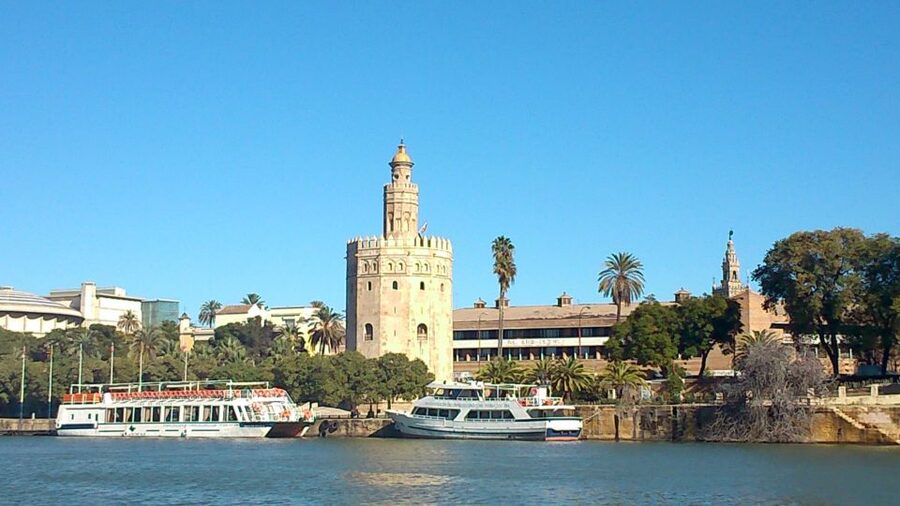
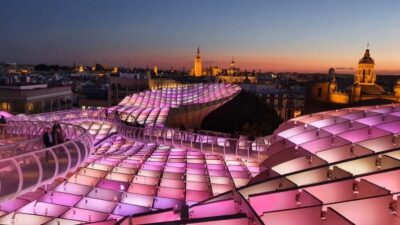
Setas de Sevilla, also called Metrosol Parasol, is the famous “mushrooms” structure in La Encarnación. On this tour, it’s not treated as a photo stop. Your guide helps you understand what it represents and why it changed the central square.
This matters because Seville can feel very old—so a modern landmark can throw people off at first. Learning the purpose and context makes it easier to appreciate it instead of just thinking, okay, that’s unusual.
If you’re planning your own free time afterward, Setas is also a strong meeting point. Knowing exactly where it sits in the city center helps you anchor the rest of your day.
Guadalquivir River and Torre del Oro: the story behind the view
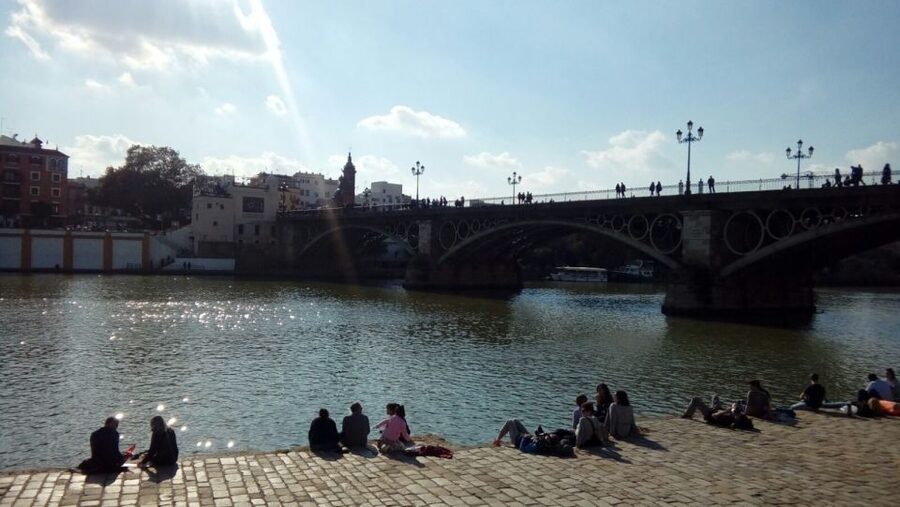
Then the tour shifts toward the river, and this is one of my favorite parts of the itinerary concept. The Guadalquivir isn’t just a scenic backdrop—it’s how the peninsula’s history and movement connect. Your guide explains that the main river across the peninsula was called Betis by ancient Romans, giving you a sense of how old the geography really is.
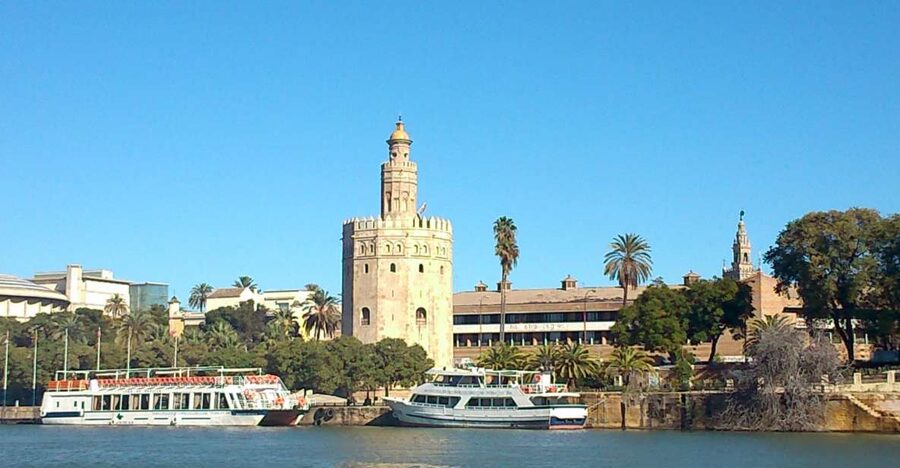
Along the way you also reach Torre del Oro, a 36-meter tower on the left bank. The important part isn’t just height; it’s the function and the curious origin of its name. That kind of explanation turns a viewpoint into a story you can remember later when you’re looking at postcards or trying to map locations in your head.
Practical payoff: once you understand where the tower sits relative to the river, it’s easier to orient the rest of the city. You can picture the river as a line that organizes the neighborhoods.
Real Maestranza de Caballería de Sevilla: the bullring as cultural landmark

Seville’s bullring, the Real Maestranza de Caballería de Sevilla, appears as part of this orientation pass. Even if you have zero interest in bullfights, this stop helps you see how deeply bull culture runs through parts of Spanish history.
The bullring also gives your guide a chance to place the landmark within Seville’s identity—something that comes through in the way locals talk about certain sites. If you’re the type who likes to understand what a building means to the city, this quick stop adds value.
Consideration: if you prefer to avoid charged cultural topics, just be aware this stop is included as an orientation landmark. You’ll still be able to keep your focus on architecture and context.
How the guide’s style can make the difference (Moses, Estela, Elena)
The tour is run with live guides in multiple languages, and the guide quality is often where an orientation tour either clicks or feels generic. Based on guide names you might encounter—Moses, Estela, and Elena—you can expect people who are comfortable explaining the main sights and answering questions.
One of the best signs is when a guide helps you spot details you’d normally miss. That’s especially useful in places like Santa Cruz and around central plazas, where it’s easy to lose the thread of what you’re seeing.
If you want to maximize your experience, come with 1–2 questions. Ask about the best neighborhoods to return to, or how to connect the monuments you’ll see on your own later. A good guide can point you to sensible next steps without turning it into a long pitch.
Walking vs adding a cab ride: how to choose your comfort level
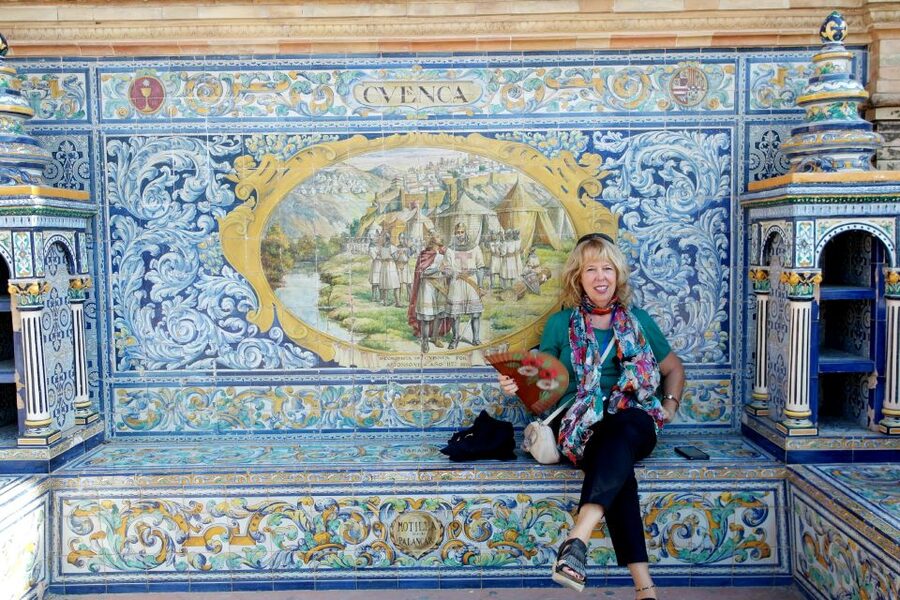
The tour is designed as a walking experience, but the idea includes the option to combine it with a cab ride. That’s a smart flexibility for Seville.
On a hot day, a short cab segment can help you conserve energy for the river and plazas. On the other hand, if it’s comfortable weather, walking is the best way to actually feel the city’s pacing—especially in Santa Cruz where street turns can make or break your sense of direction.
If you’re booking for a first visit, I’d treat the walk as the default. You’ll learn the city’s rhythm faster than if you skip too much by car.
Who this tour suits best (and who might want a different plan)
This works especially well if it’s your first day in Seville or if you have limited time and want a clear orientation. It’s also a good choice if you like architecture and city context, but you’re not trying to spend an entire day inside museums.
It’s less ideal if you already know Seville well and want long, deep visits inside major monuments. This tour is about outside views, key explanations, and efficient coverage—not a slow soak in one site.
If you’re a planner, it’s also useful even after the fact. Once you’ve got the route in your head, your self-guided wandering becomes easier. You can return to the places that hit you most and ignore the ones that didn’t.
Should you book this Seville orientation tour?
Book it if you want a first-day map made by a real guide, including Santa Cruz, Sierpes Street, major monuments from the right angles, the Guadalquivir river, Torre del Oro, and Setas de Sevilla. The included hotel meet-up, private group setup, and skip-the-line entrance add real practical value if you’re also planning returns to the biggest sights.
Skip it (or consider a different style of tour) if you only want time inside the Cathedral and Alcázar, or if you hate busy plazas and crowded neighborhood streets. This is an overview route, and it’s built to move.
Bottom line: for $258 per group up to 15 and 121 minutes of guided orientation, it’s a strong “get oriented, then explore” option—especially if you want Seville to click quickly instead of slowly.
FAQ
How long is the Seville Orientation Tour?
The tour lasts 121 minutes.
Where does the tour start?
You meet at the lobby of your hotel.
Is this tour a walking tour?
Yes, it is designed as a walking tour. There’s also mention of the option to combine it with a cab ride.
What places will I see?
You’ll cover Santa Cruz, the city center, Torre del Oro, the Guadalquivir River, Salvador Square, Sierpes Street, bullring Real Maestranza de Caballería de Sevilla, and Setas de Sevilla (Metrosol Parasol). You’ll also look outside the Cathedral and the Real Alcázar.
Does the tour include skip-the-line access?
Yes, skip the line through a separate entrance is included.
What languages are available?
The live guide is offered in German, Spanish, English, French, Italian, and Portuguese.
Is it a private group?
Yes, it’s a private group.
How big is the group?
The price is listed per group up to 15 people.
More Tours in Seville
- Seville: Alcázar, Cathedral & Giralda Skip-the-Line Tour
★ 4.8 · 11,525 reviews - Seville: Cathedral, Giralda & Alcazar Entry With Guided Tour
★ 4.6 · 8,560 reviews - Seville: Priority Access Cathedral, Giralda & Alcázar Tour
★ 4.8 · 7,563 reviews - Seville: Alcázar and Cathedral Entry Ticket and Guided Tour
★ 4.6 · 5,056 reviews - Seville: City Sightseeing Hop-On Hop-Off Bus Tour
★ 4.0 · 4,633 reviews
More Tour Reviews in Seville
- Seville: Live Flamenco Dancing Show Ticket at the Theater
★ 4.7 · 16,396 reviews - Seville: Alcázar, Cathedral & Giralda Skip-the-Line Tour
★ 4.8 · 11,525 reviews - Seville: 1-Hour Guadalquivir River Sightseeing Eco Cruise
★ 4.2 · 10,281 reviews - Seville: Setas de Sevilla Entry Ticket
★ 4.6 · 8,901 reviews - Seville: Cathedral, Giralda & Alcazar Entry With Guided Tour
★ 4.6 · 8,560 reviews
Just added to the Seville list



Tours, compared.
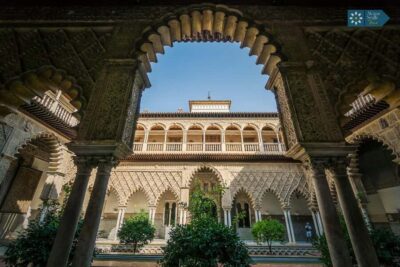 ★ 4.8Alcázar, Cathedral & Giralda Skip-the-Line TourFrom $6411,525 reviews
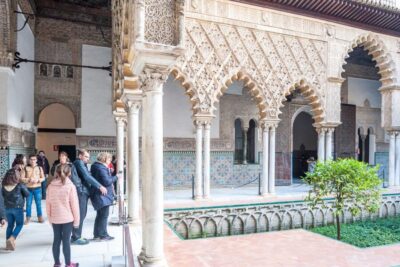 ★ 4.6Cathedral, Giralda & Alcazar Entry With Guided TourFrom $658,560 reviews
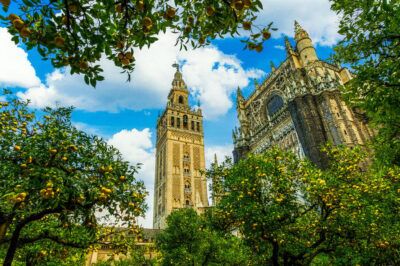 ★ 4.8Priority Access Cathedral, Giralda & Alcázar TourFrom $647,563 reviews
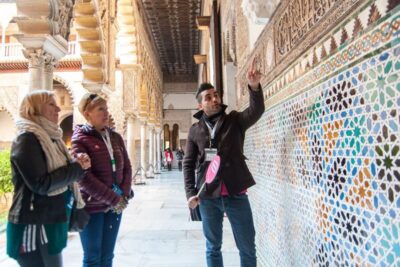 ★ 4.6Alcázar and Cathedral Entry Ticket and Guided TourFrom $785,056 reviews
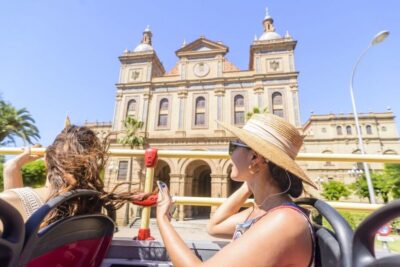 ★ 4.0City Sightseeing Hop-On Hop-Off Bus TourFrom $334,633 reviews
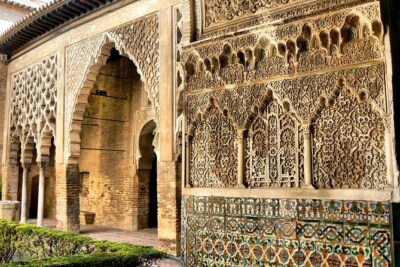 ★ 4.5Alcazar and Cathedral of Seville Tour with Skip the Line TicketsFrom $714,579 reviews
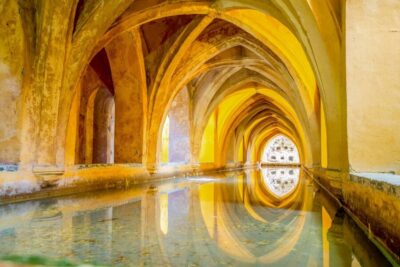 ★ 4.6Alcázar of Seville Skip-the-Line Tickets and Guided TourFrom $443,941 reviews
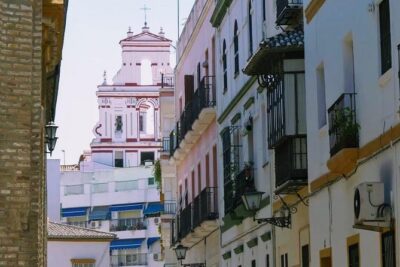 ★ 5.0Sevilla Food Tour: Tapas, Wine, History & TraditionsFrom $833,468 reviews