
Review · CITY TOURS
Seville: City of Queens, Nuns, Sex Work & Witches
Seville tells different stories when you listen to women. This 2-hour guided walk stitches together famous monuments and off-the-map corners, using women’s lives as the thread through centuries of Seville. The theme is bold—queens, nuns, sex work, and witches—so the storytelling feels less like a straight textbook line and more like real people navigating power.
I especially like two things: the way the guide connects places like the Costurero de la Reina to everyday roles and authority, and the brief stop at an atmospheric local bar so the tour has a human rhythm, not just checkpoints. It’s also a small group (up to 8), which helps you ask questions without shouting over a crowd.
The main drawback is simple: at $105 per person, this is a higher-priced walking tour. If you just want mindless sightseeing, you may feel the cost more than the payoff—this one rewards curiosity and walking stamina on old-town streets.
In This Review
- Key things I’d circle before you go
- Women’s history in Seville: the point of this tour
- Starting at the Costurero de la Reina: where the theme clicks
- Exposition 1929 architecture: the US and Portugal pavilions up close
- Parque de María Luisa and Doña Sol: gardens with a narrative
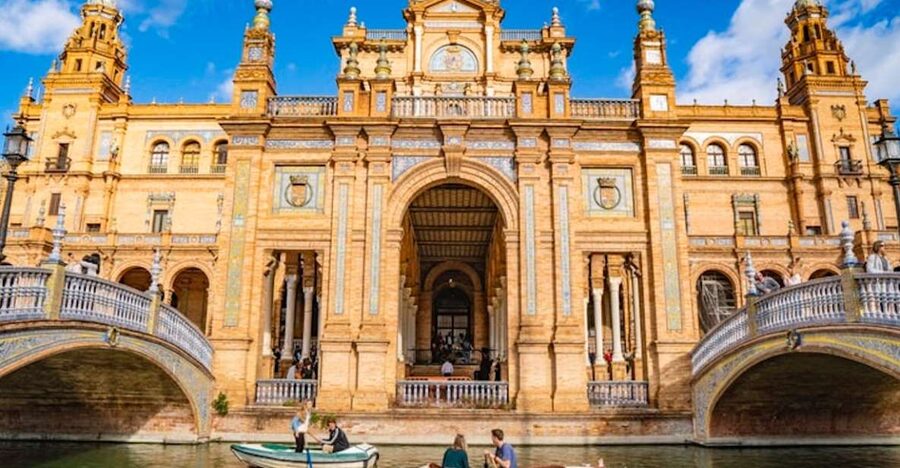
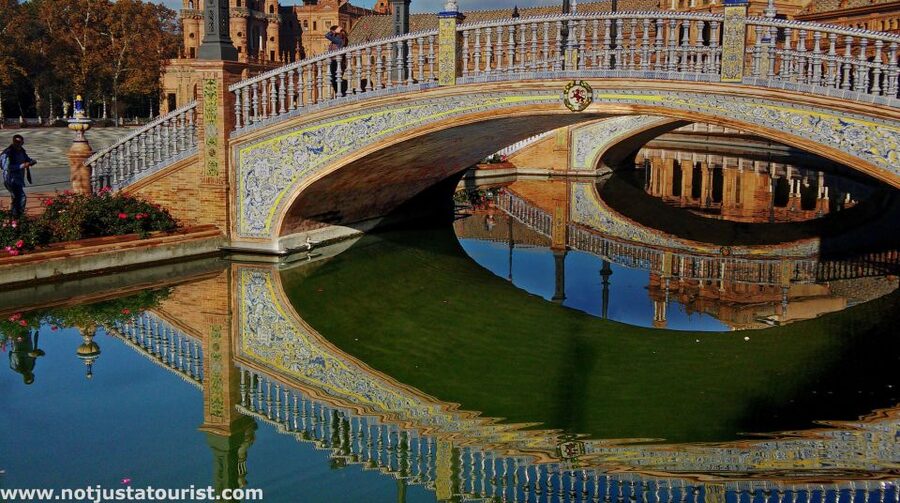
- Plaza de España: seeing beyond the postcard
- Antigua Fábrica de Tabacos: the cigar girls and women at work
- Santa Cruz on foot: Callejón del Agua and the Doña Inés ending
- Guide style matters: Abby and Nico as examples of what you want
- Price and value: is $105 fair for a 2-hour walk?
- Logistics that affect your comfort (and your photos)
- Who should book this Seville themed walking tour
- Should you book this Seville walk?
- FAQ
- How long is the tour?
- How large is the group?
- Where do we meet?
- What languages are available?
- What key places does the tour include?
- Is this a walking tour?
- What’s included in the price?
- Can I cancel or pay later?
Key things I’d circle before you go
- Female-first perspective on Seville’s landmarks, from royal symbols to street-level lives
- Small group (max 8) with an English or Spanish live guide, so the pace stays personal
- Big-ticket sites in a short loop: Plaza de España and architecture from the 1929 Exposition
- Cigar-girls story at the former tobacco factory area
- Hidden Old Town lanes through Santa Cruz, including Callejón del Agua
- End near Plaza Nueva, with the tour’s Don Juan and Doña Inés link as your final story beat
Still deciding? A few more Seville picks worth a look.
- Seville: City Sightseeing Hop-On Hop-Off Bus Tour★ 4.0 · 4,633 reviews
- Seville: Highlights City Bike Tour★ 4.8 · 2,168 reviews
- City Sightseeing Seville Hop-On Hop-Off Bus Tour★ 4.0 · 1,782 reviews
Women’s history in Seville: the point of this tour
Most Seville tours treat women as a footnote. This one treats them as the plot. You’ll walk the city while the guide reframes what you’re looking at—why certain buildings mattered, what roles women held, and how social power actually worked in daily life.
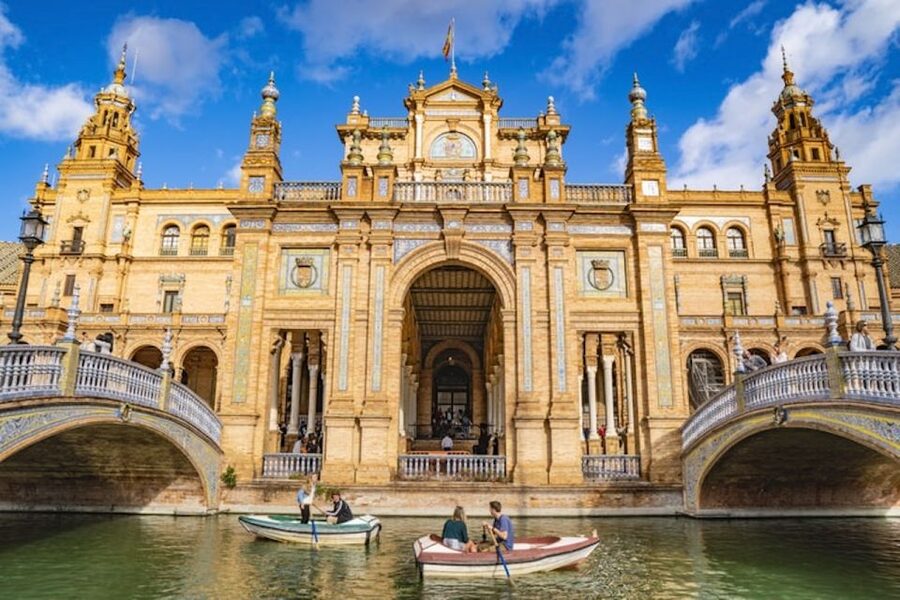
That approach changes how you see the famous postcard spots. Plaza de España isn’t just a set of photo angles when the guide talks about the people living inside the era’s rules. And the parks and pavilions along the 1929 Exposition aren’t just architecture lessons when you hear how gender shaped public life, private work, and the stories that survived.
The vibe is also more conversational than lecture-heavy. In the recent guidance styles associated with this tour, you’ll find names like Abby and Nico, both praised for humor and keeping the mood engaging—especially when you’ve got teens in tow. That matters because Seville can be hot, and history can get heavy. Here, the pacing tries to keep it breathable.
Starting at the Costurero de la Reina: where the theme clicks
You meet at the Costurero de la Reina monument on P.º de las Delicias, 3. Right from the start, you get the central idea: women’s work and status aren’t just background flavor. They show up in objects, institutions, and spaces you can still stand next to today.
From there, the tour builds momentum toward the grand architecture of the 1929 Exposition area. You’re not racing across the city; you’re following a route where each stop sets up the next. That’s a big deal in Seville, where distances add up fast and the old streets can be uneven underfoot.
You should also plan for walking time even if many stops are short. The tour is just 2 hours, so it’s paced to fit a lot in without turning into a sprint. The payoff is that you spend more time hearing connections and less time trying to figure out what you’re seeing.
Exposition 1929 architecture: the US and Portugal pavilions up close
One of the most satisfying parts is the Exposition 1929 stop sequence, including the Pabellón de Estados Unidos and later the Pabellón de Portugal. Even if you’ve seen Plaza de España before, these pavilions remind you that Seville’s modern image was shaped by a specific moment in time—not just by medieval romance.
You’ll get a focused look (short, guided visits rather than endless wandering) at the look, the symbolism, and the way these buildings helped stage a city’s identity. For me, the value here is practical: it teaches you how to read architecture. You start noticing details without needing an art-history degree.
If your travel style is “show me where to stand and what to notice,” these pavilion stops are the kind of structure that helps. You’ll come away with a simple mental map: Seville isn’t only churches and palaces; it also has a public, outward-facing story from the 20th century.

Parque de María Luisa and Doña Sol: gardens with a narrative
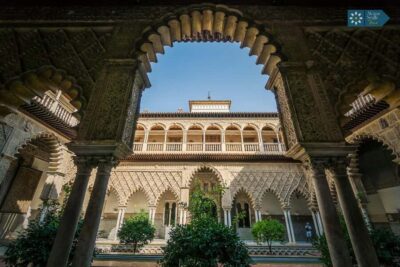
Then the tour turns toward Parque de María Luisa, one of Seville’s most popular parks. The key is that the guide doesn’t treat the park like a break from history. Instead, it’s part of the same story—how public spaces reflect who was expected to do what, and who had permission to be seen.
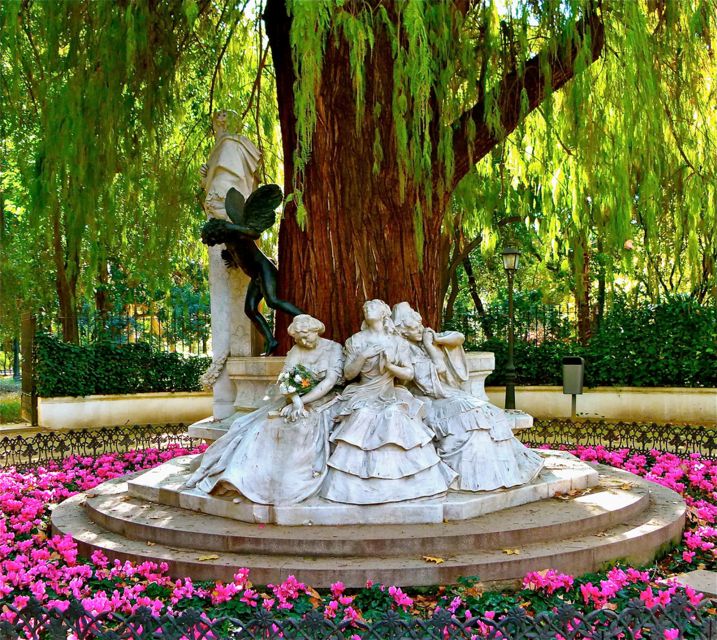
You also hit the Glorieta de Doña Sol, a smaller stop, but exactly the kind of place where a guide can make the setting feel specific. A quick look here matters because it’s the bridge between the open, landscaped feel of the park and the more formal, symbolic architecture you’ll meet next.
In Seville, gardens can blur together if you’re not paying attention. This stop keeps you oriented, so you don’t just think, Pretty plants. You think, This is how the city spaces out power and presence.
Plaza de España: seeing beyond the postcard
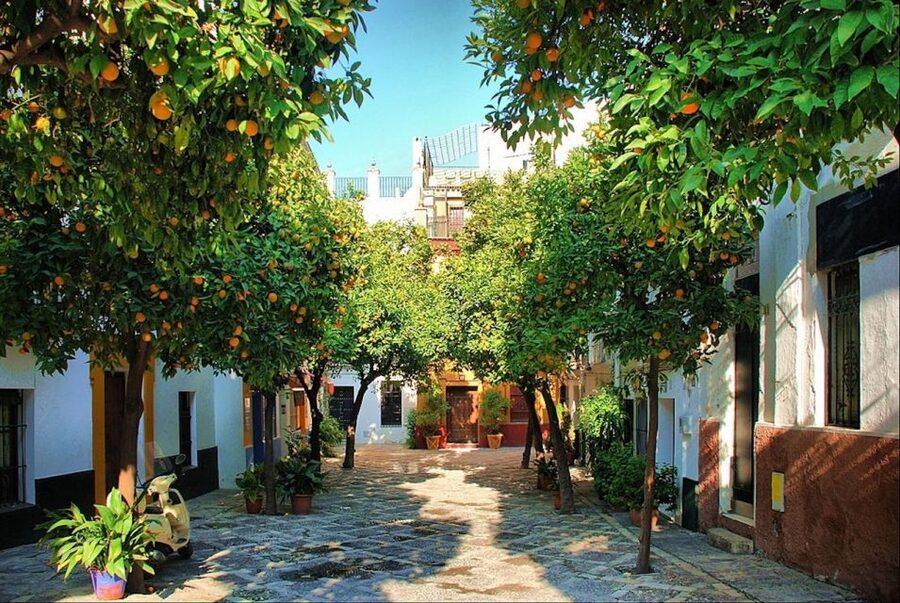
Next comes Plaza de España. It’s popular for a reason, and you’ll likely recognize it even if this is your first time in Seville. Here’s where the tour’s female lens becomes more than a gimmick.
Instead of treating the plaza as a single aesthetic moment, you’re guided through what it represents and how it fits into the city’s broader evolution. That means the stories tie back to the roles women played in the eras that shaped these public spaces—who moved through them, who was represented, and who got written into official narratives.
You get a guided segment (not a long free-for-all), which is helpful if you want your photos without spending the entire time lost. The plaza is huge, and without a plan, it’s easy to waste your limited attention span.
Antigua Fábrica de Tabacos: the cigar girls and women at work
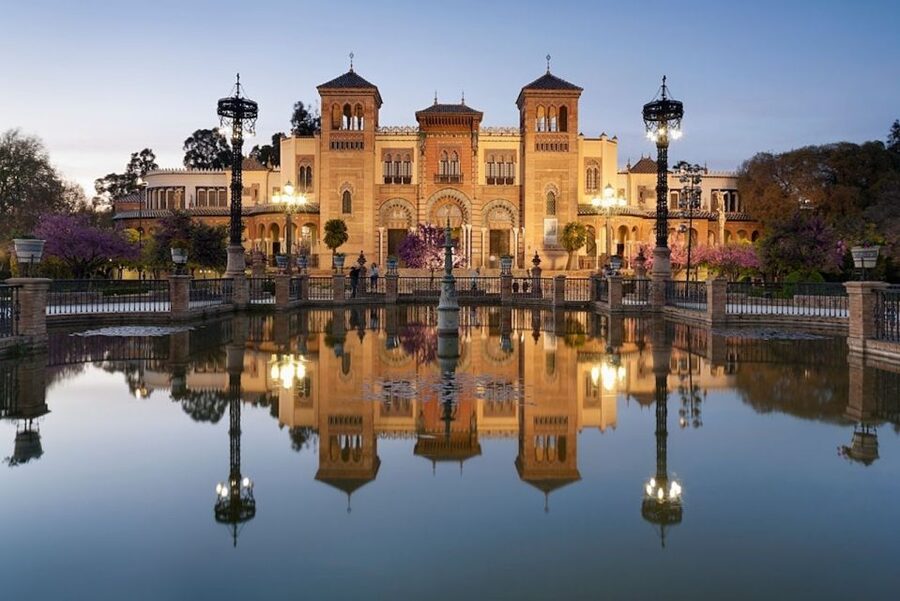
One of the most compelling stops is the Antigua Fábrica de Tabacos. This is where the tour leans into real work and real pressure: you’ll hear about the cigar girls, women tied to the tobacco trade and the social systems around it.
This is a good place for the guide’s tone to matter. The topic could go heavy, but the better tours keep it human. The guide’s job here is to connect what you’re seeing in the building area with what life may have been like for the workers—how gender shaped labor, respectability, and vulnerability.
Also, this is a natural moment in the route for that refreshing pause mentioned in the experience: a stop at a local bar. Even if you don’t stay long, it helps reset your brain. Two hours passes quickly in Seville heat, and that small break keeps you from zoning out during the final old-town lanes.
Santa Cruz on foot: Callejón del Agua and the Doña Inés ending
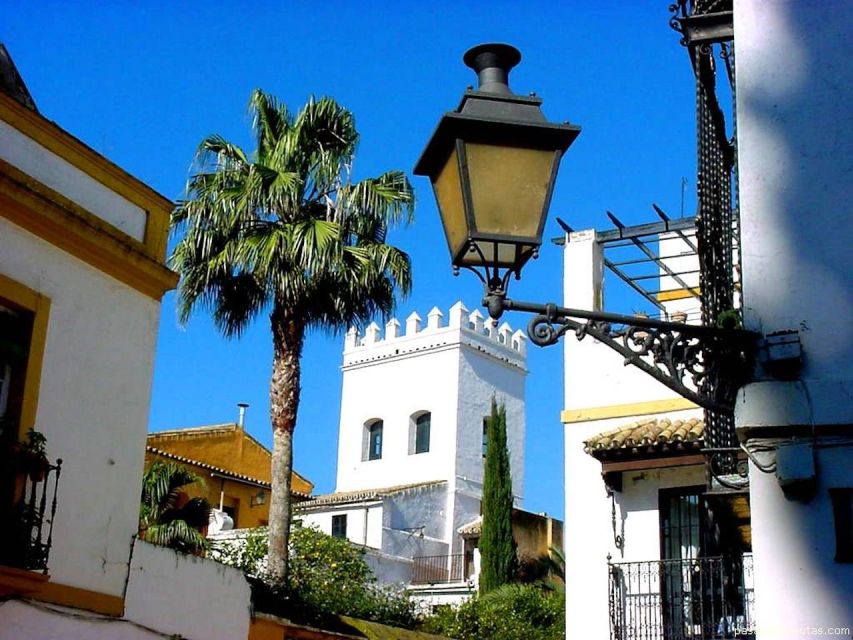
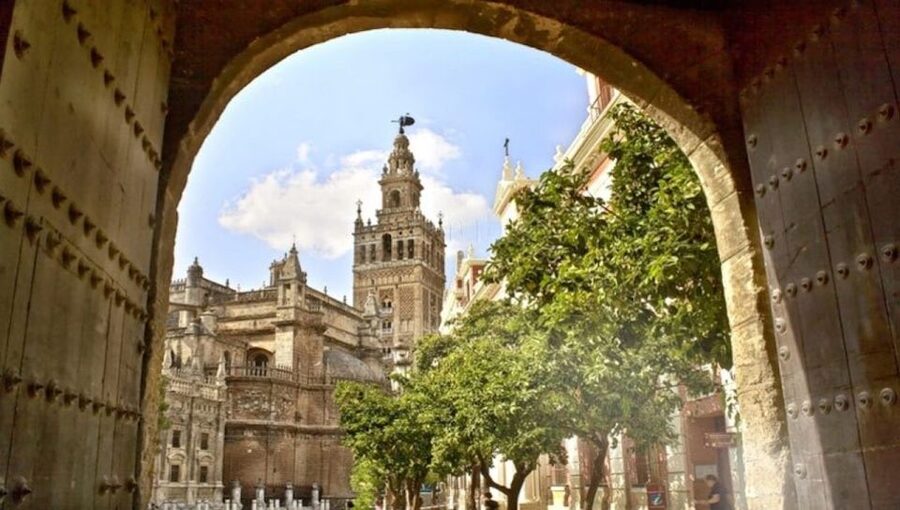
After the factory area, the tour shifts into narrower street territory: Calle Susona and Callejón del Agua are part of the feel-good “walk slowly, look closely” stretch. These lanes are exactly where Seville can surprise you—small, quiet turns, old walls, and that sense that the city keeps its secrets in plain sight.
Then you enter Santa Cruz, the Jewish quarter. The tour doesn’t ask you to memorize facts. It guides you through the sense of place—how this neighborhood’s layout and history create a mood that’s hard to get from a bus ride or a quick stroll alone.
The tour ends at Plaza Nueva, finishing with a literary tie-in: the square where a Don Juan story is linked to Doña Inés. It’s a neat “close the loop” moment because Seville has always mixed real street life with myth, theater, and romance. Even if you’re not a literature person, you’ll probably remember this last story beat because it happens right where you can stand and picture it.
Guide style matters: Abby and Nico as examples of what you want
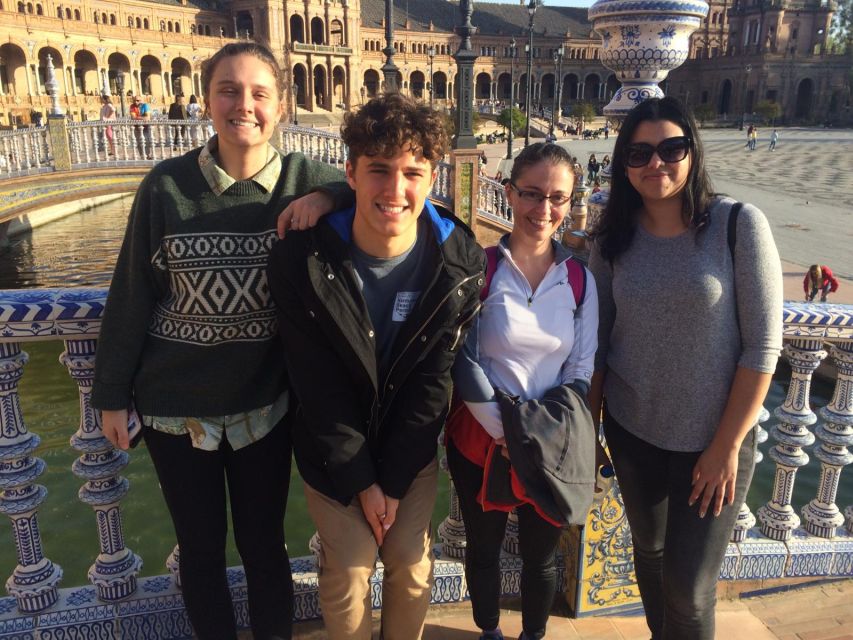
You’re getting a professional live guide, and the small group size (up to 8) is part of why the guide can actually connect. In the guide styles associated with this experience, Abby is described as funny and engaging, with stories you won’t pick up from a basic guidebook. Nico is praised for humor, fast responsiveness, and strong English.
One detail I’d treat as a green flag: guides who can keep attention without steamrolling the group. In these recent accounts, there’s mention of helping include a teen, which tells me the pacing likely adjusts based on who’s there. That’s rare, and it’s valuable if your group includes mixed ages.
So when you book, choose based on how you want to learn: if you like a guided walk that explains why the places matter, you’ll likely get more from the guide. If you prefer silence and self-guided wandering, you might feel constrained by the structured stops.
Price and value: is $105 fair for a 2-hour walk?
Let’s talk money plainly. $105 per person is not cheap for a walking tour. The justification is mainly in three places:
First, it’s small-group. With up to 8 participants, you’re paying for conversation and a guide who can handle questions.
Second, it includes a map plus insiders’ tips. Those aren’t always huge on paper, but in Seville they help you turn what you learn into a better plan for the rest of your day.
Third, the tour covers a lot of major landmarks in a short window: Exposition 1929 pavilions, Plaza de España, the tobacco factory area, and Santa Cruz’s lanes—all with story context. If you were doing this solo, you’d spend real time figuring out what to pay attention to.
My balanced take: this is good value if you want guided interpretation and you like thematic storytelling. It’s overpriced if your only goal is photos and you don’t care about what’s behind them.
Logistics that affect your comfort (and your photos)
This experience is built for walking. You’ll spend much of the 2 hours on foot between stops, with multiple short guided visits. That’s ideal for most people, but Seville’s old streets can be uneven, and the heat is real—so wear shoes you trust.
The tour also runs in English or Spanish, which is great if you’re with a mixed-language group. If you’re booking for multilingual comfort, this is a practical plus.
Timing matters too. A 2-hour tour is short enough to fit into a tight itinerary, but it’s long enough that you’ll feel the walking if you plan to do it late in the day. I’d aim for earlier or later with a bit of shade and a plan to cool down after.
And yes, there’s that bar stop. I’d treat it as part of the pacing, not a surprise.
Who should book this Seville themed walking tour
I think this works best for:
- People who enjoy city walks where the guide explains what you’re actually looking at
- Travelers who want a female-focused perspective and more than the same male-centric landmarks
- Anyone who likes both major sites and smaller lanes, especially in Santa Cruz
- Families or groups with teenagers who need a guide who can keep stories moving
You might skip it if:
- You want a do-it-yourself route with no structure
- You’re not interested in thematic interpretation and prefer museums or long stops instead
- You’re sensitive to walking on uneven old-town streets
Should you book this Seville walk?
If you want Seville with a point of view, I’d book it. The route hits the big hitters—Plaza de España, the 1929 pavilions, the tobacco factory area—then adds the quieter Santa Cruz lanes that most people only see while rushing to something else. Most importantly, the guide’s female lens turns these stops into stories you can remember, not just pictures you can scroll past.
If your budget is tight, you could build a cheaper self-guided day. But if you like guided storytelling, small-group attention, and learning how women shaped Seville in ways you won’t get from a quick walk, this is the kind of tour that pays you back in understanding.
FAQ
How long is the tour?
The tour lasts 2 hours.
How large is the group?
It’s a small group limited to a minimum of 2 participants and a maximum of 8.
Where do we meet?
You meet at the Costurero de la Reina monument, P.º de las Delicias, 3, 41001 Sevilla, Spain.
What languages are available?
The live guide offers tours in English and Spanish.
What key places does the tour include?
You’ll visit stops including the Exposition 1929 pavilions, Costurero de la Reina, Parque de María Luisa, Plaza de España, Antigua Fábrica de Tabacos, and you’ll walk through Santa Cruz, finishing at Plaza Nueva.
Is this a walking tour?
Yes. It’s a walking tour with guided stops along the way.
What’s included in the price?
The tour includes the walking tour, a professional live guide, a city map, and insiders’ tips.
Can I cancel or pay later?
You can reserve now & pay later, and you can cancel up to 24 hours in advance for a full refund.
More City Tours in Seville
- Seville: City Sightseeing Hop-On Hop-Off Bus Tour
★ 4.0 · 4,633 reviews - Seville: Highlights City Bike Tour
★ 4.8 · 2,168 reviews - City Sightseeing Seville Hop-On Hop-Off Bus Tour
★ 4.0 · 1,782 reviews - Seville: Relaxing City Bike Tour with a Tour Guide
★ 4.8 · 1,588 reviews - Seville: Small-Group City Highlights Walking Tour
★ 5.0 · 1,204 reviews
More Tour Reviews in Seville
- Seville: Live Flamenco Dancing Show Ticket at the Theater
★ 4.7 · 16,396 reviews - Seville: Alcázar, Cathedral & Giralda Skip-the-Line Tour
★ 4.8 · 11,525 reviews - Seville: 1-Hour Guadalquivir River Sightseeing Eco Cruise
★ 4.2 · 10,281 reviews - Seville: Setas de Sevilla Entry Ticket
★ 4.6 · 8,901 reviews - Seville: Cathedral, Giralda & Alcazar Entry With Guided Tour
★ 4.6 · 8,560 reviews
Just added to the Seville list




City Tours, compared.
 ★ 4.0City Sightseeing Hop-On Hop-Off Bus TourFrom $334,633 reviews
 ★ 4.8Highlights City Bike TourFrom $382,168 reviews
 ★ 4.0City Sightseeing Seville Hop-On Hop-Off Bus TourFrom $331,782 reviews
 ★ 4.8Relaxing City Bike Tour with a Tour GuideFrom $351,588 reviews
 ★ 5.0Small-Group City Highlights Walking TourFrom $271,204 reviews
 ★ 4.9City Sightseeing and Local Culture Bike TourFrom $311,120 reviews
 ★ 4.5Italica Roman City & Medieval Monastery TourFrom $461,051 reviews
 ★ 4.8Private City Tour by Eco Tuk TukFrom $33963 reviews
Browse the lists this tour appears in