
Review · TOURS
Seville: 3–Hour Sightseeing Tour
Bikes and stories make Seville move. This 2.5-hour route strings together the Cathedral area, the old Tobacco Factory, and the modern Metropol Parasol finish, so you get the big landmarks plus the why behind them. I really like how the stops are laid out in an order that keeps you oriented. I also love the storytelling, especially with guides like Sebastian who explain the monuments as you see them. One thing to consider: bike quality can vary, so you should check your brakes and tires right when you pick up the rental.
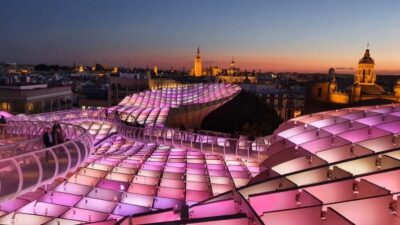
The tour starts at a bike shop and then eases you in with a look at a typical Sevillian patio from a nineteenth-century house. From there, you cruise through classic plazas, riverfront views, and major squares without wasting time hunting for sights on your own. The route ends with the Mushrooms of Plaza de la Encarnación, which is a sharp contrast to the older parts of Seville.
In This Review
- Key Points at a Glance
- How a 2.5-Hour Bike Route Hits Seville’s Greatest Names
- Starting from a Centerbici Bike Shop (and a Sevillian Patio Moment)
- Plaza del Salvador, Plaza de San Francisco, and Plaza Nueva: Seville’s Center Stage
- Avenida de la Constitución, the Cathedral Area, and the Giralda Views
- The Old Tobacco Factory: Origins, Trivia, and a Monument That Was Built to Work
- Prado de San Sebastián to Plaza de España and Maria Luisa Park
- New York Dock, Real Maestranza, and Torre del Oro by the Riverfront
- Plaza de la Encarnación’s Mushrooms: Historic Seville Meets Modern Seville
- Guides in Multiple Languages: Why Sebastian and Alexandro Matter
- Bikes, Safety, and What to Check at the Start
- Price and Logistics: Is $35 Good Value for Seville’s Big Sights?
- Should You Book This Seville Bike Tour?
- FAQ
- How long is the Seville 3–Hour Sightseeing Tour?
- How much does the tour cost?
- Where do I meet for the tour?
- What is included in the price?
- Is helmet rental included for children?
- Does the tour help me skip the ticket line?
- What languages are available for the live guide?
- Is the tour suitable for people with mobility impairments?
- What do I need to bring with me?
Key Points at a Glance
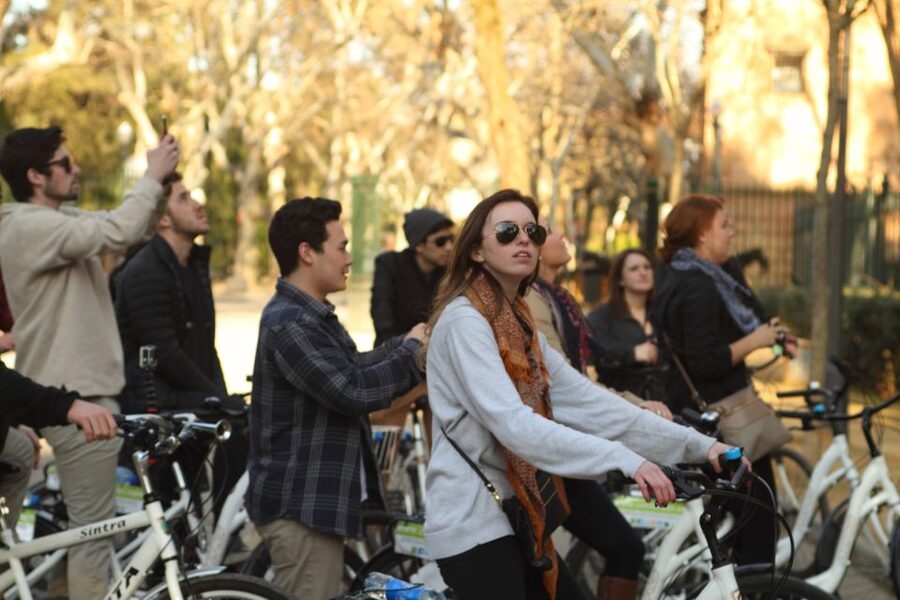
- A tight 2.5-hour “greatest hits” loop that links the Cathedral area to the river and then to modern Seville
- Story-first stops at places like Plaza Nueva and the old Tobacco Factory, with origins and trivia explained by your guide
- Guides that adapt to the group’s interests, with people praising Sebastian and Alexandro
- Skip-the-line included, so you spend more time sightseeing and less time waiting
- Bike rental plus water, map, and kid helmets, keeping you moving
- Bring your ID, since it’s required for the experience
Not sure yet? See what else in Seville is worth your time.
- Seville: Live Flamenco Dancing Show Ticket at the Theater★ 4.7 · 16,396 reviews
- Seville: Alcázar, Cathedral & Giralda Skip-the-Line Tour★ 4.8 · 11,525 reviews
- Seville: 1-Hour Guadalquivir River Sightseeing Eco Cruise★ 4.2 · 10,281 reviews
How a 2.5-Hour Bike Route Hits Seville’s Greatest Names
This is the kind of tour that helps you understand Seville fast. You get a guided pass through the city’s most recognizable monuments, but it’s not just photos on a checklist. The value is in the order: you start near the center, move outward through major squares and parks, then return with a final wow moment at Plaza de la Encarnación.
At $35 per person for about 2.5 hours, it’s a solid deal if you’re comfortable riding a bike. You’re getting the bike rental, a bilingual live guide, water plus a map, and you even get kid helmets if needed. That means you’re not juggling rentals, directions, and ticket lines at the same time.
The main trade-off is the “bike first” format. If you’re hoping for slow-paced museum-style time, this may feel too active. And if your comfort level depends on bike condition, make safety your priority at the start.
Starting from a Centerbici Bike Shop (and a Sevillian Patio Moment)
You meet at Centerbici store on C/ Espronceda, 5 – 41004 – Sevilla. The vibe here is practical: gear up, get your bearings, and then roll out.
Before the big monuments, the tour begins at a nineteenth-century house where you can view a typical Sevillian patio. I like this because it gives you a mental frame for how houses and courtyards work in Seville. It’s also a nice warm-up—less intense than hopping straight into crowds at the Cathedral.
If you’re the type who enjoys “seeing the city’s logic,” you’ll appreciate this first step. It’s not a random detour; it’s the tour’s way of saying, pay attention to details, not just famous buildings.
Plaza del Salvador, Plaza de San Francisco, and Plaza Nueva: Seville’s Center Stage
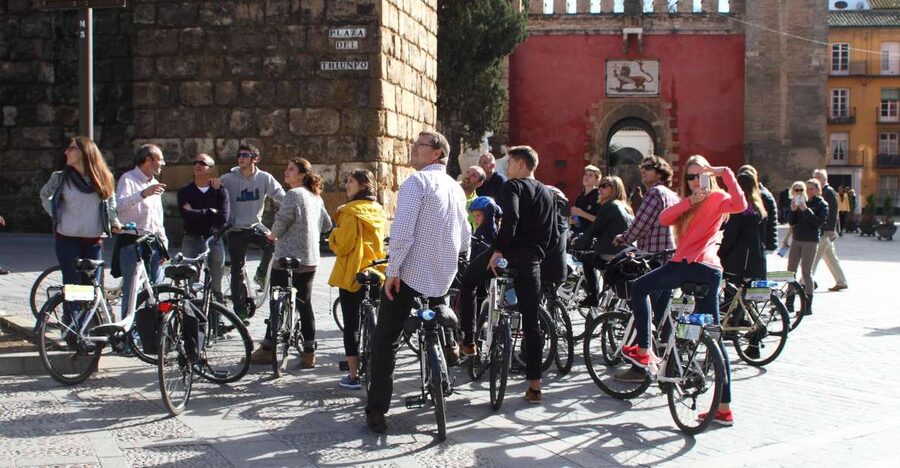
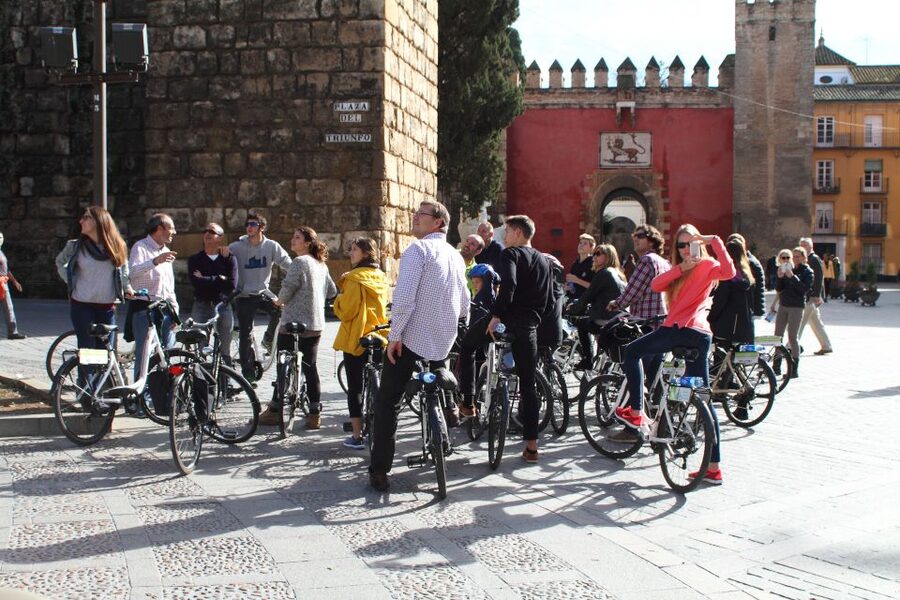
After the patio, you head to Plaza del Salvador, Plaza de San Francisco, and Plaza Nueva. These plazas are where Seville’s streets open up and where you can start making sense of the city layout.
This part works best when you pause for the guide’s stories. The tour is built around monuments and “what they mean,” not just what they look like. So as you stop in each plaza, you’re not only taking in architecture—you’re learning the origins and little trivia that connect the sights to everyday Sevillian life.
One smart tip for you: keep your camera ready, but don’t use it as a substitute for listening. The explanations are tied to what you’re seeing right then.

Avenida de la Constitución, the Cathedral Area, and the Giralda Views
Next comes Avenida de la Constitución, heading toward the Cathedral area and the Giralda. This is a key stretch because it’s one of the clearest ways to experience Seville’s landmark concentration.
The Giralda is central to the whole visual identity here, and the tour’s route gives you chances to orient yourself while you move. You’re not stuck staring at a single spot waiting for the “perfect photo angle.” You’re getting the story with the geography around it—how the streets funnel you, and how the buildings dominate the skyline.
If you only have a short time in Seville, this stop is a high-return move. It’s a strong anchor for your first impression of the city.
The Old Tobacco Factory: Origins, Trivia, and a Monument That Was Built to Work
Then you roll into the old tobacco factory, one of the tour’s most memorable stops. The tour emphasizes origins, trivia, and history here, which matters because this isn’t just a pretty facade—you’re meant to understand why the building mattered.
I like how this fits the overall rhythm of the tour. You’ve already hit major plazas and a cathedral area landmark. Now you shift to a working landmark, which gives the city a more human, practical side.
If you like when a guide explains what a place used for, not just what it became, you’ll probably rate this as one of your favorites.
Prado de San Sebastián to Plaza de España and Maria Luisa Park
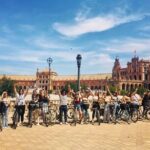
From the tobacco factory area, the tour continues toward Prado de San Sebastián, Plaza de España, and Maria Luisa Park.
This is where your ride feels like a change of pace. Squares give you big open sightlines, while parks slow you down visually even while you’re still moving. You get the contrast: more monumental urban scenes, then calmer green space settings.
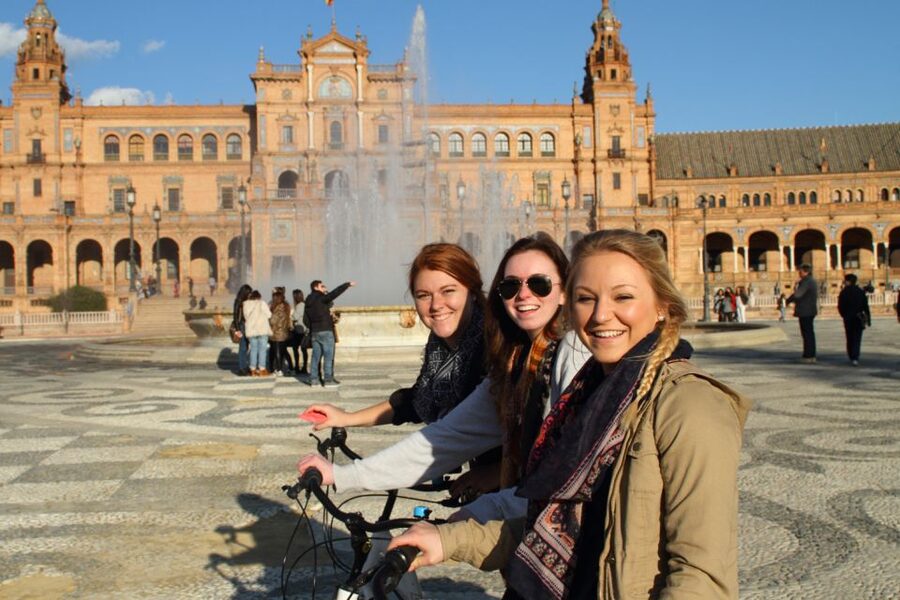
Plaza de España also helps you connect Seville’s grand public spaces into one mental picture. If you’ve seen it in photos but never understood how it feels on the ground, this tour gives you a guided way to see it without wandering.
New York Dock, Real Maestranza, and Torre del Oro by the Riverfront
After the parks and major squares, the route moves into the river-connected highlights: New York dock, Real Maestranza, and Torre del Oro.
This section is all about atmosphere and views. You’ll feel the shift from inland plazas to the feeling of Seville facing its waterways and bridge-like corridors. And the guide’s stories help you see these not as random named spots, but as part of a single city system.
Torre del Oro is a strong “final third” landmark on this itinerary. I like tours that don’t save the skyline and signature silhouettes for too late, because it helps you keep anticipation building while you’re still getting your bearings.
Plaza de la Encarnación’s Mushrooms: Historic Seville Meets Modern Seville
The tour finishes with the Mushrooms of the Plaza de la Encarnación. This is one of the easiest places to remember because it’s visually unmistakable and because it flips the tone of the trip.
Up to this point, you’re mostly in historic monuments and classic squares. Then you hit something more avant-garde, and the guide helps you “contrast historic Seville with the most avant-garde.” I like this ending because it turns the day into a story arc, not just a list of stops.
If you want the cleanest souvenir photos, you’ll usually do best starting to shoot at the moment you arrive and then letting the explanation land once you’re in place. Don’t rush this last stop—you’ll want to absorb the contrast.
Guides in Multiple Languages: Why Sebastian and Alexandro Matter
This tour runs with a live guide in multiple languages: Spanish, English, French, Italian, and Dutch. That’s useful on a bike tour, where you need clear directions and tight explanations while you’re moving.
What really gets praised is how the guide handles the group. People highlight Sebastian for being friendly and for explaining well. Others point to Alexandro as a very good guide. There’s also a theme of adapting to what the group wants to see, so the tour doesn’t feel like the guide is stuck reading a script.
A practical note for you: if your group is small, your language experience might differ from what you first expected. I’d treat the language selection as “supported,” not guaranteed in every situation. If you’re traveling with anyone who needs a specific language, consider arriving a few minutes early and asking the guide how the route will be explained.
Bikes, Safety, and What to Check at the Start
Bike rentals are included, and kids can get helmet rentals too. That’s a plus. The issue is that bike condition doesn’t always feel consistent.
Some experiences point out that bikes can be older. Others say they worked fine but weren’t brand new. And a few accounts mention quality problems that can affect comfort or safety, even sounding serious in rare cases.
So here’s what I recommend you do to protect your day:
- When you pick up the bike, take 30 seconds to check brakes and make sure the seat feels stable.
- If anything feels sketchy, tell the staff right away before you roll out.
- Wear your helmet if you’re given one, and keep an easy pace while you learn the route.
This is an easy way to turn a potential downside into a non-issue. The tour’s big strength is the route and guide. Don’t let the bike derail that.
Price and Logistics: Is $35 Good Value for Seville’s Big Sights?
Let’s talk value in plain terms. You pay $35 per person for a 2.5-hour guided ride. In return, you get:
- Bike rental (and helmets for children)
- A live guide in multiple languages
- A water bottle and map
- Skip-the-ticket-line support
If you were doing this on your own, you’d likely pay for bike rental plus spend time figuring out where to go and how to line up major sights efficiently. Even with your own planning, a guided route helps you avoid the “where are we going next?” stress.
Where the value could dip is if bike comfort becomes a problem or if your group language preference doesn’t match what you hoped. That’s not a reason to avoid the tour altogether. It’s a reason to arrive ready: check the bike, then enjoy the fact that you’re getting a lot of Seville in a short, guided loop.
Also, remember the rule that you should bring your ID.
One more note: the tour is not suitable for people with mobility impairments. Because it’s bike-based, it’s not a “work around it” situation.
Should You Book This Seville Bike Tour?
You should book if you want Seville’s headline sights in a single 2.5-hour session and you like learning as you move—plazas, the Cathedral area with the Giralda, the old Tobacco Factory, major squares and parks, and a modern finish at the Mushrooms of Plaza de la Encarnación.
You might skip it if you’re sensitive to bike quality, prefer long indoor stops, or need an accessibility-friendly format. If you do book, show up early, check your bike before rolling, and ask your guide how the language will work for your group.
Overall, for the price and the range of Seville landmarks packed into one coherent route, this is a very strong option—especially if your travel style is active and you enjoy stories tied directly to what you’re seeing.
FAQ
How long is the Seville 3–Hour Sightseeing Tour?
The tour lasts 2.5 hours.
How much does the tour cost?
The price is $35 per person.
Where do I meet for the tour?
You meet at the Centerbici store, C/ Espronceda, 5 – 41004 – Sevilla.
What is included in the price?
It includes a 3-hour tour of Seville, bike rental, a bilingual live guide, a water bottle, and a map.
Is helmet rental included for children?
Yes, helmet rental for children is included.
Does the tour help me skip the ticket line?
Yes, the tour includes skip-the-ticket line.
What languages are available for the live guide?
The guide is available in Spanish, English, French, Italian, and Dutch.
Is the tour suitable for people with mobility impairments?
No, it is not suitable for people with mobility impairments.
What do I need to bring with me?
You should bring your ID.
More Tours in Seville
- Seville: Alcázar, Cathedral & Giralda Skip-the-Line Tour
★ 4.8 · 11,525 reviews - Seville: Cathedral, Giralda & Alcazar Entry With Guided Tour
★ 4.6 · 8,560 reviews - Seville: Priority Access Cathedral, Giralda & Alcázar Tour
★ 4.8 · 7,563 reviews - Seville: Alcázar and Cathedral Entry Ticket and Guided Tour
★ 4.6 · 5,056 reviews - Seville: City Sightseeing Hop-On Hop-Off Bus Tour
★ 4.0 · 4,633 reviews
More Tour Reviews in Seville
- Seville: Live Flamenco Dancing Show Ticket at the Theater
★ 4.7 · 16,396 reviews - Seville: Alcázar, Cathedral & Giralda Skip-the-Line Tour
★ 4.8 · 11,525 reviews - Seville: 1-Hour Guadalquivir River Sightseeing Eco Cruise
★ 4.2 · 10,281 reviews - Seville: Setas de Sevilla Entry Ticket
★ 4.6 · 8,901 reviews - Seville: Cathedral, Giralda & Alcazar Entry With Guided Tour
★ 4.6 · 8,560 reviews
Just added to the Seville list


Tours, compared.
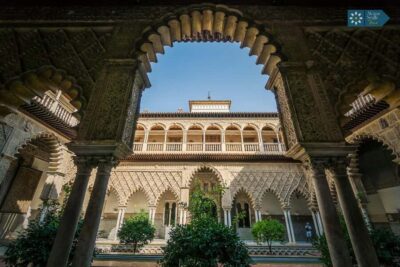 ★ 4.8Alcázar, Cathedral & Giralda Skip-the-Line TourFrom $6411,525 reviews
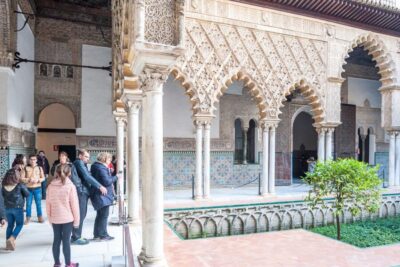 ★ 4.6Cathedral, Giralda & Alcazar Entry With Guided TourFrom $658,560 reviews
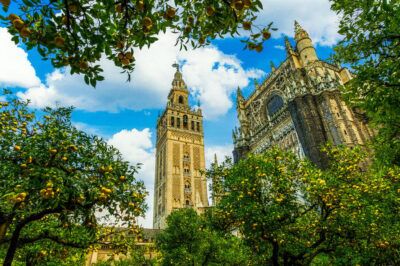 ★ 4.8Priority Access Cathedral, Giralda & Alcázar TourFrom $647,563 reviews
 ★ 4.6Alcázar and Cathedral Entry Ticket and Guided TourFrom $785,056 reviews
 ★ 4.0City Sightseeing Hop-On Hop-Off Bus TourFrom $334,633 reviews
 ★ 4.5Alcazar and Cathedral of Seville Tour with Skip the Line TicketsFrom $714,579 reviews
 ★ 4.6Alcázar of Seville Skip-the-Line Tickets and Guided TourFrom $443,941 reviews
 ★ 5.0Sevilla Food Tour: Tapas, Wine, History & TraditionsFrom $833,468 reviews