
Review · SEVILLE OLD TOWN WALKS
Private walking tour of Triana
Triana tells its story like a local. This private walking tour threads legends and landmarks into one easy loop, from Rodrigo de Triana’s Earth-cry to the flamenco identity carved into the neighborhood. I like that it’s led by Beatriz Pérez García, and she’s known for a relaxed, friendly pace that makes history feel human.
Two things I especially enjoy: the walk links serious themes (Inquisition, Muslim trade routes) with everyday Triana scenes (markets and fair traditions), and it keeps the group small enough for real conversation. One thing to keep in mind: it’s an external route, so you’re mostly viewing sights from the street rather than doing full interior museum time.
In This Review
- Key highlights to look for
- Triana on Foot: What This 90-Minute Private Tour Delivers
- Start at Torre del Oro and Follow the River Stories
- Rodrigo, Santa Ana Church, and the New World Angle
- Guadalquivir Fair Traditions, Carmen Chapel, and Triana Ceramics
- Mercado de Triana, Theater, and Where to Eat Nearby
- Inquisition Castle, Beethoven’s Fidelio, and the Tower of Gold
- Puente de Triana at Night and Flamenco’s Monument
- Price and Value for a Private Walking Loop
- Should You Book This Tour of Triana?
- FAQ
- How long is the private walking tour of Triana?
- Where does the tour start and end?
- Is there pickup available?
- Is this a private tour?
- Are monument entrances included?
- Does the tour include an audio guide?
- Can I cancel and get a refund?
Key highlights to look for
- Beatriz Pérez García (often called Bea) brings the stories in a calm, question-friendly way.
- Private format with a group cap of 15 means you’re not stuck in a cattle line.
- Market + ceramics turn the tour from sightseeing into neighborhood texture.
- No monument entrances included, so the value is the storytelling and the viewpoints.
- Riverfront connections link the New World era to Triana’s cultural life today.
- Torre del Oro to Castillo de San Jorge forms a strong “from trade to power” storyline.
Seville on foot, a few more walks
- Seville: Small-Group City Highlights Walking Tour★ 5.0 · 1,204 reviews
- Cultural Walking Tour of Seville Monumental★ 5.0 · 861 reviews
- Seville: Tapas, Taverns, and History Walking Tour★ 4.9 · 676 reviews
Triana on Foot: What This 90-Minute Private Tour Delivers
This is a compact 90-minute (about 1 hour 30 minutes) private walk that focuses on place-based storytelling. You’ll cover a neat set of stops tied to Triana’s history, music culture, and day-to-day life along the Guadalquivir. The pace is built for orientation: you come away knowing how Triana “hangs together,” not just what each stop is called.
I also like the way the tour respects your time. With a short visit at each location, you can keep your energy without feeling like you need museum stamina. And because it’s private, you can ask questions as they come up—especially useful if you’re the type who likes to understand why something is where it is.
The tour is in English, and it uses a mobile ticket. If your group size grows, you’ll also want to know about the audio rule: audio guides are mandatory in groups of more than 7 people at €1.00 per person. That’s not a dealbreaker, but it affects how interactive the walk feels.
Start at Torre del Oro and Follow the River Stories
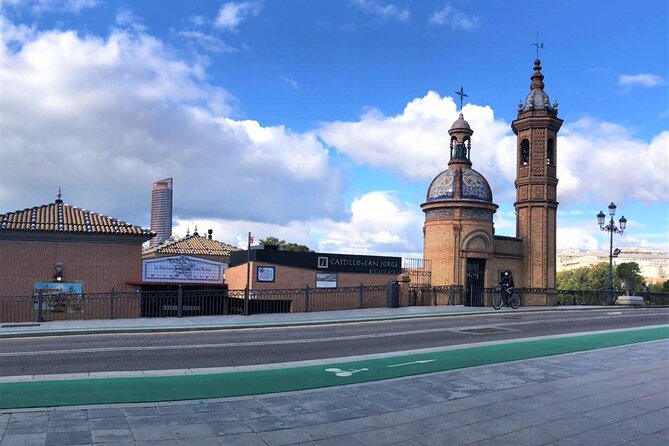
The tour begins at Torre del Oro (P.º de Cristóbal Colón, s/n, Casco Antiguo, 41001 Sevilla). The guide waits at the main entrance to the tower, which is helpful if you don’t want to play guessing games with your meeting spot. You’ll end at Museo del Castillo de San Jorge (Pl. del Altozano, s/n, 41001 Sevilla). The castle is next to the Triana Market, so it’s a convenient finish if you want to keep exploring after the tour.
This route works well because it moves in a logical direction: river history first, then Triana’s religious and cultural stops, then toward the Inquisition-era power sites. You also get a good mix of “iconic Seville” landmarks and a more local Triana feel, without needing to squeeze in extra transfers.
If you’re traveling with accessibility needs, the tour notes most travelers can participate, and it’s near public transportation. Service animals are allowed, which makes it easier for many people to travel confidently.
Rodrigo, Santa Ana Church, and the New World Angle
You kick things off at the Monumento a Rodrigo de Triana. Rodrigo de Triana is linked to the first sighting of the New World from the Caravel Pinta on October 12, 1492—the famous cry of Earth. Even if you’ve seen Seville’s world-history themes elsewhere, this stop gives a more Triana-specific lens. It frames the neighborhood as part of the larger story of discovery, not just a “pretty side of town.”
From there, you head to Iglesia de Santa Ana. This is described as the first church built outside the city of Seville after its Reconquest. Inside, the highlight is the Virgen de la Victoria, tied to Magellan’s prayer before his spice-islands voyage. That Magellan connection is a great example of how the tour blends local devotion with global exploration.
One practical note: monument entry isn’t included. So your experience here depends on what you can see from the outside and what the group can access along the way. Still, even exterior stops can be very meaningful if your guide points out the right details and gives you the context—especially with a site that connects to both Reconquest history and maritime voyages.
More days with a guide of your own


Guadalquivir Fair Traditions, Carmen Chapel, and Triana Ceramics
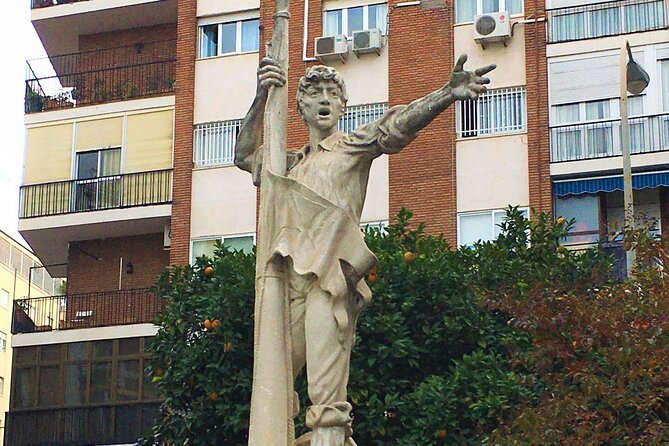
Next comes a Triana-style river moment at the Río Guadalquivir. When the Santa Ana Fair happens, a cucaña is placed on the river: a slippery pole on a boat, with a prize at the end. It’s the kind of tradition that sounds like pure chaos—in the fun sense—and it helps you picture Triana as a neighborhood with living customs, not just monuments.
Then you visit Capilla Virgen del Carmen. This small chapel is nicknamed the “lighter” among Sevillians because of its shape. Inside, you’ll find an image of the Virgen del Carmen, known as the patron saint of sailors. I like this stop because it adds a human working-life angle. Triana’s identity connects to the river and to travel by sea, so the chapel theme fits the route naturally.
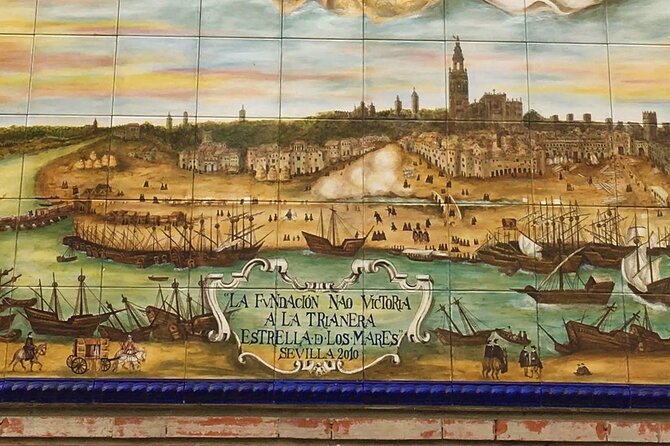
From there, you’ll walk to Cerámica Triana, located where the old Santa Ana Factory once operated in the late 19th and early 20th centuries. The key point here is the exterior tilework—the decoration is the star. Even without going inside, it’s a strong reminder that Triana expresses itself through craft. If you love design and practical art, you’ll likely enjoy having a dedicated stop for ceramics rather than treating it like a quick photo pause.
Mercado de Triana, Theater, and Where to Eat Nearby
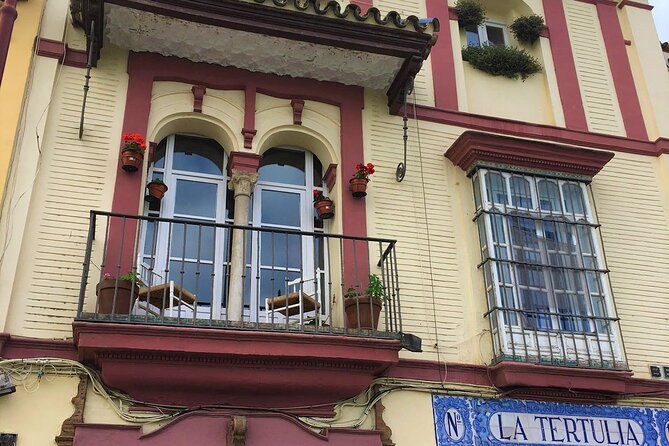
A favorite part of this tour for many people is Mercado de Triana. It’s described as unconventional, with exotic fruits and products you won’t usually see in other markets. That makes the stop useful even if you’re not shopping. You can scan what locals actually buy, and that alone tells you a lot about what Triana values.
There’s also a quirky detail: the market has the smallest theater in Seville, with 28 locations. It’s the kind of fact that turns a “walk-by market” into a story you’ll remember later.
Also, this is where the tour can pay off beyond the route itself. One of the best-reviewed things about this experience is that your guide helps with off-the-beaten-track dining spots. I’d treat that as a bonus value: ask for a recommendation while the tour is still fresh. If you’ve been thinking about dinner, it’s smart to get local guidance when you’re already in the right neighborhood.
Because entrances and ticketed monument time aren’t part of the standard package, this market stop is where you’ll likely feel the most hands-on neighborhood energy. Even just looking around is enough to make the walk feel grounded.
Inquisition Castle, Beethoven’s Fidelio, and the Tower of Gold
Now you move into the heavy-hitting sites. At the Castillo de San Jorge, you learn that it was used as the seat of the Court of the Inquisition. The reason this place matters historically is Seville’s position in the Crown of Castile with a large number of people who converted to Christianity. It’s not a topic everyone wants to linger on, but it’s central to understanding how power operated here.
What makes this stop more interesting is the cultural twist: the castle is also linked to Beethoven, who used it as the setting for his opera Fidelio—his only opera. The storyline involves Floristan, a man locked in his cell for political ideas. That’s a big contrast from the dry label of an Inquisition court, and it gives you something to chew on: how the same walls can inspire art and fear, depending on who’s telling the story.
From there, you head to Torre del Oro again—but this time, you’re using it as a viewpoint and a theme. The description ties it to a Muslim era role: it was a place where goods of the New World were unloaded. Whether you care more about architecture or trade history, your guide can help connect the dots between the river, the tower, and what got moved through Seville.
This is another reason I think the route works: you aren’t just collecting facts. You’re building a mental map of how Seville’s global connections filtered into daily life, then into institutions, then into culture.
Puente de Triana at Night and Flamenco’s Monument
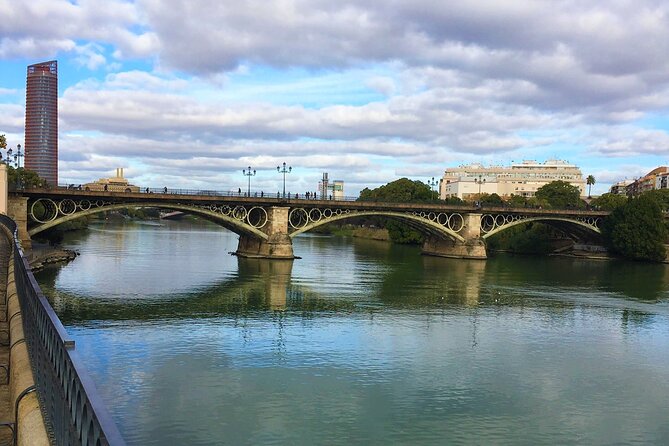
Your walk finishes with a mix of romance and identity. At Puente de Isabel II (also called Puente de Triana), the big idea is how it looks in the illuminated evening setting. The bridge is also connected to an earlier boat bridge that used to be found here. That continuity matters: the river crossings are part of Triana’s rhythm, not just a one-time engineering moment.
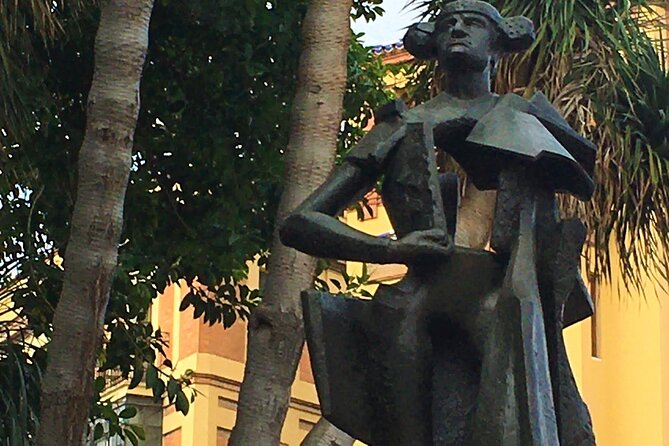
Then you stop at Monumento Triana al Arte Flamenco. This monument represents the importance of flamenco in the neighborhood, since flamenco is described as being born in Triana. Even if you’re not a hardcore flamenco fan, this is one of those “now I get it” stops. It helps you understand why Triana feels different from other parts of Seville. The art isn’t just something you go see later—it’s treated like part of the neighborhood’s identity.
If you’re a night owl, consider pairing this with an evening wander after the tour ends. You’ll already know what you’re looking for, and you can slow down where the guide pointed out the best angles.
Price and Value for a Private Walking Loop
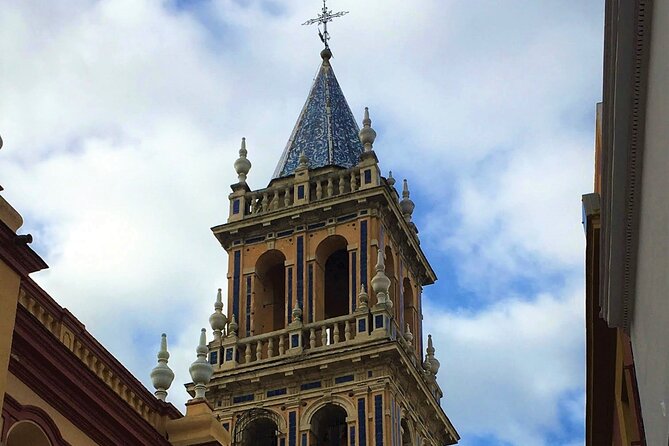
The price is $72.49 per person for about 1 hour 30 minutes. For a private walking tour, that can be a fair value, especially since it includes a private guide and not just a self-guided script. You’re paying for human interpretation: the chain of stories that connects the New World, religious devotion, river traditions, and power institutions.
What you should factor in is what isn’t included. The tour is an external route, and it doesn’t include entrances to monuments. Some stops note admission tickets aren’t included, so if you want to go inside churches or deeper into specific attractions, you’ll need to plan that separately.
Audio guides might be relevant if your group is bigger than 7 (mandatory in that case at €1.00 per person). That’s small money, but it changes the experience tone—more listening, less spontaneous conversation.
If you’re traveling as a couple or small group, you’re likely to get the best experience from the private format. And if you like practical travel help, don’t miss the chance to ask for a dinner suggestion—those local dining tips are part of the tour’s value in a way you can feel right away.
Should You Book This Tour of Triana?
I’d book this tour if you want a high-context Triana walk—one that connects neighborhoods to big historical themes without turning it into a lecture. It’s especially a smart choice when you’re also trying to avoid Seville’s biggest-crowd highlights and still get meaningful history and real neighborhood life.
Skip it (or add an interior-visit plan) if your priority is museum-style time inside buildings. Since entrances aren’t included and it’s mostly external viewing, the experience is about stories, street details, and viewpoints.
One final tiebreaker: the guide quality. The consistent praise points to Beatriz Pérez García bringing enthusiasm, answering questions patiently, and sharing Triana like someone who truly lives it. If that matters to you, this is a strong fit.
FAQ
How long is the private walking tour of Triana?
It lasts about 1 hour 30 minutes.
Where does the tour start and end?
It starts at Torre del Oro, P.º de Cristóbal Colón, s/n, Casco Antiguo (41001 Sevilla), and it ends at Museo del Castillo de San Jorge, Pl. del Altozano, s/n (41001 Sevilla).
Is there pickup available?
Pickup is offered. You’ll receive confirmation details at booking.
Is this a private tour?
Yes. It’s a private tour/activity, and only your group participates. The group size is capped at 15 people.
Are monument entrances included?
No. It’s an external route, so it does not include entrance to monuments.
Does the tour include an audio guide?
Audio guides are mandatory for groups of more than 7 people, and the cost is €1.00 per person.
Can I cancel and get a refund?
No. The experience is non-refundable and cannot be changed for any reason.
More Tour Reviews in Seville
- Seville: Live Flamenco Dancing Show Ticket at the Theater
★ 4.7 · 16,396 reviews - Seville: Alcázar, Cathedral & Giralda Skip-the-Line Tour
★ 4.8 · 11,525 reviews - Seville: 1-Hour Guadalquivir River Sightseeing Eco Cruise
★ 4.2 · 10,281 reviews - Seville: Setas de Sevilla Entry Ticket
★ 4.6 · 8,901 reviews - Seville: Cathedral, Giralda & Alcazar Entry With Guided Tour
★ 4.6 · 8,560 reviews
A Guide of Your Own in Seville
- Seville: Private City Tour by Eco Tuk Tuk
★ 4.8 · 963 reviews - Seville Private Walking Tour with Alcazar & Cathedral Tickets
★ 5.0 · 332 reviews - Private Walking Tour Alcazar and Cathedral in Sevilla
★ 5.0 · 172 reviews - Alcazar and Cathedral of Seville Private Tour
★ 5.0 · 149 reviews - Private Tour Jewish Quarter, center and Plaza de España
★ 5.0 · 127 reviews
More Walks Through the Old Town
- Seville: Small-Group City Highlights Walking Tour
★ 5.0 · 1,204 reviews - Cultural Walking Tour of Seville Monumental
★ 5.0 · 861 reviews - Seville: Tapas, Taverns, and History Walking Tour
★ 4.9 · 676 reviews - Seville: Tapas, Taverns and History Guided Walking Tour
★ 4.9 · 515 reviews - Seville: Small-Group Jewish Quarter Discovery Walking Tour
★ 4.9 · 499 reviews
Just added to the Seville list



Seville Old Town Walks, compared.
 ★ 5.0Small-Group City Highlights Walking TourFrom $271,204 reviews
 ★ 5.0Cultural Walking Tour of Seville MonumentalFrom $8861 reviews
 ★ 4.9Tapas, Taverns, and History Walking TourFrom $84676 reviews
 ★ 4.9Tapas, Taverns and History Guided Walking TourFrom $99515 reviews
 ★ 4.9Small-Group Jewish Quarter Discovery Walking TourFrom $29499 reviews
 ★ 5.0Seville Guided Small-Group Walking TourFrom $21435 reviews
 ★ 4.7Paranormal and Legends Guided Walking TourFrom $15336 reviews
 ★ 5.0Seville Private Walking Tour with Alcazar & Cathedral TicketsFrom $276332 reviews
Browse the lists this tour appears in