
Review · SETAS DE SEVILLA
Guided walking tour to Setas, La Macarena and Dueña’s Palace in Seville
Seville gets a guided shortcut. This walk threads together standout sights like the Metropol Parasol area, the Palacio de las Dueñas, and key neighborhoods such as Macarena—all with a route that helps the city make sense. I love that your palace visit is time-boxed but substantial, and that the guide connects what you see to street-level places like San Luis and market surroundings. One real thing to plan for: you’ll be outside most of the time, and bottled water/snacks aren’t included, so bring your own and dress for weather.
I also like that the tour stays human-sized (max 30) and uses strong guiding—names you may hear mentioned include Julian and Mari Paz, both known for clear, friendly explanations of the monuments and the neighborhood route. The final payoff is arriving back at Dueñas, where the inside visit gives you the best chance to slow down and look carefully.
The route is very doable for most people, but it does mean steady walking on historic streets. If you’re tight on time or you hate moving at all, you may prefer a slower stop-and-stay plan—but if you want a smart “see a lot, understand a lot” loop, this works well.
In This Review
- Key highlights (why this tour clicks)
- A 3.5-hour Seville loop that actually explains the city
- Starting at Setas de Sevilla: a modern landmark at the city’s edge of old
- Palacio de las Dueñas: where the visit turns from looking to seeing
- Macarena district and the Virgin: a neighborhood stop, not a checkbox
- San Juan de la Palma and street-market energy
- Mudejar palace details: Marquis of Aljaba and the medieval layers
- Walking the ancient Cardo Máximo: the city’s spine under your feet
- The route’s practical rhythm: group size, pace, and timing
- Guides make the difference: Julian and Mari Paz as a clue to what you’ll get
- What’s included, what isn’t, and how to set yourself up for an easy win
- Who this tour suits best (and who should think twice)
- Booking decision: should you book this Seville walking tour?
- FAQ
- How long is the guided walking tour?
- How much does the tour cost?
- What’s included in the price?
- What isn’t included, and what should I bring?
- Where do I meet the guide, and when does it start?
- Where does the tour end?
- Is the group size limited?
- Is it okay if I travel with a service animal?
Key highlights (why this tour clicks)
- Palacio de las Dueñas inside visit (1 hour) with tickets included
- Macarena sights, including the basilica area and the Virgin of the city
- Mudejar stops like the Marquis of Aljaba’s palace-adjacent area and Santa Marina’s church
- Walking the Cardo Máximo route to track Seville’s layers from Roman to later eras
- Small-group feel with a maximum of 30 people
- Strong guide approach, with Julian and Mari Paz frequently praised for making the route easy to follow
More time up on the Setas walkways
- Seville: Flamenco Show Ticket at Tablao Flamenco Las Setas★ 4.8 · 2,214 reviews
- Espectáculo Flamenco Tablao “Las Setas”★ 5.0 · 59 reviews
- Seville: Salvador Church, Casa Pilatos, and Metropol Tour★ 4.8 · 20 reviews
A 3.5-hour Seville loop that actually explains the city
This is the kind of walking tour that works because it doesn’t treat Seville like a postcard list. You’re moving through the historic center with a guide who ties monuments to streets and neighborhoods. In practice, that means you finish with a better sense of where things are—and why Seville evolved the way it did.
The big “value moment” is Dueñas. You get a ticket-included visit, not just a look from outside. Add in stops across Macarena and Mudejar-adjacent areas, plus a Roman-glimpses stop early on, and you get variety without a long commute.
At about 3 hours 30 minutes, it’s long enough to feel like a real experience but short enough to still have energy for a separate evening plan—tapas, a flamenco show, or a slower wander through streets you noticed during the tour.
Starting at Setas de Sevilla: a modern landmark at the city’s edge of old
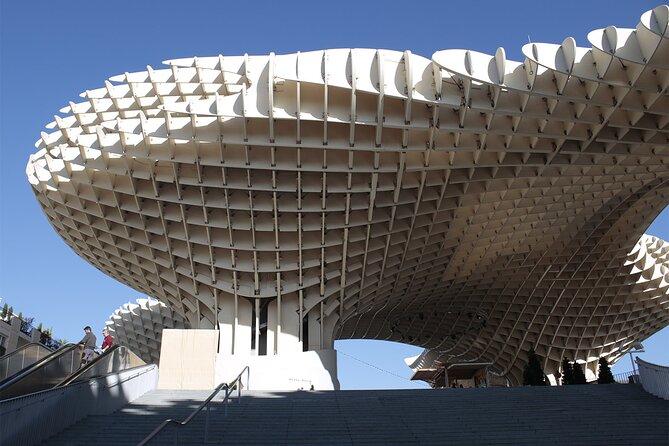
The tour begins at Setas de Sevilla, at Pl. de la Encarnación. This matters because it sets up a contrast: you start near a modern structure and then walk into older layers fast. Even before you hit the main historic sights, you’re already seeing how Seville mixes time periods in one compact area.
If you like getting your bearings, this is a helpful starting point. The location is easy to reach by public transportation, and the meeting point is clear—at the Setas entrance area.
Practical tip: if you’re taking photos, aim for a quick snapshot here early. Later, when you’re deeper into the historic core, it’s harder to stop without disrupting the group pace.
Palacio de las Dueñas: where the visit turns from looking to seeing
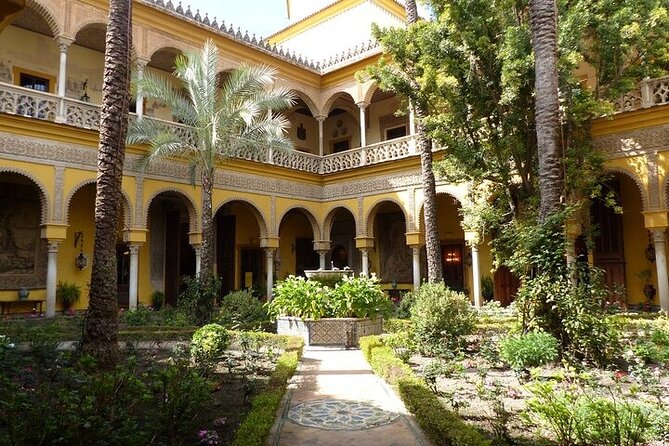
Dueñas is the anchor of the whole tour. You’ll spend about 1 hour inside the Palacio de las Dueñas, and tickets are included. That included ticket detail is worth noticing: palace entry can be one of the biggest friction points on your own, and here it’s handled for you.
What I like about this stop as a traveler is how it pairs with the walking route. You’re not arriving cold. Earlier portions of the walk give you context about medieval and older Seville, so when you step into a ducal residence, you’re better prepared to recognize what you’re looking at—rooms, layouts, and how the palace relates to its surroundings.
Also, the guide experience matters here. In the tour feedback you can see a pattern: people highlight guides like Julian and Mari Paz for explaining what you’re seeing instead of reciting dates. That makes the hour inside feel less like waiting in a line and more like a guided viewing.
What to consider: this palace visit is inside a historic property, so comfortable shoes still matter. You’ll likely do enough walking to justify water on your own.
Seville on foot, a few more walks



Macarena district and the Virgin: a neighborhood stop, not a checkbox
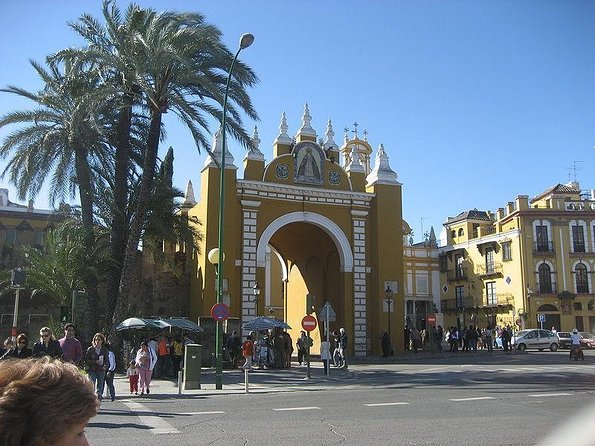
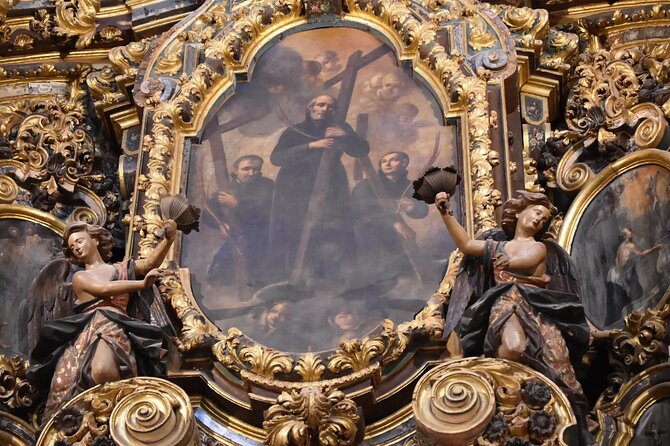
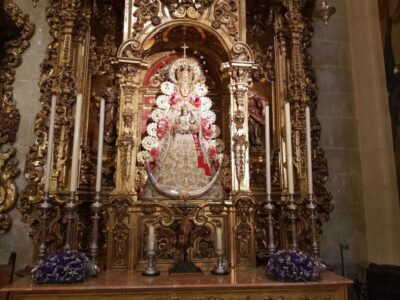
From there, the walk pushes into the Macarena area. You’ll visit the Basilica of Macarena’s Brotherhood and the city gate, and you’ll also have a chance to see the famous Virgen de la Macarena.
This is one of the most “Seville-sounding” parts of the itinerary. The Macarena area isn’t just a pretty backdrop; it’s tied to local religious tradition and the identity of the city. Even if you don’t know the religious specifics ahead of time, you’ll feel how the neighborhood centers around this landmark.
Why this stop is valuable: it breaks the tour out of a purely architectural mode. Instead of only thinking about styles and buildings, you’re reminded that Seville is lived-in. That makes the medieval and Mudejar elements you’ll see later feel more grounded.
One consideration: church and basilica areas can mean crowds depending on timing. Keep a little flexibility in your expectations for how much quiet looking you’ll get and focus on letting the guide steer your attention.
San Juan de la Palma and street-market energy
The tour continues to the Church of San Juan de la Palma, a well-known emblematic spot in Seville where you’ll also find one of the city’s traditional street markets nearby. This part of the experience is less about a single monument and more about atmosphere—how locals shop, talk, and move through the day.
As a practical matter, market surroundings can be perfect for learning street names and how neighborhoods connect. You walk along and the guide helps you “read” the area, so you’ll have an easier time finding your way later even after the tour ends.
If you like taking photos, this is a good place to do it quickly. The best shots here usually require timing and a gentle approach—don’t block paths, and follow your guide’s lead on where it makes sense to pause.
Mudejar palace details: Marquis of Aljaba and the medieval layers
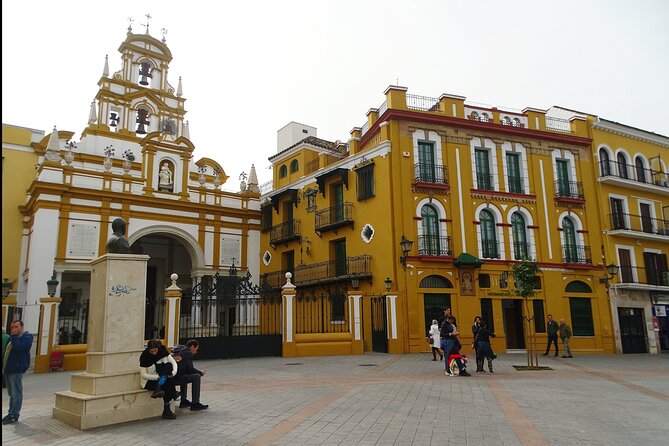
Next, you’ll head toward a Mudejar palace of the Marquis of Aljaba, located next to the Omnium Sanctorum Church. Even if you’re not a specialist in architectural styles, the point of this stop is simple: Mudejar craftsmanship is one more “Seville vocabulary word,” and the guide helps translate it into what you can actually see.
Then you’ll continue toward the Mudejar Church of Santa Marina and learn about its temple and surrounding area. Again, this keeps the tour from becoming only “great big famous monuments.” Instead, you get smaller, style-specific experiences—often the places that reward slower looking.
What makes this section work for you: it gives variety in architecture and visual texture. You’re not just scanning facades; you’re learning what to notice next. If you’ve ever felt like historic cities blur together, this kind of targeted style stop helps you separate them in your mind.
Walking the ancient Cardo Máximo: the city’s spine under your feet
A standout element of this tour is that it follows the ancient Cardo Máximo, marked as part of the route. The Cardo Máximo was the principal north-south street of Roman city planning. Walking that alignment—then seeing later neighborhoods and monuments around it—gives you a “how the city grew” feeling that you can’t get from a map alone.
This is where guided walking tours earn their keep. You’re physically moving through the same city axis people have used for centuries. That’s not just romantic; it’s practical. It helps you remember where key areas sit relative to one another.
If you love understanding cities rather than just collecting photos, this segment will be a highlight.
The route’s practical rhythm: group size, pace, and timing
With a maximum of 30 travelers, you can usually hear the guide and still move without getting stuck in a bottleneck. The duration of about 3 hours 30 minutes is also a sweet spot: it gives time for meaningful stops without turning the day into a full marathon.
You start at 10:00 am and end at Palacio de las Dueñas (near C. Dueñas, 5, at the entrance gate). So you’re essentially circling through the center and coming back to the palace—handy if you want to continue exploring on your own right after.
What you should bring:
- Comfortable walking shoes
- Your own water and a small snack, since bottled water/snacks aren’t included
- A light layer, since weather can shift and the tour notes it requires good weather
Guides make the difference: Julian and Mari Paz as a clue to what you’ll get
Across the feedback, strong praise repeatedly lands on guides being both professional and friendly, with clear explanations and good routing through neighborhoods. Names like Julian and Mari Paz show up as examples of guides who go beyond “here’s the building” and instead help you understand what you’re looking at and how the route connects.
That matters because this kind of walking tour has a lot of “moving parts”: Roman traces, basilica territory, street-market surroundings, Mudejar churches and palatial interiors. If the guide is sharp, it feels like a story. If not, it can feel like hurried sightseeing. Based on the emphasis you’ll see, the experience is designed to be the storytelling kind.
What’s included, what isn’t, and how to set yourself up for an easy win
This tour includes:
- Tickets to the House Palace of Dueñas
- A professional guide
Not included:
- Bottled water
- Snacks
So the value angle isn’t only the price—it’s that one big-ticket element (Dueñas entry) is handled. A lot of walking tours fail on exactly this point: they give you a “brief exterior look” while you scramble for tickets later. Here, the palace visit is central and prearranged.
Also, since you’re walking for hours, don’t assume you’ll be able to buy what you need quickly at every stop. Bring a bottle and a snack you like. You’ll enjoy the tour more when you’re not mentally negotiating hunger or thirst.
Who this tour suits best (and who should think twice)
This is a smart match for you if:
- You want to see a lot in one morning without feeling like you’re on a frantic sprint
- You enjoy understanding neighborhoods, not just monuments
- You care about palaces and architectural styles like Mudejar
- You like the idea of walking along an ancient route like the Cardo Máximo
Think twice if:
- You prefer very slow travel with long free time at each stop
- You need a completely accessible, minimal-walking plan (this is a walking tour through historic streets)
- You’ll struggle with being outside much of the time, since the tour requires good weather
Booking decision: should you book this Seville walking tour?
I’d book this tour if you want a structured way to experience Seville’s layers—Roman alignments, Macarena devotion, Mudejar details, and a real inside look at Dueñas—without juggling tickets yourself. The combination of included palace entry and a guide who’s praised for making the route easy to follow is the kind of value that actually shows up in your day.
If you’re the type who hates crowds, avoid assuming every church stop will feel quiet. Bring a little flexibility, keep an eye on weather, and plan your own snack and water.
If your goal is to understand Seville, not just photograph it, this walk is a strong use of a half-day.
FAQ
How long is the guided walking tour?
The tour lasts about 3 hours 30 minutes.
How much does the tour cost?
The price is $44.71 per person.
What’s included in the price?
The tour includes tickets to the House Palace of Dueñas and a professional guide.
What isn’t included, and what should I bring?
Bottled water and snacks are not included. Bring your own water and a small snack.
Where do I meet the guide, and when does it start?
The meeting point is Setas de Sevilla, Pl. de la Encarnación, s/n, and the start time is 10:00 am.
Where does the tour end?
The tour ends at Palacio de las Dueñas, C. Dueñas, 5, at the entrance gate.
Is the group size limited?
Yes. The tour has a maximum of 30 travelers.
Is it okay if I travel with a service animal?
Yes. Service animals are allowed.
More Tour Reviews in Seville
- Seville: Live Flamenco Dancing Show Ticket at the Theater
★ 4.7 · 16,396 reviews - Seville: Alcázar, Cathedral & Giralda Skip-the-Line Tour
★ 4.8 · 11,525 reviews - Seville: 1-Hour Guadalquivir River Sightseeing Eco Cruise
★ 4.2 · 10,281 reviews - Seville: Setas de Sevilla Entry Ticket
★ 4.6 · 8,901 reviews - Seville: Cathedral, Giralda & Alcazar Entry With Guided Tour
★ 4.6 · 8,560 reviews
More Walks Through the Old Town
- Seville: Small-Group City Highlights Walking Tour
★ 5.0 · 1,204 reviews - Cultural Walking Tour of Seville Monumental
★ 5.0 · 861 reviews - Seville: Tapas, Taverns, and History Walking Tour
★ 4.9 · 676 reviews - Seville: Tapas, Taverns and History Guided Walking Tour
★ 4.9 · 515 reviews - Seville: Small-Group Jewish Quarter Discovery Walking Tour
★ 4.9 · 499 reviews
Up on the Setas Again
- Seville: Setas de Sevilla Entry Ticket
★ 4.6 · 8,901 reviews - Seville: Flamenco Show Ticket at Tablao Flamenco Las Setas
★ 4.8 · 2,214 reviews - Espectáculo Flamenco Tablao “Las Setas”
★ 5.0 · 59 reviews - Seville: Salvador Church, Casa Pilatos, and Metropol Tour
★ 4.8 · 20 reviews - Seville: Palacio de Las Dueñas, La Macarena & Las Setas Tour
★ 4.3 · 11 reviews
Just added to the Seville list



Setas de Sevilla, compared.
 ★ 4.6Setas de Sevilla Entry TicketFrom $188,901 reviews
 ★ 4.8Flamenco Show Ticket at Tablao Flamenco Las SetasFrom $332,214 reviews
 ★ 5.0Espectáculo Flamenco Tablao “Las Setas”From $4059 reviews
 ★ 4.8Salvador Church, Casa Pilatos, and Metropol TourFrom $4620 reviews
 ★ 4.3Palacio de Las Dueñas, La Macarena & Las Setas TourFrom $4611 reviews
Browse the lists this tour appears in