

Review · CITY TOURS
e-Scavenger hunt Seville: Explore the city at your own pace
Seville becomes a puzzle on your phone. This self-guided e-scavenger hunt turns the city into a game: you use a mobile app, follow GPS, and answer prompts as you make your way through some of Seville’s best-known landmarks at a pace you control. It’s the kind of activity that works when you want to see a lot without locking yourself into a fixed schedule.
I especially like two things: the flexibility (you can start when you want, pause for a break, and choose longer or shorter stops), and the game format that keeps you moving while still letting you linger at squares and monuments. One clear drawback to consider is app reliability—if the app language or translation doesn’t load correctly on your device, you may struggle to follow instructions and keep the game going.
In This Review
- Key things to know before you play
- How a phone game becomes a solid Seville plan
- The walking route: from Avenida Isabel la Católica to Calle Sierpes
- Royal Palace area, Plaza de España, and the Giralda landmarks
- Museo de Bellas Artes and La Casa de Pilatos: culture stops without the lecture
- The Seville Cathedral area, the former mosque-turned-church, and the “records” stop
- Torre del Oro, Plaza del Triunfo, and the river-side atmosphere
- Plaza de América, Plaza Nueva, and the Alameda de Hércules energy
- City Council and Calle Sierpes: finishing in the most walkable part of town
- Price and logistics: value, timing, and what you must bring
- Who this Seville e-hunt suits best (and who should skip it)
- Should you book this e-Scavenger hunt in Seville?
- FAQ
- How much does the Seville e-Scavenger hunt cost?
- How long does the game take?
- Where do I start?
- Does the tour end somewhere else?
- Do I need to bring a smartphone?
- Is this a guided tour or self-guided?
- How do you find the locations during the game?
- Can I do this at any time?
- Is it private for my group?
- Is there free cancellation?
Key things to know before you play

- GPS-led walking: the app helps you find squares, streets, and monuments as you go.
- You control the pace: you can stop for 5 or 10 minutes, or pause longer when you want.
- Pass-by at every location: you’re not meant to rush—each stop gets a built-in moment.
- Major sights in one loop: Real Alcázar, Plaza de España, the Giralda area, the Cathedral zone, and more.
- Small-group value: priced per group (up to 6), so it can be a smart pick for friends or families.
- App language can make or break it: if translation doesn’t work on your phone, the experience may stall.
Still deciding? A few more Seville picks worth a look.
- Seville: City Sightseeing Hop-On Hop-Off Bus Tour★ 4.0 · 4,633 reviews
- Seville: Highlights City Bike Tour★ 4.8 · 2,168 reviews
- City Sightseeing Seville Hop-On Hop-Off Bus Tour★ 4.0 · 1,782 reviews
How a phone game becomes a solid Seville plan
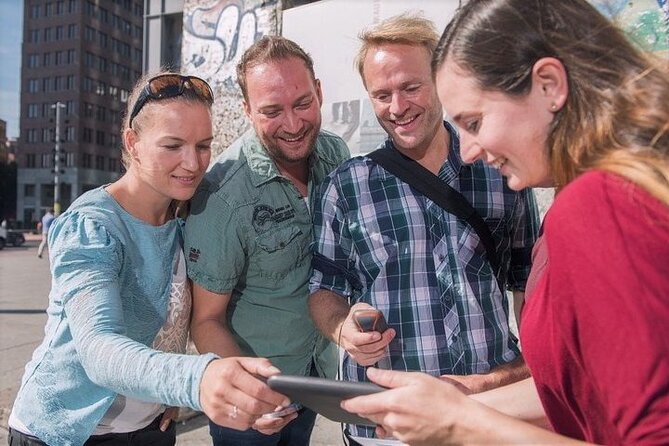
This is not a sit-and-listen tour. It’s a self-guided city game where your smartphone does the talking: you log in to the free city game app, then play as you walk. The basic idea is simple—answer questions about what you’re seeing and complete short search assignments, all while the app guides you between stops.
The big payoff is control. You’re not stuck waiting on anyone else, and you’re not forced to do the “tour pace” shuffle. If you want to spend extra time at a viewpoint or step into shade for a few minutes, you can. For Seville, that matters, because the weather and light can shift quickly, especially as you move between open plazas and quieter lanes.
Another plus: this is priced as $37.12 per group (up to 6), which can be easier to swallow than paying per person for a guide. You’re paying for the app experience and the route, not for a bundle of timed entry tickets.
The walking route: from Avenida Isabel la Católica to Calle Sierpes
Your start point is Avenida Isabel la Católica, 41013 Seville, and the activity ends back at the same place. That “loop back” detail matters because it makes planning straightforward—you can treat it like a long stroll through central sights rather than a point-to-point transfer.
The overall duration is listed as 2 to 4 hours, depending on how long you stay at each stop and how many breaks you take. The app is designed so you can choose to linger—there are built-in moments at each location—so you’re not racing through the city like a game character with a timer.
The sights on the route form a pretty logical “Seville greatest-hits” spread. You’ll hit grand royal and Islamic-era architecture cues (Real Alcázar, the Giralda area, and the mosque-turned-church stop), then move into the Cathedral zone and historic records (Archivo General de Indias). Later you shift toward classic public squares and evening energy (Plaza Nueva, Plaza de América, and the Alameda de Hércules area). The closer you get to Calle Sierpes, the more you feel like you’re in daily Seville life: shops, pedestrians, and short blocks that are perfect for wandering between prompts.
Royal Palace area, Plaza de España, and the Giralda landmarks
The first “wow” stop is the Royal Palace of Seville—Real Alcázar. It’s described as a royal palace, and the name Alcázar ties back to the Arabic word al-qasr, meaning fortress, lock, or palace. For your game, this kind of etymology detail is useful because it turns what could feel like just a pretty building into something you can spot and remember.
Next comes Plaza de España, the crescent-shaped icon that was built for the Ibero-American Exposition of 1929 in Maria-Luisa Park. This is one of those places where the scale can confuse people on their first visit. The app’s questions and search assignments help you look at smaller features while you’re surrounded by big architecture.
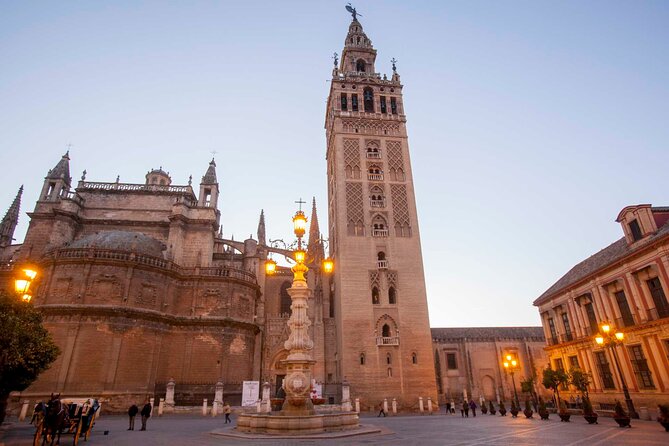
Then you’ll reach the Giralda, Seville’s famous tower. The listed facts here are excellent for your scavenger hunt: it was built by the Almohads between 1184 and 1195, and it was once the tallest minaret in the world. Even if you don’t go inside (and entry isn’t listed as included), you’ll still get a better “read” of what you’re looking at because you know the tower’s origin story.
A practical note: plan to wear shoes that handle uneven sidewalks and plenty of standing. You’ll likely want to pause and reset your phone in your hands after quick questions.


Museo de Bellas Artes and La Casa de Pilatos: culture stops without the lecture
Two stops that make the route feel more than just postcards are Museo de Bellas Artes de Sevilla and La Casa de Pilatos.
At the Bellas Artes museum, you’re not just being pointed at a building. The description says it mainly houses Spanish works from the Middle Ages through the 20th century. That’s a wide range, and it’s exactly the kind of fact that helps you think: this museum isn’t a quick glance stop—it’s a serious archive of Spanish art. In the context of a scavenger hunt, you can treat the museum as a “cultural waypoint,” and if you want more, you can decide whether to add extra time or entry on your own.
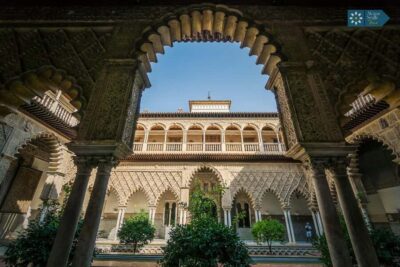
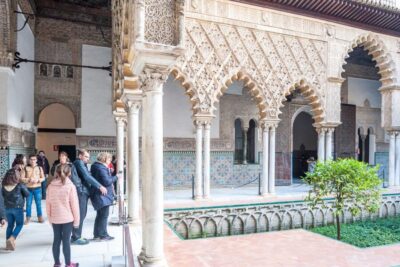
La Casa de Pilatos is described as an Andalusian palace and the permanent residence of the Dukes of Medinaceli. That detail gives the stop a clear social context: this wasn’t a random house. The game’s prompts can make it easier to notice patterns you might otherwise skip—courtyard shapes, palace form, and the kind of grandeur that’s often hiding in plain sight.
The main drawback here is also the main advantage of this format: since it’s game-based, you won’t get a guided explanation unless you bring your own curiosity. If you need a live storyteller to connect the dots, this may feel a bit self-directed. If you like figuring things out as you go, it’s a good match.
The Seville Cathedral area, the former mosque-turned-church, and the “records” stop
One of the most historically packed sections of the route centers on the Seville Cathedral. It’s described as a large Gothic cathedral and the main church of the Archdiocese of Seville. That matters because even from the outside, Gothic cues can be easier to spot once you know what style you’re looking for.
Right around the Cathedral zone, you’ll also encounter the stop described as a former mosque, now a Baroque Roman Catholic church, with a voluminous altar and a floating nave. Even without extra background, that transformation label gives you a lens. Watch for visual contrasts you can actually notice: the shift from mosque-era atmosphere to Baroque Catholic dramatic form.
Then the game steps you into a different kind of power: archives. The Archivo General de Indias houses archives of the Royal and Supreme Council of the Indies. In a city game, this is a smart inclusion because it broadens the usual “look at buildings” approach. You’re not just chasing scenery—you’re confronting how empires kept records, made decisions, and preserved documentation.
If you’re sensitive to crowding, consider doing this portion a little earlier in the day. Plazas and cathedral-adjacent zones can get busy, and your game experience depends on having enough room to pause, read, and move on.
Torre del Oro, Plaza del Triunfo, and the river-side atmosphere

Your hunt also includes Torre del Oro, a tower in Seville on Paseo Cristóbal Colón and the Guadalquivir. It dates to the 13th century. This stop can feel like a breath of air compared with dense historic interiors. Towers by the river tend to give you space to recalibrate the phone in your hand and look around.
Next is Plaza del Triunfo, a square surrounded by three major landmarks: Archivo General de Indias, Seville Cathedral, and Real Alcázar de Sevilla. That “three-in-one” setup is perfect for a scavenger hunt. Instead of walking back and forth, you get a concentration of major anchors—great for answering questions that rely on orientation and recognizing key shapes.
If you like photography, this section is naturally helpful because it sets up big, readable skyline connections. The downside is the same as with any big-name square: you’ll want to keep your eyes up on pedestrians and bike traffic, not just on your screen.
Plaza de América, Plaza Nueva, and the Alameda de Hércules energy
Once the route shifts toward public spaces, it becomes more about vibe than monument size.
In Parque de María Luisa, you’ll reach Plaza de América. It’s described as flanked by the Museum of Popular Arts to the north, the Archaeological Museum to the south, and the Royal Pavilion to the east. Even if you don’t enter any museums, these “neighbor” facts help you map what you’re seeing. The game can turn the park into a checklist: look north, look south, then orient yourself toward the pavilion side.
Then you’ll pass through Plaza Nueva, where the center features a statue of King Ferdinand III of Castile. A statue stop can feel slow on paper, but in a game format it’s often a chance to reset and answer prompts without the pressure of interpreting detailed architecture.
Finally, the Alameda area is included. It’s described as popular with students and creatives, with lively nightlife centered around Alameda de Hércules square. This is the Seville “modern life” section—more street-level, more social energy. The game still keeps you moving, but you’ll feel less like you’re stuck in a history museum and more like you’re walking through daily city rhythms.
City Council and Calle Sierpes: finishing in the most walkable part of town

Two late-route stops keep the experience grounded in everyday Seville.
First is the City Council of Seville, described as the supreme governing and governing body of the Municipality of Seville, Spain. Even if you don’t study the building closely, a stop like this reminds you that a city game isn’t only about monuments. It’s also about how daily governance and public space interact.
Then comes Calle Sierpes, the pedestrianised commercial heart of Seville. This final stretch is ideal for the last phase of a scavenger hunt because it’s easy to wander while you finish remaining prompts. You also get practical freedom: if you want a snack, this is the kind of lane where you’re likely to find options without committing to a long detour.
Price and logistics: value, timing, and what you must bring
At $37.12 per group (up to 6), this can be a good value when you’re splitting costs. You’re paying for the app experience and the guided-by-GPS walking route, not for a traditional guided tour. So the “value” depends on whether you enjoy learning through questions and searching rather than listening to a person.
The listed duration is about 2 to 4 hours, and you can control pacing. That flexibility is great when you have kids, when your group energy varies, or when you want to fit the city between meals.
Important items:
- The tour includes an online app to play the game.
- You do need your own smartphone and data. Data isn’t included, so plan for connectivity.
- It’s a mobile ticket, and you’ll get start instructions after booking.
- It’s private in the sense that only your group participates.
One more logistics consideration: since the experience runs all day on the dates listed (and it says you can do it anytime you choose), you should still pick a time that matches your comfort. Midday heat and late-night crowds can both change how easy it is to read prompts and walk calmly.
Who this Seville e-hunt suits best (and who should skip it)
This is a strong match for:
- Families and groups who want something hands-on and game-like rather than a sit-down narration.
- Travelers who like DIY pacing and don’t want to feel tied to a strict itinerary.
- People who enjoy city learning through spotting details, not just hearing facts.
It may be a weaker match if:
- You depend on a fully working translation or prefer a guided explanation for context. One piece of feedback in the provided information points to trouble translating instructions, which can make the game difficult to play when language support fails.
- Your phone battery life is often short. Since you’re relying on a phone app and GPS, you’ll want your device ready for the whole walk.
Should you book this e-Scavenger hunt in Seville?
If you want a budget-friendly way to hit major landmarks in a city you can feel on foot, I think it’s worth considering. The best part is that the format respects your pace: you can pause, stay longer, and still move through a high-value route that connects Real Alcázar, Plaza de España, the Giralda area, the Cathedral zone, and the quieter “square and street” moments toward Calle Sierpes.
If you’re someone who hates app-dependent tours, or if your device has a history of language/translation glitches, treat that as your main risk. For me, the decision comes down to one question: are you comfortable using your phone as the guide? If yes, this can turn Seville into an enjoyable walk with built-in reasons to look closer.
FAQ
How much does the Seville e-Scavenger hunt cost?
It costs $37.12 per group, with a maximum of 6 people per group.
How long does the game take?
Plan on about 2 to 4 hours.
Where do I start?
The meeting point is Avenida Isabel la Católica, 41013 Sevilla, Spain.
Does the tour end somewhere else?
No. It ends back at the meeting point.
Do I need to bring a smartphone?
Yes. The smartphone and data use are not included, and the game is played on your phone.
Is this a guided tour or self-guided?
It’s self-guided. You play via an online app using your phone, and you can decide when to start, stop, or pause.
How do you find the locations during the game?
You use GPS in the app to find squares, streets, and monuments, with prompts and activities at each location.
Can I do this at any time?
Yes. The tour is available daily during the listed opening window, and you can choose your time.
Is it private for my group?
Yes. It’s private, meaning only your group participates.
Is there free cancellation?
Yes. You can cancel for a full refund up to 24 hours in advance. Canceling less than 24 hours before the start time isn’t refunded.
More City Tours in Seville
- Seville: City Sightseeing Hop-On Hop-Off Bus Tour
★ 4.0 · 4,633 reviews - Seville: Highlights City Bike Tour
★ 4.8 · 2,168 reviews - City Sightseeing Seville Hop-On Hop-Off Bus Tour
★ 4.0 · 1,782 reviews - Seville: Relaxing City Bike Tour with a Tour Guide
★ 4.8 · 1,588 reviews - Seville: Small-Group City Highlights Walking Tour
★ 5.0 · 1,204 reviews
More Tour Reviews in Seville
- Seville: Live Flamenco Dancing Show Ticket at the Theater
★ 4.7 · 16,396 reviews - Seville: Alcázar, Cathedral & Giralda Skip-the-Line Tour
★ 4.8 · 11,525 reviews - Seville: 1-Hour Guadalquivir River Sightseeing Eco Cruise
★ 4.2 · 10,281 reviews - Seville: Setas de Sevilla Entry Ticket
★ 4.6 · 8,901 reviews - Seville: Cathedral, Giralda & Alcazar Entry With Guided Tour
★ 4.6 · 8,560 reviews
Just added to the Seville list






City Tours, compared.
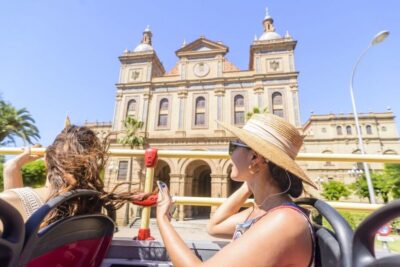 ★ 4.0City Sightseeing Hop-On Hop-Off Bus TourFrom $334,633 reviews
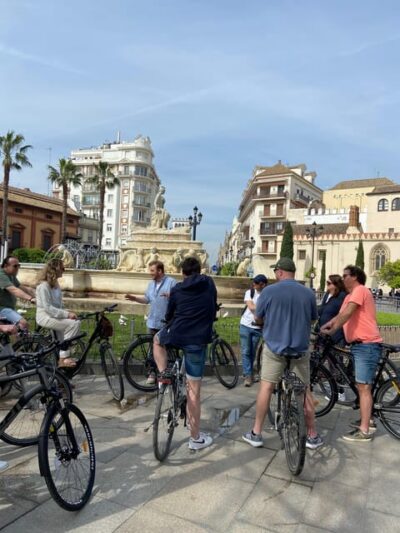 ★ 4.8Highlights City Bike TourFrom $382,168 reviews
 ★ 4.0City Sightseeing Seville Hop-On Hop-Off Bus TourFrom $331,782 reviews
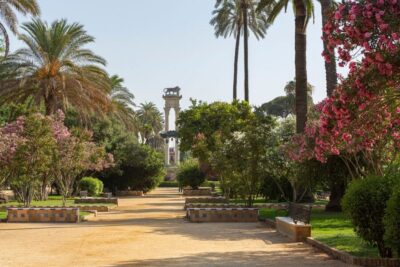 ★ 4.8Relaxing City Bike Tour with a Tour GuideFrom $351,588 reviews
 ★ 5.0Small-Group City Highlights Walking TourFrom $271,204 reviews
 ★ 4.9City Sightseeing and Local Culture Bike TourFrom $311,120 reviews
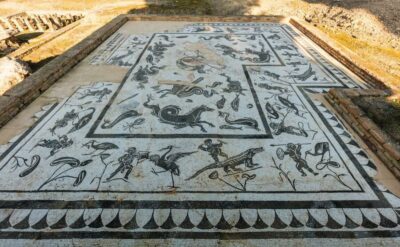 ★ 4.5Italica Roman City & Medieval Monastery TourFrom $461,051 reviews
 ★ 4.8Private City Tour by Eco Tuk TukFrom $33963 reviews
Browse the lists this tour appears in