
Review · TOURS
Complete Triana Tour “Corrales included”
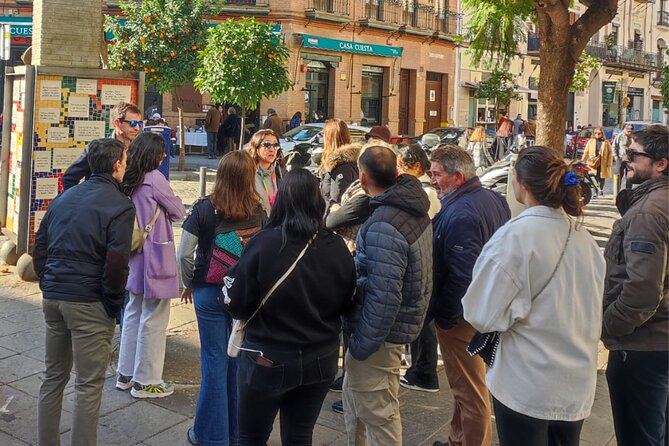
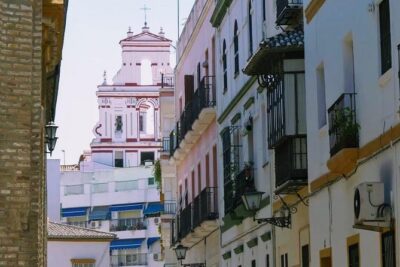
Triana has a talent for surprises in small steps. This 2-hour route threads together Corrales patio life, major churches, flamenco monuments, and ceramic stops, with plenty of photo moments along the way. I especially like how the tour builds one story across the neighborhood, from the Torre del Oro viewpoints to the craft lanes around Castillo de San Jorge. One thing to consider: the route includes a mix of outdoor sights and a couple of places where tickets may or may not be needed, so read the day’s site notes and arrive with realistic expectations for a fast pace.
You’ll also appreciate the scale. With a maximum group size of 30 and a mobile ticket, it’s the kind of tour that’s easy to fit into a tight day. I do want you to plan smart, though, because there’s at least one reported case of a guide not showing up, so it helps to show up early, check your start point, and keep your confirmation handy.
In This Review
- Key things I’d plan around
- Triana on foot: why this route clicks
- Price and value: $9.49 for a focused loop
- Meeting points and the start confusion you should double-check
- Stop-by-stop: what you’ll see (and what it means)
- 1) Torre del Oro viewpoints, defensive past
- 2) Puente de San Telmo: river views and angle shifts
- 3) Milla Cero de la Tierra: world voyage memory + April Fair
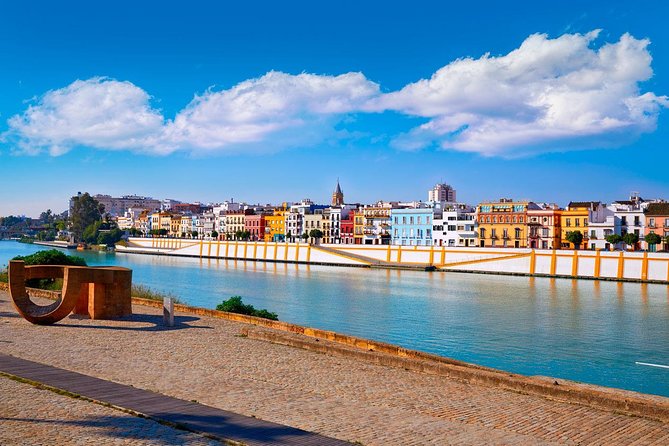
- 4) Calle Betis: Triana’s separate identity
- 5) Calle Troya: Cervantes’ Seville moment
- 6) El Embarcadero: Carmen and cigarette-works mythology
- 7) Puente de Isabel II (Puente de Triana): iron bridge cred
- 8) Triana patios/corrales: the architectural idea you can spot
- 9) Plazuela de Santa Ana: a corner with past migrations
- 10) Real Parroquia de Señora Santa Ana: Santa Ana + Trianeros legend
- 11) Capilla de los Marineros: the Hope of Triana
- 12) Parroquia de San Jacinto (Dominicos): convent + plague history
- 13) San Jacinto peatonal: “where to drink” street + aviation fact
- 14) Hermandad de La Estrella: Star Brotherhood shipping roots
- 15) Calle San Jacinto: courtyards, tiles, crowds, bars
- 16) Capilla Virgen del Carmen: Aníbal González’s late work
- 17) Monumento a Juan Belmonte: bullfighting memory
- 18) Monumento Triana al Arte Flamenco: flamenco as living heritage
- 19) Mercado de Triana: food mood and local rhythm
- 20) Castillo de San Jorge: persecution and the Inquisition
- 21) Calle San Jorge: old furnaces and surviving ceramic work
- 22) Centro Cerámica Triana: the ceramics you can point to
- 23) Isla de La Cartuja: yesterday, today, tomorrow
- The guide factor: what makes this tour feel good
- Timing, weather, and who this suits best
- After the tour: how to turn Triana Market into a real meal plan
- Should you book this Triana al Completo with Corrales included?
- FAQ
- How long is the Triana al Completo tour?
- What does it cost?
- How big is the group?
- Where do I meet, and where does the tour end?
- Are entrance tickets included?
- Is the tour outdoors?
- Can I get a refund if my plans change?
Key things I’d plan around
- Corrales and patio architecture: you’ll hear how Triana’s shared courtyards evolved (more than 100 originally, now about 15).
- Cultural stops with real anchors: churches, chapels, and brotherhood spaces tied to local traditions and icons like the Hope of Triana.
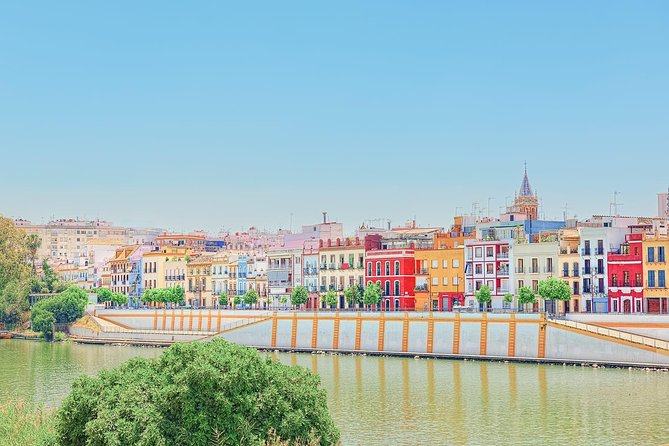
- Strong viewpoint run: Torre del Oro area to bridges (San Telmo and Puente de Triana) for river-and-neighborhood angles.
- Flamenco and bullfighting memorials: Monumento Triana al Arte Flamenco and a tribute to Juan Belmonte.
- Ceramics in the streets: old furnace lanes plus Centro Cerámica Triana.
- Market finish: Triana Market is the practical landing spot for food plans afterward.
Not sure yet? See what else in Seville is worth your time.
- Seville: Live Flamenco Dancing Show Ticket at the Theater★ 4.7 · 16,396 reviews
- Seville: Alcázar, Cathedral & Giralda Skip-the-Line Tour★ 4.8 · 11,525 reviews
- Seville: 1-Hour Guadalquivir River Sightseeing Eco Cruise★ 4.2 · 10,281 reviews
Triana on foot: why this route clicks
Triana works differently from the rest of Seville. It has its own rhythm—streets that feel like a neighborhood inside the city, places with long memory, and corners that turn up when you least expect them. This tour is designed for that kind of wandering without wasting your time. In about two hours, you get a sweep that mixes “must-see” with the kinds of details you’d miss if you just followed a map.
What makes it feel worth it is the mix: religious landmarks, working-neighborhood streets, and art/craft markers. That’s also why it’s a good first Triana tour. You come away with a mental grid of where things sit: the river edge, the church cluster around Santa Ana and San Jacinto, and the ceramic zone around Castillo de San Jorge and Calle San Jorge.
The pace is brisk by design. Each stop is short—often around 4 to 5 minutes—so you’re not meant to linger like you would on a self-guided day. If you like slow looking, you’ll want a longer follow-up walk later.
Price and value: $9.49 for a focused loop
At about $9.49 per person, this is priced like a “grab the highlights” tour, not a deluxe, tickets-and-treats day. That matters because you should treat it as value through storytelling and orientation. You’re paying for a guide-led path that stitches together a lot of locations in a short time window.
Here’s the value logic:
- You’re covering both sides of Triana’s identity—tradition (chapels, convent history) and work/craft (ceramics).
- You get the “why” behind landmarks, not just the “what.”
- You finish near Triana Market, where you can turn the tour into an actual meal plan.
One practical note on value: not every stop is the same for tickets. Torre del Oro specifically notes an admission ticket is not included. Other stops list free entry. So while the tour is cheap, don’t assume everything is included inside buildings.
Meeting points and the start confusion you should double-check
The booking info lists the start near Puente de Isabel II with the Monumento al Arte Flamenco, and it also lists a Stop 1 meeting point at the front door of Torre del Oro (Gold Tower). That’s not unusual for city walking tours, but it does mean you should confirm the exact start corner printed on your confirmation.
My advice: arrive 10–15 minutes early and match what you see on the street to the name on your ticket. If you’re traveling during busy hours, that extra time can save you stress.
The finish point is listed at Triana Market, in the heart of the neighborhood. In other words, you can plan to transition from “walking tour” to “food browsing” right away.

Stop-by-stop: what you’ll see (and what it means)
This tour reads like a guided walk through Triana’s layers. I’ll go stop-by-stop, but with the useful angle: what each place adds to your understanding, plus any drawback.
1) Torre del Oro viewpoints, defensive past
You kick off near the Gold Tower, a monument that served as a defensive bulwark and beacon. Even if you don’t go inside (admission is noted as not included), the location sets you up for Seville’s river geography fast. It’s a strong “start point” because it frames the city and Triana at the same time.
Potential drawback: if you were hoping for a long, inside visit, the tour is too short. You’ll mainly get the exterior setting and the story.
2) Puente de San Telmo: river views and angle shifts
Right after Torre del Oro, you cross or move toward the San Telmo Bridge for views over the river and toward Triana. This is where your pictures start looking like they belong to Seville, not just a walking tour.
3) Milla Cero de la Tierra: world voyage memory + April Fair
A quick stop for the Monumento Milla Cero de la Tierra, tied to the first round-the-world departure, plus nearby history connected to the April Fair. It’s the kind of stop that feels light—minutes only—but it adds a cultural anchor so you understand why people hype certain dates in Seville.
4) Calle Betis: Triana’s separate identity
Then comes Calle Betis, where the guide’s job is to explain Triana’s “town within Seville” feeling. You’ll hear how Seville and Triana were always separated, which is a big part of why Triana still feels like it has its own rules, language of streets, and traditions.
5) Calle Troya: Cervantes’ Seville moment
In Calle Troya, you’ll connect Triana to writer Miguel de Cervantes, since there’s a place on the route linked to inspiration during his time in Seville. This is a short stop, but it makes the neighborhood feel less like a theme park.
6) El Embarcadero: Carmen and cigarette-works mythology
At El Embarcadero, the tour points you toward Triana’s ancient port area and the jetty tied to stories around Carmen and Las Cigarreras. If you like blending literature and local imagery, this one works well because the guide gives you a thread to follow.
7) Puente de Isabel II (Puente de Triana): iron bridge cred
Next is Puente de Triana / Puente de Isabel II, noted as the oldest preserved iron bridge in Spain, built in 1852. It’s a good “engineering for regular humans” moment: not just a bridge, but a historical marker you can actually see.
8) Triana patios/corrales: the architectural idea you can spot
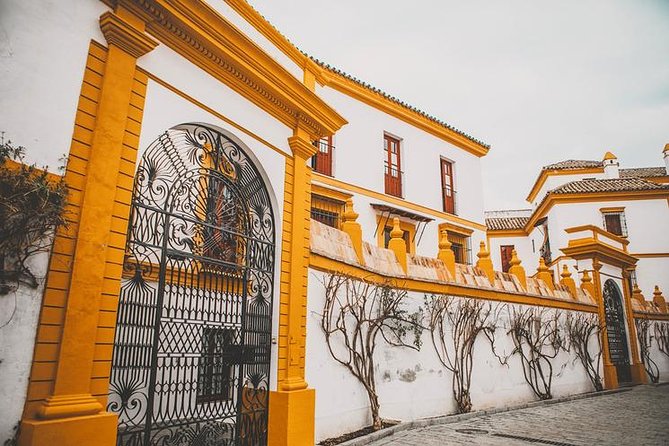
In central Triana, you’ll talk about the famous corrales (shared courtyards/pens). The route notes that there were more than 100 originally, and today about 15. That’s a striking statistic because it turns what you see in the streets into a survival story, not just pretty tiles.
9) Plazuela de Santa Ana: a corner with past migrations
At the Plazuela de Santa Ana, you’ll hear about this corner as a meeting place for former Flemish residents. It’s a small plaza, but that’s the point: Triana’s history often lives in these minor squares.
10) Real Parroquia de Señora Santa Ana: Santa Ana + Trianeros legend
You’ll visit the Real Parroquia de Señora Santa Ana, including references to the ancient Church of the Gypsies Trianeros and its legends. This is the kind of stop where you either get a lot out of the guide’s explanation or you skim it. If you’re the “listen closely” type, you’ll get more from this leg.
11) Capilla de los Marineros: the Hope of Triana
At Capilla de los Marineros, you can enter one of Triana’s sisterhood spaces. The highlight is the image of the Hope of Triana, presented as unique for many varied reasons the guide will explain. This is also a strong “human tradition” stop, where you’re seeing how community devotion shapes space.
12) Parroquia de San Jacinto (Dominicos): convent + plague history
You move to San Jacinto (Dominicans), the former Dominican Convent of San Jacinto. The tour notes that the surrounding area served as a mass grave during a plague epidemic. That’s heavy subject matter, but it adds weight to Triana’s religious landscape beyond architecture alone.
If you’re sensitive to grim history, just know this stop can feel emotionally intense, even though it’s brief.
13) San Jacinto peatonal: “where to drink” street + aviation fact
Now you’re in San Jacinto peatonal, described as the busiest street in Triana where you have to know where to drink something. Then there’s a sharp twist: the guide points to the Hispano-Aviación factory, where the first Spanish reactor was made, linked to modern fighter development.
That jump—from tapas street to aviation milestone—is exactly the kind of street-level contrast that makes Triana feel real.
14) Hermandad de La Estrella: Star Brotherhood shipping roots
At the Chapel of the Star Brotherhood, you’ll learn about the patron saint of former port shippers, connected to how religiosity shaped life in the 16th and 17th centuries. Again: short stop, but it helps connect the port past to the present neighborhood character.
15) Calle San Jacinto: courtyards, tiles, crowds, bars
Calle San Jacinto is where the tour leans into atmosphere: tiled facades, old courtyards, and the push-and-pull of crowds and bars. This is a good time to reset your feet and take a few slow photos, since you’ll be on your feet for the next stretch.
16) Capilla Virgen del Carmen: Aníbal González’s late work
Next, Capilla Virgen del Carmen, described as one of architect Aníbal González’s last works. The route connects González to the 1929 universal exhibition and Plaza de España, so you get a broader Seville architectural link in a Triana package.
17) Monumento a Juan Belmonte: bullfighting memory
Triana is also a land of major bullfighters, and the walk includes a monument to Juan Belmonte. It’s quick, but it prevents Triana’s story from becoming all religion and craft. You see a second cultural identity.
18) Monumento Triana al Arte Flamenco: flamenco as living heritage
At the Monumento Triana al Arte Flamenco, you’ll see a tribute to singing, dancing, guitar, and palms. The tour frames flamenco as an Intangible Cultural Heritage of Humanity. If you’re a flamenco fan, this stop gives you a nice “anchor point” so you don’t just hear about flamenco in abstract terms.
This is one of the reasons I think the tour works well at the start or near the middle: it’s a clear marker of what Triana does best.
19) Mercado de Triana: food mood and local rhythm
Then you reach Mercado de Triana, where the tour emphasizes Triana’s gas-tronomy and the market’s life. Even if you don’t eat right away, this is where you’ll start imagining your next steps: what to buy, where to sit, what to try.
20) Castillo de San Jorge: persecution and the Inquisition
At Castillo de San Jorge, the guide ties Seville’s history of persecution to the Catholic Monarchs and the Inquisition. It’s a dramatic stop that changes your tone from everyday neighborhood life to the heavy institutional past.
Even though the tour is short here, it’s one of the best “story turns” on the walk.
21) Calle San Jorge: old furnaces and surviving ceramic work
Next is Calle San Jorge, where the tour notes courtyards that once held large furnaces and still hold small ceramic workshops. This is where Triana’s craft identity stops being a talking point and becomes visible in the streets.
22) Centro Cerámica Triana: the ceramics you can point to
At Centro Cerámica Triana, you get the museum-style context that makes the street-level craft make sense. If ceramics are your thing, this is your “go deeper if you want” spot. If ceramics aren’t your thing, you’ll still leave knowing why Triana ceramics have a reputation.
23) Isla de La Cartuja: yesterday, today, tomorrow
The last stretch references Isla de La Cartuja, described as the evolution of Triana and connected to Calle Pages del Corro as yesterday’s Triana, today’s Triana, and tomorrow’s Triana. This is the tour’s forward-looking moment, where you see how the neighborhood keeps changing without losing its core.
The guide factor: what makes this tour feel good
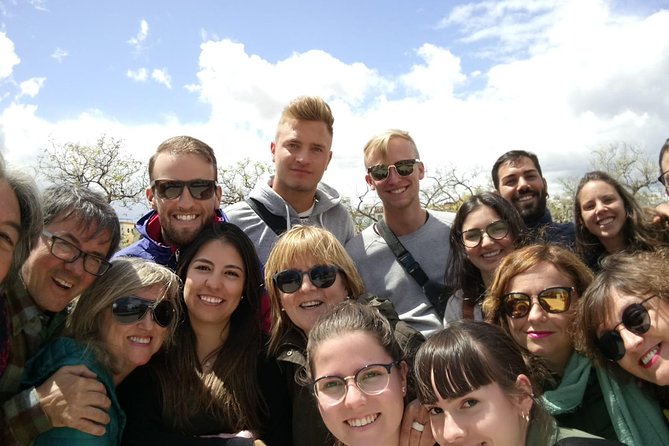
The quality of a walking tour lives or dies with the guide. In the feedback for this experience, a guide named Jose gets highlighted for being friendly and for explaining things in a way that keeps the two hours from dragging. That’s exactly what I’d hope for in a route with lots of short stops. You’re moving quickly, so you need clear, upbeat storytelling.
There’s also a cautionary edge from a reported no-show situation. I can’t ignore that. If you have a connection right after the tour or you’re juggling reservations, arrive early, verify the exact meeting point on your voucher, and keep your booking details ready.
Timing, weather, and who this suits best
This tour is built for good weather. If the day is rainy or miserable, you can be offered a different date or a full refund. That matters because the majority of the experience is outside, with multiple brief sightseeing stops.
In terms of who it fits:
- Great for your first or second day in Seville if you want Triana context fast.
- Great for food-minded people who like markets and street-level culture.
- Great for travelers who enjoy history, but prefer it woven into walking stories rather than long museum hours.
It’s less ideal if you need long indoor stays, or if you hate moving your feet every few minutes.
After the tour: how to turn Triana Market into a real meal plan
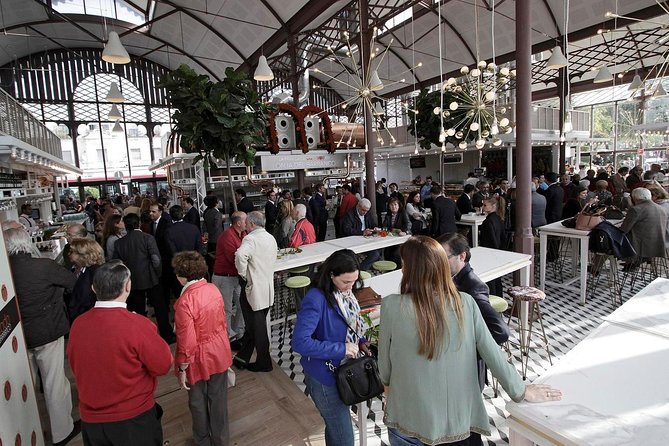
Finishing near Triana Market is smart. You don’t have to backtrack to hunt for dinner. The tour also promises to recommend the best tapas in the neighborhood, which is exactly what most people want at the end of a walking day.
Here’s how I’d use this moment:
- Browse the market first for vibe and ingredients.
- Then pick a tapas place that feels busy in a normal, local way.
- Order a small mix so you can sample without committing to one “big” dish.
Because the tour gives you the neighborhood’s story, the food feels like part of Triana’s identity, not just fuel.
Should you book this Triana al Completo with Corrales included?

Book it if you want a short, structured Triana overview that includes corrales/patios, key churches and chapels, flamenco and bullfighting memorials, and ceramics—ending near the market so you can eat without fuss. The price is low enough that the value comes from orientation and storytelling rather than ticket-heavy attractions.
I’d think twice if you’re the type who needs slow wandering, or if you rely on exact interior access to monuments. Also, double-check the meeting location on your confirmation, since the start details reference both the Puente de Isabel II flamenco area and the Gold Tower front door.
If you like walking tours that feel like a guided street story, this one gives you a lot of Triana per hour.
FAQ
How long is the Triana al Completo tour?
It’s listed as 2 hours (approx.).
What does it cost?
The price is $9.49 per person.
How big is the group?
The tour has a maximum of 30 travelers.
Where do I meet, and where does the tour end?
The start is listed near Puente de Isabel II with the Monumento al Arte Flamenco, and the end is listed at Triana Market (C. Arfian, 13). Because the start info also mentions Torre del Oro for the first stop, it’s smart to follow the exact meeting point shown on your confirmation.
Are entrance tickets included?
For Torre del Oro, the admission ticket is listed as not included. One stop lists an admission ticket as included, and many other stops are listed as free.
Is the tour outdoors?
Yes, it’s a walking route with many outdoor stops. It’s noted that the experience requires good weather.
Can I get a refund if my plans change?
Yes. It offers free cancellation if you cancel at least 24 hours before the experience start time for a full refund.
More Tours in Seville
- Seville: Alcázar, Cathedral & Giralda Skip-the-Line Tour
★ 4.8 · 11,525 reviews - Seville: Cathedral, Giralda & Alcazar Entry With Guided Tour
★ 4.6 · 8,560 reviews - Seville: Priority Access Cathedral, Giralda & Alcázar Tour
★ 4.8 · 7,563 reviews - Seville: Alcázar and Cathedral Entry Ticket and Guided Tour
★ 4.6 · 5,056 reviews - Seville: City Sightseeing Hop-On Hop-Off Bus Tour
★ 4.0 · 4,633 reviews
More Tour Reviews in Seville
- Seville: Live Flamenco Dancing Show Ticket at the Theater
★ 4.7 · 16,396 reviews - Seville: Alcázar, Cathedral & Giralda Skip-the-Line Tour
★ 4.8 · 11,525 reviews - Seville: 1-Hour Guadalquivir River Sightseeing Eco Cruise
★ 4.2 · 10,281 reviews - Seville: Setas de Sevilla Entry Ticket
★ 4.6 · 8,901 reviews - Seville: Cathedral, Giralda & Alcazar Entry With Guided Tour
★ 4.6 · 8,560 reviews
Just added to the Seville list


Tours, compared.
 ★ 4.8Alcázar, Cathedral & Giralda Skip-the-Line TourFrom $6411,525 reviews
 ★ 4.6Cathedral, Giralda & Alcazar Entry With Guided TourFrom $658,560 reviews
 ★ 4.8Priority Access Cathedral, Giralda & Alcázar TourFrom $647,563 reviews
 ★ 4.6Alcázar and Cathedral Entry Ticket and Guided TourFrom $785,056 reviews
 ★ 4.0City Sightseeing Hop-On Hop-Off Bus TourFrom $334,633 reviews
 ★ 4.5Alcazar and Cathedral of Seville Tour with Skip the Line TicketsFrom $714,579 reviews
 ★ 4.6Alcázar of Seville Skip-the-Line Tickets and Guided TourFrom $443,941 reviews
 ★ 5.0Sevilla Food Tour: Tapas, Wine, History & TraditionsFrom $833,468 reviews