
Review · WORKSHOPS
Ceramics classes in Seville – Learn lathe, majolica or mosaic
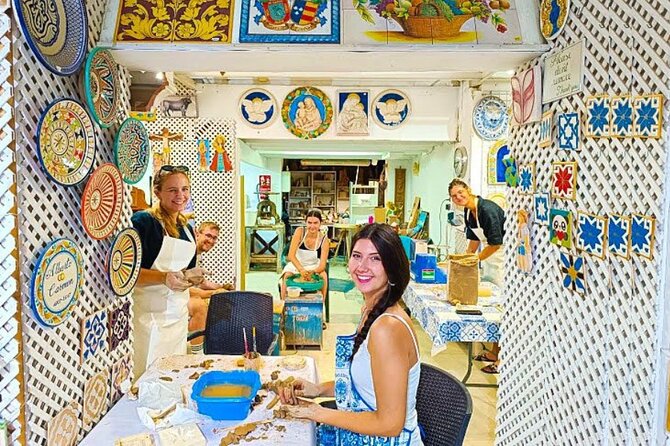
Pottery in Triana is hands-on therapy. In Seville at Cerámica 1920, you choose between wheel-turning (with firing included) or one of three tile/mosaic decoration styles, including a same-day mosaic. I like that you get real studio time to make the piece, not just watch. I also like that the options fit different schedules—especially if you need your creation fast. The main thing to consider is timing: wheel pieces take about a week for drying and firing, while the tile techniques need a few days and only the mosaic can go home the same day.
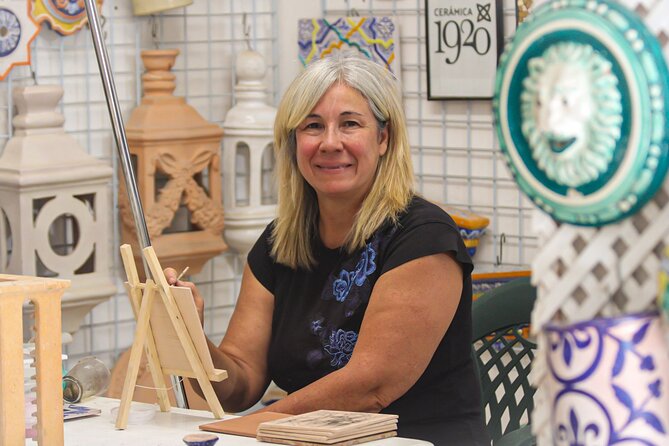
One more thing I appreciate: you’re not left to figure it out alone. The class is run in English, and the guide experience matters here—Beatrice is described as warm, welcoming, and skilled, and that sets the tone from the first instructions. You’ll use an apron and goggles, and you can copy Sevillian motifs or design your own, depending on the session.
In This Review
- Quick hits on this Seville ceramics class
- Cerámica 1920 sessions: pick the one that matches your time
- Your Triana route: Puente de Isabel II, Mercado de Triana, and the Callejón de la Inquisición
- Wheel-turning: make clay, and plan for a one-week pickup
- Majolica (brush) and dry rope (knob): 15×15 cm tiles with your design
- Majolica: brush-applied decoration
- Dry rope: the knob technique
- When to pick up
- What I’d watch out for
- Mosaic class: cut tiles, build a 10×10 cm design, and take it home
- Who mosaic fits best
- Price and value: what $79.47 buys you (and what it doesn’t)
- Practical tips so you leave with something you’ll love
- Who should book this ceramics class, and who might want another option
- Should you book Cerámica 1920 in Seville?
- FAQ
- What ceramics sessions are offered in Seville?
- Can I take my mosaic creation home the same day?
- How long do I wait to pick up wheel-turned pieces?
- When are majolica and dry rope tiles ready?
- What sizes are made in each session?
- Is the class offered in English?
- What’s included in the price?
- Is free cancellation available?
- Where does the experience start?
Quick hits on this Seville ceramics class
- Four distinct hands-on sessions: wheel-turning, mosaic, majolica, or dry rope.
- Different take-home timelines: mosaic is same day; tiles are typically 2–3 days; wheel pieces take about a week.
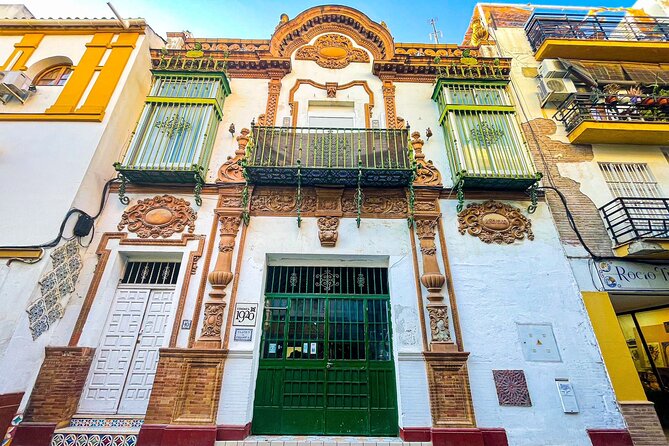
- Sevillian motifs without the pressure: you can follow the tradition or create your own design.
- Studio basics included: apron and goggles are provided.
- A Triana-area mini-walk: you’ll stop around landmarks like Puente de Triana and Mercado de Triana before getting started.
- Private group format: only your group participates, so you’re not competing for attention.
Still deciding? A few more Seville picks worth a look.
- Seville: Flamenco Dance Class with Optional Costume★ 4.9 · 1,350 reviews
- Seville: Spanish Cooking Class with Dinner★ 4.9 · 900 reviews
- Spanish Cooking Class & Triana Market Tour in Sevilla★ 5.0 · 760 reviews
Cerámica 1920 sessions: pick the one that matches your time
This is a choose-your-own-adventure ceramics experience. You’ll have four sessions to select from: wheel-turning, mosaic, majolica (brush-applied), and dry rope (applied with a knob). Each one teaches a different technique, and each one has a different “final result” timeline.
Before you book, I’d think about two things: (1) when you need the finished item, and (2) how hands-on you want to be. Wheel-turning is about shaping clay on the potter’s wheel and making as many pieces as time allows. The tile techniques and mosaic are about decoration skills—cutting, applying, and building a design.
If you’re in Seville for a short stretch and want an instant souvenir, mosaic is the most practical choice. If you’re staying longer and don’t mind waiting for pickup, the wheel or tile styles let you make something that feels more “finished” after firing and drying.
Your Triana route: Puente de Isabel II, Mercado de Triana, and the Callejón de la Inquisición
Even though the heart of the experience is the ceramics, the class starts with a little neighborhood grounding. You begin at C. Antillano Campos, 10, 41010 Sevilla, and then you’ll make a small route that includes stops at:
- Puente de Isabel II (Puente de Triana)
- Mercado de Triana
- Monumento Triana al Arte Flamenco
- Callejón de la Inquisición
This part is useful because it helps you get your bearings fast. Triana is an area where you’ll see everyday Seville life right away, and these stops give context as you move toward the studio. There’s no feeling of being rushed through “just photos”—you’ll actually pause at each named spot.
The one practical drawback: if you’re tight on mobility or you prefer to minimize walking, any short walk through a neighborhood can feel like a lot. The good news is the whole outing is about 1 hour 30 minutes, so it’s not a long trek.
Wheel-turning: make clay, and plan for a one-week pickup
Wheel-turning is the session for you if you want the classic ceramics skill: working on the wheel and creating forms out of clay. You’ll start with a brief introduction to the process, then you get time to make as many pieces as the session allows.
Here’s what I think is valuable: the class doesn’t treat wheel-throwing like a single “one-and-done” project. You’re encouraged to use the time you have. That means more attempts, more learning, and a better chance of walking away with a piece you feel good about.
Important logistics: firing is included, but your pieces need drying and firing time. You’ll wait about a week before you can pick them up. That affects who should choose this session.
Choose wheel-turning if:
- You have a flexible schedule in Seville.
- You’re okay with waiting a bit to get the final ceramic.
- You want to focus on shaping clay, not just decorating a flat tile.
Be careful if:
- You need your item the same day, or you’re leaving soon.
- You’re the type who gets stressed by delayed gratification. (Yes, pottery will humble you.)


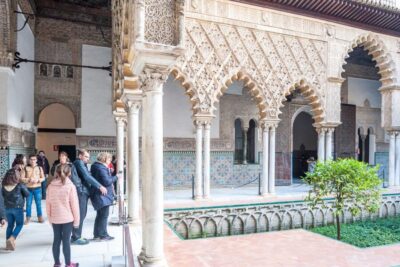
Majolica (brush) and dry rope (knob): 15×15 cm tiles with your design
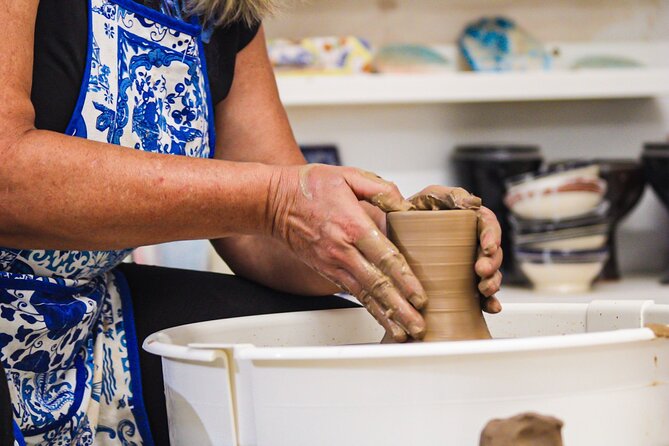
If you prefer something more graphic and design-focused, both majolica and dry rope are built around decorating a tile. In both techniques, you’ll work on a 15×15 cm tile using Sevillian-inspired style—either with traditional motifs or your own design.
Majolica: brush-applied decoration
With majolica, you’ll use a brush to apply the paint. You’ll learn how to approach the design on a flat surface, and the tile format makes it easier to create crisp patterns. Many people go with Sevillian motifs because they’re the most “Seville” looking, but the option to create your own design is there too.
Dry rope: the knob technique
With dry rope, you decorate using a knob to apply the paint. The look is different because the application method changes the texture and edges of marks. If you’re the kind of person who likes tactile, hands-and-motion activities, this one tends to feel fun quickly.
When to pick up
Both of these tile techniques usually take a little time to finish. Your pieces are ready to pick up between 2 and 3 days after the session. That’s a sweet spot for many schedules: it’s not instant, but it’s also not a week-long wait.
What I’d watch out for
Your finished tile will be tied to your design choices. If you only have a few days in town, go in thinking: can you create something you’ll still like when it’s fired-ready? The good part is you have the freedom to keep it simple or get more ambitious.
Mosaic class: cut tiles, build a 10×10 cm design, and take it home
The mosaic session is ideal if you’ve got a short stay and want a finished souvenir right away. You’ll make a 10×10 cm mosaic using a free design, which means you can shape the look instead of being stuck with a single pattern.
This session teaches two big skills:
- how to cut the tiles
- how to adhere the pieces to the base
And the payoff is immediate: you can take your mosaic creation home the same day.
That’s a big deal in practice. Waiting for pickup is where ceramics experiences often lose travelers. Here, the mosaic side-steps that. It also makes the class feel more like a “do it now, keep it now” craft session rather than something that turns into a delayed errand later.
Who mosaic fits best
- You want something tangible the moment you finish.
- You’re traveling light and don’t want pickup logistics.
- You’d rather spend your energy on assembling than on wheelwork.
The only consideration is that mosaic is craft-work in the truest sense: cutting and sticking takes focus. If you’re tired from walking around Seville, you’ll still enjoy it, but you may want to keep your expectations realistic and accept that small imperfections are part of hand-made.
Price and value: what $79.47 buys you (and what it doesn’t)
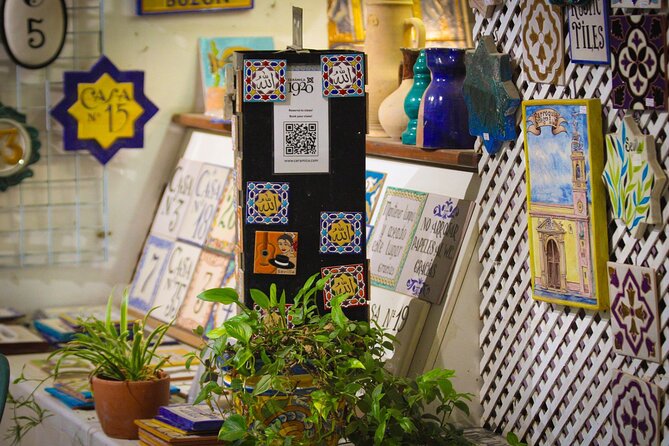
The price is $79.47 per person, and the session length is about 1 hour 30 minutes. For what you’re getting, the value comes from three areas:
- The guided process: you have a guide present throughout the making.
- Materials protection: you get an apron and goggles.
- Firing support when relevant: wheel-turning includes firing (with pickup later), and tile techniques follow through after decoration.
What’s not included: tips. That’s standard for many guided experiences, but I’d factor it into your budget if you plan to be generous.
The hidden value is timing planning. Mosaic’s same-day take-home turns the class into a no-drama souvenir. Wheel-turning and tile techniques turn it into a “process with results later” experience, which can be great if you’re staying in Seville long enough to wait.
Practical tips so you leave with something you’ll love
Here’s how to get the best outcome without turning the class into a stress test.
- Choose your session based on pickup time, not just interest. If you’re leaving soon, mosaic is the safest bet.
- Arrive with a simple design plan. If you want a custom motif, decide on a basic layout before you start painting or placing tiles. It helps you use the 1.5 hours well.
- Wear comfortable clothing you don’t mind getting a little artsy. You’ll have an apron, but pottery and decoration can still be messy in small ways.
- Take your time during the instructions. The techniques are different enough that a quick “wait, what do I do next?” moment costs more than you’d think.
- If you want a specific technique, double-check it before you settle in. There can be situations where only one option is offered depending on how the studio schedule is running.
If you’re prone to overthinking, don’t. Ceramics classes are meant to teach through doing. The goal is a good first try, not a museum-quality masterpiece.
Who should book this ceramics class, and who might want another option
This class is a strong match for:
- people who like hands-on activities and short, guided workshops
- travelers who want an authentic-making souvenir from Seville, not just a store-bought one
- anyone who likes having a clear result, especially mosaic (same-day take-home)
- small groups who want attention from the guide (private group format)
It’s less ideal for:
- travelers who need everything finished and collected the same day but don’t choose mosaic
- people who hate waiting for pickup after the session (wheel-turning is about a week)
- anyone who gets thrown off by schedule changes. If you’re set on majolica or dry rope, plan to confirm your session in person once you arrive.
Should you book Cerámica 1920 in Seville?
If you want to leave Seville with something you made—something you can hold, show, and remember—this is a fun, practical choice. I’d book it if you’re excited about the process and you can match your plans to the pickup timeline: mosaic for same-day, tiles for 2–3 days, wheel-turning for about a week.
Skip or rethink it if you’re on a tight schedule with no margin for waiting, or if you’re traveling with an absolute requirement that the item must be yours immediately. Also, if a specific technique is your priority, don’t assume it automatically—confirm it once you’re at the studio so you don’t waste your energy.
FAQ
What ceramics sessions are offered in Seville?
You can choose between wheel-turning, mosaic, and two ceramic painting/decorating techniques: majolica (using a brush) and dry rope (using a knob).
Can I take my mosaic creation home the same day?
Yes. The mosaic session is designed so you can take your 10×10 cm mosaic creation home the same day.
How long do I wait to pick up wheel-turned pieces?
Wheel-turning includes firing, but you’ll need to wait about a week to pick up your pieces.
When are majolica and dry rope tiles ready?
Majolica and dry rope tiles (15×15 cm) are ready to pick up between 2 and 3 days after the session.
What sizes are made in each session?
Wheel-turning pieces are made on the wheel during the session (no fixed size is stated). The majolica and dry rope sessions use 15×15 cm tiles, and the mosaic session uses a 10×10 cm mosaic.
Is the class offered in English?
Yes, the experience is offered in English.
What’s included in the price?
You get an apron, goggles, a guide, and (for the mosaic session) you can take your mosaic creation home the same day.
Is free cancellation available?
Yes. You can cancel up to 24 hours in advance for a full refund.
Where does the experience start?
The meeting point is C. Antillano Campos, 10, 41010 Sevilla, Spain, and it ends back at the meeting point.
More Workshops in Seville
- Seville: Flamenco Dance Class with Optional Costume
★ 4.9 · 1,350 reviews - Seville: Spanish Cooking Class with Dinner
★ 4.9 · 900 reviews - Spanish Cooking Class & Triana Market Tour in Sevilla
★ 5.0 · 760 reviews - Seville: 3.5-Hour Spanish Cooking Class & Triana Market Tour
★ 4.9 · 751 reviews - Seville: Paddle Surf Route and Class
★ 5.0 · 346 reviews
More Tour Reviews in Seville
- Seville: Live Flamenco Dancing Show Ticket at the Theater
★ 4.7 · 16,396 reviews - Seville: Alcázar, Cathedral & Giralda Skip-the-Line Tour
★ 4.8 · 11,525 reviews - Seville: 1-Hour Guadalquivir River Sightseeing Eco Cruise
★ 4.2 · 10,281 reviews - Seville: Setas de Sevilla Entry Ticket
★ 4.6 · 8,901 reviews - Seville: Cathedral, Giralda & Alcazar Entry With Guided Tour
★ 4.6 · 8,560 reviews
Just added to the Seville list



Workshops, compared.
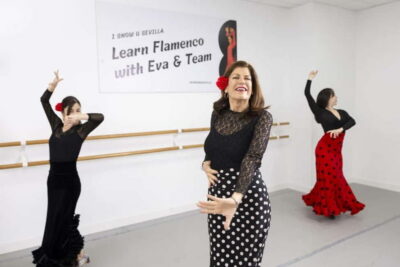 ★ 4.9Flamenco Dance Class with Optional CostumeFrom $331,350 reviews
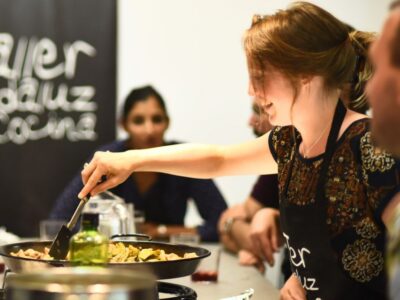 ★ 4.9Spanish Cooking Class with DinnerFrom $82900 reviews
 ★ 5.0Spanish Cooking Class & Triana Market Tour in SevillaFrom $90760 reviews
 ★ 4.93.5-Hour Spanish Cooking Class & Triana Market TourFrom $88751 reviews
 ★ 5.0Paddle Surf Route and ClassFrom $35346 reviews
 ★ 5.0Spanish Cooking Class and Dinner in SevilleFrom $84261 reviews
 ★ 5.0Rooftop Paella Cooking Class & 30-minute expert Q&AFrom $214198 reviews
 ★ 5.0Flamenco Dance Class in Seville with optional Flamenco CostumeFrom $33191 reviews
Browse the lists this tour appears in