
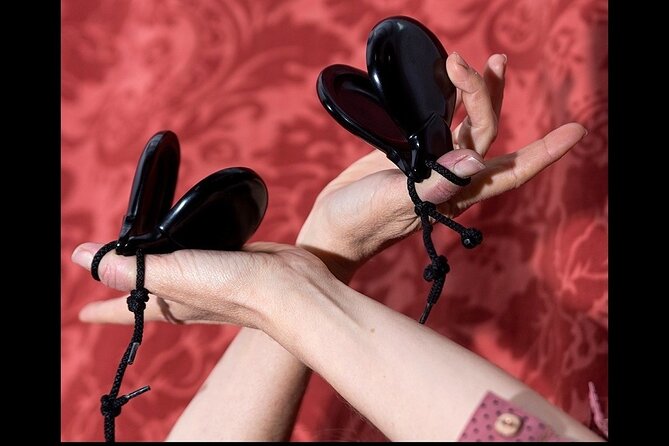
Review · WORKSHOPS
Castanets for Beginners: Introduction Class (with Dance Demo)
Seville has a way of making you want to move. This beginner-friendly castanets workshop pairs easy instruction with a real studio stop just a few minutes from Plaza San Marcos. I liked learning the basics of how castanets work and getting practical rhythm practice, taught by Eva with calm, patient energy. One thing to consider: it’s only about an hour, so if you want a long flamenco show, this is more of a hands-on primer than an all-night performance.
You’ll start in the Casco Antiguo and walk to an authentic studio tucked in an old artisan quarter. I also appreciated that the teacher provides good-quality castanets for you to use during the class, so you can try without committing to a purchase. The main drawback is that if you get hooked, buying your own castanets is not included.
In This Review
- Key things I’d bank on before you book
- Plaza San Marcos to an old artisan flamenco studio
- Castanets 101: history, sound, and what you’re actually learning
- Hands-on castanet technique without the intimidation
- Percussion with music: where flamenco timing clicks
- The dance demo: seeing castanets connect to movement
- Price and what $24.08 buys you in real value
- Who this Seville castanet intro class is perfect for
- Quick tips to make your first castanet session smoother
- Should you book this castanets introduction class?
- FAQ
- How long is the castanets introduction class in Seville?
- What is the price per person?
- Is the class offered in English?
- Where do I meet for the workshop?
- Is the class group size small?
- Do I need to bring castanets?
- Is buying castanets included in the price?
- What happens if the weather is bad?
- Are service animals allowed?
Key things I’d bank on before you book
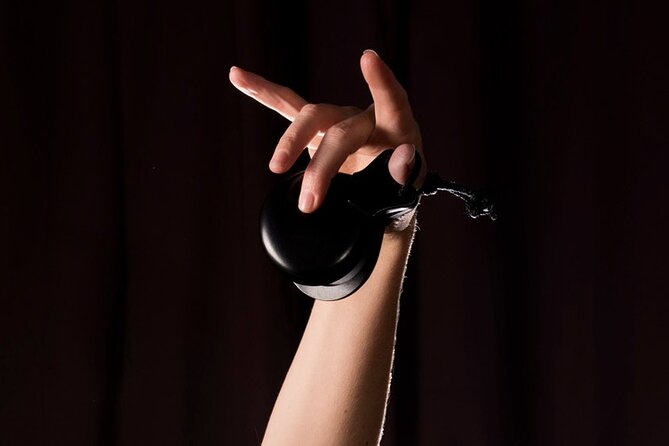
- Small group (max 6) means you get more direct help when your rhythm goes sideways.
- Eva’s beginner approach: patient, engaging, and focused on making it achievable.
- You try castanets hands-on rather than just watching.
- Basic percussion with music so you hear how it fits into flamenco timing.
- Short dance demo at the end to connect the sound to movement.
- Provided castanets reduce hassle, and buying your own is optional.
Still deciding? A few more Seville picks worth a look.
- Seville: Flamenco Dance Class with Optional Costume★ 4.9 · 1,350 reviews
- Seville: Spanish Cooking Class with Dinner★ 4.9 · 900 reviews
- Spanish Cooking Class & Triana Market Tour in Sevilla★ 5.0 · 760 reviews
Plaza San Marcos to an old artisan flamenco studio
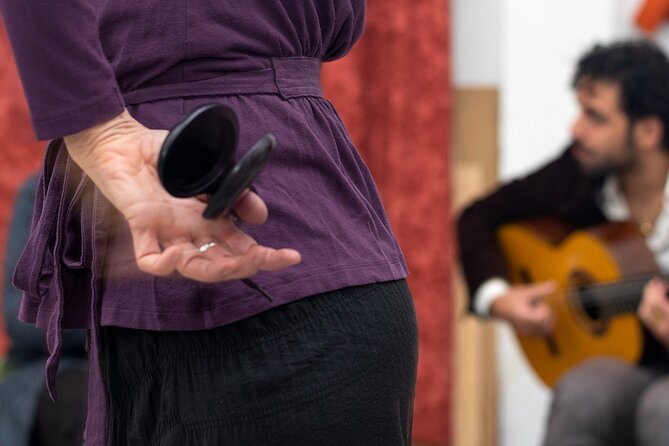
This starts right where many visitors already find their feet: Plaza San Marcos in the Casco Antiguo (41003 Sevilla). You’ll meet there, then head to an authentic flamenco studio that’s only a few minutes away on foot. It’s in an older artisan-style area, a bit off the busiest routes, which I like because it feels less like a tourist hallway and more like a real neighborhood workshop.
The group stays small—up to 6 people—which matters more than you might think. With castanets, you’re learning timing and hand position. In a big crowd, you’d just follow along. In this size group, you can actually correct what you’re doing before it becomes a bad habit.
How long will it take to get there? Plan on a quick walk; the total class is about 1 hour. You return to the same meeting point at the end, so you’re not left figuring out how to get back after your hands are covered in rhythm.
Castanets 101: history, sound, and what you’re actually learning
The heart of the experience is the Introduction to Castanets portion. You don’t need prior dance training or music chops. The teacher explains what makes castanets behave the way they do—how they produce crisp clicks and how you control that sound through your hands.
You’ll also get some context on the instrument: the history and how castanets are used in flamenco. This isn’t taught like a museum lecture. It’s practical background meant to help you understand why certain movements work better than others.
And because you’re a beginner, the lesson style matters. Eva stood out for teaching in a way that’s both fun and achievable. That shows up in how you’re coached during the practice, not just at the start. If you’ve ever been scared to get something wrong in a class, this format helps you relax because the goal is simple: learn the basics, then apply them right away.
Hands-on castanet technique without the intimidation
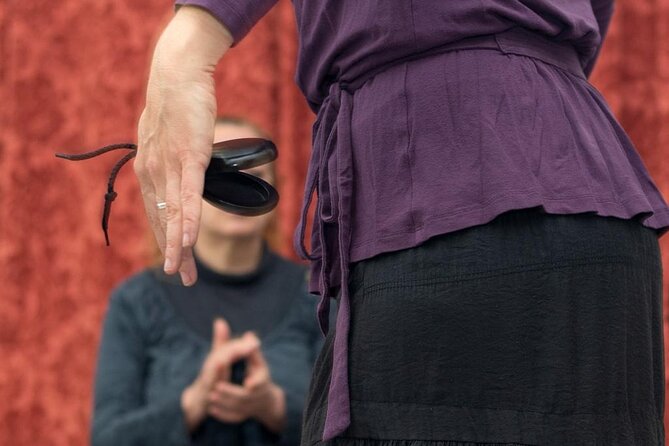
Once you’re oriented, you’ll practice basic techniques. This is the part where most people learn fastest, because your body starts to recognize the motion pattern.
A big advantage here is that the teacher provides good-quality castanets for you to use in the session. That means:
- you don’t waste time hunting for rental or bringing your own
- you can focus on technique instead of fighting a bad instrument
- you get a clearer sense of whether castanets feel good in your hands
You’ll practice in a way that’s accessible. That phrase often gets used loosely, but here it’s built into the structure: short lesson, then active repetition, then you hear it in context with music. If you can clap on beat, you can handle this. It’s not about performing at a professional level—it’s about getting the mechanism and timing so it stops feeling mysterious.
Possible consideration: castanets are small and loud, and you’ll be concentrating on hand placement. If you’re expecting a silent, meditative activity, this won’t be it. Also, because the class is only about an hour, you won’t master everything—think of it as the first strong layer, not the whole cake.
Percussion with music: where flamenco timing clicks
You don’t just learn movements in isolation. You’ll do some basic castanet percussion with accompanying music, which is exactly where the instrument becomes real.
In flamenco, rhythm isn’t background. It drives the mood and keeps dancers and musicians locked in. When you practice along with music, you start to feel how castanets fit into the overall pulse. That makes your learning stick because you’re not only copying motions—you’re linking them to sound and timing.
This part is also where the small group helps. When you’re off rhythm, you can often correct faster with real-time feedback. When you’re on rhythm, it’s plain fun. You end up feeling like you can contribute to the beat, not just observe it.
And yes, you might get that moment where your brain says I’m doing it and your hands say… mostly. That’s normal. The point is to leave with a working understanding and something you can actually try again later.
The dance demo: seeing castanets connect to movement
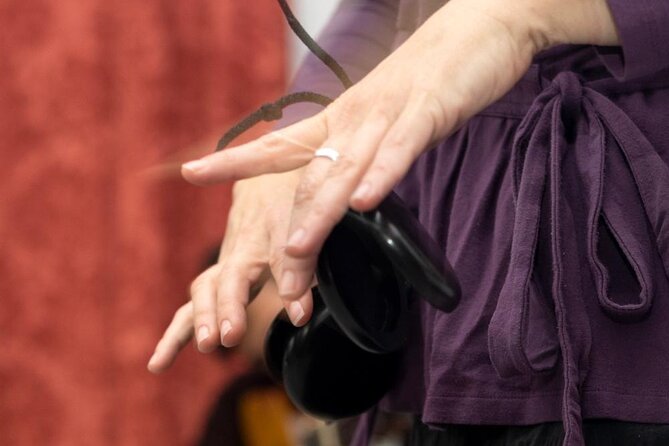
At the end, you get a short demonstration on using castanets with dance. This is a key piece of value, because it ties your new technique to what you came for in the first place: flamenco.
Watching castanets with movement helps you understand how the hands and body coordinate. It also shows why those basics you learned earlier matter. The sound isn’t random; it’s timed to the dancer’s energy and phrasing. Even if the demo is brief, it gives you a visual anchor.
I like ending this way because it changes how you look at flamenco shows afterward. You’ll notice more than just costumes and drama. You’ll pick up the rhythmic role of castanets, which makes the next performance feel more “decoded” and less like noise.
Price and what $24.08 buys you in real value
At $24.08 per person for about 1 hour, this class is priced like an experience you can fit between sightseeing blocks. It’s not trying to be a full evening show. Instead, you’re paying for instruction, a small group, and the ability to use castanets during the session.
Here’s why I think it’s good value for beginners:
- Provided castanets lower the cost of trying the activity at all.
- Max 6 travelers means the instruction feels personal rather than generic.
- English offered keeps it beginner-friendly and lowers the risk of misunderstanding directions.
- Group discounts can make it a better deal if you’re traveling with someone.
One practical note: you’ll see this booked ahead fairly often (on average, about 14 days in advance). If you’re traveling in peak season or you’re picky about your day and time, book early so you don’t end up improvising last-minute.
If you fall in love with the instrument, purchase isn’t included—but you’re already halfway through the decision. You’ll know whether castanets are comfortable for your hands, not just whether they look cool in photos.
Who this Seville castanet intro class is perfect for
This is best for you if:
- you’ve never touched castanets and want to start with real coaching
- you prefer small-group learning over sitting through a passive show
- you want a flamenco activity that feels hands-on, not intimidating
- you like structured practice with a payoff at the end (the dance demo)
It can also work well for couples or small groups because it’s about shared experience, not technical musicianship. You’ll walk out with a rhythm you can explain, and you’ll feel more confident seeking flamenco later.
If you’re a total dance diehard craving a long performance, you may find the hour too short. But if you want to understand castanets quickly and taste the connection between sound and dance, this class hits the sweet spot.
Quick tips to make your first castanet session smoother
- Wear something comfortable for using your hands for a short burst of practice.
- Arrive a few minutes early at Plaza San Marcos so you don’t rush into learning mode.
- Bring a good attitude toward making noise. Castanets are loud on purpose.
- If you’re sensitive to sound, you might want to mentally prepare; this is a percussion instrument class.
Also, since the experience requires good weather, have a backup mindset. If it’s canceled due to poor weather, you’ll be offered a different date or a full refund.
Should you book this castanets introduction class?
Yes, I’d book it if you want a beginner-friendly flamenco skill that doesn’t require prior training. The biggest reasons are simple: small-group teaching, castanets provided for you to use right away, and a close-to-the-source setting in Seville’s old artisan quarter. Eva’s patient, engaging style adds real confidence, especially if you’re worried about getting it wrong.
Skip it only if you’re looking for a long flamenco show or you want something more advanced than basic technique and first rhythm practice. For everyone else—this is a smart, affordable way to step into castanets with your hands, not just your eyes.
FAQ
How long is the castanets introduction class in Seville?
It lasts about 1 hour.
What is the price per person?
The price is $24.08 per person.
Is the class offered in English?
Yes, it’s offered in English.
Where do I meet for the workshop?
You meet at Plaza San Marcos, Casco Antiguo, 41003 Sevilla, Spain.
Is the class group size small?
Yes. The maximum group size is 6 travelers.
Do I need to bring castanets?
No. The teacher provides good-quality castanets for you to use during the workshop.
Is buying castanets included in the price?
No. If you want to buy your own castanets, that purchase is not included.
What happens if the weather is bad?
The experience requires good weather. If it’s canceled due to poor weather, you’ll be offered a different date or a full refund.
Are service animals allowed?
Yes, service animals are allowed. Most travelers can participate, too.
More Workshops in Seville
- Seville: Flamenco Dance Class with Optional Costume
★ 4.9 · 1,350 reviews - Seville: Spanish Cooking Class with Dinner
★ 4.9 · 900 reviews - Spanish Cooking Class & Triana Market Tour in Sevilla
★ 5.0 · 760 reviews - Seville: 3.5-Hour Spanish Cooking Class & Triana Market Tour
★ 4.9 · 751 reviews - Seville: Paddle Surf Route and Class
★ 5.0 · 346 reviews
More Tour Reviews in Seville
- Seville: Live Flamenco Dancing Show Ticket at the Theater
★ 4.7 · 16,396 reviews - Seville: Alcázar, Cathedral & Giralda Skip-the-Line Tour
★ 4.8 · 11,525 reviews - Seville: 1-Hour Guadalquivir River Sightseeing Eco Cruise
★ 4.2 · 10,281 reviews - Seville: Setas de Sevilla Entry Ticket
★ 4.6 · 8,901 reviews - Seville: Cathedral, Giralda & Alcazar Entry With Guided Tour
★ 4.6 · 8,560 reviews
Just added to the Seville list

Workshops, compared.
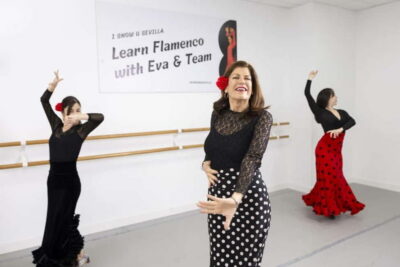 ★ 4.9Flamenco Dance Class with Optional CostumeFrom $331,350 reviews
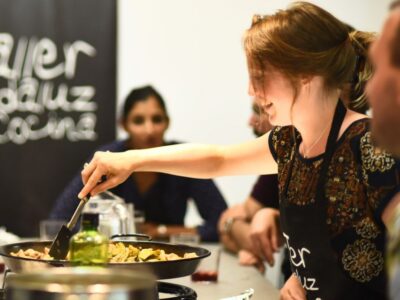 ★ 4.9Spanish Cooking Class with DinnerFrom $82900 reviews
 ★ 5.0Spanish Cooking Class & Triana Market Tour in SevillaFrom $90760 reviews
 ★ 4.93.5-Hour Spanish Cooking Class & Triana Market TourFrom $88751 reviews
 ★ 5.0Paddle Surf Route and ClassFrom $35346 reviews
 ★ 5.0Spanish Cooking Class and Dinner in SevilleFrom $84261 reviews
 ★ 5.0Rooftop Paella Cooking Class & 30-minute expert Q&AFrom $214198 reviews
 ★ 5.0Flamenco Dance Class in Seville with optional Flamenco CostumeFrom $33191 reviews
Browse the lists this tour appears in