
Review · SEVILLE OLD TOWN WALKS
Carmona Roman Necropolis and History Walking Tour
Carmona’s dead were surprisingly well-documented. This tour is a focused 2-hour walk through the Roman Necropolis and its 300+ tombs and vaults, plus a quick stop that helps you connect the dots with later eras. I especially like the way the guide explains Roman burial customs around real mausoleums, not just generic facts, and I also like the included entrance items that keep the pacing smooth. One thing to keep in mind: it’s strict about timing—if you’re late or step away, the group can’t pause for you.
You’ll get a professional art historian guide who treats the site like a classroom, with clear explanations and the kind of context that makes stone feel personal. If you want Carmona’s Roman period alongside Phoenician, Carthaginian, and Arab layers, this is an efficient way to hear it all in one walk. The only real drawback is that the tour can run in two languages on some occasions, so if you’re strongly single-language, plan to be flexible with delivery.
In This Review
- Key things that make this tour worth considering
- Why Carmona’s Roman Necropolis feels different than most ruins
- Elephant Tomb and Servilia Tomb: what you’ll see and what to notice
- Elephant Tomb
- Servilia Tomb
- Admission is handled for you
- Alcázar de la Puerta de Sevilla: a short finish that ties eras together
- The walking rhythm: 2 hours, small group, and smart stops
- Price and logistics: what you’re paying for (and what you’re not)
- Guide quality: what you should expect from an art historian on-site
- Who this tour suits best (and who might want something else)
- Heads-up: timing and group discipline matter here
- Should you book this Carmona Roman Necropolis tour?
- FAQ
- FAQ
- What’s the duration of the Carmona Roman Necropolis and History Walking Tour?
- Where does the tour start and end?
- What time does the tour begin?
- What’s included in the ticket price?
- Is hotel pickup included?
- What language is the tour offered in?
- How large is the group?
- Are children allowed?
- Do I need to bring a printed ticket?
Key things that make this tour worth considering
- 300+ tombs and vaults in a 1st-century Roman necropolis setting
- Elephant Tomb and Servilia Tomb are major stops you can actually picture
- A guide who brings burial customs and monument purpose into focus
- Included necropolis entrance fee plus site admission for both stops
- Small-group feel with a maximum of 30 travelers
- Ending at Alcázar de la Puerta de Sevilla, so you’re not stuck retracing steps
Seville on foot, a few more walks
- Carmona: City Walking Tour★ 3.9 · 21 reviews
Why Carmona’s Roman Necropolis feels different than most ruins
Roman cemeteries can feel like a stone filing cabinet. This one is different because it’s packed—more than 300 tombs and vaults—and they’re visually set up to read like a story. The Roman Necropolis of Carmona isn’t just about “old rocks.” It’s about how people marked identity, status, and memory long after the living moved on.
The best part is the pacing. You’re not wandering randomly through grass and signage. You’re guided through key monuments, including the Elephant Tomb and the Servilia Tomb, then you learn what the Romans believed about honoring their dead and how burial practices worked in that time. The tour also frames Carmona as a layered city, with time under the Phoenicians, Carthaginians, and Arabs—so the Roman material doesn’t feel isolated.
And yes, it’s in Seville’s orbit. Carmona is the kind of day trip that turns into an actual experience: fewer crowds than the big-ticket sites, and a site where you’ll notice details because there’s time to stop.
Elephant Tomb and Servilia Tomb: what you’ll see and what to notice
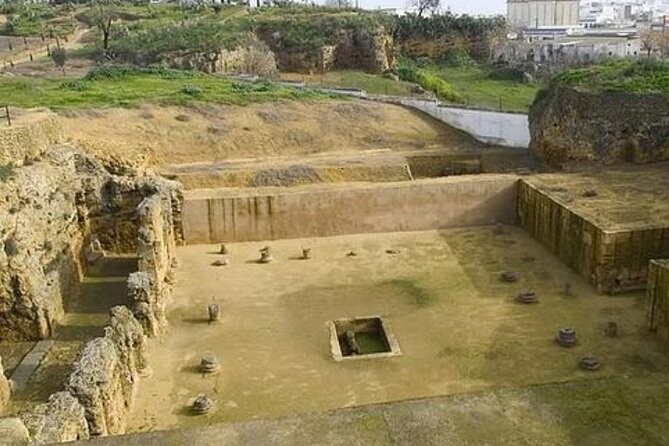
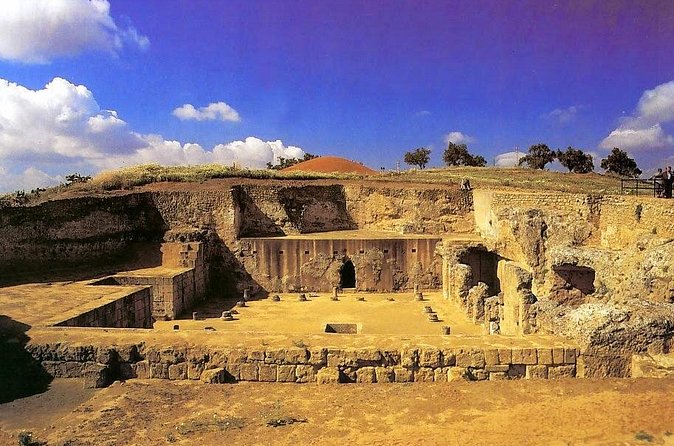
Stop 1 is the Roman Necropolis itself, with about 20 minutes at the core monuments. Two tombs get the spotlight:
Elephant Tomb
This is the stop most people remember because the name alone tells you you’re going somewhere visual, not just descriptive. Even if you’ve never studied Roman funerary art, you’ll be able to connect what you see to why it mattered. The guide focuses on what Romans built and how tombs and vaults functioned as both memorial and statement.
Here’s what I’d watch for while you’re there:
- Placement and scale: big tombs weren’t for “privacy.” They were meant to be seen.
- Condition and preservation: the site is well-kept enough that you can still read the monument form clearly.
- How the guide explains purpose: don’t just look at decoration—listen for what the monument signaled.
More short hops out to Carmona
Servilia Tomb
Servilia Tomb is another anchor. If Elephant Tomb catches your eye, Servilia helps you understand the necropolis as a whole—how multiple families and individuals used monumental architecture to honor the dead. The guide’s art-historian lens matters here. You’re not getting a list of names and dates; you’re getting interpretation—what the tomb’s form and setting suggest about burial culture.
This stop is also where you’ll get the “why this place” feeling. The tour keeps pulling you back to the idea that funerary monuments were part of civic life, not just private grief.
Admission is handled for you
Both of these monument segments come with admission included, which makes your day simpler. You show up, you walk with the group, and you don’t burn time hunting tickets or figuring out where the entry boundary is.
Alcázar de la Puerta de Sevilla: a short finish that ties eras together
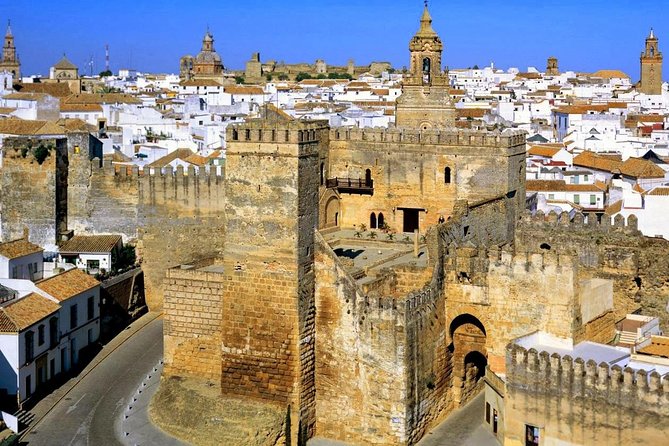
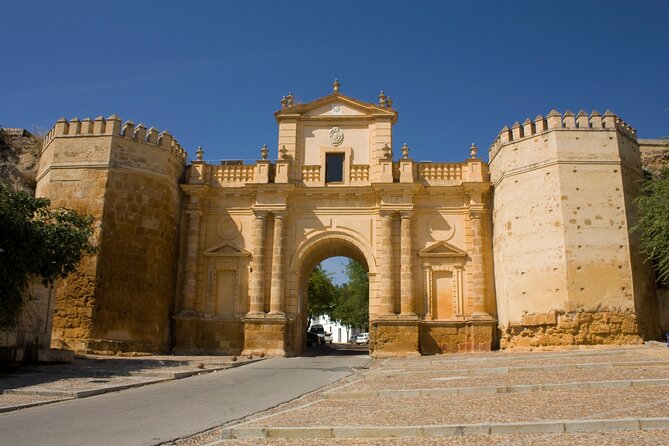
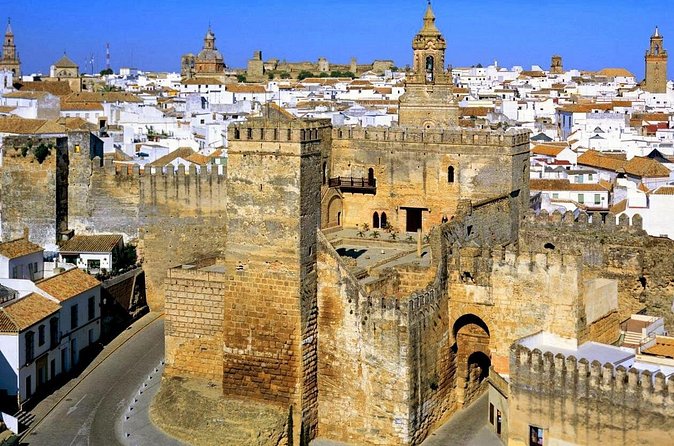
Stop 2 is Alcázar de la Puerta de Sevilla, with about 8 minutes included. It’s short on purpose. This isn’t a long architectural deep study—it’s a way to end your necropolis visit with a place that helps you connect Carmona’s timeline in your head.
What you should expect here:
- The guide continues the story of Carmona’s past, including periods before and after Roman rule.
- You’ll get a sense of how the city’s identity kept shifting as different peoples controlled it over time.
- The quick stop gives you a physical endpoint that feels natural after standing among tombs.
If you like history that’s stitched together rather than chopped into separate museum boxes, you’ll appreciate that the tour doesn’t end the moment you leave the necropolis gate.
The walking rhythm: 2 hours, small group, and smart stops
This is an approximate 2-hour experience, designed for a real walking tour pace without turning into a full day of tromping. The group size tops out at 30 travelers, which usually means you can hear your guide without constantly playing catch-up.
There’s also a practical schedule element:
- The tour has choice of departure times.
- The listed start time is 11:00 am.
- The meeting point is Avenida Jorge Bonsor, 41410 Carmona, Sevilla, Spain.
- The tour ends at Alcázar de la Puerta de Sevilla, Pl. Blas Infante, 41410 Carmona, Sevilla, Spain.
That start-and-finish setup matters. You’re not walking in a big circle just to end where you began. If you’re planning lunch, this ending spot can work nicely because it gives you options for wandering the old town without backtracking.
Price and logistics: what you’re paying for (and what you’re not)

At $102.79 per person, this isn’t a budget “see it in 10 minutes” tour. You’re paying for guided time with a professional art historian guide and included admission items for the necropolis stop and the Alcázar stop.
What’s included:
- Professional art historian guide
- Local taxes
- Entrance/tickets at the necropolis stop and at Alcázar de la Puerta de Sevilla
What’s not included:
- Hotel pickup and drop-off
- Transportation to and from attractions
So think of it as value for time and access, not for logistics. You’ll still need to get yourself to Carmona (or meet at the appointed meeting point in town). If you’re driving, build extra margin; if you’re relying on transit, plan to arrive early because the tour runs on time.
One more detail that affects your day: the tour notes that the provider isn’t responsible for entrance delays caused by the sites’ internal management. That’s not unique to this tour, but it’s worth remembering—your best move is arriving early enough that a small hiccup doesn’t derail your schedule.
Guide quality: what you should expect from an art historian on-site
The guide is the engine here. This isn’t a casual walk-through where you hear vague highlights and keep moving. You’re getting an art historian perspective—formal, structured, and meant to help you interpret monuments instead of just ticking them off.
In one case, the guide was Henry (Henry of Vandalia) and the style described was:
- professional and documented
- information with an appropriate level of detail
- no silliness or overly fussy lecturing
That kind of guide behavior is exactly what you want at a cemetery site. If the explanations are too dry, you lose the human angle. If they’re too fluffy, you miss what the monuments were built to say.
Also note: on some occasions, the tour may run in two languages. That usually means the guide can still guide effectively, but your listening experience might depend on your language comfort.
Who this tour suits best (and who might want something else)
This works well for:
- First-timers who want a guided start to Roman funerary art without studying beforehand
- People who enjoy short, focused walks rather than multi-stop marathons
- Visitors who want Carmona’s Roman story plus hints of Phoenician, Carthaginian, and Arab layers
- Travelers who like when tickets and admission are handled as part of the experience
It’s also a fair pick for many ages because it’s short and manageable—but there’s an important family rule: children must be accompanied by at least 2 adults. If you’re traveling with kids, make sure you meet that adult-to-child requirement and double-check child-rate conditions (child rate applies only when sharing with 2 paying adults).
If you’re the type who wants a long, slow museum-style visit, you might find 2 hours a bit tight. But if your goal is to see the top monuments, understand the burial meaning, and connect to Carmona’s broader past, this format is a strong fit.
Heads-up: timing and group discipline matter here

This tour makes it clear that it’s a group experience with set boundaries. The guidance includes:
- Arrive about 5 minutes early so you can link up with the guide.
- If the tour has started and you’re not there, the group may be considered complete with no refunds or claims once it begins.
- Don’t separate from the group during the guided tour; you can lose rights to claims if you do.
This isn’t meant to scare you. It’s just the reality of timed sites and organized group entry. Your best move is simple: plan to be early, and once you meet up, stay with the group so you don’t miss the explanation parts.
Should you book this Carmona Roman Necropolis tour?
If you want a smart, guided introduction to Carmona’s Roman Necropolis with real tombs like Elephant Tomb and Servilia Tomb, I think this is a good buy. You’re paying for guidance and admission, and the time is tight enough that you’ll leave feeling you understood the site rather than just photographed it.
Book it if:
- you like guided context, especially around art and monuments
- you want a short day trip format near Seville
- you appreciate a structured route with included entries
Pass or switch plans if:
- you strongly need a flexible start time on the day (this tour expects punctual meeting)
- your schedule is unpredictable and you can’t reliably get to Carmona on time
- you’re looking for a long, slow excavation-by-excavation style visit (this is a focused walk)
If you do book, give yourself extra time to reach the meeting point. Arrive early, listen carefully in the tomb stops, and treat the short Alcázar finish as your “okay, now I can place Carmona in time” moment.
FAQ
FAQ
What’s the duration of the Carmona Roman Necropolis and History Walking Tour?
The tour lasts about 2 hours.
Where does the tour start and end?
It starts at Avenida Jorge Bonsor, 41410 Carmona and ends at Alcázar de la Puerta de Sevilla, Pl. Blas Infante, 41410 Carmona.
What time does the tour begin?
The listed start time is 11:00 am, and there are choice of departure times.
What’s included in the ticket price?
You get a professional art historian guide and local taxes, and the tour includes admission/tickets for the necropolis stop and Alcázar de la Puerta de Sevilla.
Is hotel pickup included?
No. Hotel pickup and drop-off and transportation to/from attractions are not included.
What language is the tour offered in?
It’s offered in English. On some occasions, it may be conducted in two languages.
How large is the group?
The experience has a maximum of 30 travelers.
Are children allowed?
Yes, but children must be accompanied by at least 2 adults. Child pricing applies only when sharing with 2 paying adults.
Do I need to bring a printed ticket?
It’s a mobile ticket, and you’ll receive confirmation at booking. The tour also notes that you must provide a mobile phone number to the company when reserving.
More Tour Reviews in Carmona
- Private visit to Carmona and its main monuments
★ 5.0 · 23 reviews - Carmona: City Walking Tour
★ 3.9 · 21 reviews
More Short Hops to Carmona
- Private visit to Carmona and its main monuments
★ 5.0 · 23 reviews - Carmona: City Walking Tour
★ 3.9 · 21 reviews
More Walks Through the Old Town
- Carmona: City Walking Tour
★ 3.9 · 21 reviews
Just added to the Seville list

Seville Old Town Walks, compared.
 ★ 5.0Small-Group City Highlights Walking TourFrom $271,204 reviews
 ★ 5.0Cultural Walking Tour of Seville MonumentalFrom $8861 reviews
 ★ 4.9Tapas, Taverns, and History Walking TourFrom $84676 reviews
 ★ 4.9Tapas, Taverns and History Guided Walking TourFrom $99515 reviews
 ★ 4.9Small-Group Jewish Quarter Discovery Walking TourFrom $29499 reviews
 ★ 5.0Seville Guided Small-Group Walking TourFrom $21435 reviews
 ★ 4.7Paranormal and Legends Guided Walking TourFrom $15336 reviews
 ★ 5.0Seville Private Walking Tour with Alcazar & Cathedral TicketsFrom $276332 reviews
Browse the lists this tour appears in