Review · SEVILLE
The Seville of the 3 Cultures
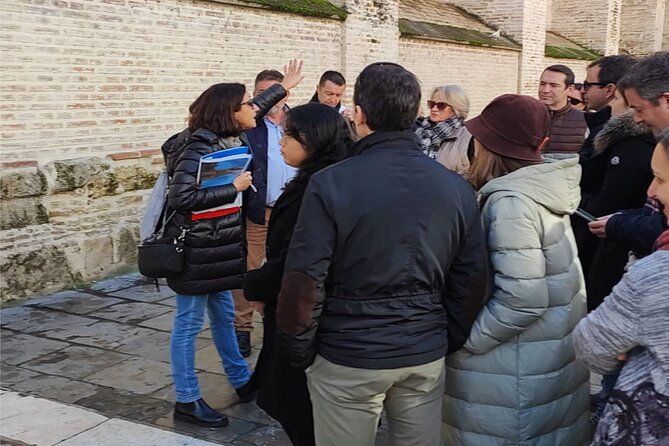
One neighborhood can tell four eras. This Seville of the 3 Cultures walk guides you through the city’s key corners where Roman, Al-Andalus, Christian, and Jewish life left traces. I like how it turns streets you’d otherwise rush past into clear stories you can actually picture.
Two things I especially like: the small group size (max 20) keeps the pace friendly, and the guide storytelling connects places to real turning points like the Reconquest under Ferdinand III. You also get lots of “look here” photo moments, especially around the Giralda area and later toward Triana.
One drawback to consider: it’s about 2 hours with many quick stops, so it’s great for getting oriented, but not a replacement for slow, ticketed museum time inside big monuments.
In This Review
- Key highlights before you go
- A 2-hour walk that makes Seville’s four eras make sense
- Price check: what $13.88 buys you (and where you might pay extra)
- From Plaza de San Francisco to Ayuntamiento: start where Seville’s layout clicks
- Puerta del Perdon and the Giralda zone: photo stops with a story behind them
- Palacio Arzobispal: the emotion of architecture
- Santa Cruz and the Judería: squares, superstitions, and walking legends
- Royal Alcázars surroundings and Puerta del León: power in the details
- Monuments, towers, and the Arenal-to-Triana shift
- Puente de Isabel II and the Torre del Oro finish: Seville from the waterline
- What makes the guide impactful here (Alfredo, Jose, and the right tone)
- Who this suits best, and who should consider a different approach
- My practical tips so you enjoy every minute
- Should you book Sevilla&ME Seville of the 3 Cultures?
- FAQ
- What’s the duration of the Seville of the 3 Cultures tour?
- Where does the tour start and where does it end?
- How much does it cost?
- Do I need a printed ticket?
- How big is the group?
- Is admission included for all stops?
- Is the tour near public transportation?
- Can I bring a service animal?
- When will I get confirmation?
- What’s the cancellation policy?
Key highlights before you go
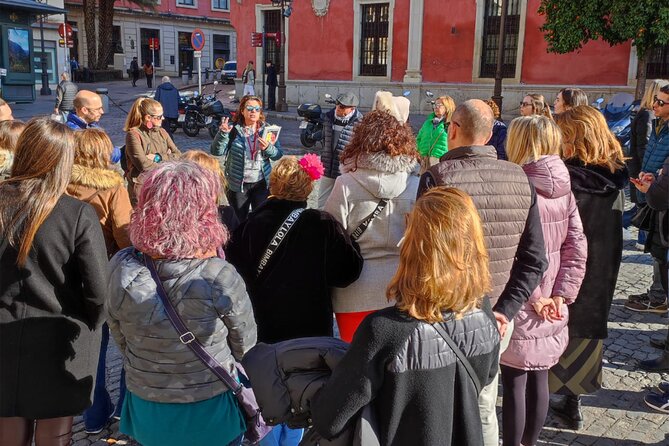
- Giralda and Cathedral viewpoints: you’ll stop where the best photos happen, plus learn why certain angles can fool you.
- Judería-focused squares: Santa Marta, Plaza de la Alianza, and more help you map the Jewish Quarter by story, not just streets.
- Legends you can repeat: Calle Susona and Calle Vida are treated like walking urban legends, not random alley names.
- Power and symbolism stops: the Archbishopric areas and major palace/fortification entrances are explained in plain terms.
- A satisfying finish at Torre del Oro: the last stretch across toward Triana gives you a full Seville feel before you end.
Not sure yet? See what else in Seville is worth your time.
- Seville: Live Flamenco Dancing Show Ticket at the Theater★ 4.7 · 16,396 reviews
- Seville: Alcázar, Cathedral & Giralda Skip-the-Line Tour★ 4.8 · 11,525 reviews
- Seville: 1-Hour Guadalquivir River Sightseeing Eco Cruise★ 4.2 · 10,281 reviews
A 2-hour walk that makes Seville’s four eras make sense
Seville is one of those cities where the present sits right on top of the past. This tour works because it doesn’t treat history like a lecture. It links Roman-era Seville, Al-Andalus power, Almohad splendor, and then the Christian era after the Reconquest under Ferdinand III—while also giving the Jewish community a visible, central place in the story.
I like that the route is built around transitions: commercial → monumental, old Jewish Quarter → Santa Cruz lanes, palace gates → archival walls, then toward the Arenal and Triana riverside. That structure helps you start spotting patterns as you walk, instead of memorizing names.
Price check: what $13.88 buys you (and where you might pay extra)
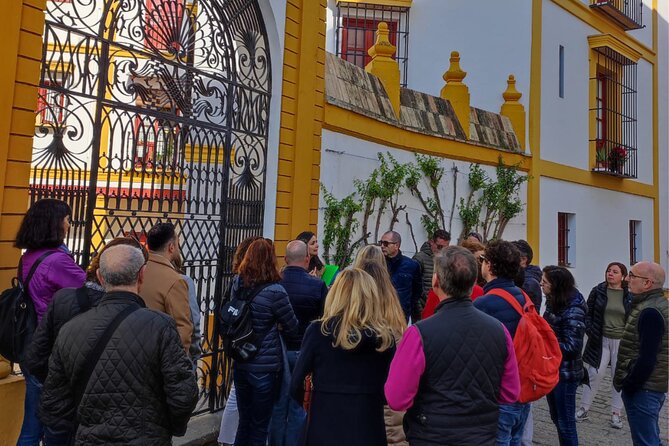
At $13.88 per person for about 2 hours, the value comes from two practical things. First, most stops are listed with admission as free to access, so you’re mainly paying for guidance and context. Second, the group is capped at 20 people, which usually means fewer listeners getting left behind.
It’s also a mobile ticket setup. That’s handy in a city where printed tickets can get lost in the bottom of a bag.
What you should know: a few major points are marked as admission not included, including the Palacio Arzobispal, Puerta del León, Archivo General de Indias, and the Torre del Oro (even though you end in that area). If you want to go inside at those, plan on paying separately when needed.
From Plaza de San Francisco to Ayuntamiento: start where Seville’s layout clicks
The meeting point is Pl. de S. Francisco, 17, in the Casco Antiguo. This is a smart place to begin because the tour starts with orientation, not trivia.
Your first big stop is the Ayuntamiento de Sevilla area, where the city divides between the older commercial zone and the more monumental side. Even if you’ve visited other Spanish cities, this kind of “map in your head” moment matters. It helps you understand why certain streets feel busy and certain spaces feel ceremonial.

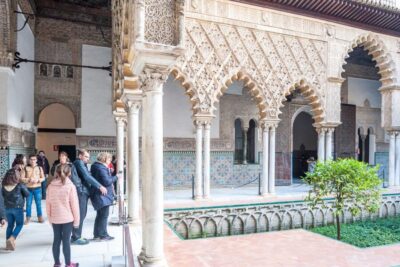
Puerta del Perdon and the Giralda zone: photo stops with a story behind them
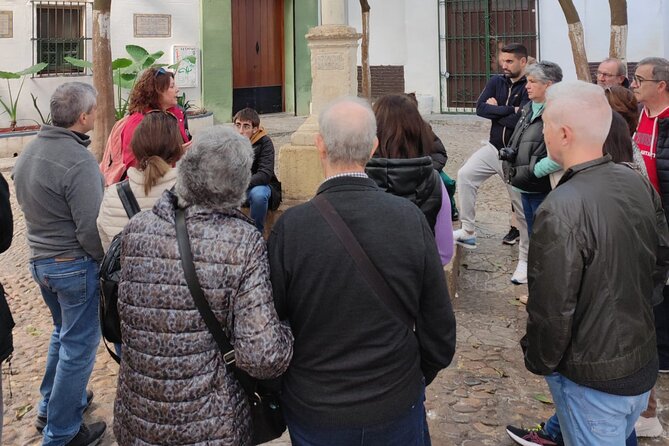
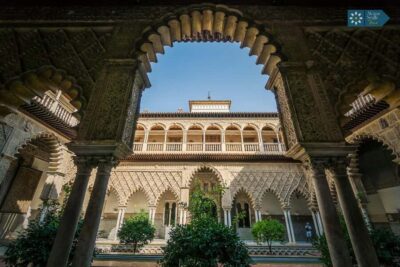
From there you head toward the Puerta del Perdon. You get a walking moment focused on the streets, plus a take-your-best-shot segment tied to the Giralda area. This isn’t just get-a-photo-and-go. The guide talks about the collapse of the Giralda, which changes how you view the surrounding architecture.
Next comes Plaza de la Virgen de los Reyes, where the Cathedral connects to the Giralda. The key value here is attention. You’re guided to what people often overlook—how the space feels, not just what it looks like from one angle.
And later, around the Giralillo icon, you’ll learn that views can mislead. That’s a fun lesson because it pushes you to move a few steps, not just hold up your camera from the first spot.
Palacio Arzobispal: the emotion of architecture
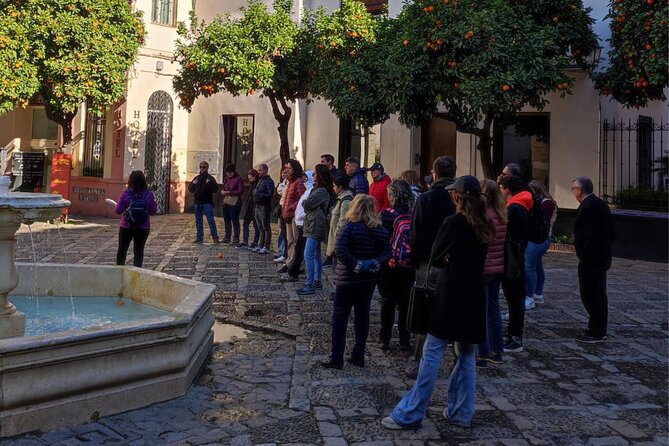
At Palacio Arzobispal, the tour focuses on the idea of the Archbishopric’s horror vacui—a concept about how spaces fill up and what that tells you about power and identity. You don’t need to be an art history student to get the point. The stop is about reading the visual language.
This is also one of the places where admission is not included, so treat the stop as a close look and story moment rather than a “must enter” target. If you’re the type who loves looking, taking photos, and asking a lot of questions, this chapter is for you.
Santa Cruz and the Judería: squares, superstitions, and walking legends
This is where the tour earns its name. You spend time in and around the Jewish Quarter and Santa Cruz area, with stop after stop designed to help you “place” the Judería in your mind.
You start with Plaza de Santa Marta, tied to one of the largest Jewish communities you can connect to Seville’s layout. Then you move to Plaza de la Alianza, which is presented as a sum of many villages that passed through this area over time. The effect is that the city feels lived-in, not frozen in a single era.
You also reach Plaza de Doña Elvira, a key photography and storytelling stop in the Santa Cruz neighborhood. Here you’ll hear about historic minorities and some very curious superstitions. I like this style because it gives you a cultural angle that’s easy to remember. You walk away able to explain what you saw without sounding like you read a page from a book.
Then come two lanes that act like legends with addresses:
- Calle Susona: a “listen with your senses” stop, where the guide builds a legend you’ll want to repeat later.
- Calle Vida: a street-name contrast built for mood. You literally cross from life toward death, at least symbolically, and you’ll feel how the guide uses surprise to keep the walk engaging.
After that, you land in Judería, where the tour turns from a few themed stops into a bigger sense of place. This is the moment where Seville starts to feel like color, smell, and everyday life—again, not as vague atmosphere, but as a set of street cues you now know how to read.
Royal Alcázars surroundings and Puerta del León: power in the details
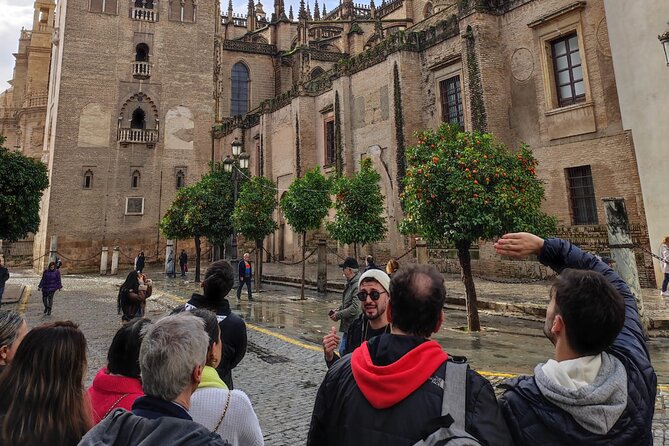
Next the walk heads into Plaza del Patio de Banderas, with a focus on the Royal Alcázars of Seville area. Even if you don’t go inside, this stop helps you understand why gates, courtyards, and entrances matter. They show how each group claimed authority, then left their mark.
At Puerta del León, the emphasis is on symbolism: defense, heraldry, customs, and different kings who passed through and where they “stayed” in the story. Admission is not included, so again it’s about reading the outside and letting the guide connect the dots.
A short but memorable step follows at Archivo General de Indias. The tour brings up an odd idea—why even today the archives feel like a place that could attract pirates—and explains it in story terms tied to what’s kept and protected. If you like history told like a mystery, this is a good pivot from romance to paperwork power.
Monuments, towers, and the Arenal-to-Triana shift
The route doesn’t stay stuck in one era or one neighborhood. You’re guided past Monumento a la Inmaculada Concepción, where the discussion connects Seville’s crossroads identity with painters and Baroque moments—and even mentions the idea of the first marketing campaign in history. That’s a surprising link, but it works because it shows cities aren’t only about art and war. They’re also about promotion, audiences, and influence.
Then you reach Torre Abdel Aziz, another viewpoint-and-imagination stop. The tour encourages you to compare what you see on the street with what the city looks like in photos, then shows how towers, walls, palaces, and houses “read” differently in person. This is also where I’d push you to slow down for a minute. Take a breath. Towers reward patience.
You then move through the Arco del Postigo del Aceite area, tied to the Arenal Quarter. The message here is that the Arenal has everything in small doses—good times and bad times in the way stories cluster around certain corners.
At Plaza del Cabildo, you get a beauty-focused moment meant to make you understand why people don’t just pass through Seville’s passages. It’s described like a square that explains how the city was lived—and why you feel a pull to keep going.
Nearby, Mercado Artesania El Postigo adds a practical break. It’s a place that represents the “villages that settled here,” with the best of each kept in one place. Even if you don’t buy anything, you’ll likely want to look, because the stop shifts you from pure history into daily culture.
Puente de Isabel II and the Torre del Oro finish: Seville from the waterline
The tour crosses toward Puente de Isabel II (Puente de Triana). This section is built for photos plus comparison—seeing Seville from a different angle and noticing how neighborhoods feel as you move. The guide also brings in pilgrim stories from those who crossed, which helps the river feel more human.
Finally, you end in the Torre del Oro area. This is one of those closers that makes sense because it gives you an “I get it now” feeling. You’ve walked through streets and gates and squares, and now the city’s defensive and trading energy shows up visually in a single landmark.
Admission is listed as not included for the Torre del Oro itself, so think of the finish as the story payoff and the views. If you want more, you’ll have to plan a separate ticket visit.
What makes the guide impactful here (Alfredo, Jose, and the right tone)
Good guides don’t just recite. They frame. Based on the guide styles connected with this experience—like Alfredo and Jose, who are praised for placing neighborhoods in context and narrating with clear knowledge—the standout element is the way they keep the walk fun and professional without turning it into a performance.
That matters because the tour covers a lot of ground in a short window. When the guide’s pacing is right, you leave feeling oriented. When it’s not, you leave with random facts and no map.
Who this suits best, and who should consider a different approach
This works well for:
- First-timers who want Seville’s three-cultures story fast
- People who like legends and street-level history, not only big monument interiors
- Travelers who want a manageable group walk (max 20) rather than a huge crowd
You might want a different setup if:
- You want long time inside places like archives or palaces, since some entrances are not included
- You prefer slow wandering with minimal structure, because this tour is paced with many short stops
My practical tips so you enjoy every minute
Wear shoes you can trust. The route is built for walking and quick photo angles. Bring your phone camera charged, because Giralda and the riverline finishes are the kind of views you’ll want to revisit.
Also, show up ready to ask questions. Stops like the Archbishopric horror vacui idea and the Calle Susona/Calle Vida legends land better when you engage with the guide. If you’re the quiet type, that’s fine too—you’ll still get the stories—but you’ll enjoy it more if you interact.
Should you book Sevilla&ME Seville of the 3 Cultures?
If you want a guided hit of Seville that ties together Roman, Al-Andalus, Christian, and Jewish influences in about two hours, this is a strong choice. The price is low enough to feel low-risk, and the structure keeps you from getting lost in the maze of Santa Cruz streets.
I’d book it if you like stories you can remember—especially around the Giralda area, the Judería squares, and the Triana river crossing. I’d skip or pair it with extra time elsewhere if you’re hoping for lots of paid interior access during the same walk.
FAQ
What’s the duration of the Seville of the 3 Cultures tour?
It runs for about 2 hours.
Where does the tour start and where does it end?
It starts at Pl. de S. Francisco, 17, Casco Antiguo, 41004 Sevilla, Spain, and ends in the Torre del Oro area at P.º de Cristóbal Colón, s/n, Casco Antiguo, 41001 Sevilla, Spain.
How much does it cost?
The price is $13.88 per person.
Do I need a printed ticket?
No. The tour uses a mobile ticket.
How big is the group?
The tour has a maximum of 20 travelers.
Is admission included for all stops?
Not everywhere. Several stops are listed as admission free, but some are marked as ticket not included, including Palacio Arzobispal, Puerta del León, Archivo General de Indias, and Torre del Oro.
Is the tour near public transportation?
Yes, it is listed as near public transportation.
Can I bring a service animal?
Yes, service animals are allowed.
When will I get confirmation?
Confirmation is received at the time of booking.
What’s the cancellation policy?
Free cancellation is available up to 24 hours in advance for a full refund. If you cancel less than 24 hours before the start time, the amount paid will not be refunded. If the minimum traveler requirement isn’t met, you’ll be offered another date/experience or a full refund.
More Tour Reviews in Seville
- Seville: Live Flamenco Dancing Show Ticket at the Theater
★ 4.7 · 16,396 reviews - Seville: Alcázar, Cathedral & Giralda Skip-the-Line Tour
★ 4.8 · 11,525 reviews - Seville: 1-Hour Guadalquivir River Sightseeing Eco Cruise
★ 4.2 · 10,281 reviews - Seville: Setas de Sevilla Entry Ticket
★ 4.6 · 8,901 reviews - Seville: Cathedral, Giralda & Alcazar Entry With Guided Tour
★ 4.6 · 8,560 reviews