
Review · SEVILLE OLD TOWN WALKS
Seville Triana Quarter and River Small-Group Walking Tour
Seville has a way of turning a simple walk into a story you can feel. This 90-minute small-group route through Triana and the Guadalquivir riverfront starts at the old ship-watch tower area and moves step by step through Seville’s changing cultures, trades, and faith.
What I like most is the focus: you get both the big political-religious landmarks and the everyday stuff like markets and ceramics. I also love the small group cap of 10 people, which makes it easy to ask questions and actually hear the details. One heads-up: since the tour is centered on churches and historical institutions, if religious history is a hard sell for you, a portion of the walk may feel heavy.
In This Review
- Key Highlights You’ll Feel Immediately
- Meeting at Torre del Oro: Where Seville Watched the Ships
- Along the Riverfront: A Modern Monument and Cultural Coexistence
- Crossing into Triana: The First Fixed Bridge and 1800s Ironwork
- Triana’s Market Stop: Mediterranean Ingredients With a Story
- Crafts and Ceramics: How Triana Turned Work Into Art
- San Jorge Castle: The Only Defensive Structure and the Inquisition Connection
- Holy Week at a Triana Church: Brotherships and Living Tradition
- Santa Ana and Mudéjar Architecture: The Triana Cathedral Feeling
- Pace, Footing, and How to Prepare for 90 Minutes
- Price and Value: Why About $30 Feels Reasonable
- Who This Tour Is Best For
- Should You Book the Seville Triana and River Walk?
- FAQ
- FAQ
- What is the duration of the Seville Triana Quarter and River small-group walking tour?
- How big is the group?
- Is the tour offered in English?
- Where does the tour start and end?
- Will I get a mobile ticket?
- Are service animals allowed?
- Can I cancel for a full refund?
Key Highlights You’ll Feel Immediately
- A max group size of 10 keeps the pace human and the explanations clear
- Torre del Oro to Triana means you see the river’s story in order, not in random stops
- Market + ceramic crafts connects local food and art to how Triana became Triana
- San Jorge Castle adds the darker side of power, with the Inquisition as part of the context
- Holy Week sites and Mudéjar church architecture make the spiritual side visible in stone and tradition
- On-foot sightseeing works because this area is generally flat and easy to navigate
Seville on foot, a few more walks
- Seville: Small-Group City Highlights Walking Tour★ 5.0 · 1,204 reviews
- Cultural Walking Tour of Seville Monumental★ 5.0 · 861 reviews
- Seville: Tapas, Taverns, and History Walking Tour★ 4.9 · 676 reviews
Meeting at Torre del Oro: Where Seville Watched the Ships
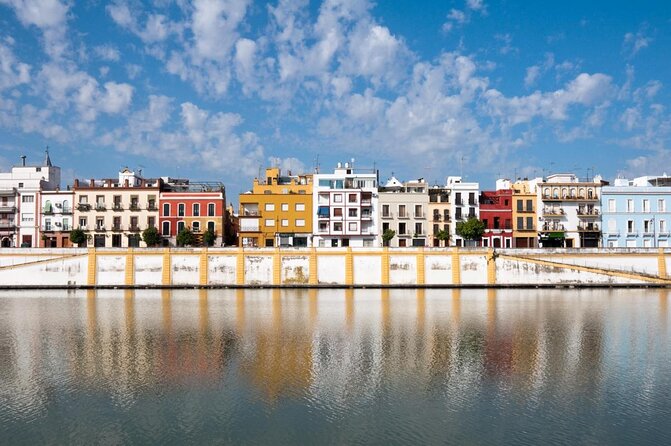
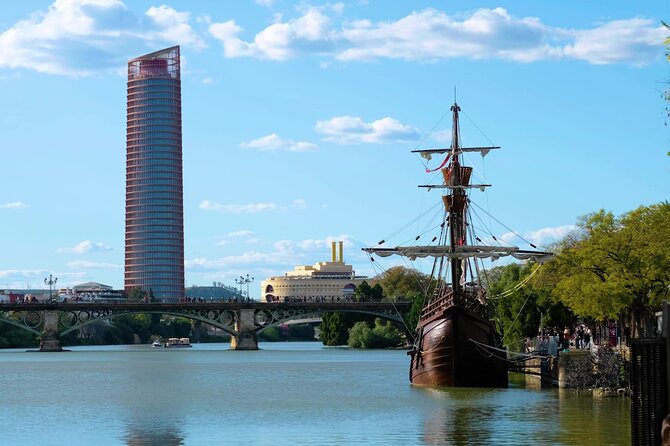
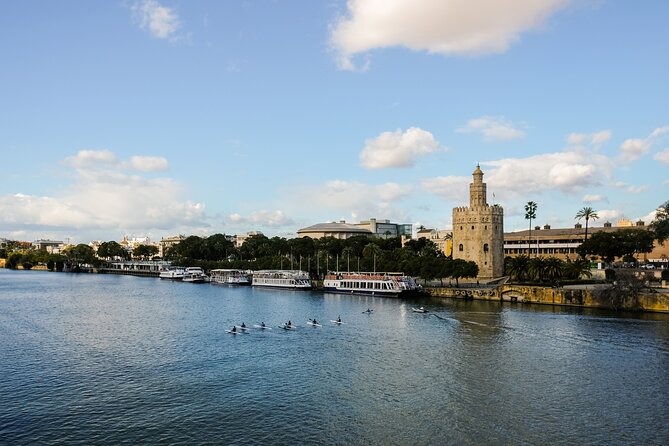
The walk begins at the Torre del Oro area, the old watchtower built more than 800 years ago to defend Seville’s access by water. Even before you start crossing toward Triana, this is a smart first move. The tower immediately frames the river as a gateway, not just a pretty view.
From here, you can picture why the Guadalquivir mattered so much. Seville didn’t grow by accident. Water routes meant trade, movement, and attention from powers far beyond the city walls. If you’ve ever wondered why Seville feels so “important” in Spain’s story, this start gives you the reason fast.
Along the Riverfront: A Modern Monument and Cultural Coexistence
Next up is a modern monument that reflects the different cultures that arrived in Seville and managed to coexist for centuries. This is the tour’s gentle left turn: you move from medieval defense into the idea of layers—Seville as a city that kept absorbing and remixing.
This stop matters because it changes how you’ll interpret what comes later. When you reach Triana’s churches and crafts, you’re not just ticking off buildings. You start noticing how different communities left physical marks—sometimes in architecture, sometimes in traditions, and sometimes in the way people made and sold things.
If you prefer your walking tours strictly chronological, this part might feel like a thematic bridge rather than a timeline. Still, it helps the rest of the route click.
Crossing into Triana: The First Fixed Bridge and 1800s Ironwork
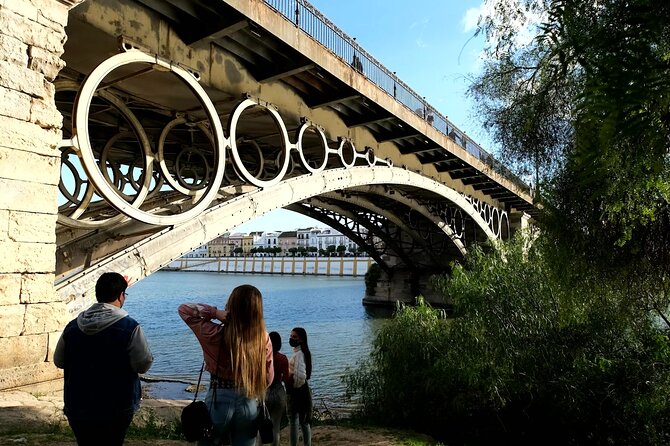
Then you head toward the river crossing—Seville’s first fixed bridge. It was built to replace an earlier floating bridge that had connected the city with Triana. And here’s a detail worth savoring: the bridge is a great example of iron architecture from the 1800s.
This is where the riverfront becomes practical. Bridges aren’t just engineering; they’re decisions about movement and control. By seeing how the crossing evolved, you understand why Triana remained its own distinct neighborhood while staying connected to Seville’s core.
Also, this is a nice moment for photos. The river gives you width and depth, and the ironwork adds structure to the skyline. You get both the “look at it” and the “now I get why it looks like that.”
Still deciding? A few more Seville picks worth a look.
Triana’s Market Stop: Mediterranean Ingredients With a Story
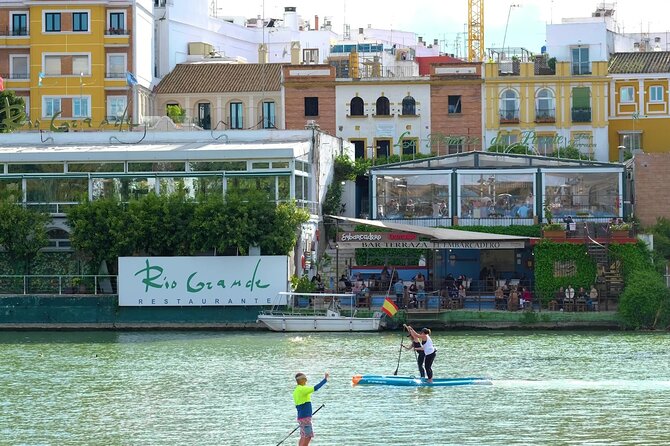
As you walk deeper into Triana, you reach the neighborhood’s traditional market area. This stop is about more than food smells and local bustle. The point is how the products of the area fed Mediterranean cuisine, and how those ingredients shaped what people ate and valued.
Markets are where history becomes normal life. You learn to see food as a map of trade routes, seasonal availability, and cultural exchange. If you love eating your way through places, this part is a strong match—you’ll come away with ideas for what to hunt down later.
Practical note: markets can be busy at peak times. Even on a calm day, be ready to pause and listen. I’d wear comfortable shoes and keep your phone handy for quick reference photos, because the tour pace assumes you’ll want to absorb details, not sprint ahead.
Crafts and Ceramics: How Triana Turned Work Into Art
After the market, the tour shifts from what Triana sells to what Triana makes. You’ll talk about the importance of local crafts and their contribution to the arts, with a specific focus on ceramics and traditional artisan workshops.
This is one of the most satisfying parts of the route because it ties together identity and skill. Triana isn’t just a place you pass through. It’s a neighborhood known for making things—then teaching those techniques forward.
If you’ve ever bought a ceramic souvenir and wondered why it looks the way it does, this stop helps you connect the dots. You start seeing patterns, finishes, and forms as cultural habits, not random decoration.
In past departures, guides like Clara have been praised for making these crafts feel approachable and fun, not like a lecture. That matters. Ceramics can get boring fast if you only hear facts. Here, the goal is to understand the why behind the making.
San Jorge Castle: The Only Defensive Structure and the Inquisition Connection
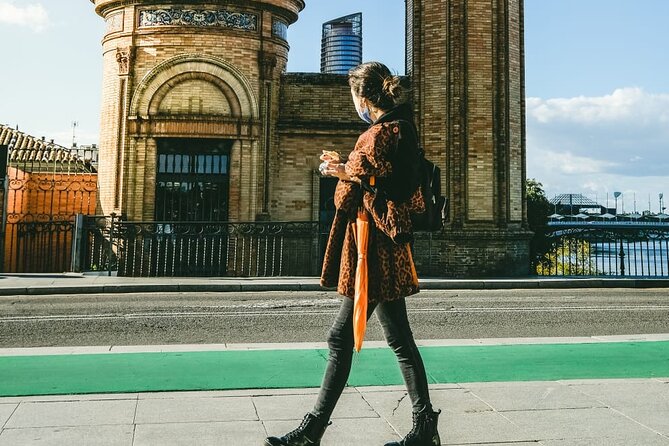
The tour then climbs into the Castle of San Jorge area. This is described as the only defensive structure of the neighborhood, and the headquarters of the Inquisition. That combination—protection plus institutional power—gives this stop a very specific weight.
You’re not just looking at walls. You’re learning what that kind of structure signaled to the community. The Inquisition isn’t mentioned here as abstract trivia. The framing is local: how a religious court mattered in Seville’s history, and how institutions shaped daily life.
This part can feel intense, especially if you’re visiting for beauty and atmosphere. But it’s also what makes the tour more than a photo walk. You’re getting the full picture, including the darker machinery behind the buildings.
Also, if you’re someone who likes history seen through human consequences, this stop is likely to stick with you long after you leave Triana.
Holy Week at a Triana Church: Brotherships and Living Tradition
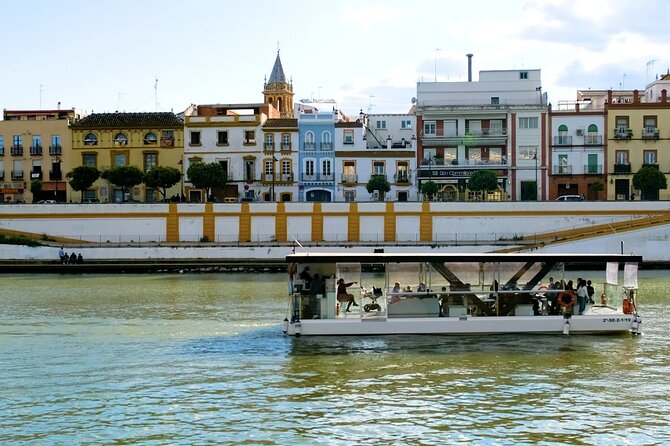
Next comes a small church connected to Holy Week, one of the most important religious festivities in the area. The key detail here is that this chapel is associated with the most beloved brotherhoods of Triana—and it’s still a must-stop for anyone visiting the suburb.
This isn’t a dry “religion lesson.” It’s a chance to understand how tradition becomes identity. Holy Week in Spain isn’t only about ceremonies; it’s about community roles, long-standing groups, and local pride.
If you visit outside the peak festival season, you won’t see the full spectacle. Still, the stop is valuable because it explains why these brotherhoods matter and why the chapel remains important.
Santa Ana and Mudéjar Architecture: The Triana Cathedral Feeling
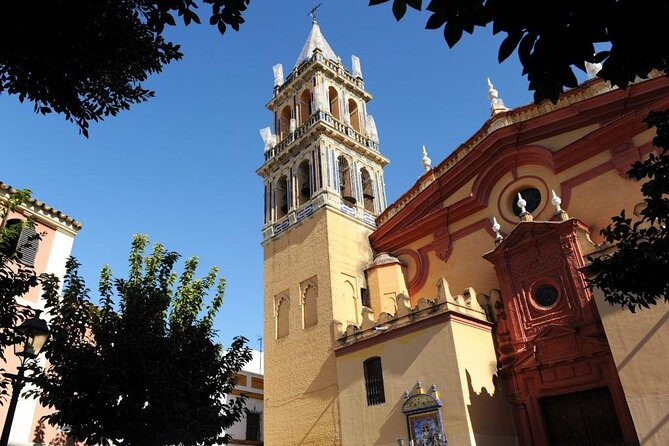
The final major architectural stop is the Real Parroquia de Señora Santa Ana, often described as the most important church of Triana and the first one built after the Christian conquest of 1248. The big style connection here is Mudéjar architecture—so much so that it’s popularly referred to as the Cathedral of Triana.
This is a great way to end because it brings the tour’s themes together. You started with river defense, crossed into a neighborhood shaped by trade and crafts, then moved into the world of religious power and living faith. Now you land on a building style that reflects historical blending.
Mudéjar architecture can look delicate, but it’s tied to real historical dynamics. Seeing it here makes the style feel earned, not random. You’ll likely finish the walk with a better eye for what makes certain churches in Seville feel uniquely Seville.
Pace, Footing, and How to Prepare for 90 Minutes
This is a short tour—about 1 hour 30 minutes—and it’s best as a focused “get your bearings” experience rather than an all-day marathon. The area on both sides of the Guadalquivir River is generally flat, which means it’s easier on your legs than some old-city walks.
What to bring:
- Comfortable walking shoes (you’ll be on foot for the full route)
- A small water bottle if the day is warm
- A charged phone for photos, especially around the bridge and river viewpoints
Timing can help too. The tour offers both morning and afternoon start times, so pick the one that matches your energy level and how you want to structure the rest of your day—this works nicely as either a first “Seville orientation” or an afternoon story add-on.
Price and Value: Why About $30 Feels Reasonable
At $30.04 per person, you’re paying for a small group walk with real guided storytelling across multiple “Seville layers”: medieval defense, 1800s engineering, markets and crafts, and major religious landmarks.
What makes that feel fair is the group cap at 10 people. In practice, that usually means more interaction—questions, clarification, and the kind of explanations that don’t get swallowed by a crowd. Past guests have also highlighted guides like Marta for clearly presenting information and keeping it engaging, and Miguel for connecting history to today in a way that felt current and conversational.
Also, this tour is offered in English, and you’ll get a mobile ticket. That’s a practical bonus when your schedule is tight and you don’t want extra friction before the first stop.
Who This Tour Is Best For
I’d especially recommend this tour if:
- You love history but want it explained in plain language, not memorized facts
- You care about how neighborhoods develop through trade, crafts, and faith
- You want a walk that balances major landmarks with everyday culture like markets
- You like smaller group experiences where the guide can tailor the pace
If you’re in Seville for only a day or two, this is a strong “spine” tour. It gives you context for what you’ll see later—cathedrals, monuments, and the idea of Triana as more than a postcard.
If you hate walking in churches or prefer only modern culture and art, you might find parts of the route less fun. But if you can handle religious history as part of the local story, you’ll probably enjoy how the pieces connect.
Should You Book the Seville Triana and River Walk?
Yes—if you want an efficient, high-impact look at Seville through the lens of Triana. The combination of Torre del Oro, the iron bridge connection, market-to-ceramics craft culture, San Jorge’s serious institutional history, and Mudéjar Santa Ana at the end is a well-formed package.
Book it especially if:
- You like small groups (10 people maximum)
- You want a guided route rather than trying to stitch together the story on your own
- You want to leave with a better understanding of why Seville and Triana feel the way they do
FAQ
FAQ
What is the duration of the Seville Triana Quarter and River small-group walking tour?
The tour lasts about 1 hour 30 minutes.
How big is the group?
The tour is limited to a maximum of 10 travelers.
Is the tour offered in English?
Yes. It is offered in English.
Where does the tour start and end?
It starts at Torre del Oro (Torre del Oro, P.º de Cristóbal Colón, s/n, Casco Antiguo, 41001 Sevilla, Spain) and ends at Real Parroquia de Señora Santa Ana (Párroco don Eugenio, 1, 41010 Sevilla, Spain).
Will I get a mobile ticket?
Yes, the tour includes a mobile ticket.
Are service animals allowed?
Service animals are allowed.
Can I cancel for a full refund?
Free cancellation is available. You can cancel up to 24 hours in advance for a full refund, based on the experience’s local time.
More Tours in Seville
- Seville: Alcázar, Cathedral & Giralda Skip-the-Line Tour
★ 4.8 · 11,525 reviews - Seville: Cathedral, Giralda & Alcazar Entry With Guided Tour
★ 4.6 · 8,560 reviews - Seville: Priority Access Cathedral, Giralda & Alcázar Tour
★ 4.8 · 7,563 reviews - Seville: Alcázar and Cathedral Entry Ticket and Guided Tour
★ 4.6 · 5,056 reviews - Seville: City Sightseeing Hop-On Hop-Off Bus Tour
★ 4.0 · 4,633 reviews
More Tour Reviews in Seville
- Seville: Live Flamenco Dancing Show Ticket at the Theater
★ 4.7 · 16,396 reviews - Seville: Alcázar, Cathedral & Giralda Skip-the-Line Tour
★ 4.8 · 11,525 reviews - Seville: 1-Hour Guadalquivir River Sightseeing Eco Cruise
★ 4.2 · 10,281 reviews - Seville: Setas de Sevilla Entry Ticket
★ 4.6 · 8,901 reviews - Seville: Cathedral, Giralda & Alcazar Entry With Guided Tour
★ 4.6 · 8,560 reviews
More Walks Through the Old Town
- Seville: Small-Group City Highlights Walking Tour
★ 5.0 · 1,204 reviews - Cultural Walking Tour of Seville Monumental
★ 5.0 · 861 reviews - Seville: Tapas, Taverns, and History Walking Tour
★ 4.9 · 676 reviews - Seville: Tapas, Taverns and History Guided Walking Tour
★ 4.9 · 515 reviews - Seville: Small-Group Jewish Quarter Discovery Walking Tour
★ 4.9 · 499 reviews
Just added to the Seville list



Seville Old Town Walks, compared.
 ★ 5.0Small-Group City Highlights Walking TourFrom $271,204 reviews
 ★ 5.0Cultural Walking Tour of Seville MonumentalFrom $8861 reviews
 ★ 4.9Tapas, Taverns, and History Walking TourFrom $84676 reviews
 ★ 4.9Tapas, Taverns and History Guided Walking TourFrom $99515 reviews
 ★ 4.9Small-Group Jewish Quarter Discovery Walking TourFrom $29499 reviews
 ★ 5.0Seville Guided Small-Group Walking TourFrom $21435 reviews
 ★ 4.7Paranormal and Legends Guided Walking TourFrom $15336 reviews
 ★ 5.0Seville Private Walking Tour with Alcazar & Cathedral TicketsFrom $276332 reviews
Browse the lists this tour appears in