Review · SEVILLE
Seville Travel Captures
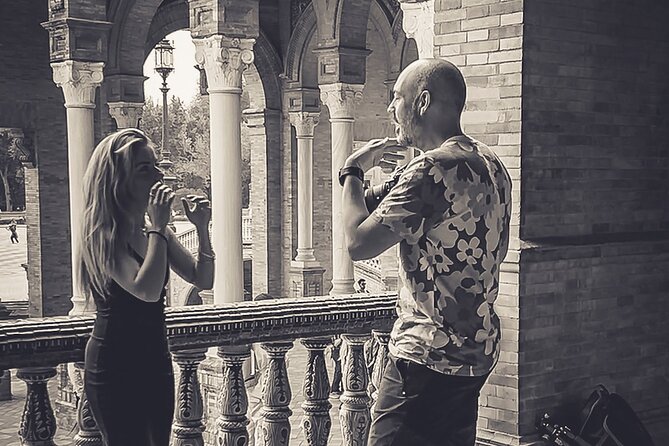
Turn Triana into a movie in 2 hours. This private, camera-led walk through Triana gives you a cinematic video memory so you can enjoy the neighborhood without turning every corner into a photo mission.
I love that the guide runs the capture. You stay in the moment, while professional framing turns everyday streets into something you can replay later. I also like the people-friendly flow, including a tapa and drink stop that feels like you’re hanging out with locals for a bit, not just passing through.
One drawback to consider: this is a protagonist-style shoot. You’ll be guided from spot to spot and asked to interact for the camera, so it’s not the quiet, self-paced wandering experience some people want.
In This Review
- Key Things to Know Before You Go
- Triana, Filmed Like a Story
- Price and Value: What $173.47 Buys You
- Where It Starts (and Why the Meeting Spot Matters)
- Stop 1: Callejón de la Inquisición and the Triana Artist Mood
- Stop 2: Cerámica Triana and the Santa Ana Ceramic Factory Story
- Stop 3: Puente de Isabel II for River Views and Framing Shots
- Stop 4: Plaza de Altozano and the Guadalquivir’s Past Shores
- Stop 5: Esperanza Triana Exterior and the Santa Ana Plazuela Hang
- What You’ll Walk Away With (Beyond a Phone Gallery)
- Practical Tips So Your Shoot Looks Natural
- Who This Tour Fits Best (and Who Might Not)
- Should You Book Seville Travel Captures in Triana?
- FAQ
- How long is the Seville Travel Captures Triana experience?
- What does the tour cost?
- Is this a private tour?
- Do I get a mobile ticket?
- Where does the tour start and where does it end?
- What kinds of places do you visit in Triana?
- Is there food or a drink included?
- What happens if the weather is poor?
- Are service animals allowed?
Key Things to Know Before You Go
- A private 90–120 minute shoot focused on Triana’s most recognizable corners
- Callejón de la Inquisición to Puente de Isabel II in a tight, film-like route
- Cerámica Triana exterior stops tied to the old Santa Ana ceramic factory story
- Plaza de Altozano with historical map moments along the Guadalquivir river edge
- Exterior views around Esperanza Triana and Santa Ana in a lively local square area
- Food and drink time when availability allows so the tour feels social, not just scenic
Not sure yet? See what else in Seville is worth your time.
- Seville: Live Flamenco Dancing Show Ticket at the Theater★ 4.7 · 16,396 reviews
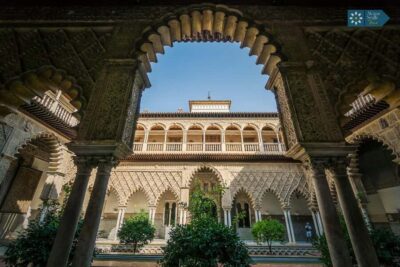
- Seville: Alcázar, Cathedral & Giralda Skip-the-Line Tour★ 4.8 · 11,525 reviews
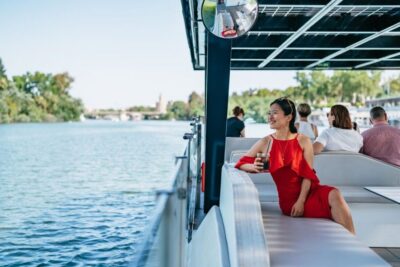
- Seville: 1-Hour Guadalquivir River Sightseeing Eco Cruise★ 4.2 · 10,281 reviews
Triana, Filmed Like a Story
Triana is the kind of neighborhood where you don’t need a script to feel dramatic. Even on a normal walk, you get strong visual cues: street textures, old entrances, river-adjacent views, and that unmistakable vibe tied to art and flamenco. This tour leans into that. It’s not about checking off landmarks. It’s about giving you a reason to look closely—while someone else handles the camera work.
The clever part is the pacing. Instead of saying take your own photos and move on, the experience is built around a guided shoot. That changes how you move through the area. You’re more likely to slow down and notice details like doorways, alley angles, and the way the light hits the street at different points.
And because it’s private, you’re not squeezed into a herd. You can be more expressive, more relaxed, and easier to direct. If you like the idea of leaving Seville with something beyond a phone gallery—think video-style memories—this format fits well.
Price and Value: What $173.47 Buys You
At $173.47 per person for about 1 hour 30 minutes to 2 hours, the price lands in the “experiences, not souvenirs” category. You’re paying for time, a private route through specific Triana stops, and professional capture that turns the visit into something you can replay.
Here’s the value angle I see: a standard walking tour gives you stories. This gives you a visual record with you as the main character. That matters if you’re traveling with friends or partners and you’d rather remember the feeling of the day than just capture what it looks like.
Also, the stops are marked as admission ticket free, so you’re not paying extra just to stand in front of sites. The cost is focused on the shoot and the guided experience, not museum entry fees.
That said, this isn’t a budget-friendly “walk and get a few photos.” It’s a dedicated professional activity. If you’re only after quick snapshots and don’t care about video-style output, you may feel like you’re paying for more than you’ll use.
Where It Starts (and Why the Meeting Spot Matters)
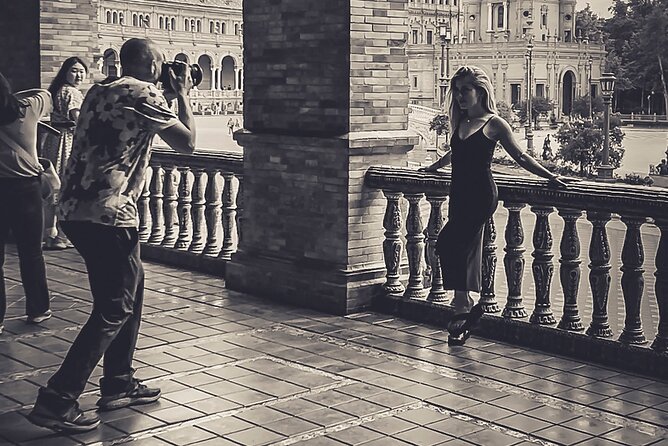
You meet at Cjón. de la Inquisición, 2A, 41010 Sevilla. That location helps because you begin right in Triana’s street grid, before you start bouncing between the bigger, more open areas. You’ll finish at Hermandad de la Estrella (Triana) on C. San Jacinto, 41, 41010 Sevilla, in pedestrian-friendly San Jacinto Street.
Expect a neighborhood pace. This isn’t all major avenues. You’ll be walking through streets that work best when you wear comfortable shoes. The tour guidance explicitly recommends that, and honestly, it’s smart. Triana’s charm is partly in its street layout, and that means your feet do some work.
One more practical note: the format is a private tour/activity. Only your group participates. That helps with timing and makes it easier to keep the shoot moving without slowing down for other groups.
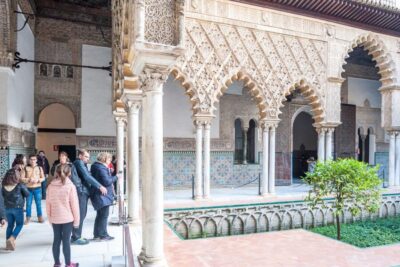
Stop 1: Callejón de la Inquisición and the Triana Artist Mood
The first stop is Callejón de la Inquisición, framed as a warm welcome to the neighborhood. You start by meeting the guide, then you walk through Triana streets where the focus is on you—captured as the protagonist in the setting.
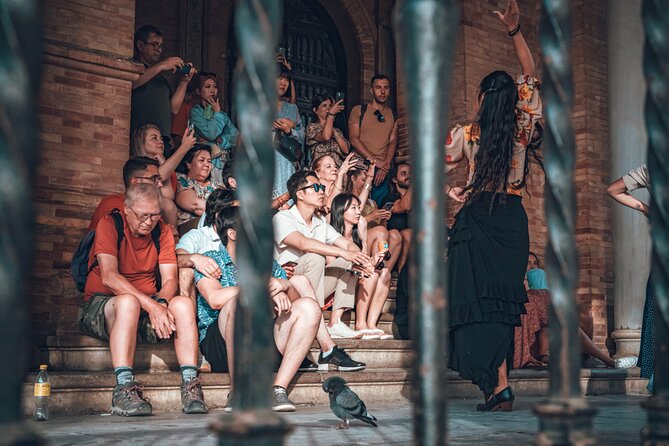
This opening matters because Triana isn’t one single “thing.” It’s an identity. You’re told it’s the cradle of artists and bullfighters, and considered a center of flamenco in Seville. Those themes aren’t just trivia. They help you interpret what you’re walking past: why certain streets feel expressive, why the neighborhood has that performance energy.
The stop also sets up a key style decision for the whole tour: you won’t be constantly thinking about photography. The guide is doing the heavy lifting. That’s why this first section often feels more fun than stressful—you get direction, pacing, and a reason to look around.
Time-wise, it’s about 20 minutes. It’s enough to get comfortable and start producing usable footage without turning the day into a long production.
Stop 2: Cerámica Triana and the Santa Ana Ceramic Factory Story
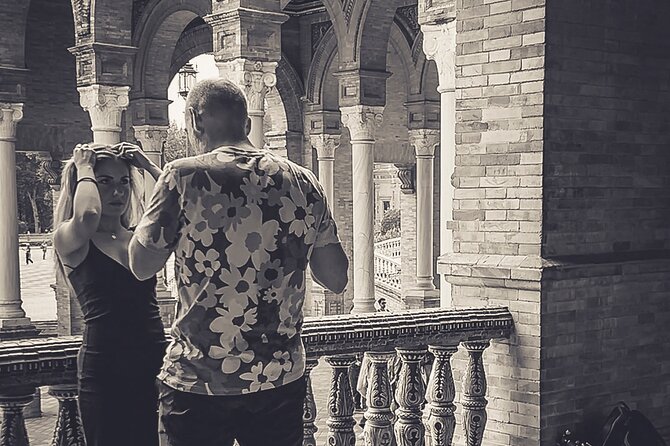
Next you continue to Cerámica Triana, outside the old Santa Ana ceramic factory. This is one of those stops that works even if you’re not a ceramics person, because the point isn’t collecting facts. It’s connecting Triana’s look to its work history.
Pottery shaped the neighborhood’s economy and its visual style. So when you’re standing outside these spaces, it’s more meaningful than just a background wall. You’re in a place where craft is part of the identity, and the guide’s framing is designed to capture that texture.
This stop is short—about 10 minutes. That can feel fast on its own, but it fits the overall shoot rhythm. You’re moving through several distinct zones, and the idea is to keep the energy up while you collect variety for the final video-style result.
If you’re the type who likes to read a plaque and linger, you might want more time here. But if you prefer your culture delivered through a guided flow, this is a good pace.
Stop 3: Puente de Isabel II for River Views and Framing Shots
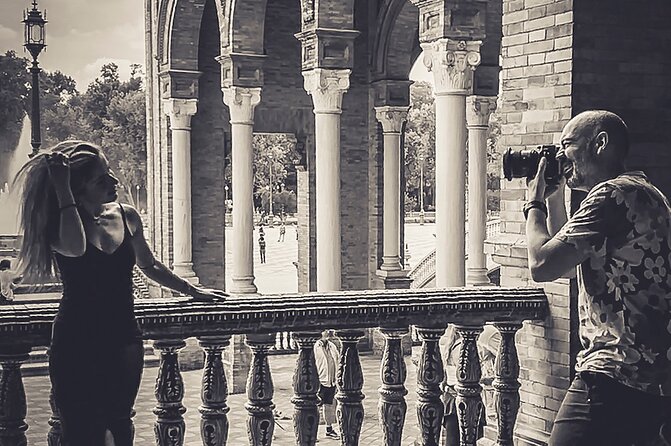
Then you head to Puente de Isabel II, also called Puente de Triana. This is where the tour shifts from tightly urban streets to a more open visual zone near the river.
For you, this is a practical win: bridges and river edges tend to give better angles and backgrounds. For the camera, it’s easier to create a sense of scale and movement. You’re also getting a classic Seville postcard moment, but with less effort on your part since the guide is orchestrating the capture.
This section runs about 30 minutes, which is the longest segment so far. That longer stretch makes sense because bridges usually require time for different shots, better light, and multiple framing options.
If you come during busier times, you might notice more pedestrian flow around the bridge area. Still, the tour is private, so the guide can steer the shoot to keep it moving.
Stop 4: Plaza de Altozano and the Guadalquivir’s Past Shores
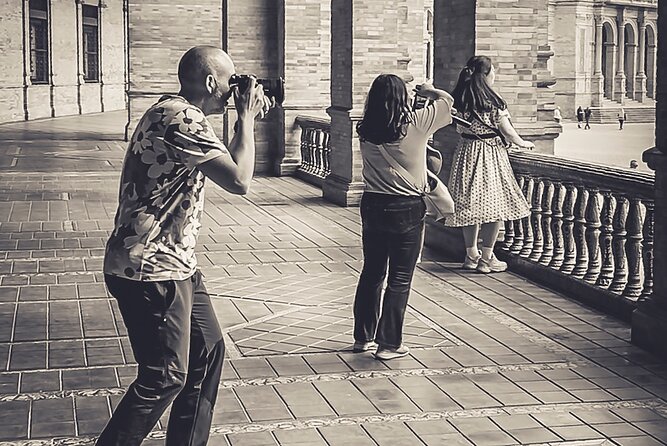
From the bridge area, you continue toward Plaza de Altozano and walk along Calle Betis, the street that borders the Guadalquivir on the Triana side.
This is one of the more interesting idea-stops in the route. The guide uses historical maps to explain how those river edges used to be soft muddy shores, shaped by tides—places where boats moored, ships beached, and carpenters worked like a naval workshop.
That’s the kind of storytelling that changes how you see what’s in front of you. Instead of thinking of the river as scenery, you start imagining labor, movement, and daily life along the waterline. And since you’re walking a border street, you get a real sense of being at the seam between land and river.
Time here is about 20 minutes. It’s long enough for the idea to land and for you to enjoy the river-facing mood without it turning into a lecture.
Also, the tour description frames this stretch as something like feeling cinematic, almost like you’re in a film scene. It’s not cheesy. It’s a useful mindset because it encourages you to move naturally and look around, rather than just walk fast.
Stop 5: Esperanza Triana Exterior and the Santa Ana Plazuela Hang
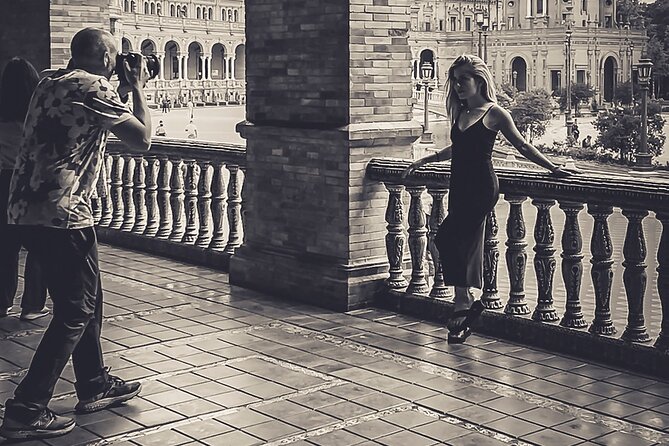
The final portion brings you to the exteriors of the Museo de la Hermandad de la Esperanza de Triana, also known for Esperanza Triana. There’s no indication you’re spending your time inside. Instead, you’re focused on the exterior view and the neighborhood context around it.
Right after, you stop at La Plazuela de Santa Ana, next to the parish that gives the area its name. This is the kind of place that feels lived-in: animated by bars and walkers, with a steady rhythm of people passing through.
This final stop is about 30 minutes, which gives you time to slow down and let the shoot land its final moments. If you want the tour to feel like a complete arc—start expressive, build variety, then finish grounded in neighborhood life—this ending does that job.
And there’s a social bonus: if availability allows it, you’ll be invited to a drink to freshen up after the movie tour. If there’s no availability at that exact point, the plan shifts to San Jacinto Street on the way to the end point.
This drink moment is a simple detail, but it changes the tone. It turns the experience from “booked activity” into “mini local hang,” which is usually what people remember most clearly afterward.
What You’ll Walk Away With (Beyond a Phone Gallery)
This tour is built around professional visual capture, with you as the protagonist. The promise is that you’ll have memories in a visual way you can relive later, and that the shooting feels like a movie-style experience.
In feedback attached to the experience, people describe receiving a trailer-style preview and then a cinematic result. That’s important because it tells you this isn’t random snapshot delivery. It’s an edited product—something with structure and a sense of story.
So if your priority is a polished end result rather than a few quick images, this tour matches that mindset. It’s also a nice fit if you don’t love the pressure of taking photos while walking. You’ll be moving through Triana with permission to enjoy it, while the camera work happens alongside you.
On the other hand, if you expect a guided history lecture with deep stops inside buildings, you’ll likely find the experience more performance-and-photo driven than academic. The value is in the visuals and the feeling of the walk through Triana’s signature spots.
Practical Tips So Your Shoot Looks Natural
You’ll get the best result when you keep the day easy on yourself.
- Wear comfortable shoes. You’ll be walking streets and moving between several points.
- Go with a relaxed attitude. The tour’s format asks you to participate. If you lean into it, you’ll look more natural on camera.
- Keep your phone away when told. Since the guide handles the capture, your attention stays where it should be—on the street, the river, and the moment.
- Stay flexible about the drink moment. The invite depends on availability, and the plan adjusts to San Jacinto Street if needed.
- Bring good weather energy. This experience requires good weather, which affects whether it runs as scheduled.
If you’re traveling with friends, I’d treat it like a shared activity rather than a solo “photo session.” When the energy is social, the final visuals often feel more like memories and less like posing.
Who This Tour Fits Best (and Who Might Not)
This is a strong match for you if:
- you like creative travel formats that produce a finished visual keepsake
- you’d rather have someone direct you than manage your own photo timing
- you’re interested in Triana’s vibe—flamenco energy, ceramics craft heritage, and river-edge atmosphere
It might not fit as well if:
- you want a silent, unstructured walk where you set your own pace the whole time
- you only want quick photos and don’t care about video-style output
- you prefer museum interiors over exterior-focused neighborhood scenes
It also suits couples and small groups because it’s private and built around a protagonist approach. You’ll get more personalized attention and less crowd disruption than you would on a larger group tour.
Should You Book Seville Travel Captures in Triana?
I think this is a smart booking if your goal is to leave Seville with something more emotional than a standard set of snapshots. The route hits meaningful Triana spaces—Callejón de la Inquisición, Cerámica Triana, Puente de Isabel II, the Guadalquivir edge near Calle Betis, and the Esperanza Triana exterior around Santa Ana—while keeping the pace simple and guided.
If you’re the type who gets frustrated managing cameras while traveling, this solves that problem by putting the shooting work in someone else’s hands. And because it’s private, the experience stays focused on your group and your vibe.
Book it if you want a cinematic memory and you’re okay with direction and a camera-first format. Skip it if you want a fully self-guided, quiet stroll where the camera is an afterthought.
FAQ
How long is the Seville Travel Captures Triana experience?
It runs for about 1 hour 30 minutes to 2 hours.
What does the tour cost?
The price is $173.47 per person.
Is this a private tour?
Yes. It’s private, and only your group participates.
Do I get a mobile ticket?
Yes, the experience uses a mobile ticket.
Where does the tour start and where does it end?
You start at Cjón. de la Inquisición, 2A, 41010 Sevilla, Spain, and you finish at Hermandad de la Estrella (Triana), C. San Jacinto, 41, 41010 Sevilla.
What kinds of places do you visit in Triana?
You move through several Triana stops including Callejón de la Inquisición, Cerámica Triana (outside the old Santa Ana ceramic factory), Puente de Isabel II, Plaza de Altozano/Calle Betis, and the exteriors around Esperanza Triana and La Plazuela de Santa Ana.
Is there food or a drink included?
The plan includes a tapa and a drink during the walk, and later the guide may invite you to have a drink after the shoot if availability allows it.
What happens if the weather is poor?
The experience requires good weather. If it’s canceled due to poor weather, you’ll be offered a different date or a full refund.
Are service animals allowed?
Yes, service animals are allowed. Comfortable shoes are also recommended.
More Tour Reviews in Seville
- Seville: Live Flamenco Dancing Show Ticket at the Theater
★ 4.7 · 16,396 reviews - Seville: Alcázar, Cathedral & Giralda Skip-the-Line Tour
★ 4.8 · 11,525 reviews - Seville: 1-Hour Guadalquivir River Sightseeing Eco Cruise
★ 4.2 · 10,281 reviews - Seville: Setas de Sevilla Entry Ticket
★ 4.6 · 8,901 reviews - Seville: Cathedral, Giralda & Alcazar Entry With Guided Tour
★ 4.6 · 8,560 reviews