
Review · SEVILLE BIKE TOURS
Seville: Historic Center Bike Tour
Riding Seville’s old defenses feels like time travel. This Historic Center Bike Tour turns the city into a story you can follow, from early settlements all the way to the 1868 riots and what changed after. I especially like how the route focuses on defensive walls and historic gates, and how the guide explains each era clearly. The one caution: a small number of bikes may not feel brand new, so if you’re picky about ride comfort, plan to mention it right away.
You get a fast, efficient format: 2.5 hours is long enough to connect the dots, but short enough that you’re not stuck in “museum mode” all afternoon. I also like that you’re not just looking at buildings—you’re learning why the city was built the way it was, and how power shifted over time.
If you have mobility limits, this isn’t built for you. It’s a bike tour, so you’ll want to feel steady and comfortable riding through the historic center.
In This Review
- Key highlights I’d pin to your map
- Why Seville’s gates matter more than you think
- Meeting Centerbici and getting rolling without stress
- A 2.5-hour route that keeps history from getting lost
- Early Seville layers: Tartessians, Carthaginians, Romans
- Almoravids and the idea of a best-walled Europe
- Macarena, Puerta de Córdoba, and the Alcázar link after 1868
- Gate stops: Puerta Carmona, Osario, and Triana stories
- Guides make the difference (and the reviews prove it)
- Price and value: why $35 can be a smart use of time
- Pace, comfort, and who should choose this
- Tickets, guide language, and what’s included
- Should you book the Seville Historic Center Bike Tour?
- FAQ
- How long is the Seville Historic Center Bike Tour?
- Where do you meet for the tour?
- What does the tour cost?
- Is bike rental included?
- Are helmets provided for children?
- What languages are the guides available in?
- Which gates and historic areas do you visit?
- Is the tour suitable for people with mobility impairments?
- What are the cancellation and payment options?
Key highlights I’d pin to your map
- Defensive-wall route that shows you how Seville protected itself
- Stops at major gates like Puerta Carmona, Puerta Osario, and Puerta Triana
- Clear, language-supported guiding in Spanish, English, and French
- A quick 2.5-hour history loop that doesn’t waste your time
- Named architectural anchors including Macarena, Puerta de Córdoba, and the Alcázar area
- Bike condition check is worth keeping in mind when you arrive
Seville by bike, a few more routes
- Seville Highlights Bike Tour (English)★ 5.0 · 2,225 reviews
- Seville: Highlights City Bike Tour★ 4.8 · 2,168 reviews
- Seville: Relaxing City Bike Tour with a Tour Guide★ 4.8 · 1,588 reviews
Why Seville’s gates matter more than you think
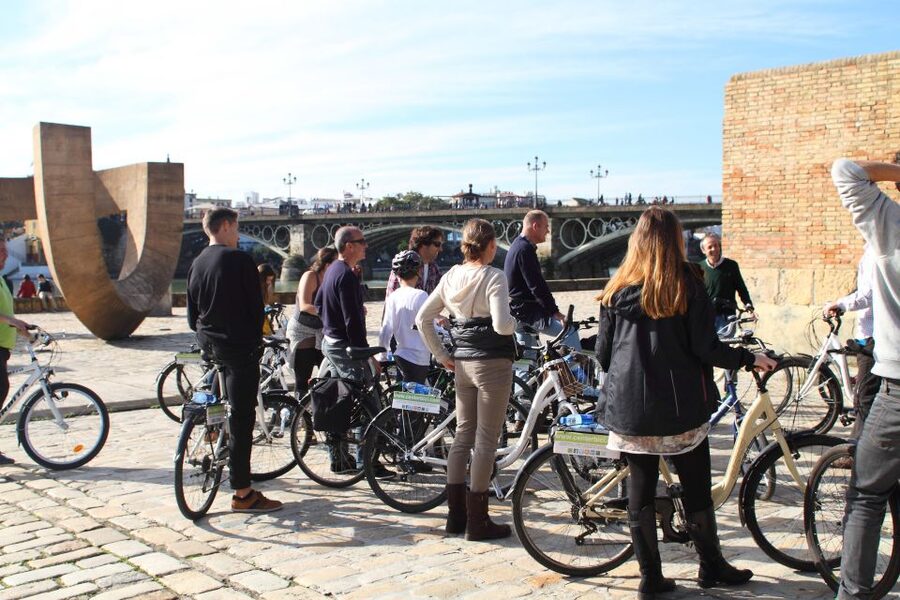
Seville looks beautiful at street level, but this tour makes you notice something else: the city’s edges. Riding along the former defensive route, you see why gates were more than decorative entry points. They were choke points, customs and control zones, and practical answers to real threats.
The tour frames Seville as a place that kept rebuilding itself—politically, culturally, and physically. You’ll hear about the Tartessians, Carthaginians, and Romans settling in the area, then how later powers shaped the city’s fortifications. That sequence matters because it explains why certain walls and structures still feel “purpose-built,” even centuries later.
If you like walking tours, you’ll probably like this more. You cover ground quickly, but the pacing stays thoughtful. It’s not “pedal hard, talk later.” It’s “ride with a point,” and you’ll feel that in how the route is chosen.
Meeting Centerbici and getting rolling without stress
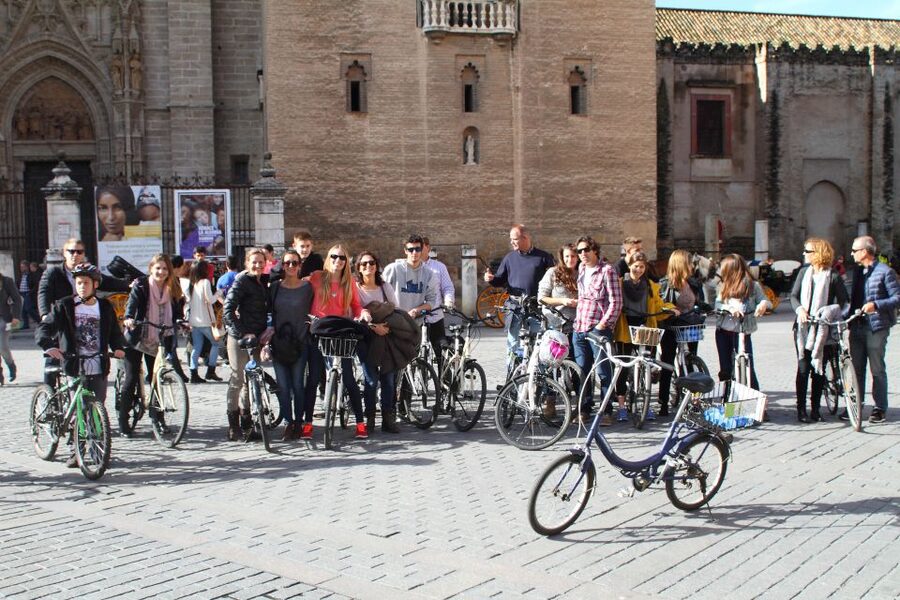
Your tour starts at Centerbici Store, C/ Espronceda, 5 (41004 Sevilla). This is convenient because it puts you near the historic center so you spend less time transferring and more time learning.
From the start, you’re set up for an easy experience: bike rental is included, and you’ll get a water bottle and a map. The guide is live and comes in Spanish, English, or French depending on the group. If you’re traveling with kids, there’s also helmet rental for children, which is a useful detail for families.
What I like about starting this way is the simplicity. You don’t need to hunt for equipment or waste time coordinating gear. You show up, get the bike, and the guide handles the “where to look and why it matters” part.
A 2.5-hour route that keeps history from getting lost
A bike tour can go two ways: either it’s sightseeing with no context, or it’s a history lecture that takes over. This one stays in the middle.
In about 2.5 hours, you’ll move through the historic center and follow the former defensive route of old Seville. That structure gives the ride a spine, so you don’t end up with disconnected photos of doors and towers. You’ll get a timeline in your head: early settlements, major fortification phases, then the upheaval of the 1868 riots and the changes that followed.
The stop rhythm is also practical. You’ll have moments where the guide slows down the story—especially at gates—so you can connect what you’re seeing to what you’re hearing. It’s the kind of pace that works well if you want culture without burning your whole day.
Still deciding? A few more Seville picks worth a look.
Early Seville layers: Tartessians, Carthaginians, Romans
One of the best things about this tour is that it doesn’t treat Seville as a single era city. It treats it like a layered site.
You’ll hear how different peoples settled in the area, including the Tartessians and Carthaginians. Then the story shifts to Roman times. Even if you don’t expect to see obvious Roman ruins at every turn, the point is understanding the foundation: why Seville became important early on, and how the city’s location supported long-term growth.
This is one of those experiences where the guide’s explanation changes the way your eyes work. Instead of reading the city as only “old buildings,” you start seeing it as “why this spot kept mattering.”
Almoravids and the idea of a best-walled Europe
Later on, the tour focuses on Seville as the best-walled city in Europe under the Almoravids. That’s a big claim, and you’ll understand it better when the ride starts emphasizing defensive sections and key points along the route.
You’ll cycle along parts of the former defensive walls and see how the city’s protection system shaped where you end up: walls, openings, and the geography around gates. It’s a tangible way to learn fortification logic rather than just memorizing dates.
If you’ve ever wondered why some European cities feel “encircled” by history, this is the answer. The city’s boundaries weren’t just lines on a map—they were strategy.
Macarena, Puerta de Córdoba, and the Alcázar link after 1868
The tour doesn’t stop at medieval defenses. It brings you into more modern upheaval, including the riots of 1868 and the Glorious Revolution.
You’ll hear how sections connected to the defensive story remained or changed after the 1868 riots—specifically mentions include the Macarena area, Puerta de Córdoba, and the Alcázar left in the aftermath. Even without going deep into a single monument, this is where the tour becomes emotionally real. You’re seeing how conflict reshaped a cityscape, and how older structures survived while others were altered.
This part is great for people who like their history to feel connected to physical places. You’re not just learning names. You’re connecting names to the city you’re riding through.
Gate stops: Puerta Carmona, Osario, and Triana stories
This tour really shines at the gates, because gates are built for drama. They’re thresholds, and they force a story: who controlled entry, who passed through, and what happened at the edges of power.
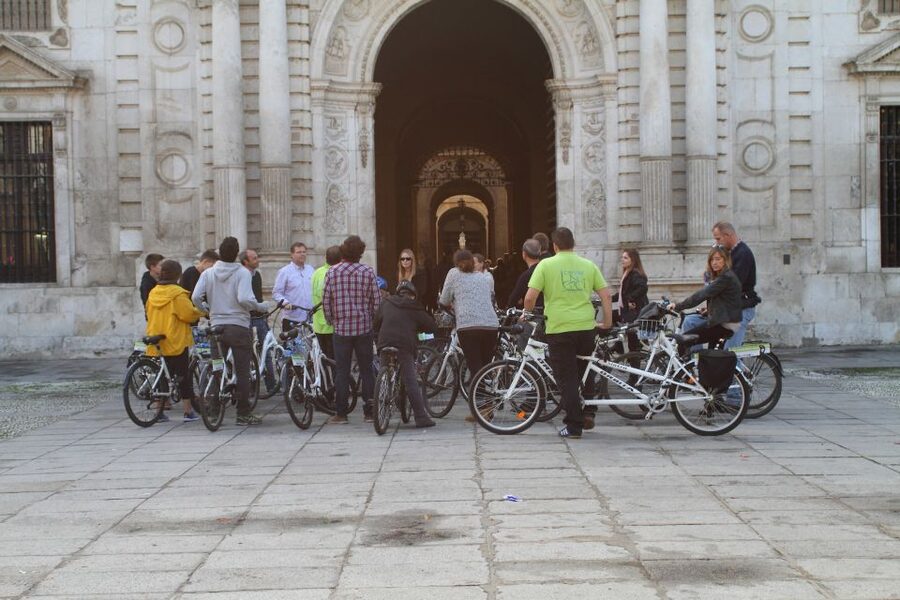
You’ll stop at Puerta Carmona, Puerta Osario, and Puerta Triana. The guide connects each one to a piece of Seville’s past—where carriages were stopped and where you can pick up mysteries and local stories tied to the city’s defensive layout and movement of people.
A practical tip: at each gate, slow your own pace down. Even though you’re on a bike, don’t rush the stop. These are the moments where the guide’s explanations become the difference between a nice ride and a memorable learning experience.
If you like storytelling landmarks, this is the section you’ll remember later when you’re back in a café and comparing which “door” felt the most important.
Guides make the difference (and the reviews prove it)
The biggest strength here isn’t the bike—it’s the guiding.
In the feedback, I’m seeing a clear theme: guides who explain well and adjust to language needs. Names that show up include Luca, Daniel, and Sébastien. Luca is highlighted for being very cultured and attentive to clients’ wellbeing, and also for switching languages smoothly, even when communication gets tricky. One note mentions the guide working hard to help when French wasn’t available, using his phone to find translations.
Daniel is described as a super guide with clear explanations. Sébastien gets similar praise for being a standout. And even the more measured comment about bikes also still gives credit for good care and solid explanation.
So here’s my takeaway for you: if language matters, show up ready to participate. This tour works best when you ask questions. Guides here seem comfortable doing the extra work to make the story land.
Price and value: why $35 can be a smart use of time
At $35 per person for about 2.5 hours, this isn’t a “special effects” tourist show. It’s value built on structure: bike rental, a bilingual (Spanish/English/French) live guide, and basic extras like water bottle and map.
Why that adds up:
- You’re paying for guided interpretation, not just transportation.
- You cover the defensive route and multiple named gate stops in a short window.
- You get help with context that you’d struggle to stitch together alone while riding.
One note from a review flags bikes that were in late-stage condition. That doesn’t automatically ruin the trip, but it does mean you should do a quick comfort check when you pick up your bike—handlebars, brakes, and seat fit.
Even with that caution, the overall high rating suggests the experience quality is generally strong. For many first-time visitors, saving time while learning real context can be worth more than squeezing in one extra stop on your own.
Pace, comfort, and who should choose this
This is a bike tour in Seville’s historic center, and the main factor is your comfort cycling in a city. The tour duration is 2.5 hours, and the route follows the historic and defensive parts of town, so you’ll be spending most of the time in motion.
It’s not suitable for people with mobility impairments, so don’t treat it as a “maybe.” If you can ride comfortably and you’re confident on a bike, you’ll likely enjoy it more than a standard walking tour because you can see more without exhausting yourself.
Also consider the kind of traveler you are:
- If you love history but hate spending hours in one place, this fits.
- If you want architecture photos, the gates and fortification sections give you clear subjects.
- If you’re easily bored by lectures, ask the guide to explain while you look—this style of stop-and-explain helps.
Tickets, guide language, and what’s included
Here’s what you can count on, straight from the activity details:
- Tour of Seville plus bike rental
- Live guide in Spanish, English, or French
- Water bottle and map
- Helmet rental for children
- Skip the ticket line (so you’re not losing time waiting)
That “skip the ticket line” part is a small thing, but it adds up when you’re on a timed tour. It keeps you focused on the route instead of logistics.
Should you book the Seville Historic Center Bike Tour?
If you want Seville in one ride—history with real anchors like gates and walls—this is a strong pick. I’d book it if you like guided storytelling, you’re comfortable cycling, and you want context from Roman-era origins through the later defensive and political chapters tied to the 1868 riots.
I would also book it knowing there’s a chance the bike could be less than perfect. When you arrive, do a quick comfort check. If something feels off, ask for a fix immediately. With a good guide team, that’s usually the difference between a great ride and a “fine, but…” ride.
On balance, this tour offers one of the best “time-to-learning” ratios in Seville: you get movement, named places, and a guide who works to make the story clear. For $35, that’s solid value.
FAQ
How long is the Seville Historic Center Bike Tour?
The tour lasts 2.5 hours.
Where do you meet for the tour?
You meet at Centerbici Store, C/ Espronceda, 5 – 41004 – Sevilla.
What does the tour cost?
The price is $35 per person.
Is bike rental included?
Yes. Bike rental is included.
Are helmets provided for children?
Yes. Helmet rental for children is included.
What languages are the guides available in?
The live tour guide is available in Spanish, English, and French.
Which gates and historic areas do you visit?
The tour includes stops at Puerta Carmona, Puerta Osario, and Puerta Triana, and it also covers areas connected to the city walls and fortifications such as Macarena, Puerta de Córdoba, and the Alcázar.
Is the tour suitable for people with mobility impairments?
No. It’s not suitable for people with mobility impairments.
What are the cancellation and payment options?
You can cancel up to 24 hours in advance for a full refund, and there is a reserve now & pay later option.
More Tours in Seville
- Seville: Alcázar, Cathedral & Giralda Skip-the-Line Tour
★ 4.8 · 11,525 reviews - Seville: Cathedral, Giralda & Alcazar Entry With Guided Tour
★ 4.6 · 8,560 reviews - Seville: Priority Access Cathedral, Giralda & Alcázar Tour
★ 4.8 · 7,563 reviews - Seville: Alcázar and Cathedral Entry Ticket and Guided Tour
★ 4.6 · 5,056 reviews - Seville: City Sightseeing Hop-On Hop-Off Bus Tour
★ 4.0 · 4,633 reviews
More Tour Reviews in Seville
- Seville: Live Flamenco Dancing Show Ticket at the Theater
★ 4.7 · 16,396 reviews - Seville: Alcázar, Cathedral & Giralda Skip-the-Line Tour
★ 4.8 · 11,525 reviews - Seville: 1-Hour Guadalquivir River Sightseeing Eco Cruise
★ 4.2 · 10,281 reviews - Seville: Setas de Sevilla Entry Ticket
★ 4.6 · 8,901 reviews - Seville: Cathedral, Giralda & Alcazar Entry With Guided Tour
★ 4.6 · 8,560 reviews
Pedalling Round Seville
- Seville Highlights Bike Tour (English)
★ 5.0 · 2,225 reviews - Seville: Highlights City Bike Tour
★ 4.8 · 2,168 reviews - Seville: Relaxing City Bike Tour with a Tour Guide
★ 4.8 · 1,588 reviews - Seville: City Sightseeing and Local Culture Bike Tour
★ 4.9 · 1,120 reviews - Seville Electric Bike Tour – Small Group
★ 5.0 · 841 reviews
Just added to the Seville list


Seville Bike Tours, compared.
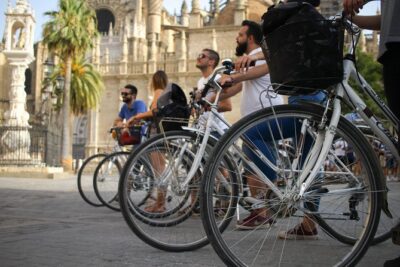 ★ 5.0Seville Highlights Bike Tour (English)From $422,225 reviews
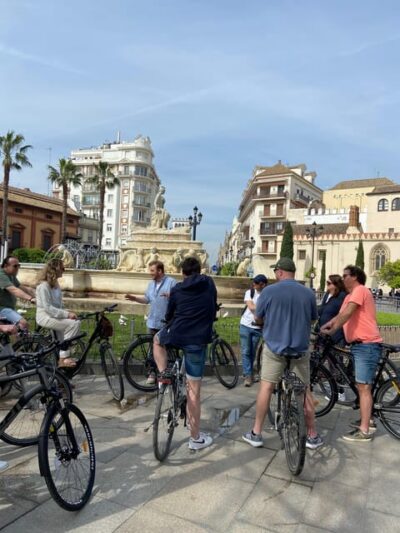 ★ 4.8Highlights City Bike TourFrom $382,168 reviews
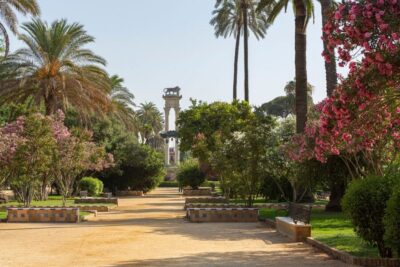 ★ 4.8Relaxing City Bike Tour with a Tour GuideFrom $351,588 reviews
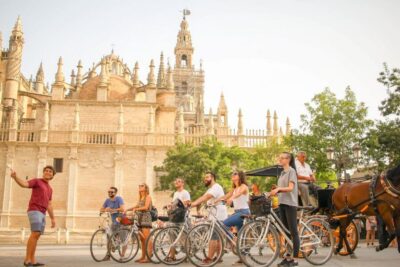 ★ 4.9City Sightseeing and Local Culture Bike TourFrom $311,120 reviews
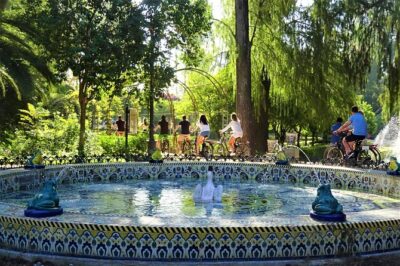 ★ 5.0Seville Electric Bike Tour – Small GroupFrom $58841 reviews
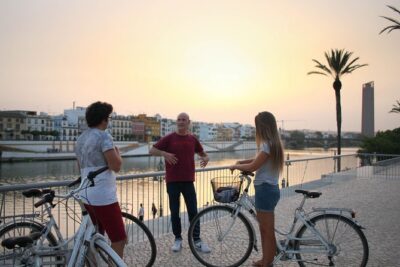 ★ 5.0Sunset Guided Bike Tour in SevilleFrom $36438 reviews
 ★ 4.9Guided Sunset Bike TourFrom $41332 reviews
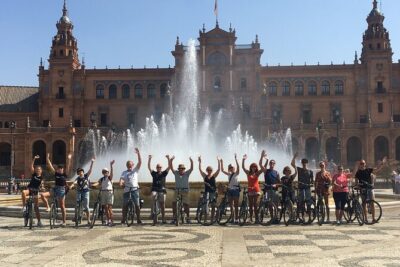 ★ 5.03-hour Guided Bike Tour along the Highlights of SevilleFrom $39315 reviews
Browse the lists this tour appears in