
Review · CRUISES ON THE GUADALQUIVIR
Seville: Guadalquivir & Secrets of Triana Small Group Tour
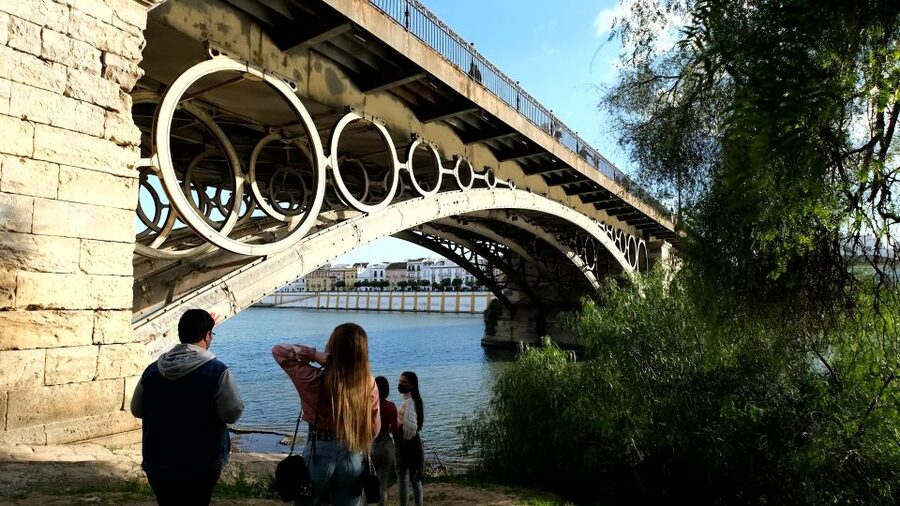
Guadalquivir shapes Seville in plain sight. This 1.5-hour small-group walk connects the river-port story to the old neighborhood of Triana, where crafts, folklore, and flamenco are not just museum topics. You’ll start by Torre del Oro, then cross into Triana to see how the area’s architecture and alleyways explain the city’s bigger history.
I like two things a lot here. First, the tour is built around real-world places you’ll actually walk past, from the river shore to bridges and workshop-like stops like Centro Cerámica Triana. Second, the guides are story-focused and locally rooted; in past groups you’ll hear names like Marta, Carmen, Valentín, Miguel, and Carlos, and the common thread is clear explanations plus time for questions.
The main drawback to plan for is simple: it runs rain or shine, and it’s walking. If you’re easily slowed down by cobblestones and short city climbs, you may feel it more than you expect in only 1.5 hours.
In This Review
- Key things that make this tour worth your time
- Guadalquivir First: Why this river walk changes how you see Seville
- From Torre del Oro to the port mindset: your route starts with the right question
- Puente de Isabel II to Triana Market: crossing from Seville’s trade power into a neighborhood identity
- Callejón de la Inquisición: architecture and folklore with a darker edge
- Back to the river: you’ll connect the dots at the Guadalquivir shore
- Chapel of Sailors and the river’s human side
- Flamenco and Triana: how the tour ties performance to place
- The guides are a real part of the value
- Price and value: what $29 buys you in real time
- What to expect on the ground: timing, walking style, and pacing
- Who should book this Triana and river tour
- Should you book it?
- FAQ
- How long is the Seville: Guadalquivir & Secrets of Triana Small Group Tour?
- What is the group size limit?
- What language is the tour guided in?
- Where do we meet for the tour?
- Is the tour wheelchair accessible?
- Does the tour run in bad weather?
- Are monument tickets included?
- Is hotel pick-up included?
- Where does the tour finish?
Key things that make this tour worth your time
- Small group size (max 10) keeps the walk conversational, not lecture-style.
- Guadalquivir-first storytelling helps you understand Seville’s trade power fast.
- Triana stops you’d normally miss like Centro Cerámica Triana and the Callejón de la Inquisición.
- Flamenco has a place on this route, not just on stage tips at the end.
- Local guides with patience make it easier if you’re a first-timer or you ask follow-up questions.
Other ways out onto the Guadalquivir
- Seville: Guadalquivir River Cruise★ 3.9 · 6,921 reviews
- Seville: Guadalquivir Boat Tour with Optional Lunch/Dinner★ 4.4 · 2,193 reviews
- Seville: Guadalquivir River Boat Tour★ 4.6 · 1,478 reviews
Guadalquivir First: Why this river walk changes how you see Seville
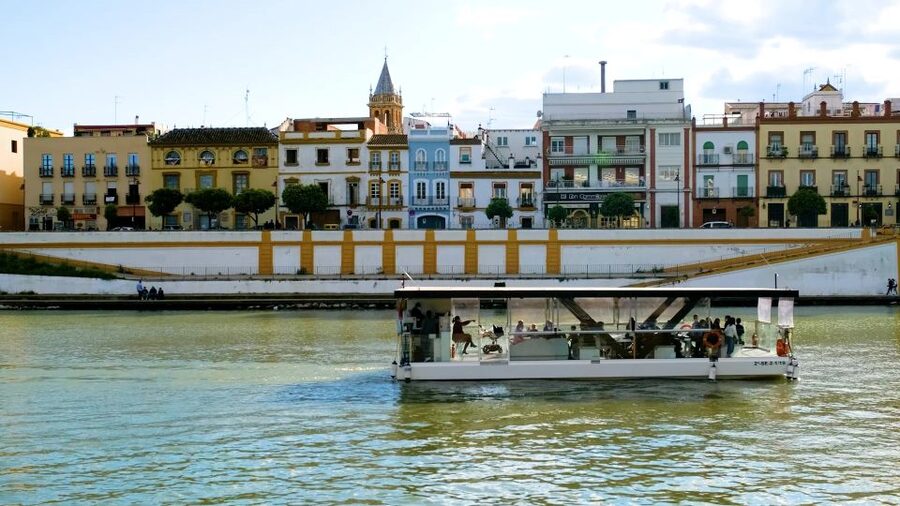
If you only know Seville from its big squares and cathedral-size views, you can still miss the engine that fed the city. The Guadalquivir River isn’t just scenery here. It’s the reason Seville became a serious trade center, and it’s why Triana developed its own identity across the water.
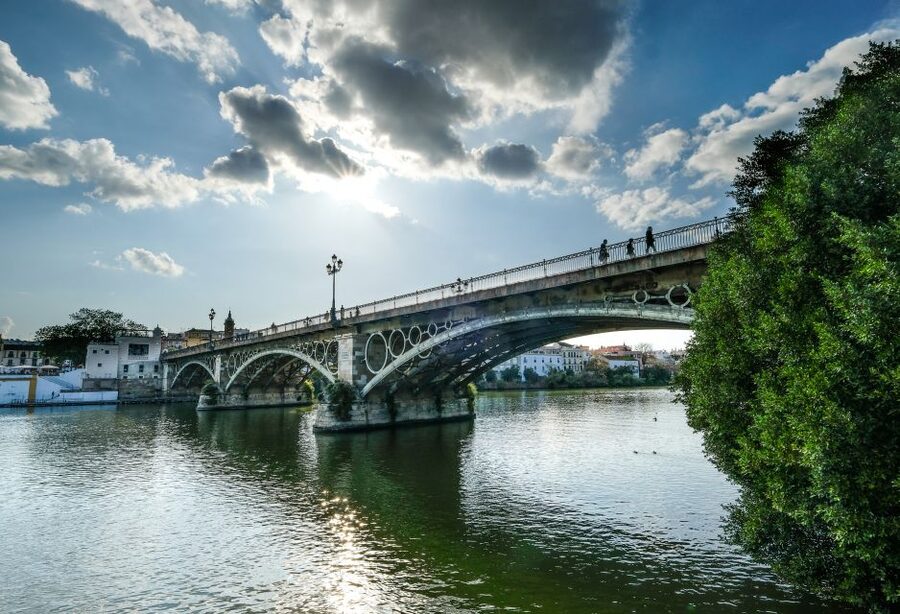
What I like about the way this tour is structured is that it gives you a cause-and-effect chain. You start on the river shore, then you move along key points that show how goods and people moved. Once you cross the most emblematic bridge (Puente de Isabel II), the story shifts from “trade routes” to “neighborhood life,” and the same river becomes the link tying everything together.
You’ll also get a sense of the contrast between the two sides. Seville proper often gets the spotlight. Triana feels more like a living quarter, with its own rhythm of crafts, folklore, and working traditions. This is the part where the city stops feeling like postcards and starts feeling like a place.
From Torre del Oro to the port mindset: your route starts with the right question
The meeting point is the base of Torre del Oro Cruise, by the river bank side just next to the tourist cruises ticket office. Plan to arrive a few minutes early and keep it simple: you’ll meet there, then the group leaves.
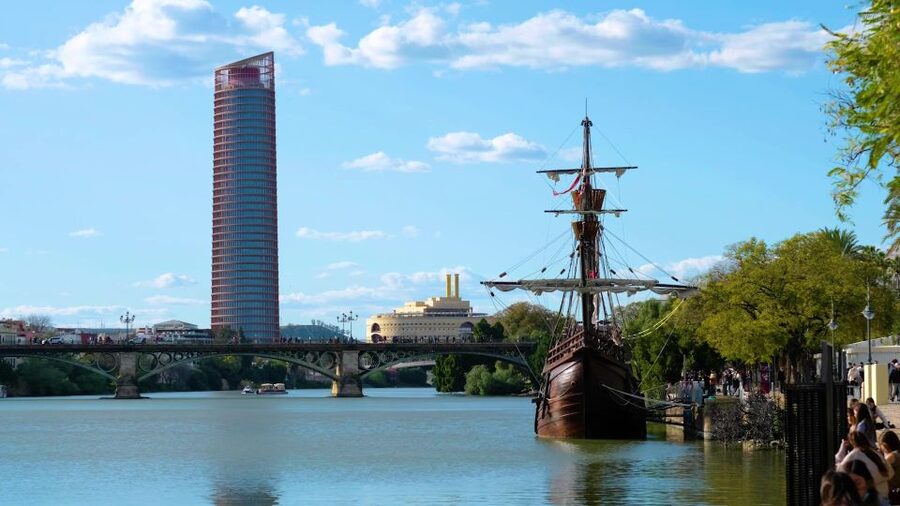
From there, the walk starts with a short guided visit at Fundación Nao Victoria · Espacio Exploraterra. Even in a brief slot, this kind of stop sets the tone: Seville’s river power wasn’t accidental. It was built on exploration, movement, and maritime connections.
Next comes a short sightseeing segment (just a 5-minute guided pause). You might find it acts like a bridge in the explanation, helping you reorient before the walk reaches Puente de Isabel II. Then you hit that bridge stop with a longer guided segment, which is exactly what you want before you cross into Triana. Bridges in Seville do more than connect neighborhoods. They frame how you understand what you’re about to see.
Practical tip: bring water and wear shoes with grip. Even if the walk is only about 1.5 hours, the pavement and transitions between viewpoints can add up.
Puente de Isabel II to Triana Market: crossing from Seville’s trade power into a neighborhood identity
Once you cross the river, the tour’s language changes. You’ll spend the second part learning Triana’s history, architecture, folklore, and even gastronomy. The guide’s goal is to help you picture the neighborhood as a working world, not just a photo stop.
Triana Market is one of the key anchors. Markets tell you what people needed, what they sold, and what rhythms kept the neighborhood going. In a walking tour format like this, the market stop helps you understand Triana’s everyday culture without turning it into a long sit-down experience.
Then the route shifts into crafts and material culture at Centro Cerámica Triana. This is where Triana’s reputation for tilework and craft traditions becomes more than a slogan. If you’ve ever looked at Seville’s ceramics and thought, I should understand how this stuff got made, this stop is the kind of moment that answers that instinct. It also fits the tour’s broader theme: Triana as a home of craft guilds that survived into modern times.
If you’re traveling with kids or you’re tired from other Seville sights, this is still a strong stop. It’s specific, hands-on in spirit, and it’s the kind of place you’ll actually remember during your evening wander.

Callejón de la Inquisición: architecture and folklore with a darker edge
One of the most interesting stops is Callejón de la Inquisición. The name alone makes people curious, but the tour uses it to talk about the darker periods of Seville’s story, including the dark times of the Inquisition.
This is also where the tour does something useful for your brain: it shows that history isn’t only monuments and grand facades. It lives in the street pattern, the corners, and the names. When you hear the context around an alley like this, it makes your next walk through old cities easier. You start noticing how space holds memory.
The drawback? This part can feel more emotionally heavy if you prefer light and breezy sightseeing only. Still, it’s integrated into the bigger picture of Triana’s survival and transformation, so it doesn’t feel tacked on.
Back to the river: you’ll connect the dots at the Guadalquivir shore
Midway through (after the Triana-focused arc), the itinerary returns to the Guadalquivir River for another guided sightseeing segment. That rhythm matters. You learn Triana’s identity from the neighborhood side, then you reconnect to the river side and see how the two stories reinforce each other.
This return also helps you understand why the tour ends where it does. The river edge is more than a scenic line. It’s a cultural spine, including the mention of flamenco venues located near the finish point.
If you like your tours to leave you with a clearer mental map, this “go out, cross, then return” approach is a smart design for that.
Chapel of Sailors and the river’s human side
Another stop on the route is the Chapel of Sailors, Sevilla. Even if you don’t go deep into a museum-style visit, hearing the story tied to sailors fits the trade-and-journey theme the walk is built on.
This is also a nice moment if you’ve been thinking about Seville’s wealth and power. Sailors and river travelers were the human link in the chain—people who brought stories, risks, goods, and cultural mixing. Triana’s identity doesn’t come only from local crafts. It also comes from constant interaction across the river.
And then you finish at Real Parroquia de Señora Santa Ana near the river shore. Ending at a church makes sense here because the tour covers major turning points, including topics like the first church built after the Christian conquest. Even if you’ve seen other Seville churches already, this finish gives you one final historical anchor before you wander off to your next meal or evening show.
Flamenco and Triana: how the tour ties performance to place
Flamenco can feel like a separate category in travel planning: find a show, pick a venue, then move on. This tour treats flamenco like a local language with roots in the neighborhood.
You’ll learn about the relationship between flamenco and Triana, and the way the tour frames it is practical: Triana has been home to bullfighters, flamenco artists, sailors, and craftmen. That mix is the point. Flamenco didn’t grow in a vacuum. It grew where people lived with work, risk, pride, and community.
A big plus is where you finish. After about 1.5 hours walking, you end by the river shore where many flamenco venues are located. That means you’re not forced into a hard decision with only one show option on your radar. You’ll be standing in the right area to pick what fits your schedule and mood.
My advice: if you want flamenco tonight, build your timing around this finish point. If you wait too long, you’ll spend more time hunting, less time enjoying.
The guides are a real part of the value
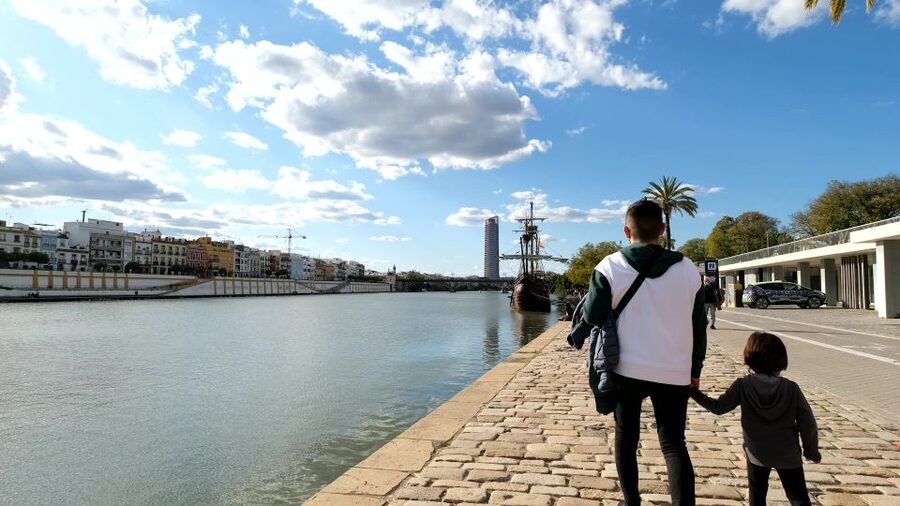
With a walking tour, the guide can make the difference between “I saw places” and “I understood the places.” This tour leans heavily on guide storytelling and Q&A.
In past tours, I’ve seen guides like Marta and Carmen praised for being excellent story tellers and for taking time with explanations. Valentín/Valentin earns points for enthusiasm and showing corners in Triana people would otherwise miss. Miguel is highlighted for relaxing solo travelers and for making questions feel easy.
You don’t have to be a history buff to benefit. The best part is that the explanations are tied to what you see: the river as trade engine, the bridge as a dividing frame, Triana as a craft-and-folklore world, and specific street names and buildings as story triggers.
This also matters for learning pace. A small group (limited to 10) helps because you’re not competing with a crowd for attention.
Price and value: what $29 buys you in real time
At $29 per person for a 1.5-hour guided small-group walk, the value is mostly about focus and access. You’re paying for a competent English-speaking license guide and for the time-efficient route that connects multiple neighborhood themes without wasting your hours.
What’s not included is also important. Tickets to monuments are not included, and hotel pick-up isn’t included. That means you should plan to treat this as an orientation and interpretation walk, not a do-everything pass.
If you’re deciding between this and a longer “big sites only” tour, think about your goal:
- If you want to understand the why behind Seville’s structure, this route is a strong choice.
- If you want lots of ticketed interiors, you’ll likely add that separately.
What to expect on the ground: timing, walking style, and pacing
The tour is 1.5 hours. It’s wheelchair accessible, which is a big plus for travelers who need that option. It also runs rain or shine, so don’t plan on perfect weather as a requirement.
Punctuality matters because the group leaves once it starts. In old-city walking, latecomers can’t just catch up without breaking the flow. So set a real meeting-time buffer, not a vague one.
In terms of pacing, you get multiple short guided sightseeing segments rather than one long lecture. The route includes stops around 15 minutes at major points and a few shorter guided segments. That rhythm helps you keep energy up, especially if you’ve been walking all day.
Who should book this Triana and river tour
This is a good fit if you:
- Want to get out of the center and still understand Seville’s core story.
- Like neighborhood travel—streets, guild traditions, architecture, folklore, and everyday life.
- Plan to see flamenco soon and want Triana context first.
- Travel solo and want a group format where questions are genuinely welcome.
It’s also great if you already know some Seville. The river-trade framing and the Triana craft/folklore angle can add depth without forcing you through a full museum day.
If you dislike walking or need frequent long breaks, you might find 1.5 hours of continuous movement a bit short but still demanding. In that case, you might prefer a more seated format.
Should you book it?
If you want a short tour that explains Seville beyond its famous postcards, I’d book this. The best reason is the structure: Guadalquivir first, then Triana as a neighborhood built by river-linked trade, crafts, and cultural life. At $29, you’re buying an efficient route plus interpretation from a guide who knows how to tell a story and keep you engaged.
Book it if you enjoy local detail—tile and iron work, street-name history, and the way flamenco connects to place. Skip it only if you’re looking for ticketed monument interiors and a lot of sitting time. For most people trying to understand Seville in a day, this is a smart, high-impact walk.
FAQ
How long is the Seville: Guadalquivir & Secrets of Triana Small Group Tour?
It lasts about 1.5 hours.
What is the group size limit?
The small group is limited to 10 participants.
What language is the tour guided in?
The tour is guided in English.
Where do we meet for the tour?
You meet at the base of Torre del Oro Cruise, by the river bank side next to the tourist cruises ticket office.
Is the tour wheelchair accessible?
Yes, it is wheelchair accessible.
Does the tour run in bad weather?
Yes, it takes place rain or shine.
Are monument tickets included?
No, tickets to monuments are not included.
Is hotel pick-up included?
No, hotel pick-up is not included.
Where does the tour finish?
It finishes at Real Parroquia de Señora Santa Ana.
More Tours in Seville
- Seville: Alcázar, Cathedral & Giralda Skip-the-Line Tour
★ 4.8 · 11,525 reviews - Seville: Cathedral, Giralda & Alcazar Entry With Guided Tour
★ 4.6 · 8,560 reviews - Seville: Priority Access Cathedral, Giralda & Alcázar Tour
★ 4.8 · 7,563 reviews - Seville: Alcázar and Cathedral Entry Ticket and Guided Tour
★ 4.6 · 5,056 reviews - Seville: City Sightseeing Hop-On Hop-Off Bus Tour
★ 4.0 · 4,633 reviews
More Tour Reviews in Seville
- Seville: Live Flamenco Dancing Show Ticket at the Theater
★ 4.7 · 16,396 reviews - Seville: Alcázar, Cathedral & Giralda Skip-the-Line Tour
★ 4.8 · 11,525 reviews - Seville: 1-Hour Guadalquivir River Sightseeing Eco Cruise
★ 4.2 · 10,281 reviews - Seville: Setas de Sevilla Entry Ticket
★ 4.6 · 8,901 reviews - Seville: Cathedral, Giralda & Alcazar Entry With Guided Tour
★ 4.6 · 8,560 reviews
Back Out on the Guadalquivir
- Seville: 1-Hour Guadalquivir River Sightseeing Eco Cruise
★ 4.2 · 10,281 reviews - Seville: Guadalquivir River Cruise
★ 3.9 · 6,921 reviews - Seville: Guadalquivir Boat Tour with Optional Lunch/Dinner
★ 4.4 · 2,193 reviews - Seville: Guadalquivir River Boat Tour
★ 4.6 · 1,478 reviews - Seville: Exclusive River Boat Tour with Tapas
★ 4.3 · 802 reviews
Just added to the Seville list



Cruises on the Guadalquivir, compared.
 ★ 4.21-Hour Guadalquivir River Sightseeing Eco CruiseFrom $1910,281 reviews
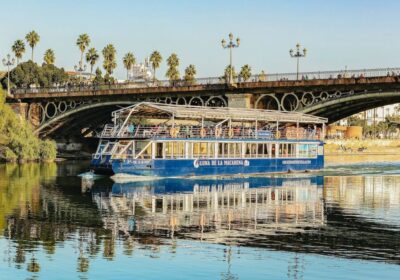 ★ 3.9Guadalquivir River CruiseFrom $216,921 reviews
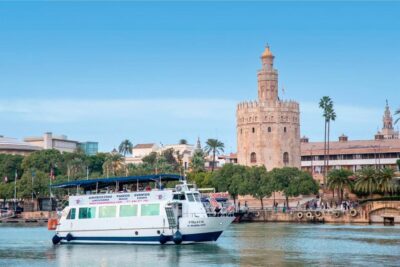 ★ 4.4Guadalquivir Boat Tour with Optional Lunch/DinnerFrom $292,193 reviews
 ★ 4.6Guadalquivir River Boat TourFrom $291,478 reviews
 ★ 4.3Exclusive River Boat Tour with TapasFrom $41802 reviews
 ★ 4.5Boat Trip “Los Rincones del Guadalquivir”From $30734 reviews
 ★ 4.5Cruise along the Guadalquivir River with appetizerFrom $30699 reviews
 ★ 4.5Kayak Rental on the GuadalquivirFrom $20648 reviews
Browse the lists this tour appears in