
Review · SEVILLE BIKE TOURS
Seville City Bike Tour: Top Seville’s Monuments
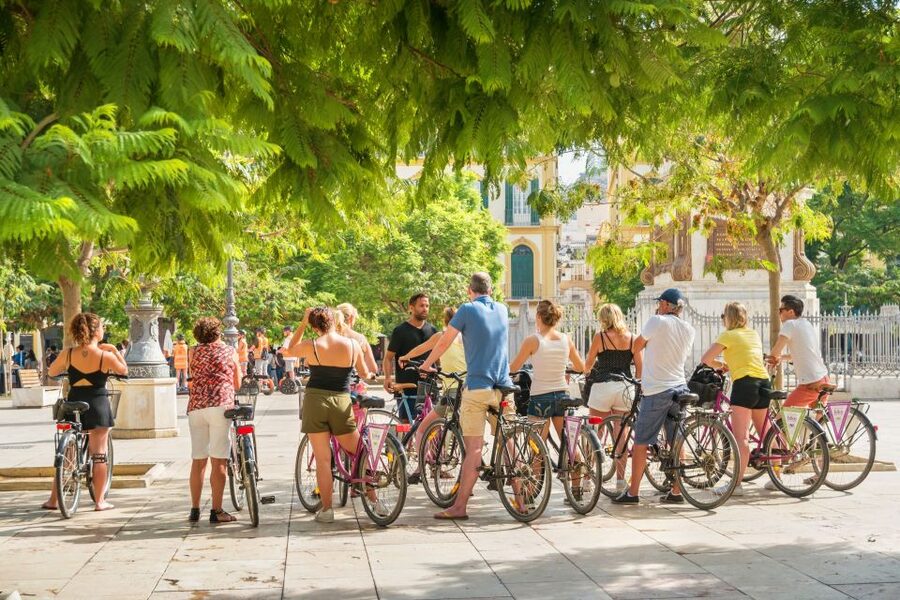
One route. Two wheels. A city you actually feel. This guided Seville bike tour mixes major monuments with neighborhood street life, and I like the way a local guide turns stops into a clear story. You also get the practical win of covering more ground than on foot. One heads-up: it is still a real bike ride, so if you hate even short stretches of traffic-or-curb watching, think twice.
What makes it especially fun is the route logic: you start in the historic Barrio Santa Cruz, cut through greener space in the Jardines de Murillo, then keep rolling to big set pieces like Plaza de España and Parque de María Luisa. Along the way you’ll see the royal tobacco factory at Antigua Fábrica de Tabacos and the iconic tile-and-expo details from the 1929 Iberian-American Exposition site.
Expect a professional, multi-language team and a comfortable pacing style. Guides in English, Spanish, and French are listed, and Italian-speaking support shows up too. Guides like Zak/Zach (French) and Barry (you’ll hear his enthusiasm in the way he explains) have been singled out for turning questions into good conversation, with a little extra time spent on learning rather than rushing.
In This Review
- Key things you’ll notice on this Seville bike tour
- Why a Seville bike route beats foot touring
- Getting rolling at Topsegway: helmets, safety, and first sights
- Barrio Santa Cruz to Jardines de Murillo: the city’s mood shift
- Antigua Fábrica de Tabacos and Seville University: big walls with context
- Plaza de España and the 1929 Expo site: ceramic details you can feel
- Parque de María Luisa, Torre del Oro, and the river turn
- Triana streets and the Setas de Sevilla pause at Campana Café
- Cartuja 1992 and Monasterio de la Cartuja: the far side of Seville’s timeline
- Pace, comfort, and who this ride suits best
- Price and value: does $40 make sense?
- Language and guide style: what to expect from real storytelling
- Best time to ride and practical weather tips
- Should you book the Seville City Bike Tour of Top Monuments?
- FAQ
- How long is the Seville City Bike Tour?
- What does the tour cost?
- Where does the tour start?
- What’s included in the price?
- What language options are available for the guide?
- What landmarks will I see on the route?
- What do I need to bring?
Key things you’ll notice on this Seville bike tour
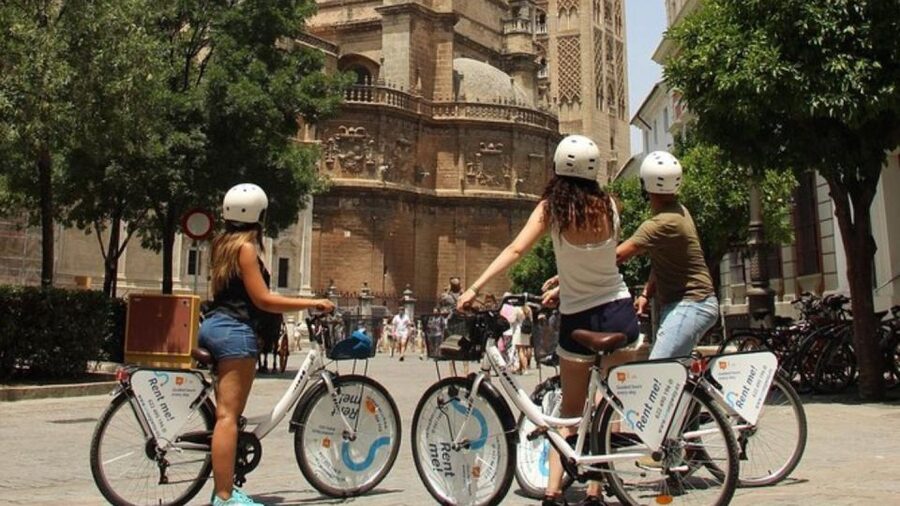
- Barrio Santa Cruz by bike: narrow streets and photo angles without doing all the walking.
- Jardines de Murillo to the tobacco district: a green reset before you hit landmark walls.
- Antigua Fábrica de Tabacos: a stop that connects Seville’s power, industry, and royal past.
- Plaza de España and 1929 expo tiles: the famous ceramic details, seen from the right perspective.
- Triana and the river edge: you get beyond the postcard center and into the flow of the city.
- Setas de Sevilla plus Campana Café: a practical pause to get your bearings for the ride back.
Seville by bike, a few more routes
- Seville Highlights Bike Tour (English)★ 5.0 · 2,225 reviews
- Seville: Highlights City Bike Tour★ 4.8 · 2,168 reviews
- Seville: Relaxing City Bike Tour with a Tour Guide★ 4.8 · 1,588 reviews
Why a Seville bike route beats foot touring
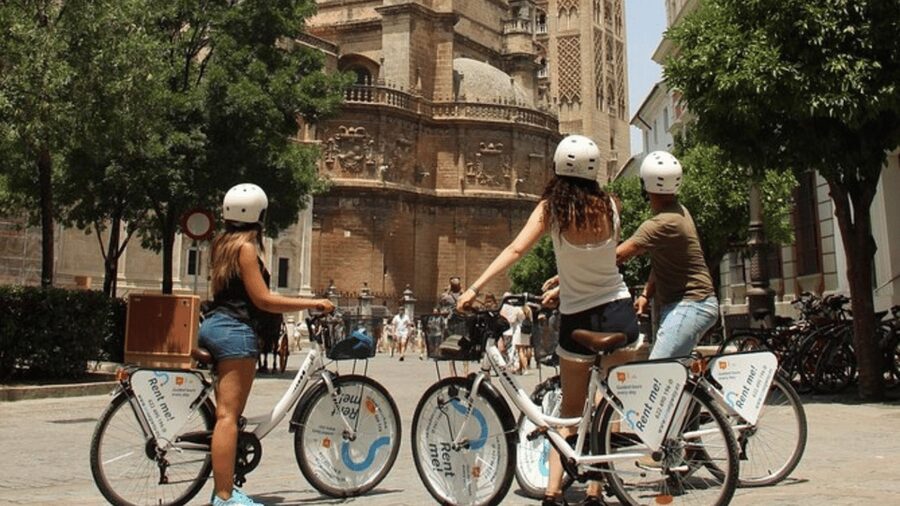
Seville is one of those cities where the center looks walkable, but it can chew up your day. Streets loop, monuments cluster, and suddenly you’re crossing the same ground twice while trying to spot the next landmark. A bike tour fixes that. In about 2 hours (with a short safety briefing), you cover a connected circuit that links old neighborhoods, big plazas, and the river area.
I like tours like this because they keep the focus where it should be: the city’s “why,” not just a list of buildings. When a good guide points out what you’re seeing in Santa Cruz or why Plaza de España matters, it makes the next turn click. And you’re not stuck staring at maps while your feet get tired.
The other plus is mental energy. You’ll still want breaks, but you won’t feel drained before you reach the monuments. That matters if you’re also planning flamenco, tapas, or late-night wandering afterward.
Getting rolling at Topsegway: helmets, safety, and first sights
The tour starts at Topsegway, where you’ll do a safety briefing before you hit the streets. This is the part that keeps your ride smooth: you learn how the group moves, how to handle stops, and how to manage the streets so you aren’t constantly braking or scanning.
Right away you’ll be near the city’s most photographed spine, with early passes by the Seville Cathedral and the Alcázar of Seville area. Even if you don’t go inside on this format, seeing them from a moving bike lane helps you understand the geography. You start to feel the “shape” of the center—where courtyards sit behind walls, where sightlines open, and where the streets start funneling you toward the bigger plazas.
The tour includes a helmet and bike rental, plus bottled water. That’s not just comfort. It removes friction, so you can spend your attention on the streets and the guide’s explanation.
Barrio Santa Cruz to Jardines de Murillo: the city’s mood shift
You begin in Barrio Santa Cruz, Seville’s classic maze of lanes and storybook corners. On a bike, you get that old-world setting without doing the slow shuffle through every tight turn. What you’ll want to watch for is the way the neighborhood changes block by block—how small streets open briefly into views, then snap back into enclosed alleys.
Then the route moves toward the Jardines de Murillo, and this is more than a pleasant pause. Gardens are part of Seville’s rhythm. When you pedal into the greenery, you reset your senses before hitting the heavier monument stops. You also get better pacing for photos: light and shade are more forgiving than in the middle of wide, glare-heavy streets.
If you’re the type who enjoys a guided route but still wants to notice details, this section is a strong match. The bike keeps you moving, while the surroundings give you time to look without feeling rushed.
Still deciding? A few more Seville picks worth a look.
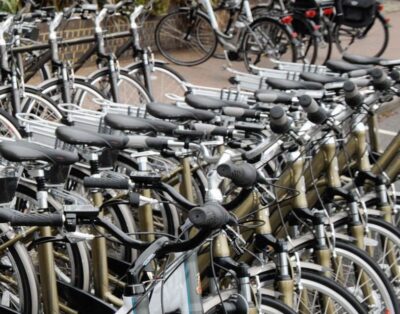
Antigua Fábrica de Tabacos and Seville University: big walls with context
Next up is the Antigua Fábrica de Tabacos, the royal tobacco factory. Even from the outside, it’s easy to understand why this kind of building mattered. Industrial scale in a city like Seville often means wealth and administration, not just production.
A good part of what makes this stop valuable is the explanation. Instead of you guessing, your guide connects the building to Seville’s role beyond tourism. It’s a reminder that this city ran on systems—trade, labor, and royal influence—and those systems left physical traces you can still see.
The route also heads toward the area of Seville University as you go. That blend—historic power near modern education—shows how Seville layers eras. You’re not only looking at monuments; you’re watching the city use them.
Plaza de España and the 1929 Expo site: ceramic details you can feel
Plaza de España is one of those stops where everyone knows the name, but a bike tour helps you see why it’s so cinematic. You’ll have a break time here, and you’ll likely spend it taking in the architecture and the ceramic work.
What really deepens the experience is the connection to the 1929 Iberian-American Exposition. The site’s mosaic tile style is what makes the plaza look like it’s wearing its own story. Passing by on a bike gives you angles that are hard to recreate when you’re stuck in one spot.
Also, the break matters. On a route like this, you don’t want to save snacks and water for later. You’ll arrive there mid-ride and already be thinking about the next section, so having time to reset keeps the rest of the tour enjoyable instead of tiring.
Parque de María Luisa, Torre del Oro, and the river turn
From the plaza, you move to Parque de María Luisa, the centerpiece of the 1929 exposition grounds. This is where Seville starts feeling like a place you could linger for hours, even though the bike tour keeps it practical. You get quick context and a real sense of scale—paths, greenery, and the way the park pulls you toward the river.
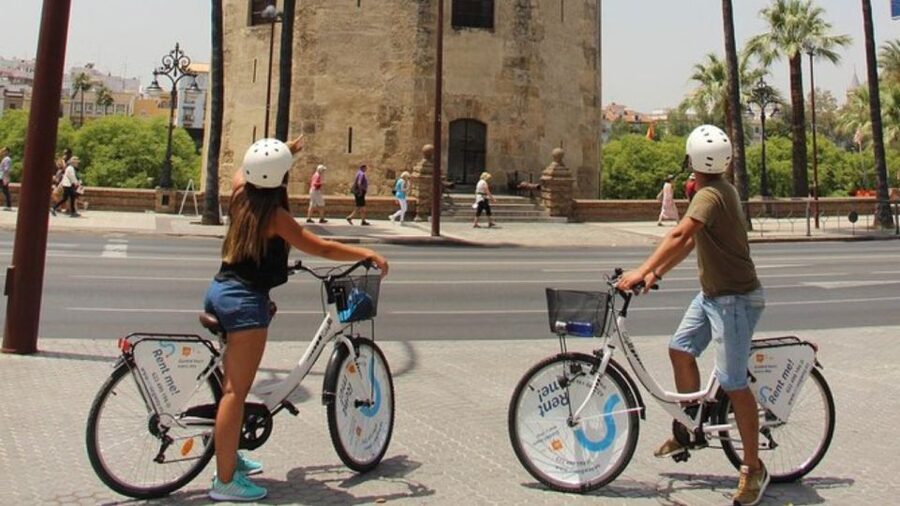
Then comes the shift to the waterfront, including the Torre del Oro (often paired with views of the river and the historic riverfront zone). It’s a landmark that anchors the geography. Once you see where it sits, the city stops feeling like random monuments and starts feeling like a network.
On the way, you’ll also pass Plaza de Toros de la Maestranza. You don’t need to be a bullfighting fan to appreciate the building. It’s another example of how Seville expressed culture through architecture and public life.
Triana streets and the Setas de Sevilla pause at Campana Café
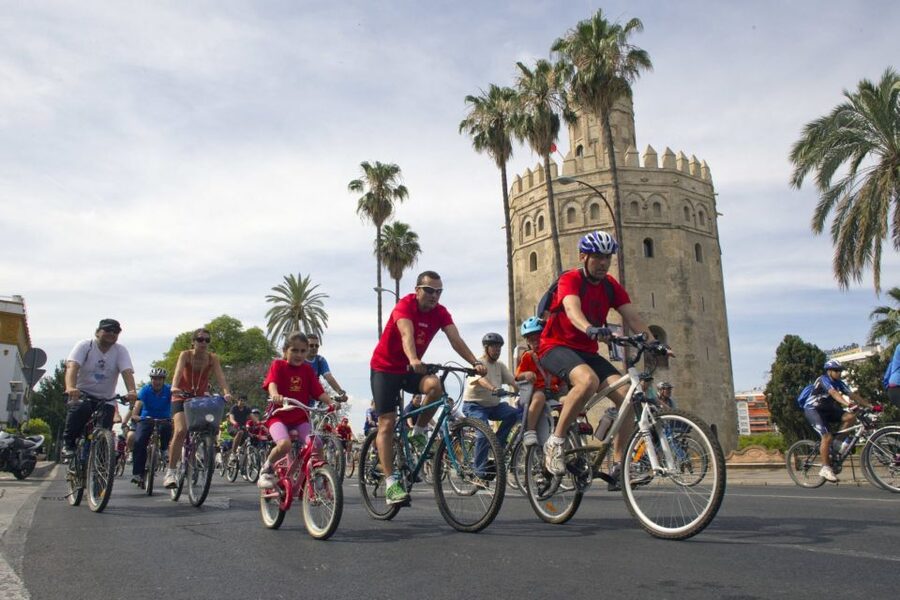
After the river-side landmarks, the route heads through Triana. Triana has its own texture and attitude compared with Santa Cruz. On a bike tour, you can actually feel the neighborhood differences. You’re not just looking; you’re riding through the vibe.
Then the tour includes a stop around Setas de Sevilla—the large mushroom-like structure often known for its striking, modern silhouette. This is one of those spots where a guide’s timing helps. If you just roll through alone, you might miss the best viewpoints or walk the wrong way and feel turned around.
That’s where the Campana Café stop comes in. It’s described as a place to get your bearings for the ride through and out of the area. I like that kind of practical stop. You’re not only seeing a monument; you’re getting a small orientation tool that makes the rest of the evening’s wandering easier.
Cartuja 1992 and Monasterio de la Cartuja: the far side of Seville’s timeline
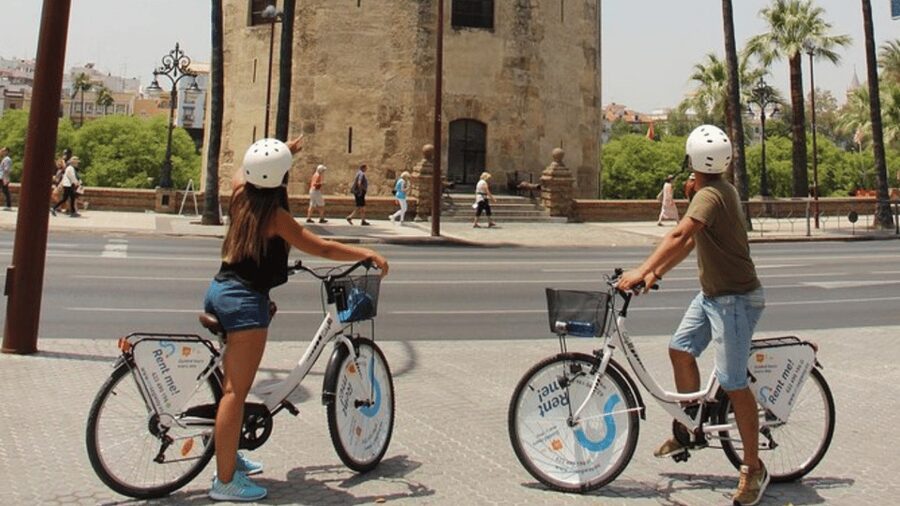
The later part of the route heads north toward Cartuja, tied to the 1992 Expo. This section is a good reminder that Seville is not stuck in one era. Big modern events shaped parts of the city, and those influences still show up in what you can see from the road.
You’ll also see Monasterio de la Cartuja, which adds a calmer, older layer to the day. When you compare it to the expo-era surroundings, it highlights the contrast between institutional history and world-fair modernity. On a bike route, this contrast lands fast, because you travel between zones without wasting time.
After that, you head back toward the center, with more riding through areas around Alameda and a final loop back through Santa Cruz. The ride includes passing the cathedral and Alcazáres again near the end, which is a smart move. It’s a chance to re-orient after you’ve seen more of Seville’s spread.
Pace, comfort, and who this ride suits best
This tour is designed to be active but not aggressive. Two hours is a sweet spot: enough time for multiple landmark zones, but short enough to keep the ride from turning into a grind.
You’ll have a bike and helmet, plus water. That covers the basics. What you still need to bring is your comfort mindset. Wear something you can pedal in. You’ll also want your passport or ID card since it’s listed as what to bring.
Wheelchair access is noted, and private group options exist, but the core experience still depends on bike movement. If you’re traveling with mixed mobility or you’d rather have long photo stops without pedaling, a walking option might feel less stressful.
The group format is also worth considering. Some guides are known for taking extra time for questions, and that can add a bit of delay. That’s not a bad thing if you like conversation, but if you’re trying to squeeze in another timed activity right after, plan a small buffer.
Price and value: does $40 make sense?
At $40 per person for about 2 hours, this isn’t a bargain tour, but it’s not priced like a luxury production either. The value comes from what’s included: bike rental and helmet, a guide, and bottled water. Those basics add up fast if you’d otherwise rent a bike yourself and pay for guiding separately.
The other value is time. Seville’s key monuments are spread out enough that a bike route can cut down the dead travel between stops. You’re paying for a guided circuit, not just transportation. When the guide explains why Antigua Fábrica de Tabacos or Plaza de España matters, that mental payoff often feels bigger than the cost difference between a self-guided ride and a guided one.
If you like structured sightseeing with enough flexibility for photos, the price feels fair.
Language and guide style: what to expect from real storytelling
The tour is listed with guides in English, Spanish, French, and the experience is also known to include Italian-speaking guide support. That means you can usually match your comfort language without feeling like you’re stuck listening at the edges.
Guide style matters here because Seville has plenty to see, and a good guide turns all that visibility into comprehension. In the past, guides with names like Zak/Zach (French) have been praised for lively, interesting exchanges and for being patient with questions. Barry has been praised for explaining in a fun, enthusiastic way and guiding guests to good spots. Italian-speaking Giacomo has been noted for combining history with curious, human details that change how you look at familiar monuments.
Even if you’re not expecting a lecture, aim to ask at least one question. On tours like this, questions tend to unlock side stories that make the monuments feel less like scenery.
Best time to ride and practical weather tips
The tour doesn’t state a time-of-day, so you should choose based on comfort. Seville can get hot, especially outside mild seasons. If you’re going in warm weather, plan for sun protection and take advantage of any natural shade stops during the ride.
Bring layers if it’s cooler at night, but don’t overpack. You’ll be biking and moving through open plazas, parks, and streets. A small daypack is usually a better plan than bulky bags you have to carry around.
Finally, make sure you’re ready for short segments where you’re focused on riding. That isn’t a downside—it’s part of why you get more Seville in less time.
Should you book the Seville City Bike Tour of Top Monuments?
Book it if you want a guided route that links major Seville sights with real neighborhood texture, and you’re happy to ride for a couple of hours. This is a smart pick when you only have a limited number of sightseeing windows and you want to see more than the classic walking loop.
Skip it if you strongly prefer slow, long stops with no biking at all, or if you’re worried about feeling rushed in busy areas like the Setas zone. Also skip if your mobility needs mean you can’t ride comfortably for the full duration.
If you like history explained in plain terms, and you want to connect Santa Cruz, Plaza de España, the river, Triana, and Cartuja into one day plan, this tour is an efficient and enjoyable way to do it.
FAQ
How long is the Seville City Bike Tour?
The tour lasts 2 hours, with a short safety briefing before riding. Plan for roughly 2 to 2.5 hours total depending on the group’s pace.
What does the tour cost?
It’s priced at $40 per person.
Where does the tour start?
The tour starts at Topsegway.
What’s included in the price?
You get bike rental and a helmet, a live guide, and bottled water.
What language options are available for the guide?
Guides are listed for English, Spanish, and French. The experience also includes Italian-speaking support.
What landmarks will I see on the route?
You’ll pass or visit highlights including the Seville Cathedral area, the Alcázar of Seville, Antigua Fábrica de Tabacos, Plaza de España, Parque de María Luisa, Torre del Oro, Plaza de Toros de la Maestranza, Triana, Setas de Sevilla, and Monasterio de la Cartuja at Cartuja.
What do I need to bring?
Bring a passport or ID card.
More Tours in Seville
- Seville: Alcázar, Cathedral & Giralda Skip-the-Line Tour
★ 4.8 · 11,525 reviews - Seville: Cathedral, Giralda & Alcazar Entry With Guided Tour
★ 4.6 · 8,560 reviews - Seville: Priority Access Cathedral, Giralda & Alcázar Tour
★ 4.8 · 7,563 reviews - Seville: Alcázar and Cathedral Entry Ticket and Guided Tour
★ 4.6 · 5,056 reviews - Seville: City Sightseeing Hop-On Hop-Off Bus Tour
★ 4.0 · 4,633 reviews
More Tour Reviews in Seville
- Seville: Live Flamenco Dancing Show Ticket at the Theater
★ 4.7 · 16,396 reviews - Seville: Alcázar, Cathedral & Giralda Skip-the-Line Tour
★ 4.8 · 11,525 reviews - Seville: 1-Hour Guadalquivir River Sightseeing Eco Cruise
★ 4.2 · 10,281 reviews - Seville: Setas de Sevilla Entry Ticket
★ 4.6 · 8,901 reviews - Seville: Cathedral, Giralda & Alcazar Entry With Guided Tour
★ 4.6 · 8,560 reviews
Pedalling Round Seville
- Seville Highlights Bike Tour (English)
★ 5.0 · 2,225 reviews - Seville: Highlights City Bike Tour
★ 4.8 · 2,168 reviews - Seville: Relaxing City Bike Tour with a Tour Guide
★ 4.8 · 1,588 reviews - Seville: City Sightseeing and Local Culture Bike Tour
★ 4.9 · 1,120 reviews - Seville Electric Bike Tour – Small Group
★ 5.0 · 841 reviews
Just added to the Seville list


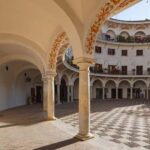
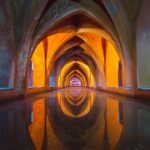
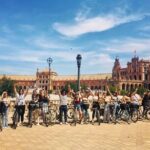
Seville Bike Tours, compared.
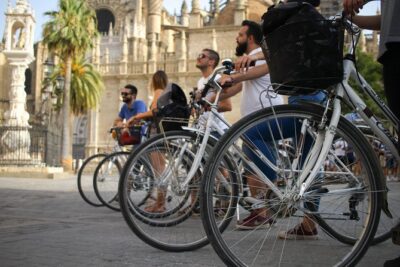 ★ 5.0Seville Highlights Bike Tour (English)From $422,225 reviews
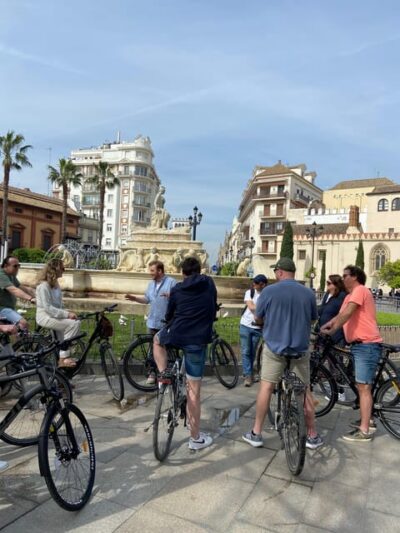 ★ 4.8Highlights City Bike TourFrom $382,168 reviews
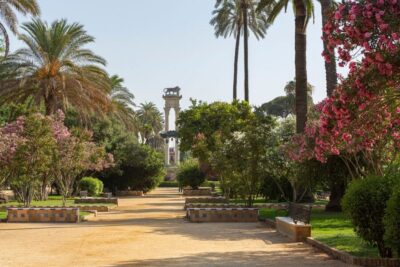 ★ 4.8Relaxing City Bike Tour with a Tour GuideFrom $351,588 reviews
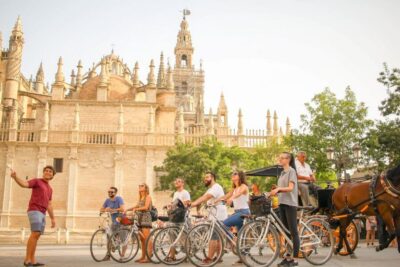 ★ 4.9City Sightseeing and Local Culture Bike TourFrom $311,120 reviews
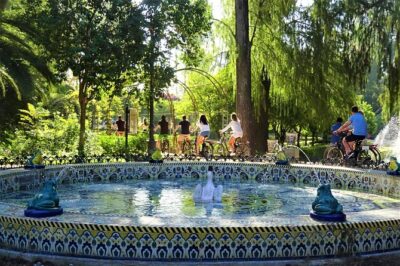 ★ 5.0Seville Electric Bike Tour – Small GroupFrom $58841 reviews
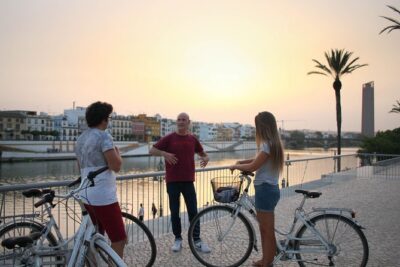 ★ 5.0Sunset Guided Bike Tour in SevilleFrom $36438 reviews
 ★ 4.9Guided Sunset Bike TourFrom $41332 reviews
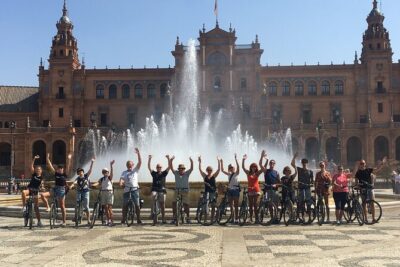 ★ 5.03-hour Guided Bike Tour along the Highlights of SevilleFrom $39315 reviews
Browse the lists this tour appears in