Review · SEVILLE
Sevilla Milenaria: legado de judíos, cristianos y musulmanes
Seville changes fast when you know what you’re looking at. This 2-hour walking tour gives you the big story of Seville’s three cultures with official guidance, so you don’t just see landmarks—you understand them. I also love that the route is planned to be comfortable and mostly flat, with shade in summer and sun in winter. One thing to consider: with a packed route of major stops, you’ll want to pace yourself and wear good shoes so you’re not rushing.
What makes this tour work is how it turns streets into clues. You’ll move through areas tied to Islamic, Jewish, and Christian chapters, and your guide connects the buildings around you to the people who lived there. Based on multiple guides and comments like Maria José’s clear, passionate storytelling and Mario’s patient explanations, you can expect questions answered and time to absorb what you’re passing—without being herded.
In This Review
- Key highlights to watch for
- Walking Seville’s three-culture story (and why you’ll feel it)
- Plaza de San Francisco start: get oriented fast, then settle in
- From Banco de España to Giralda: when one tower tells multiple eras
- A practical note
- Cathedral surroundings and the small details that answer big questions
- Judería and Santa Cruz: Jewish streets, Islamic remnants, and the power of place
- A consideration
- Roman, Visigoth, Almohad: how the tour threads layers through Seville
- The Indies era to the river: Archivo de Indias, El Arenal, and Torre del Oro
- Price and value: why $17 can feel like more than a bargain
- Who should book this tour, and who might want another option
- Should you book Sevilla Milenaria?
- FAQ
- How long is the tour?
- What does it cost?
- What languages are available?
- Where does the tour start and where does it finish?
- Is the walking route flat and comfortable?
- Is it wheelchair accessible?
Key highlights to watch for
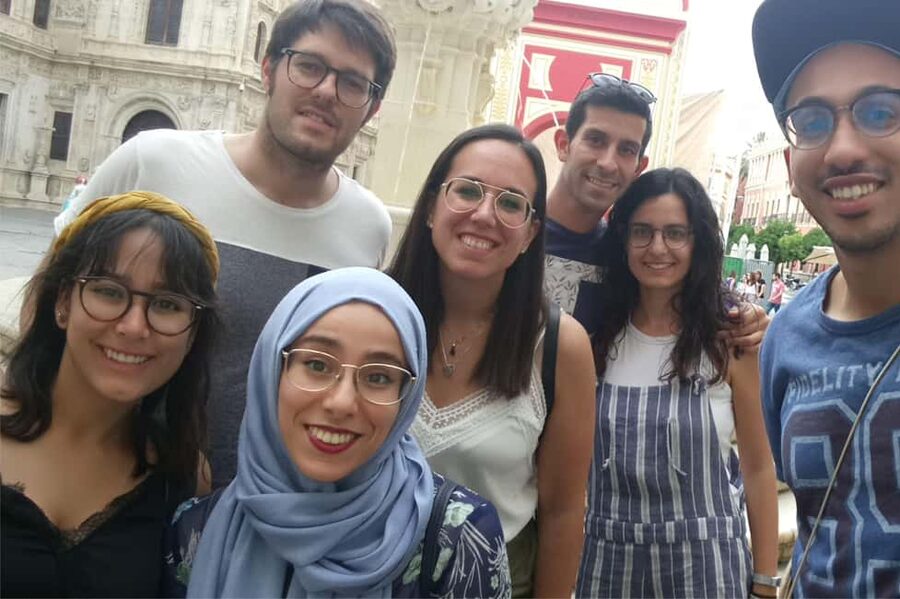
- Official guides with strong communication in English and Spanish, built for real Q&A.
- The “three cultures” angle that ties streets and monuments to Roman, Muslim (Al-Andalus), Jewish, and Christian eras.
- A walking route designed for comfort: flat terrain, shade in summer, sun in winter.
- A landmark-heavy route that still keeps the focus on stories, not just photos.
- Finish at Torre del Oro, so the tour ends with Seville’s riverfront payoff.
Not sure yet? See what else in Seville is worth your time.
- Seville: Live Flamenco Dancing Show Ticket at the Theater★ 4.7 · 16,396 reviews
- Seville: Alcázar, Cathedral & Giralda Skip-the-Line Tour★ 4.8 · 11,525 reviews
- Seville: 1-Hour Guadalquivir River Sightseeing Eco Cruise★ 4.2 · 10,281 reviews
Walking Seville’s three-culture story (and why you’ll feel it)
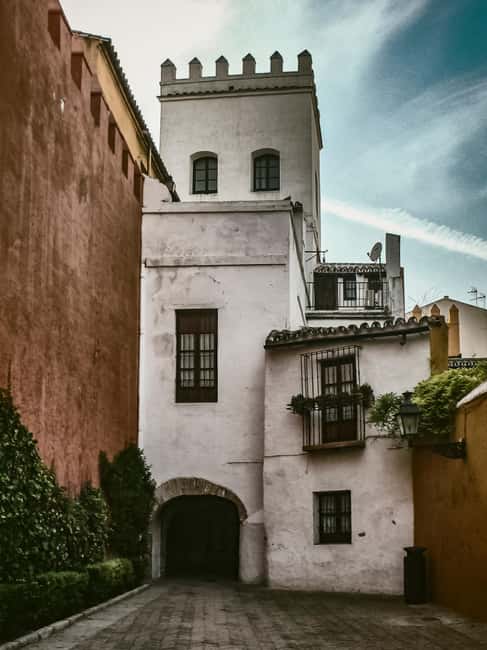
Seville is the kind of city where the walls feel old and the streets feel personal. The tricky part is that if you wander on your own, you’ll see beauty—but you might miss the reasons those shapes, neighborhoods, and monuments exist.
This tour is built to solve that. You get a guided thread through Roman and Visigoth traces, the long Muslim era under Al-Andalus and Almohad rule, the Jewish imprint in the old quarters (especially Santa Cruz and the Judería), and then the Christian shift after Ferdinand III. Instead of treating these as separate history chapters, you’re shown how each period left physical fingerprints in the city.
You’ll also notice how the guide approach matters. In the best moments—like when a guide explains why a street or gate matters—you start to see Seville as a layered place rather than a checklist. That’s when the tour becomes worth far more than its simple price tag.
Plaza de San Francisco start: get oriented fast, then settle in
The experience begins near Plaza de San Francisco (with a common starting point at Pl. de S. Francisco, 17, Hotel Amedeus). If your meeting point varies, you’ll be able to confirm details using a Whatsapp number provided at booking—useful when you’re meeting a group in a busy central square.
Right away, you’re set up for an easier walk. The route is described as flat and comfortable, with no slopes. That matters in Seville because it’s often the walking that drains you, not the sightseeing.
The timing also helps. It’s a tight 2 hours, so you’ll cover major sights without losing the afternoon. And because the plan accounts for heat and season, guides aim for stops with shade in summer and sun in winter. Bring water and plan on wearing comfortable shoes—Seville demands it, and the route length adds up.
From Banco de España to Giralda: when one tower tells multiple eras
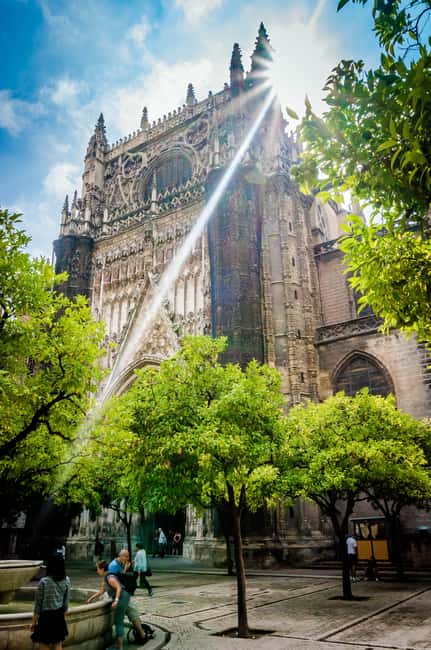
The early stretch includes Banco de España, then moves into the Cathedral area with Giralda and related viewpoints. Even if you’ve seen photos of the Giralda, the guide framing is what changes things. The Giralda is more than a pretty bell-tower moment—it’s a link between the Almohad period and the later Christian reinterpretation of the city center.
When you reach Giralda, pay attention to what your guide highlights about Almohad remains. The tour specifically calls out Seville as a city with many Almohad remains, and Giralda is one of the clearest places to see that connection in action.
Next comes Seville Cathedral, which sits on top of layers. Your guide’s job here is to connect the monumental Christian presence to the transformations that followed the Reconquest. You’re not meant to just admire scale; you’re meant to understand the shift in power, worship, and urban identity.
You’ll also pass Palacio Arzobispal (Archbishop’s Palace area). This is where the tour’s style becomes apparent: rather than rushing, it uses the architecture and street setting to talk about what changed, what stayed, and why those choices were made.

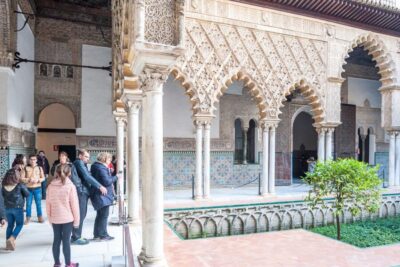
A practical note
This section moves through some of Seville’s most visited zones. You’ll get the benefit of focus from the guide, but it still helps to accept that you’re walking through an active historic core—go with patience and keep your camera ready.
Cathedral surroundings and the small details that answer big questions
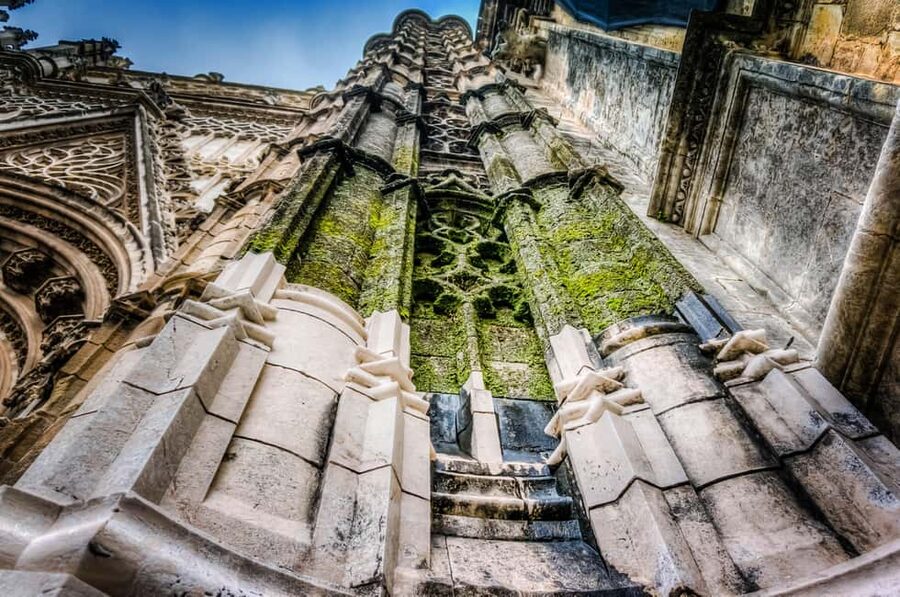
After the Cathedral complex, you’ll make your way through key nearby points, including El Giraldillo and the Immaculate Conception Monument area. These aren’t only decorative stops. Your guide should give you the context to interpret why specific figures and monuments appear where they do, and how Seville’s Christian era expressed itself in public space.
Then you arrive at parts of the route that transition you away from the grand Cathedral plaza feeling and toward the older neighborhood fabric. That movement matters: it’s how the tour shifts from major authority landmarks to the lived-in spaces where different communities shaped the city’s daily rhythm.
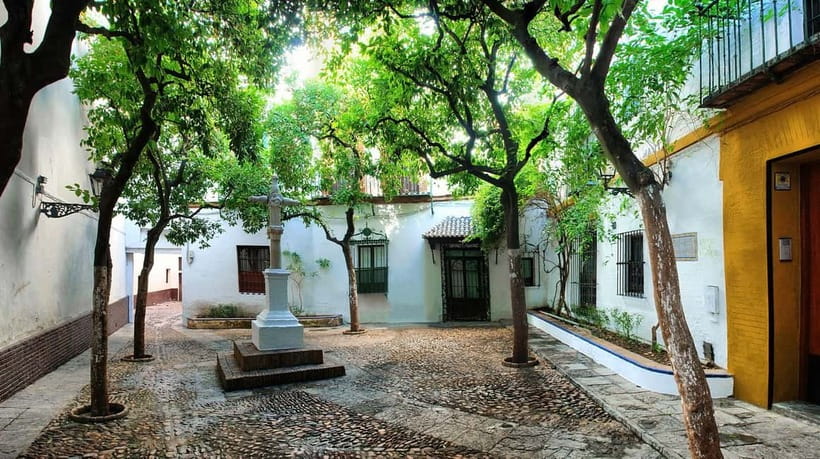
A highlight here is Patio de Banderas, which you’ll visit as part of the Cathedral-area to old-quarter connection. A patio like this works as a story checkpoint: it helps you slow down and connect what you’ve learned about earlier eras to the way Seville functions as a real city, not a museum floor.
If you tend to glaze over when a tour description turns into timelines, this section is where good guiding keeps it human—by pointing out symbols, street patterns, and buildings that reflect the past.
Judería and Santa Cruz: Jewish streets, Islamic remnants, and the power of place
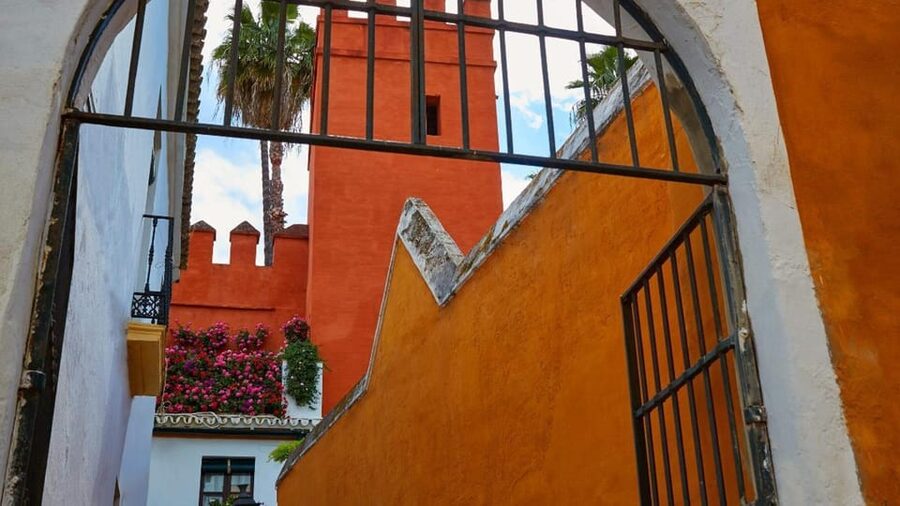
Now you get to the heart of the “three cultures” promise. The tour takes you through the Judería area and into Santa Cruz, the old Jewish quarter known for its historic significance.
What I like about this focus is that it doesn’t treat the Jewish chapter as a footnote. The tour frames the Jewish community as leaving a very visible mark, and it highlights the neighborhood’s role as one of the oldest and largest Jewish quarters in the country.
As you walk, you’ll also pass places that make the quarter feel specific instead of generic: Plaza de la Alianza, Plaza Dona Elvira, Calle Susona, and Calle Vida. The street names themselves are part of the experience. With the right guide, you learn how a small street can connect to a bigger story—community life, protection, movement, and the way neighborhoods evolved under different rulers.
You’ll also visit Puerta del León and continue within the Santa Cruz network. Gates and entrances matter here because they show boundaries—literal and social. They’re the kind of detail you’d miss if you only looked at the biggest buildings. A good guide helps you notice the edges and ask why that’s where transitions happened.
Finally, Patio de Banderas is revisited in the later flow, acting like a hinge between neighborhoods and eras. Think of it as your mental reset: the tour keeps you moving through time, but it also gives you moments to reorganize what you just learned.
A consideration
This part of Seville can feel narrow and busy. The tour says the route is comfortable and flat, which helps, but you’ll still be walking in an older street layout. If you get stressed in dense historic areas, plan to keep your attention on the guide’s explanations rather than trying to wander off visually.
Roman, Visigoth, Almohad: how the tour threads layers through Seville
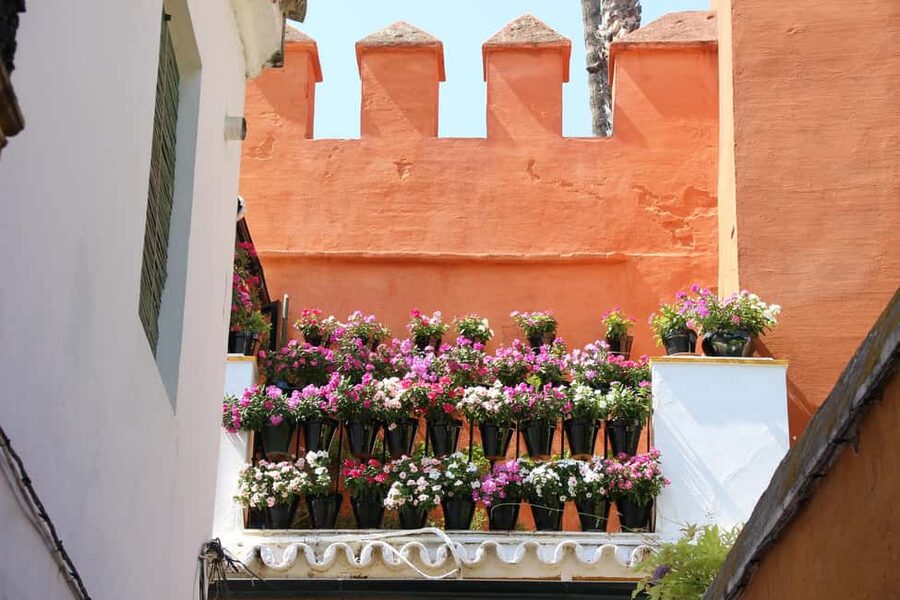
The tour’s pitch includes Roman and Visigoth traces, plus strong emphasis on the Islamic period—especially Almohad influence. You don’t get “stand here for 30 minutes and read.” Instead, the guide uses multiple stops to show that layers exist all over the city, even when the building you’re looking at isn’t labeled as Roman or Visigoth.
The key is how the tour connects physical remains to historical phases. It treats the city as a living document: Roman importance as an administrative and commercial center, Muslim prominence under Al-Andalus, Almohad rule reaching maximum splendor, and then the Christian pivot after Ferdinand III.
Even when the exact layer can be debated by history nerds, the tour’s value is practical: it teaches you to recognize that Seville has been rebuilt and reinterpreted again and again. You leave with questions you can carry into the next museum visit or the next day of wandering.
And if you’ve had that experience of visiting a monument and feeling like you’re missing the plot, this is the fix. It keeps your brain anchored to cause-and-effect: how power changes architecture, how architecture changes neighborhoods, and how neighborhoods preserve memory.
The Indies era to the river: Archivo de Indias, El Arenal, and Torre del Oro
The tour doesn’t end with the old quarters. It pushes you toward Seville’s role as a power center tied to global movement—especially through the General Archive of the Indies.
This stop is where Seville’s “Europe to America” story gets tangible. The tour frames Seville as the port of Europe for America, with the city’s lights and shadows tied to that role. Your guide’s explanations here make the archive feel less like paperwork and more like evidence of real decisions and real journeys.
Then you’ll move to El Arenal, Seville and Plaza del Cabildo. These areas help you connect the administrative and commercial side of Seville to its social and public life. They’re good places to notice how a city’s waterfront shapes everything—from trade to who gets noticed.
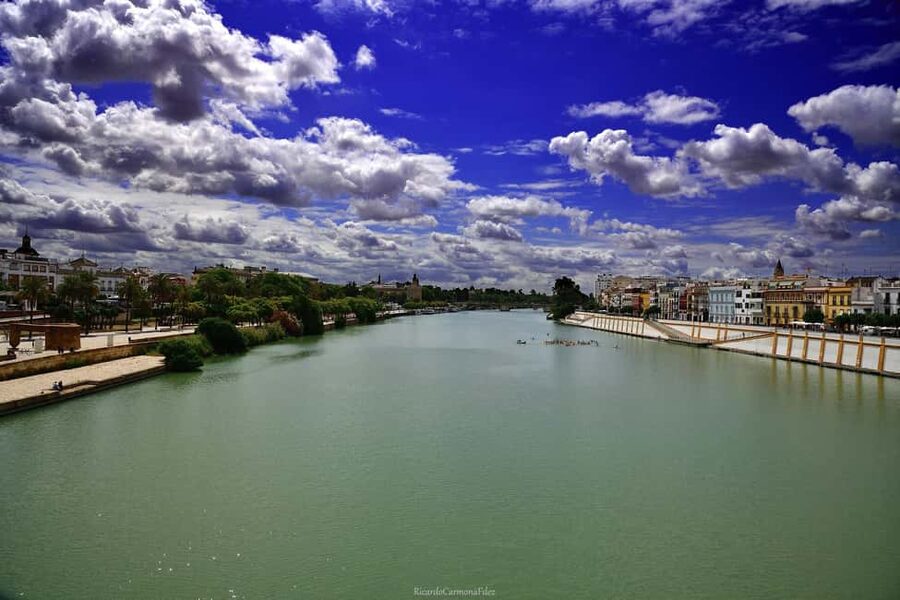
You’ll also visit Mercado Artesania El Postigo, pass Puente de Isabel II, and reach Torre del Oro at the end. This sequence gives you a satisfying emotional arc: from old walls and old quarters to the river’s commercial edge, then to the final landmark that feels made for photos and reflection.
The Torre del Oro ending is smart. You finish with a recognizable symbol tied to Seville’s history and geography. It’s also a practical finish point—easy to keep exploring afterward on your own if you want to stretch the evening.
Price and value: why $17 can feel like more than a bargain
At $17 per person for a 2-hour walk with an official tourist guide, the value is mostly about what you buy: interpretation. In Seville, architecture is dense. Without guidance, it’s easy to spend time looking and still not understand the story behind what you see.
Here you’re paying for:
- a guided route that covers major points efficiently,
- clear explanations in English or Spanish,
- and a focus on the “three cultures” narrative instead of generic sightseeing.
The guide quality matters, and the reviews you provided strongly point to that—people praising Maria José for details, Mario for patient answers, and José and Gabi for natural, graceful storytelling. That kind of communication is what turns a $17 activity into a memorable learning experience.
If you’re short on time in Seville, this is also a good fit. Two hours won’t solve every neighborhood in the city, but it can give you a framework you’ll use all week.
Who should book this tour, and who might want another option
This tour is a strong match if you:
- want the story of Jewish, Muslim, and Christian Seville explained with real clarity,
- like history but don’t want to feel lectured at,
- prefer walking with comfort (flat route) and sensible planning for weather.
You might consider another option if you:
- prefer very free-form wandering with no structure,
- want to spend long periods inside major buildings (this is built for walking and guided interpretation, not extended museum time).
Because the route is described as flat and comfortable, it’s also a good choice for many mobility needs. It’s marked wheelchair accessible, which makes a big difference when you’re deciding what to do in a historic city.
Should you book Sevilla Milenaria?
Yes, if you want Seville to click into place quickly. I’d book it when you’re arriving and you want a map made of stories—how Roman, Almohad, Jewish, and Christian chapters shaped the streets you’ll keep walking.
It’s also a good pick if you value official guiding. The tour emphasizes that guides are official and experienced, and the feedback highlights clear, natural storytelling rather than rushed delivery. At $17 for two hours, the risk is low: you’re not buying a half-day tour that disappears if it doesn’t connect with you.
One last tip: treat this like a learning sprint, not a photo marathon. Keep your questions ready, drink water, and let the guide’s explanations give meaning to the buildings you’re seeing. That’s when the tour earns its word—Sevilla, in layers.
FAQ
How long is the tour?
The tour lasts 2 hours.
What does it cost?
The price is listed as $17 per person.
What languages are available?
The live tour guide is available in English and Spanish.
Where does the tour start and where does it finish?
You start at Plaza de San Francisco near Pl. de S. Francisco, 17, Hotel amedeus (meeting point can vary by option). The tour finishes at Torre del Oro.
Is the walking route flat and comfortable?
Yes. The tour is described as a flat, comfortable route with no slopes.
Is it wheelchair accessible?
Yes, the tour is marked as wheelchair accessible.
More Tour Reviews in Seville
- Seville: Live Flamenco Dancing Show Ticket at the Theater
★ 4.7 · 16,396 reviews - Seville: Alcázar, Cathedral & Giralda Skip-the-Line Tour
★ 4.8 · 11,525 reviews - Seville: 1-Hour Guadalquivir River Sightseeing Eco Cruise
★ 4.2 · 10,281 reviews - Seville: Setas de Sevilla Entry Ticket
★ 4.6 · 8,901 reviews - Seville: Cathedral, Giralda & Alcazar Entry With Guided Tour
★ 4.6 · 8,560 reviews