
If you like palaces that changed over time, this one fits. The Royal Alcázar of Seville is one of Europe’s oldest royal residences, and you’ll see how Muslim origins fed later eras as the complex evolved into fortress, palace, and garden world. I especially love how the visit mixes major architectural styles you can spot with your own eyes and how the guide keeps the stories moving, not stuck in dates.
Second, I really enjoyed the “you have to notice this” feeling: peacocks in the palace and a musical fountain style moment (plus the Game of Thrones connection) add fun layers to the serious setting. One possible drawback: the guided portion is listed at 1.5 hours, but there are reports the tour can run shorter and value can feel off at that point—especially for families if child pricing ends up being steep.
In other words, it’s a great tour for seeing a lot with context, but it’s smart to book with your expectations set: this is a guided walk plus time in the complex, not a long, lecture-style history seminar.
In This Review
- Key things to know before you go
- Where the Royal Alcázar starts: Plaza del Triunfo and a royal neighborhood
- The architectural story: Muslim roots to Gothic, Mudejar, Renaissance, and Baroque
- What the 1.5-hour guided tour does well (and what you should expect)
- The courtyard-to-garden flow: turning architecture into atmosphere
- Musical fountain, peacocks, and the Game of Thrones connection
- Gardens of 7 hectares: how to use your extra time without feeling rushed
- Price and value: does $112 feel fair?
- Meeting point flow, ID rules, and the skip-through-security advantage
- Your best-day plan in Seville: who this tour suits
- Should you book the Royal Alcázar guided tour with Martaole tours?
- FAQ
- How long is the guided part of the tour?
- Can I stay in the gardens and palaces after the guided tour ends?
- What is included in the price?
- Is there an express security line?
- What languages are the tours offered in?
- Where do we meet?
- What do I need to bring for entry?
- Do I need to send my passport or ID information before the tour?
- Is the tour wheelchair accessible?
- What’s not allowed during the visit?
- FAQ
- Is water or lunch included?
- How does cancellation work?
Key things to know before you go
- You get a guided tour with official, expert commentary plus an included entrance ticket.
- Express security skip helps you spend more time inside the complex.
- Multiple styles in one visit: Muslim, Gothic, Mudejar, Renaissance, and Baroque.
- You’ll spot living details, like peacocks freely inside the palace areas.
- The gardens cover 7 hectares, and you can linger after the tour until closing time.
- Your guide will point out almost-unnoticed corners, plus legends and curiosities.
More ways through the Alcazar gates and gardens
- Seville: Cathedral, Giralda & Alcazar Entry With Guided Tour★ 4.6 · 8,560 reviews
- Seville: Priority Access Cathedral, Giralda & Alcázar Tour★ 4.8 · 7,563 reviews
- Seville: Alcázar and Cathedral Entry Ticket and Guided Tour★ 4.6 · 5,056 reviews
Where the Royal Alcázar starts: Plaza del Triunfo and a royal neighborhood
The Royal Alcázar sits right in Seville’s historic center, and your tour starts at Plaza del Triunfo. The square is framed by three big landmarks—the Alcázar itself, the Archivo de Indias, and Seville Cathedral—so you’re basically stepping into a compact “power zone” of old city life.
If you want to get your bearings fast, look for the statue of the Immaculate Conception in the center of the square. Your guide meets you there. It’s a simple start, but that matters here, because the complex is large and you don’t want to burn time wandering before you’re ready.
The architectural story: Muslim roots to Gothic, Mudejar, Renaissance, and Baroque
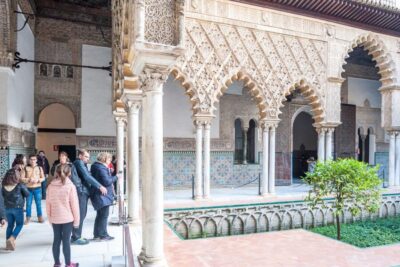
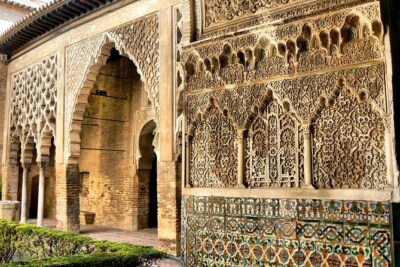
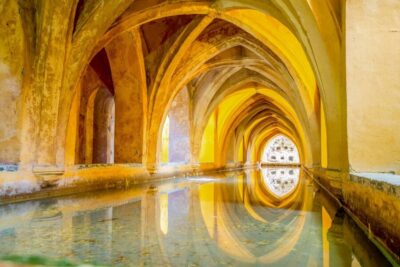
One reason I like this tour format is that it doesn’t treat the Alcázar like a single postcard. The complex has medieval appearance, but the details show a big mix of styles: Muslim, Gothic, Mudejar, Renaissance, and Baroque. Standing in different rooms and courtyards, you can start to see how each era left its signature in shape, decoration, and building language.
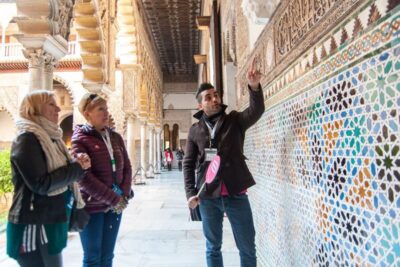
Muslim influence is a big theme, and it’s not just mentioned—it’s part of the “why this place feels the way it does.” You’ll get explanations that connect the architecture to the city’s history, including how Seville’s rulers and cultures shaped what was built (and what was adapted). This is where a good official guide helps: the same wall or arch becomes more meaningful once you understand the context.
Practical tip: take your time with close-up details. Even if you’re not a design nerd, you’ll feel the difference when the guide points out how later styles interact with older structures. That’s when the complex stops being “beautiful rooms” and becomes a readable story.
What the 1.5-hour guided tour does well (and what you should expect)
The guided portion runs about 1.5 hours, led by an official tour guide (Spanish or English). After that, you can stay in the palaces and gardens until closing time. That structure is smart: you get your bearings and key context first, then you can slow down and explore on your own.
During the guided walk, you’re not just following a route. You’re being guided through a royal complex with legends, curiosities, and unique corners that go unnoticed. The “almost secret” part isn’t about finding a lost door—you’re more likely to hear about less-obvious viewpoints, transitional spaces, or details that most people miss while they’re rushing between the big highlights.
A small caution from real-world experience: one report claimed the tour felt closer to an hour than 1.5 hours, and at the listed price that can matter. I’d plan as if you’ll get the full guided experience, but keep your schedule flexible in case the group pace is faster than expected.


The courtyard-to-garden flow: turning architecture into atmosphere
If you’ve visited historic sites that feel like a checklist, this one is easier on the senses. The Alcázar isn’t only indoor space; it works as a sequence of atmospheres—rooms, courtyards, and then garden areas that keep the visit from becoming one long museum hallway.
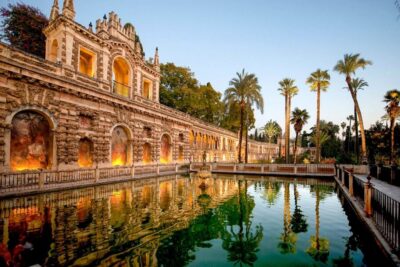
That transition is one of the tour’s strengths. You’ll move from palatial spaces to one of Spain’s standout garden settings: historic gardens spanning over 7 hectares. If you enjoy walking and noticing little changes in light, water, and plant structure, you’ll love the time you spend after your guided portion.
Also, there’s a simple, practical comfort built in: a cafeteria is available for a bite to eat, and there are restrooms on site. That’s not “fine print”—it actually helps you enjoy the late-visit portion without turning your day into a dehydration and snack scramble.
Musical fountain, peacocks, and the Game of Thrones connection
Let’s talk about the fun hooks, because they help this tour stay memorable.
You’ll encounter the idea of a musical fountain, often the kind of moment that makes people pause and look around instead of speed-walking. Even if you’re not obsessed with fountains, this kind of feature changes how you experience the gardens: water becomes a focal point, not just scenery.
Then there’s the delight of peacocks living freely inside the palace areas. This is one of those details that makes historic places feel alive in a way that’s hard to fake. It also changes your pacing—you might find yourself standing longer than you planned just to watch what they do.
And yes, there’s a Game of Thrones filmed-there style connection. I can’t verify extra specifics beyond what’s presented as part of the experience, but as a visitor hook it works: it helps you link visual memory from TV to real space on the ground. Even if you’re only casually familiar with the show, the guide’s framing can help you spot where cinematic sets borrow from the Alcázar’s visual character.
Gardens of 7 hectares: how to use your extra time without feeling rushed
One of the best values in this experience is that the guided tour is only the start. You’re allowed to stay until closing time in the gardens and palaces. That means you’re not stuck racing through the best parts as soon as your guide finishes.
Here’s how to make that extra time work:
- After the guide’s route, go back to the areas that grabbed your attention most.
- Slow down in garden sections where you can hear water or feel open space.
- Take a few minutes to circle viewpoints—historic complexes often reward a second angle.
Also, don’t underestimate how quickly 7 hectares can feel like “just enough time” when you’re walking at a relaxed pace. If your day is packed with Seville sights, this is the moment where you’ll either feel satisfied—or wish you had scheduled one less stop.
Price and value: does $112 feel fair?
At $112 per person, you should evaluate value based on what’s included, not just the headline number.
Here’s what you’re getting with the ticket and tour:
- Walking tour with an expert official guide
- Entrance ticket to the Royal Alcázar
- Headphones if needed
- Skip the line through an express security check
That package can be good value if you want context and efficiency. The Alcázar is a big, layered site; a guide helps you interpret what you see, and express entry reduces time lost to waiting. If you were to do it on your own, you’d still pay admission and you’d spend more time figuring out the meaning behind the architecture.
Where value may feel worse: family groups can be tricky. One review criticized pricing for a young child, saying a 4-year-old was charged around 70% of the adult price. I can’t generalize beyond that report, but it’s enough of a warning that I’d check the child pricing rules before you book if you’re traveling with kids.
Another review complaint was that the tour felt short on intellectual depth for the price. That doesn’t mean the guide is poor—style can vary—but it’s a reminder that your ideal tour might depend on how “stories vs. lectures” you prefer.
Meeting point flow, ID rules, and the skip-through-security advantage
This experience is smooth when you show up prepared. Your meeting point is Plaza del Triunfo, with your guide waiting in the square near the statue.
A key step happens right after booking: you’ll need to email a copy of your passport or ID card. Because tickets are nominative, you must have your passport/ID with you at entry. Copies are accepted, but the rule matters: use the same identity documents you sent.
What to bring is straightforward:
- Passport or ID card (and a copy is accepted)
What not to do:
- No smoking
- No food
Why I think these rules are worth following closely: the Alcázar is popular, and security checks can be tight. Since this tour includes express security, you’ll likely move faster than standard entry—assuming your paperwork is ready and your group is organized.
Your best-day plan in Seville: who this tour suits
This tour works especially well if you want a “big picture with details” visit. You’ll get:
- the overview of Seville’s city history through the palace’s changing role
- architectural variety you can actually notice in real time
- garden time that feels like a reward, not an afterthought
It’s also a solid choice if you have limited hours. With an about 1.5-hour guided component plus time after, you can cover a lot without turning your day into a sprint.
Who might need a different approach? If you want heavier intellectual content with a very academic tone, you might find the experience too light in that area—at least based on one critique. If you’re the type who loves long lectures, consider comparing options, or be ready to balance the tour with your own reading afterward.
Finally, if you’re traveling as a couple or solo, the headphones and guide route help you avoid the “I’m paying to wander” feeling. If you’re traveling with family, it can still be a great outing, but do sanity-check pricing for kids before you commit.
Should you book the Royal Alcázar guided tour with Martaole tours?
I’d book it if you want the Alcázar to make sense, not just look pretty. The combination of official guiding, included entry, express security, and a garden time window is a practical way to get the most out of a large complex.
I’d think twice (or at least check your assumptions) if:
- your group includes kids and you’re sensitive to child pricing
- you specifically want more academic depth than a story-driven guide style
- you’re on a schedule where a potentially shorter guided pace could make you feel rushed
If your goal is to walk into Seville’s royal layers—Muslim roots, medieval forms, and later styles—then this tour hits the right balance of efficiency and atmosphere. And when the peacocks show up and the garden pulls you back for one more turn, you’ll likely feel like you spent your time well.
FAQ
How long is the guided part of the tour?
The guided walking tour is about 1.5 hours.
Can I stay in the gardens and palaces after the guided tour ends?
Yes. After the guided tour, you can stay until closing time in the gardens and palaces.
What is included in the price?
The price includes a guided walking tour with an expert official guide, the Royal Alcázar entrance ticket, and headphones if needed.
Is there an express security line?
Yes. The experience includes skip-the-line through an express security check.
What languages are the tours offered in?
The tour guide offers Spanish and English.
Where do we meet?
You meet at Plaza del Triunfo, near the statue of the Immaculate Conception, surrounded by the Alcázar, the Archivo de Indias, and the Cathedral. The guide will be waiting there.
What do I need to bring for entry?
Bring your passport or ID card. A copy of the passport/ID is accepted, but the tour requires nominative tickets.
Do I need to send my passport or ID information before the tour?
Yes. Right after booking, you need to email a copy of your passport or ID card because the tickets are nominative.
Is the tour wheelchair accessible?
Yes, it is wheelchair accessible.
What’s not allowed during the visit?
Smoking and food are not allowed.
FAQ
Is water or lunch included?
Water and lunch are not included. There is a cafeteria on site for a bite to eat and restrooms.
How does cancellation work?
Free cancellation is available if you cancel up to 24 hours in advance for a full refund.
More Tour Reviews in Seville
- Seville: Live Flamenco Dancing Show Ticket at the Theater
★ 4.7 · 16,396 reviews - Seville: Alcázar, Cathedral & Giralda Skip-the-Line Tour
★ 4.8 · 11,525 reviews - Seville: 1-Hour Guadalquivir River Sightseeing Eco Cruise
★ 4.2 · 10,281 reviews - Seville: Setas de Sevilla Entry Ticket
★ 4.6 · 8,901 reviews - Seville: Cathedral, Giralda & Alcazar Entry With Guided Tour
★ 4.6 · 8,560 reviews
Back Through the Alcazar Gates
- Seville: Alcázar, Cathedral & Giralda Skip-the-Line Tour
★ 4.8 · 11,525 reviews - Seville: Cathedral, Giralda & Alcazar Entry With Guided Tour
★ 4.6 · 8,560 reviews - Seville: Priority Access Cathedral, Giralda & Alcázar Tour
★ 4.8 · 7,563 reviews - Seville: Alcázar and Cathedral Entry Ticket and Guided Tour
★ 4.6 · 5,056 reviews - Alcazar and Cathedral of Seville Tour with Skip the Line Tickets
★ 4.5 · 4,579 reviews
Just added to the Seville list





Alcázar of Seville Tours, compared.
 ★ 4.8Alcázar, Cathedral & Giralda Skip-the-Line TourFrom $6411,525 reviews
 ★ 4.6Cathedral, Giralda & Alcazar Entry With Guided TourFrom $658,560 reviews
 ★ 4.8Priority Access Cathedral, Giralda & Alcázar TourFrom $647,563 reviews
 ★ 4.6Alcázar and Cathedral Entry Ticket and Guided TourFrom $785,056 reviews
 ★ 4.5Alcazar and Cathedral of Seville Tour with Skip the Line TicketsFrom $714,579 reviews
 ★ 4.6Alcázar of Seville Skip-the-Line Tickets and Guided TourFrom $443,941 reviews
 ★ 4.5Alcázar Guided TourFrom $463,371 reviews
 ★ 4.3Alcazar Skip-the-Line Guided Tour with TicketsFrom $512,188 reviews
Browse the lists this tour appears in