
Review · WHITE VILLAGES & RONDA DAY TRIPS
Rock art and Ronda
Rock art and Ronda is the kind of day trip that mixes two very different worlds into one smooth route, and it all starts with the Cueva de la Pileta. You’ll spend time with major prehistoric parietal art in a Franco-Cantabrian style cave, then shift gears to Ronda’s dramatic gorge views and historic streets. If you like days that keep moving but still feel meaningful, this is a strong match.
What I like most is that the cave visit is built around real context. You’re not just shown paintings and engravings—you get a guided approach that helps you make sense of what you’re seeing and why it matters. Second, the pacing works: a full chunk of time in the cave, then a solid block in Ronda (including time to wander and take in the views), plus scenery along the way.
One thing to consider is that the day runs about 9 hours with a moderate fitness level expectation. If you know you get tired with walking, stairs, or uneven ground, you’ll want to plan for it (especially in Ronda’s old streets).
In This Review
- Key things you’ll remember from this Seville to Ronda trip
- Why the Cueva de la Pileta visit feels like the main event
- What the cave tells you (and how the guide helps)
- The Ronda shift: gorge drama and old-street wandering
- Los Pueblos Blancos and countryside views: what you should expect
- How the schedule works (and why the pacing feels right)
- Price and value: what $270.93 buys you in real terms
- Practical tips to make the day go smoothly
- Who this tour fits best
- Should you book Rock art and Ronda from Seville?
- FAQ
- How long is the Rock art and Ronda tour?
- What time does the tour start in Seville?
- Where do we meet in Seville?
- Is admission to La Cueva de la Pileta included?
- Is lunch included?
- Is the tour wheelchair-friendly or best for limited mobility?
- What’s the group size and language?
Key things you’ll remember from this Seville to Ronda trip
- Cueva de la Pileta rock art, dated to 7,000–4,500 with figures like horses, cervids, fish, bulls, and abstract signs
- A guided cave experience that helps you interpret what’s in front of you (including support with bilingual materials)
- Ronda in a deep gorge, with the old town tied to Arab rule and the new city rising from around the 15th century
- New Bridge viewpoint time, so you’re not just driving past the drama
- Los Pueblos Blancos and countryside scenery, giving the day its Andalusian texture beyond the headline stops
- Small group size (up to 8), which usually means you can actually ask questions
Other roads into the white villages and Ronda
- From Seville: Ronda+Setenil de las Bodegas Day Trip★ 4.4 · 3,562 reviews
- White Villages and Ronda Day Tour from Seville★ 4.5 · 2,049 reviews
- White Villages and Ronda Guided Day Tour from Seville★ 4.5 · 415 reviews
Why the Cueva de la Pileta visit feels like the main event
Most day trips to big cities give you one famous stop and a photo. This one starts with something harder to fake: prehistoric art you can’t casually recreate later from memory.
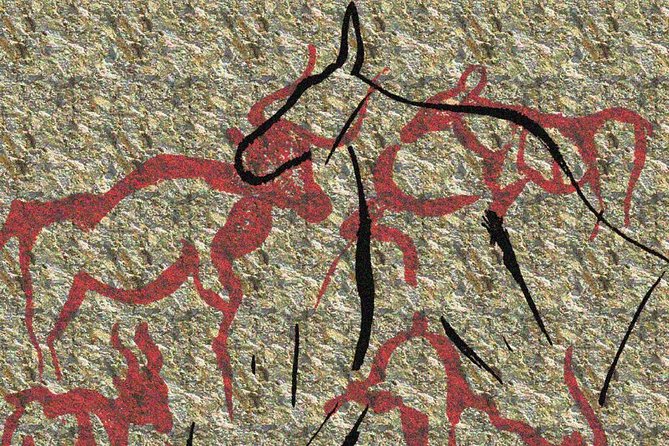
The Cueva de la Pileta is in Benaoján (in the province of Málaga). It’s a site with Paleolithic parietal art and later Neolithic remains, and the art is described in a Franco-Cantabrian style. When you look at the subject matter—cervids, horses, fish, goats, bulls, a seal, a bison, plus abstract signs and indeterminate figures—you start to see this cave as a kind of long-running canvas.
You’ll likely come away with a better sense of geography in prehistoric art. The cave is presented as an important group because it gives data on the expansion of Paleolithic art outside the best-known “classical areas,” connecting northern Spain and the southwest of France. That’s not just academic. It changes how you look at the site: you’re not only seeing art, you’re seeing evidence of wider cultural movement.
And because the tour includes admission and a guide for about 2 hours, you get time to slow down. This is one of those places where rushing makes you miss the details.
What the cave tells you (and how the guide helps)
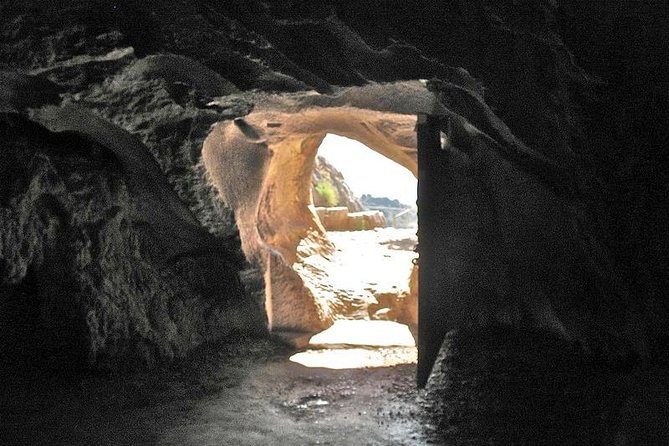
The cave’s research history is part of what makes the visit feel real. The site was discovered in 1905 by José Bullón Lobato. It was later explored and studied by names you’ll recognize if you’ve read anything about European prehistory: Willoughby Verner, Henri Breuil, and Hugo Obermaier.
Those names aren’t just trivia. They suggest that what you’re seeing has been seriously documented, interpreted, and compared. You’re walking into a site that has been studied across generations of scholarship, which makes the guided portion feel more substantial.
In practice, the value comes from interpretation. Even when a site provides bilingual materials, it can be a lot to process on your own. One of the guides associated with this tour—Miguel—is noted for being energetic and for helping people understand the bilingual guide while you’re inside. That kind of support matters because rock art is easy to misread when you don’t know what to look for.
If you’re the type who likes to ask questions—about symbolism, time periods, or what counts as a “figure” versus an abstract sign—this format gives you that chance. Just expect the cave visit to be an experience you concentrate on, not a quick stop for selfies.
The Ronda shift: gorge drama and old-street wandering
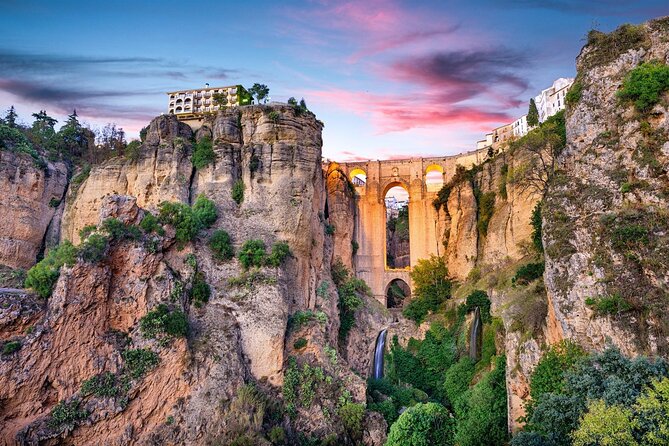
After the cave, the mood changes fast. Ronda sits in a deep gorge, with that gorge separating the new city from the old town. The tour frames this clearly: the new city dates from around the 15th century, while the old town dates back to Arab rule.
That split is visible when you walk. Even if you don’t read a single history sign, the city’s structure makes the story feel physical. You’re literally on the edge of a major drop, and you move through streets that reflect different eras.
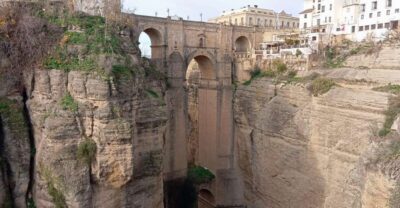
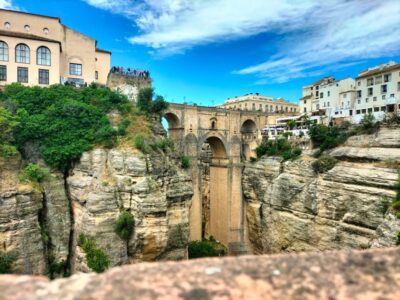
A standout moment is the New Bridge area. The tour includes Ronda time that lets you reach the New Bridge viewpoint, where the gorge opens up into a big panoramic moment. It’s the kind of view that makes you stop without meaning to.
Then there’s the old-versus-new city feel, reinforced by major monuments. The bullring is highlighted too: a legendary square of the 18th century in the new city. Whether you’re a bullfight fan or not, it’s one of Ronda’s identity markers, and it anchors the architecture in a later chapter of the city’s story.
The tour gives you around 2 hours in Ronda. That’s enough to enjoy the view, get your bearings, and still have time to wander streets at a comfortable pace. It’s also long enough to pause when you want photos, without feeling like you’re constantly being pulled along.

Los Pueblos Blancos and countryside views: what you should expect
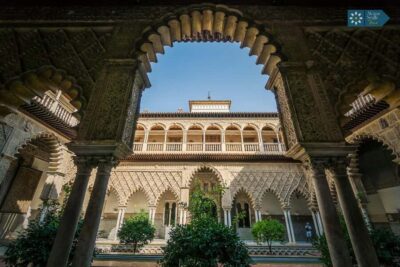
The headline stops are the cave and Ronda, but the day also includes Los Pueblos Blancos (the White Villages). Even when the timing is tight, the value is how these villages break up the drive into something distinctly Andalusian.
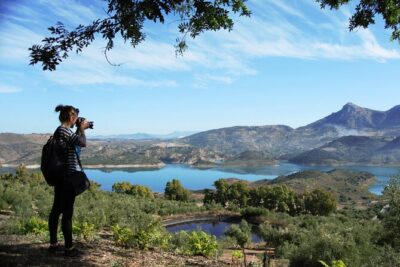
Think of it like this: Seville is flat enough to move fast, but the road out into the countryside changes how the day feels. You get that slow, scenic build-up—small towns in white, hills in the distance, and viewpoints that make you understand why people fall for southern Spain.
If you want a tour that’s more than a checklist, this is where the character comes in. You’ll have scenic context for why Ronda looks the way it does and why the region’s architecture leans into the landscape instead of fighting it.
One practical note: because this is a day trip built around set stops, you’ll likely keep moving. If you’re hoping for maximum free time in the white villages themselves, the schedule may feel more guided than open-ended—but the scenic payoff is part of the design.
How the schedule works (and why the pacing feels right)
The day runs about 9 hours, starting at 9:00 am from Sevilla. There’s roundtrip transportation by air-conditioned vehicle, and the group is kept small, with a maximum of 8 travelers. That matters for comfort and for a smoother experience when you’re doing two main destinations in one day.
Your first stop is the cave at about 2 hours with admission included. Then you move toward Ronda for another 2 hours with Ronda-focused wandering time and free admission for the Ronda segment described (the tour lists admission free for the Ronda stop).
Between stops, you’re in the car for scenery and white-village routing. It’s not a slow two-hour lounge. This is a full-day outing, so treat it like you would a classic highlights trip: wear comfortable shoes, plan to walk a bit, and keep your phone charged for views from the New Bridge.
Lunch isn’t included. The good news is that the tour is guided enough to help you find a workable plan in Ronda, and one of the associated guides/drivers in recent experiences is described as finding a great lunch spot. You’ll just need to cover the meal yourself.
Price and value: what $270.93 buys you in real terms
At $270.93 per person, this isn’t the cheapest option. But it’s also not paying for only a generic van ride and a quick stop.
Here’s the value breakdown that matters:
- Admission to Cueva de la Pileta is included, so you’re not adding extra costs for the hardest-to-arrange stop.
- A guide is included for the day, which is essential for understanding prehistoric rock art.
- Roundtrip transportation from Sevilla is included, plus the comfort of an air-conditioned vehicle.
- The group size is limited to up to 8, which usually improves the experience when you’re in a cave or walking in an old city.
What you still pay for: lunch and tips. The tour also doesn’t list any other personal expenses, which helps you budget.
If you want a day trip that feels like more than a photo run—especially because the first stop is a true rock-art site—this price starts to look fair. If your goal is only to see Ronda with minimal time commitments, you might compare against cheaper options, because the cave is what’s really driving the value here.
Practical tips to make the day go smoothly
Bring comfortable walking shoes. Ronda is walkable, but it’s also a gorge city with historic streets that can be uneven.
Charge your phone and camera. The New Bridge viewpoint is one of the practical reasons to pick this tour, and you’ll want time to frame photos without rushing.
Plan for lunch budgeting. The tour doesn’t include lunch, so you’ll want cash or card ready for whatever you choose in Ronda.
Expect a guided cave experience to take some focus. Rock art is not always intuitive at a glance, and the guide’s role is to help you read the site.
Finally, go with the right mindset. This day works best when you accept it’s a “two worlds” itinerary: prehistoric art, then city views and old streets, with countryside and white villages in between.
Who this tour fits best
This is a strong fit if you:
- Want prehistory + Andalusian scenery in one day trip
- Enjoy guided explanation more than self-guided wandering
- Like Ronda’s viewpoints and historic character, not just a single viewpoint photo
It’s also a good choice if you’re traveling with limited time in Seville and want a route that gives structure. With a small group size, you’re less likely to feel lost or rushed.
If you dislike caves, or if you prefer a long, slow day with lots of free time, you might find the pacing more full than you want. Still, the itinerary is built around two real “anchor stops,” so it’s unlikely you’ll feel like you missed the point.
Should you book Rock art and Ronda from Seville?
If your ideal day includes rock art with context and then Ronda’s gorge drama, I’d book it. The cave is admission-included, the visit is timed well, and the day has enough structure to keep you from wasting time figuring out logistics on your own.
I’d especially consider it if you want more than surface-level sightseeing. The guided approach helps you interpret what you see in the cave, and that turns the first stop into something you can talk about after you leave. The Ronda portion then rewards you with views and classic city wandering, backed by solid time on the ground.
Skip this one only if you’re mainly after a cheap, relaxed Ronda visit. In that case, the cave part may feel like extra effort. But for most people looking for a memorable Seville day trip that mixes meaning with scenery, this hits the mark.
FAQ
How long is the Rock art and Ronda tour?
It’s about 9 hours, with approximately 2 hours at Cueva de la Pileta and about 2 hours in Ronda.
What time does the tour start in Seville?
The start time is 9:00 am.
Where do we meet in Seville?
The meeting point is Sevilla Moving – Alojamientos y experiencias, C. Luis Montoto, 19, Local Bajo, 41003 Sevilla, Spain.
Is admission to La Cueva de la Pileta included?
Yes. Tickets for La Cueva de la Pileta are included.
Is lunch included?
No. Lunch is not included, and you’ll need to plan for it separately.
Is the tour wheelchair-friendly or best for limited mobility?
The tour notes a moderate physical fitness level. It’s not described as fully accessible, so you should be prepared for walking during the Ronda portion.
What’s the group size and language?
The group maximum is 8 travelers, and the tour is offered in English.
More Tour Reviews in Seville
- Seville: Live Flamenco Dancing Show Ticket at the Theater
★ 4.7 · 16,396 reviews - Seville: Alcázar, Cathedral & Giralda Skip-the-Line Tour
★ 4.8 · 11,525 reviews - Seville: 1-Hour Guadalquivir River Sightseeing Eco Cruise
★ 4.2 · 10,281 reviews - Seville: Setas de Sevilla Entry Ticket
★ 4.6 · 8,901 reviews - Seville: Cathedral, Giralda & Alcazar Entry With Guided Tour
★ 4.6 · 8,560 reviews
The White Villages and Ronda, Again
- From Seville: Pueblos Blancos and Ronda Full-Day Trip
★ 4.5 · 3,849 reviews - From Seville: Ronda+Setenil de las Bodegas Day Trip
★ 4.4 · 3,562 reviews - White Villages and Ronda Day Tour from Seville
★ 4.5 · 2,049 reviews - White Villages and Ronda Guided Day Tour from Seville
★ 4.5 · 415 reviews - White Villages and Ronda Day Trip from Seville
★ 5.0 · 295 reviews
Just added to the Seville list


White Villages & Ronda Day Trips, compared.
 ★ 4.5Pueblos Blancos and Ronda Full-Day TripFrom $523,849 reviews
 ★ 4.4Ronda+Setenil de las Bodegas Day TripFrom $533,562 reviews
 ★ 4.5White Villages and Ronda Day Tour from SevilleFrom $952,049 reviews
 ★ 4.5White Villages and Ronda Guided Day Tour from SevilleFrom $95415 reviews
 ★ 5.0White Villages and Ronda Day Trip from SevilleFrom $107295 reviews
 ★ 5.03 Cities in One Day: Cordoba, White Village & Ronda from SevillaFrom $133276 reviews
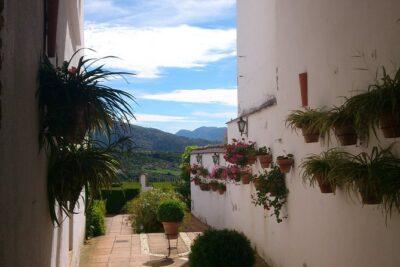 ★ 5.0Private White Villages & Ronda Day Tour from SevilleFrom $344243 reviews
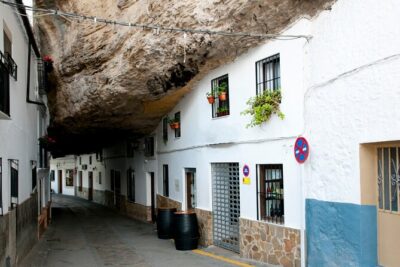 ★ 5.0Day trip to Zahara, Setenil and Ronda from SevilleFrom $102237 reviews
Browse the lists this tour appears in