

Review · GUIDED
Guided visit to the Archivo de Indias
Seville’s archive has a good story behind every page. This guided visit to the UNESCO-listed Archivo de Indias is built around the real reason it came into being during a 16th-century clash between Seville’s Cathedral and the merchants—so you understand why the Americas matter here before you see anything. I also loved the guide Rubén, who keeps the energy up and makes heavy material feel human, including entertaining stories like the trunk with 16 padlocks. The main drawback is simple: it’s about 1 hour 45 minutes and it’s not recommended for children under 12, so it works best if you can sit still and listen.
You’ll start at the main entrance on Av. de la Constitución and finish back at the same meeting point. Expect a small-ish group capped at 25, a mobile ticket, and a visit that depends on good weather—because even before you enter, the plan starts outside with a short walk around the monument complex.
In This Review
- Key things I’d bet on
- First impressions at the Archivo de Indias façade (and why you should care)
- The origin story: not an archive at first
- Stop by stop: how the 1h45 visit unfolds
- The outside walk (about 25 minutes)
- The two-floor guided visit (about 1 hour 20 minutes)
- What you should do during the walk-through
- Rubén and the art of keeping a history tour fun
- Price and logistics: is $70 worth your time?
- What makes this archive visit different from a typical museum stop
- Who should book this tour
- Should you book the Archivo de Indias guided visit?
- FAQ
- How long is the guided visit to the Archivo de Indias?
- How much does the tour cost, and is admission included?
- Where do I meet for the tour?
- Will I receive a ticket on my phone?
- Is this tour recommended for children?
- Are service animals allowed?
- What happens if the weather is bad or I need to cancel?
Key things I’d bet on
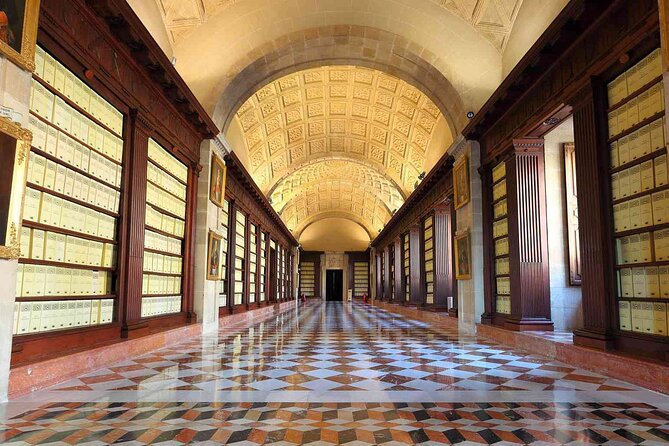
- The setting is half the lesson: you begin at the façade and orient yourself with the Cathedral and the Alcázar.
- A surprising origin story: the building wasn’t first imagined as an archive; it came from a 16th-century conflict tied to Seville’s merchant life.
- You get context for the Americas: the guide connects Seville’s growth with why the archive exists.
- Two floors, not a quick glance: the guided time includes both levels so you don’t miss the main ideas.
- Rubén’s pacing is built for attention: clear, funny, and well-organized, even with a larger group.
- UNESCO World Heritage status since 1987: this is a protected site, not a random museum room.
More days made easy by a local guide
- Seville: Cathedral, Giralda & Alcazar Entry With Guided Tour★ 4.6 · 8,560 reviews
- Seville: Alcázar and Cathedral Entry Ticket and Guided Tour★ 4.6 · 5,056 reviews
- Alcázar of Seville Skip-the-Line Tickets and Guided Tour★ 4.6 · 3,941 reviews
First impressions at the Archivo de Indias façade (and why you should care)
Your tour starts at the Archivo de Indias itself, at Av. de la Constitución, s/n, Casco Antiguo, 41004 Sevilla. Even before you go inside, the guide sets you up with a short walk around the building. This part isn’t filler. It helps you understand that you’re standing in a dense pocket of power and prestige, right near two major landmarks: the Cathedral of Seville and the Alcázar of Seville.
Think of this as getting your bearings fast. You’ll be able to place the archive in its real urban setting instead of treating it like a stand-alone ticketed stop. That matters, because the story of the archive isn’t just about documents. It’s about who had influence in Seville, who wanted control, and why the city’s institutions ended up shaping administrative history tied to the Americas.
Also, this early outdoor orientation is where you’ll notice the rhythm of the monuments around you. If you’ve been touring Seville by instinct (stopping when something looks pretty), this beginning gives you a framework so your later photos mean something.
The origin story: not an archive at first
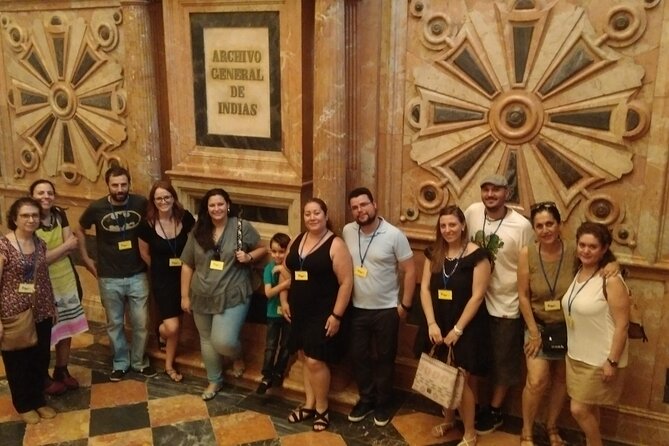
One of the most interesting ideas you’ll take away is that the building’s birth didn’t start as a plan for an archive. The guide explains that the archive’s creation grew out of a conflict between the Cathedral of Seville and the merchants active in the city in the 16th century.
That changes how you think about the place. You’re not just visiting a storage room for paperwork. You’re visiting a building whose purpose and identity were shaped by tension between institutions. When you hear this in context, the archive becomes more than a repository. It becomes a snapshot of how authority worked in early modern Seville—especially as Spain’s global reach connected the city to the Americas.
The tour also covers what the space was used for before it became the Archivo General de Indias. The key point is that the building evolved. So when you look at architecture, rooms, and the idea of preservation, you’ll understand it as a process, not a straight line from idea to institution.
And yes, this is where Rubén shines. He’s known for linking what you see today to what happened back then, without turning it into a dry lecture. The humor helps you keep pace. You end up remembering the story, not just the dates.
Stop by stop: how the 1h45 visit unfolds



The outside walk (about 25 minutes)
This opening segment is your orientation phase. You start at the main façade, then take a brief walk around it to understand the historical relationship between the archive building and the monuments around it—especially the Cathedral and the Alcázar.
What you’ll get from this part:
- a sense of how the archive fits into Seville’s power map
- a clearer picture of why Seville’s institutions mattered to the Americas
- a smoother transition into the interior, because you already know what you’re looking at
This stop is listed with admission included, and it’s designed to take the edge off confusion. You’ll feel like you’re joining the story instead of stumbling into it.
The two-floor guided visit (about 1 hour 20 minutes)
After the orientation, you move inside and spend most of your time on the two floors. The guide focuses on the most important aspects of this UNESCO World Heritage space and explains what makes the Archivo de Indias special beyond its walls.
You’ll hear about the value of what’s kept here—documents of incalculable importance are guarded in this place—and you’ll learn how different uses of the space eventually led to the archive identity you recognize today.
Even without being buried in technical detail, you should come away with a clear mental model:
1) Seville’s global role grew.
2) administration followed.
3) the need to preserve and manage records became urgent.
4) the building’s history shaped how that preservation took form.
What you should do during the walk-through
If you want this to land, do two things:
- Listen for the origin theme (Cathedral vs merchants) and how it explains the building’s existence.
- When the guide mentions objects or unusual stories, treat them like signposts. They’re there to help you remember the bigger administrative picture.
Rubén uses this approach well. The material may be old, but the storytelling structure is modern.
Rubén and the art of keeping a history tour fun
The best thing about this experience is the guide’s ability to hold attention. Rubén’s style comes through in the way explanations are delivered—clear, entertaining, and full of connections. It’s not just facts. It’s the feeling that the past is explainable.
Several parts stand out in how the tour plays:
- he keeps the group moving at a good pace
- he uses humor without turning history into a joke
- he’s good at communicating the importance of the building and the archive concept itself
One detail that people remember is the story involving a trunk with 16 padlocks. That kind of anecdote works because it makes the archive feel real. You picture how serious record-keeping had to be, and why physical security mattered in an age of politics and paperwork.
In a larger group, this kind of guiding is the difference between a tour you tolerate and a tour you actually look forward to.
Price and logistics: is $70 worth your time?
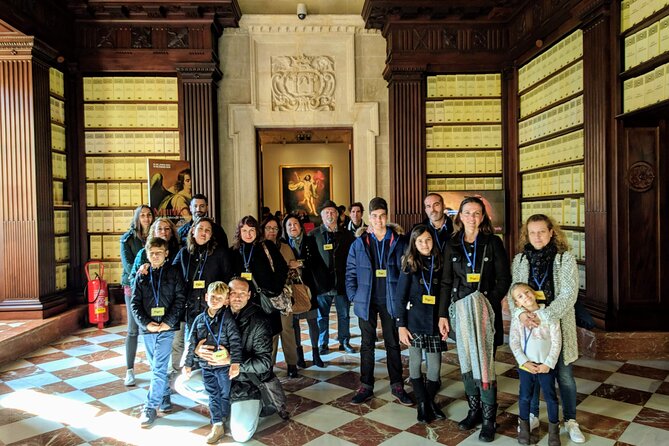
At $70 for about 1 hour 45 minutes, you’re paying for more than entry. You’re paying for a guided visit with a heritage expert, plus access that takes you beyond the façade and into the main interior areas.
Here’s why I think the value works:
- The setting is UNESCO World Heritage, but the real payoff is the context the guide gives.
- You get a structured storyline: origins, evolution of the space, then what the archive role means.
- It’s not a super-short stop. You have enough time to connect ideas, not just snap photos and rush out.
When the $70 feels less worth it is when your goal is only quick architecture viewing. If you’re the type who prefers to wander alone and read placards slowly, you might decide to go self-guided. But if you want the archive story explained in a human way, the tour price starts to make sense fast.
Practical note: you’ll use a mobile ticket, and the group maximum is 25 travelers. That size usually keeps the tour from turning into a stampede, and it helps the guide manage the room.
What makes this archive visit different from a typical museum stop
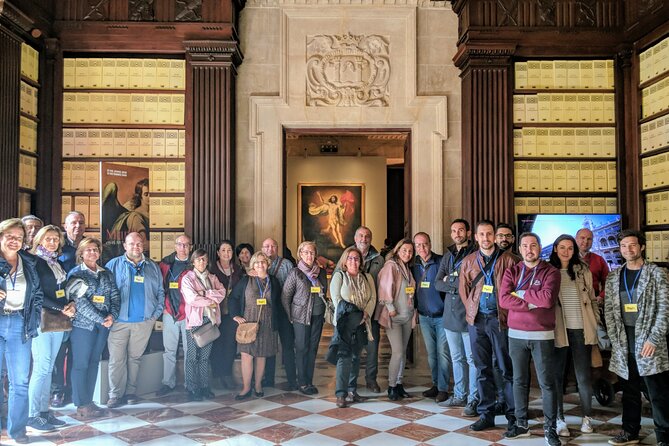
Seville has plenty of beautiful places to see. This one is different because it’s about administration, record-keeping, and how power traveled across the ocean.
When you learn that the building’s purpose was shaped by conflict and civic forces—not invented from scratch as an archive—you start to see documents differently. Records stop being boring. They become evidence of real decisions, real disputes, and real global consequences.
And because you visit both outside orientation and the two-floor interior, you don’t miss the “why.” Many tours just show you objects. This one explains the machinery behind the objects.
That’s also why this tour can work even if you’re not a hardcore history person. The guiding style helps you catch the meaning without needing a background course.
Who should book this tour
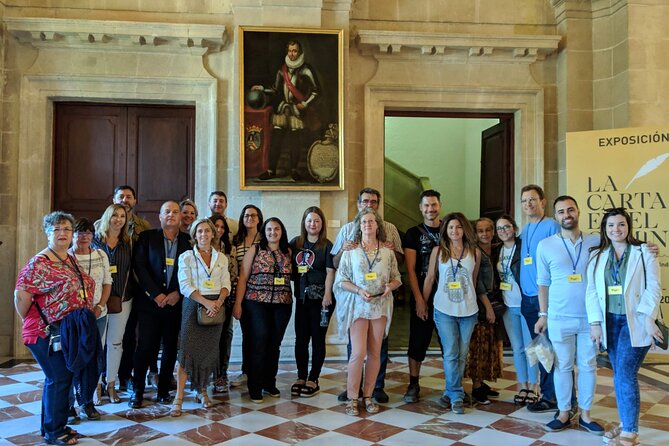
This guided visit is a strong match if you:
- want to understand Seville’s relationship to the Americas in a concrete, place-based way
- like architecture and how buildings connect to politics and daily life
- enjoy a guide who can mix facts with humor
It’s not the best match if you:
- need a kid-friendly format for children under 12 (it’s not recommended)
- expect a silent, self-paced walk (this is a guided experience)
- get impatient with listening and prefer only hands-on interpretation
If you’re visiting Seville and trying to add one “serious” stop that doesn’t feel like homework, this is a good candidate.
Should you book the Archivo de Indias guided visit?
Yes—if you want the full story, not just access. The combination of outside orientation, origin explanation, and the two-floor guided time makes it feel like a complete experience. And with a guide like Rubén, you’ll likely remember more than a list of dates.
Skip it only if your travel style is strictly wander-and-gawk, or if your group includes young kids who can’t sit through a 1h45 narration-heavy visit.
If you’re deciding between a quick stop and a guided one, this is the type of place where guidance adds real value. You’re paying for context in the exact room where the context matters.
FAQ
How long is the guided visit to the Archivo de Indias?
The tour is approximately 1 hour 45 minutes.
How much does the tour cost, and is admission included?
The price is $70, and admission to the attraction is included.
Where do I meet for the tour?
You meet at Archivo de Indias, Av. de la Constitución, s/n, Casco Antiguo, 41004 Sevilla, Spain, and the tour ends back at the meeting point.
Will I receive a ticket on my phone?
Yes, the tour uses a mobile ticket.
Is this tour recommended for children?
It is not recommended for children under 12.
Are service animals allowed?
Yes, service animals are allowed.
What happens if the weather is bad or I need to cancel?
The experience requires good weather. If it’s canceled due to poor weather, you’ll be offered a different date or a full refund. You can cancel for a full refund up to 24 hours in advance; within 24 hours, the amount paid is not refunded.
Let a Guide Take the Strain
- Seville: Cathedral, Giralda & Alcazar Entry With Guided Tour
★ 4.6 · 8,560 reviews - Seville: Alcázar and Cathedral Entry Ticket and Guided Tour
★ 4.6 · 5,056 reviews - Alcázar of Seville Skip-the-Line Tickets and Guided Tour
★ 4.6 · 3,941 reviews - Seville: Alcázar Guided Tour
★ 4.5 · 3,371 reviews - Seville Cathedral and Giralda Tower Guided Tour and Tickets
★ 4.5 · 2,429 reviews
More Tour Reviews in Seville
- Seville: Live Flamenco Dancing Show Ticket at the Theater
★ 4.7 · 16,396 reviews - Seville: Alcázar, Cathedral & Giralda Skip-the-Line Tour
★ 4.8 · 11,525 reviews - Seville: 1-Hour Guadalquivir River Sightseeing Eco Cruise
★ 4.2 · 10,281 reviews - Seville: Setas de Sevilla Entry Ticket
★ 4.6 · 8,901 reviews - Seville: Cathedral, Giralda & Alcazar Entry With Guided Tour
★ 4.6 · 8,560 reviews
Just added to the Seville list






Guided, compared.
 ★ 4.6Cathedral, Giralda & Alcazar Entry With Guided TourFrom $658,560 reviews
 ★ 4.6Alcázar and Cathedral Entry Ticket and Guided TourFrom $785,056 reviews
 ★ 4.6Alcázar of Seville Skip-the-Line Tickets and Guided TourFrom $443,941 reviews
 ★ 4.5Alcázar Guided TourFrom $463,371 reviews
 ★ 4.5Seville Cathedral and Giralda Tower Guided Tour and TicketsFrom $422,429 reviews
 ★ 4.5Cathedral Guided Tour with Priority AccessFrom $442,305 reviews
 ★ 4.3Alcazar Skip-the-Line Guided Tour with TicketsFrom $512,188 reviews
 ★ 4.5Alcázar, Cathedral & Giralda Fast Track Guided TourFrom $802,142 reviews