
Review · CYCLING TOURS
Guided Premium eBike Tour Sevilla | native speakers EN • DE • FR
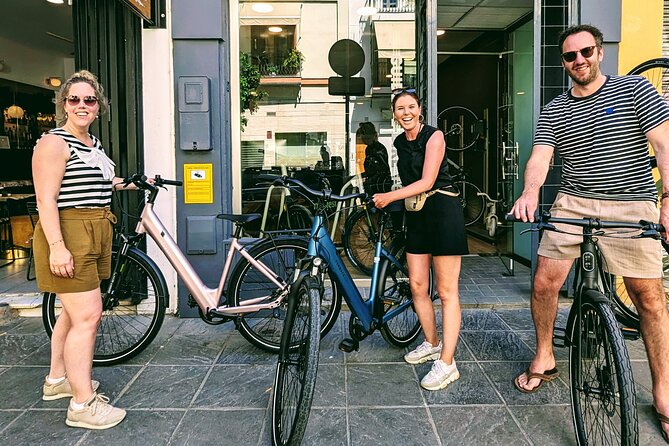
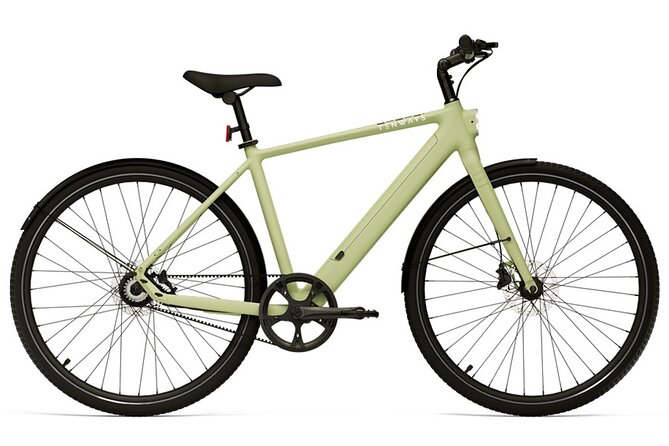
Seville on wheels beats slow sightseeing. This guided premium eBike loop is built for covering serious ground without turning your trip into a leg-day workout. I like that you get high-quality e-bikes made for Seville’s cobblestones, plus a small group (max 12) so the guide can actually pay attention.
The main thing to watch: the stops are short, so you’ll see highlights fast rather than settling in for long, slow time inside every place. If you want hours in one museum, plan extra time on a second day.
You do, however, get a smart mix of monastery calm, big monument energy, and photo-worthy views—plus routes that slip into parts of the historic center where cars can’t go.
In This Review
- Key points to know before you ride
- Why an eBike works so well in Seville
- What you’re really paying for at $46.29
- Your first stretch: Cartuja’s calm and Parque del Alamillo’s green spaces
- Huevo de Colón and Basilica de la Macarena: monuments with meaning
- Setas de Sevilla, Plaza de San Francisco, and the Giralda viewpoint plan
- Real Alcázar: palaces, tiles, and gardens in a tight window
- Parque de María Luisa and Plaza de España: the 1929 spectacle
- Plaza de América and the museum buildings you can’t ignore
- Puente de Isabel II to Triana: ending with a real neighborhood feel
- How the guide can shape the whole experience
- Who should book this eBike tour
- The main drawback to plan around
- Should you book this tour?
- FAQ
- How long is the guided eBike tour?
- What languages are offered?
- How large is the group?
- Are tickets included for the main stops?
- What happens if the weather is bad?
- Can I cancel and get a full refund?
Key points to know before you ride
- Smooth e-bikes for cobblestones: built for traction and comfort when the streets get uneven
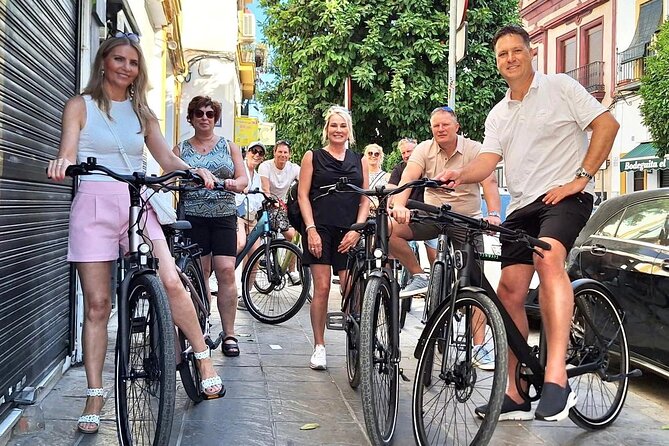
- Max 12 people: easier pacing, more conversation, fewer “where’s the group?” moments
- A route that connects the city: Guadalquivir-area parks, big churches, and the famous plazas
- Views from Setas de Sevilla: the “mushrooms” give you a new angle on the rooftops
- Giralda ramps: you can reach panoramic viewpoints without white-knuckle stairs
- Triana after the monuments: you end with a river crossing and a neighborhood feel
Still deciding? A few more Seville picks worth a look.
- Seville Highlights Bike Tour (English)★ 5.0 · 2,225 reviews
- Seville: Highlights City Bike Tour★ 4.8 · 2,168 reviews
- Seville: Relaxing City Bike Tour with a Tour Guide★ 4.8 · 1,588 reviews
Why an eBike works so well in Seville
Seville is beautiful, but it can also be an unplanned marathon. The old streets are uneven, and walking between major sights can add up quickly. An e-bike turns that problem into a non-issue. You still get the freedom of biking, but you’re not burning energy just to keep moving.
The best part is the “smooth over cobblestones” idea isn’t marketing fluff. When you’re gliding instead of bouncing, you’ll actually enjoy the streets: the courtyards you spot, the sudden sight lines to the Giralda, the way neighborhoods change as you cross a bridge. That matters, because Seville is a city where the in-between moments are a big part of the charm.
Also, you’re not stuck with a huge herd. With up to 12 people, you can stop when something looks interesting, and the guide can keep the group together without rushing. In the reviews, guides like Tom and Marco are repeatedly mentioned for being friendly and for working hard to keep everyone informed and comfortable.
One more reality check: this is still a guided tour with time limits per stop. You’ll get a guided “hit” at each highlight, not a deep, slow dive into one site.
What you’re really paying for at $46.29
At around $46.29 per person for about 2 hours 45 minutes, you’re buying three things: local guidance, a logistics-simplifying ride, and access to major city highlights in one outing.
You’re also paying for the “how” of seeing Seville. A good walking tour can cover highlights, but it forces you to move on foot between far-apart areas. Here, the e-bike does that hard work, so you can spend more energy looking, learning, and taking photos instead of planning every turn.
And since the tour is offered in EN, DE, and FR by native speakers, it’s a relief if your Spanish is basic. You’ll be able to follow the story behind what you’re seeing—especially useful when the city mixes Moorish, Gothic, Renaissance, and Baroque influences.
Your first stretch: Cartuja’s calm and Parque del Alamillo’s green spaces
The tour starts with a “breather,” which I love. You begin at Monasterio de la Cartuja, a former Carthusian monastery that’s now a modern art museum. Even if you’re not hunting for art details, the place gives you a quieter Seville feeling, with history and contemporary culture living side-by-side. It’s also right by the Guadalquivir River, so the atmosphere is cooler and more open than in the tightest historic lanes.
Then you roll into Parque del Alamillo, Seville’s largest urban park. This is a classic change of pace: lakes, big open space, and a calmer ride atmosphere. It’s a good place to reset before the monumental part of the day, and it’s also where you’re likely to notice how the city breathes beyond its famous center.
A small practical note: each of these stops is about 10 minutes, so use it for orientation and quick photos rather than expecting a full museum or wildlife session.
More days made easy by a local guide
Huevo de Colón and Basilica de la Macarena: monuments with meaning
Next comes Huevo de Colón—officially the Birth of a New Man. It’s a tall 45-meter bronze sculpture and Spain’s tallest sculpture. The story is the fun part: it was gifted by Moscow in 1995, and it features Columbus inside an egg-shaped structure, meant to symbolize his voyage. If you like monuments that have a twist (and a backstory you can actually remember), this one works.
The only catch is cost-related. For this stop, admission is not included, so budget time and money if you want to go in. If you don’t, the exterior and the symbolism are still worth a look.
After that, you shift into sacred and ceremonial Seville with Basilica de la Macarena. This neo-Baroque church was completed in 1949 and it houses the revered statue of the Virgen de la Esperanza Macarena. It’s deeply connected to Holy Week processions, especially during the early hours of Good Friday. Even in a short stop, that context helps the building make sense—this isn’t just architecture; it’s tied to living tradition.
Here, admission is listed as included, so you’re not juggling extra ticket planning mid-ride.
Setas de Sevilla, Plaza de San Francisco, and the Giralda viewpoint plan
Now you hit the city’s modern landmark moment: Setas de Sevilla, also called Metropol Parasol. It’s known as the world’s largest wooden structure, shaped like mushroom-like canopies. When you arrive, the scale is the wow factor, and the observation deck gives you a panoramic perspective that Seville tours often struggle to deliver quickly.
Under the structure, there’s the Antiquarium, an archaeological museum showing Roman and Moorish ruins uncovered during construction. Even if you don’t go deep, it’s a reminder that Seville keeps layering time on top of time.
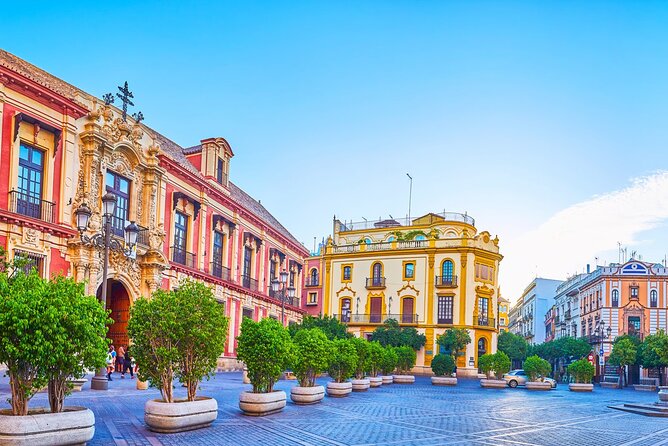
Then you glide to Plaza de San Francisco, right in the historic center. The square is named for the San Francisco church around its edges, and it frames the big visual story of Seville: impressive civic buildings, church power, and the Giralda in the distance. The tour also points out the Renaissance-style City Hall, which was originally a Franciscan convent and now serves civic functions.
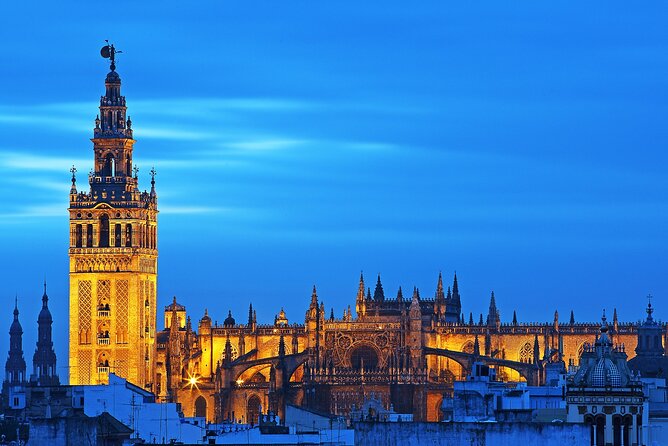
After the square, it’s cathedral time at Catedral de Sevilla—built on the former Great Mosque of Seville. This is the Gothic giant with a UNESCO World Heritage label and the reputation of being the largest cathedral in the world. Construction started in the 15th century and stretched for over a century, so you’re looking at a long project, not a quick build.
The star for practical reasons is the Giralda. It used to be the minaret of the mosque, and you can ascend ramps designed for horseback riders. That ramps detail is not just trivia—it changes the experience from steep-climb stress to steady pacing. From up top, you get the kind of Seville skyline view that makes every uphill street feel worth it.
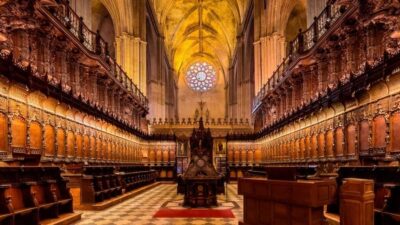
Inside, you’ll also hear about the Capilla Mayor and the altarpiece created by sculptor Pieter Dancart and painter Alejo Fernández, plus the Tomb of Christopher Columbus.
All in all, this part of the day feels like the tour earning its keep: you go from street level to major monuments to a view, without turning it into a separate ticket-and-tram day.
Real Alcázar: palaces, tiles, and gardens in a tight window
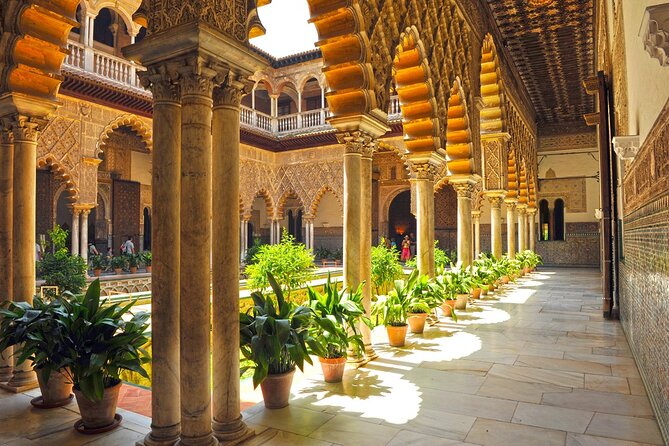
Then you arrive at Real Alcázar de Sevilla, the palace complex that mixes Moorish, Gothic, Renaissance, and Baroque styles. If you’ve ever wondered how Seville can look both ornate and elegant at the same time, this is where that contrast lives.
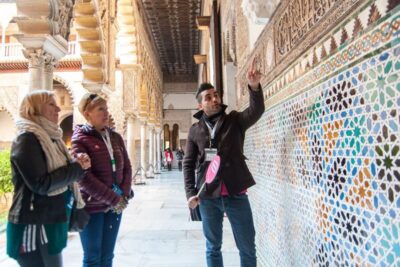
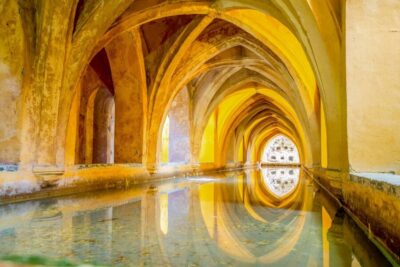
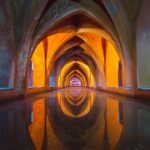
In a short visit, you’ll still get the core “wow” elements: intricate tilework, decorative stucco details, and gardens filled with fountains and orange trees. The tour highlights the Palacio de Don Pedro, known for stunning Mudejar architecture and the Hall of Ambassadors, with a dome and intricate wooden ceilings. You’ll also get a look at the Baths of Maria de Padilla, an underground chamber with vaulted ceilings and reflecting pools.
The reality of short stops applies here too. You won’t do everything like you would on an all-day palace ticket plan. But you will leave with a clear mental map of what to return for if one area pulls you in.
Parque de María Luisa and Plaza de España: the 1929 spectacle
After the cathedral-heavy segment, the tour shifts to comfort: Parque de María Luisa, Seville’s largest and most loved public park, named after Infanta María Luisa Fernanda. This is where the city’s gentler side shows up—palm trees, fragrant orange groves, flower beds, and paths designed with a 19th-century park layout in mind.
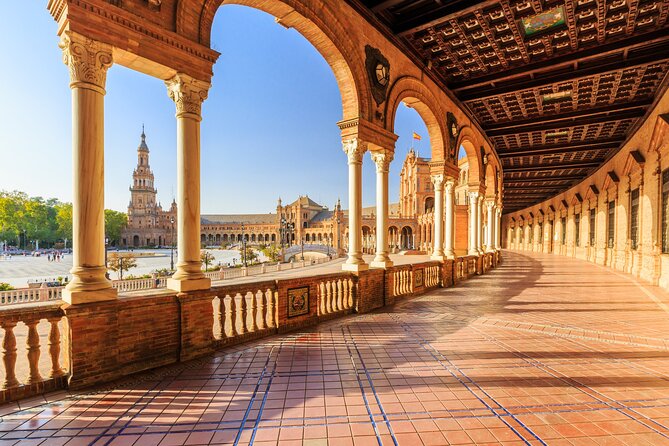
A highlight inside this phase is the walk toward Plaza de España. This is the Ibero-American Exposition showpiece from 1929, famous for its semi-circular design. A central canal represents the Guadalquivir River, and the plaza’s towers, ceramic tilework, ornate bridges, and tiled alcoves turn it into a photo machine.
If you like symbolic design, the plaza has one built in: the semi-circle layout is described as Spain embracing its former colonies. You’ll also see province-themed ceramic motifs on the facade, and plenty of smaller details for close-up looking.
Time matters here. Plaza de España is given 20 minutes, which is enough to appreciate the big shape, get key photos, and understand the design. It’s not enough for slow wandering at every corner, so treat this as a “see it well, then decide if you want a longer return.”
Plaza de América and the museum buildings you can’t ignore
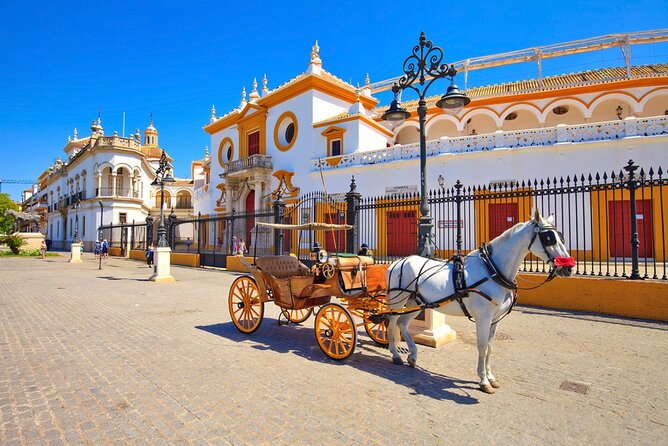
You also stop at Plaza de América within Parque María Luisa. The center point is the Palacio de las Artes y la Industria, built for the 1929 exhibition, with a mix of Moorish and Renaissance Revival styles and prominent tilework.
The stop also references two museum spaces nearby: the Museum of Popular Arts and Traditions and the Archaeological Museum of Seville. Since the time is brief, you’re mainly getting the setting and the idea of what’s housed there, not a full museum visit.
This is a good moment to decide how you want to use your own time later. If anything stands out—traditional crafts, archaeology, specific artifacts—this stop helps you know where to focus if you come back.
Puente de Isabel II to Triana: ending with a real neighborhood feel
Finally, you cross Puente de Isabel II, sometimes called the Triana Bridge. It spans the Guadalquivir River and connects Triana with the historic center. Built in the late 19th century, it’s an engineering and design landmark with graceful arches and ironwork that nods to Moorish influence.
The best payoff is that it lands you in the mood of Triana, a neighborhood known for flamenco tradition and lively street life. The tour specifically points you toward Calle Betis, where you’ll find colorful houses plus tapas bars and cafes—useful guidance if you want your evening to feel local, not just touristy.
This final leg is also why a bike tour feels good for Seville. You don’t just end at a landmark and call it done. You end with a neighborhood connection.
How the guide can shape the whole experience
This tour is only as good as the guide, and in the reviews the guides like Marco and Tom come up again and again. What I like about their style, based on what they’re praised for, is practical help beyond the script.
People describe them as kind, helpful, and willing to adjust when the group situation changes. There’s also mention of guides making contingency plans—for example, if routes were disrupted due to Easter parades. That kind of planning matters in Seville, because the city calendar can change what you can ride and when.
And beyond sightseeing, you can get real food and planning advice. One review notes that a guide helped arrange a reservation at a small neighborhood restaurant after recommending where to eat. If you want your trip to taste like Seville—not just see it—guides who share local picks are a big deal.
Who should book this eBike tour
I’d book this if you want:
- A fast, guided way to hit major Seville highlights in one outing
- Less leg fatigue on cobblestones without giving up city immersion
- A small-group feel (max 12) and a chance to ask questions in EN/DE/FR
I might skip it (or treat it as day one only) if you:
- Want to spend long hours inside one palace or church
- Get impatient with short stops and prefer slow, unstructured wandering
Because the ride is designed to cover a lot, it works best for travelers who like a paced route and then want to return on their own to what grabbed them most.
The main drawback to plan around
The biggest downside is time. With stops running about 5 to 20 minutes, you’ll get an overview and guided context, but not full, slow exploration. That’s not bad—just honest.
If you’re the type who likes to read every plaque and sit in every chapel corner, you’ll want extra time later. Treat this as the part that helps you understand the city’s big “map,” then you choose your follow-up.
Should you book this tour?
Yes, if you want an efficient, well-paced way to see Seville’s signature places without spending the day walking between them. The e-bike comfort, the small-group size, and the mix of monuments and parks make it an easy “first Seville day” choice.
Book it with confidence if you’re also okay with short stops and you plan to return for deeper time at the sites that pull you in. If weather is iffy, keep an eye on the day-of conditions since the experience requires good weather.
If your goal is to get your bearings fast, meet Seville’s major sights, and still have energy left for dinner and wandering afterward, this is a strong pick.
FAQ
How long is the guided eBike tour?
It runs for about 2 hours 45 minutes.
What languages are offered?
The tour is offered with native speakers in English, German, and French.
How large is the group?
The tour has a maximum of 12 travelers.
Are tickets included for the main stops?
Most stops are listed as free or included in the experience, but admission for Huevo de Colón is not included. Basilica de la Macarena is listed as included.
What happens if the weather is bad?
This experience requires good weather. If it’s canceled due to poor weather, you’ll be offered a different date or a full refund.
Can I cancel and get a full refund?
Yes. You can cancel up to 24 hours in advance for a full refund. If you cancel less than 24 hours before the start time, the amount paid is not refunded.
Seville by Bike
- Seville Highlights Bike Tour (English)
★ 5.0 · 2,225 reviews - Seville: Highlights City Bike Tour
★ 4.8 · 2,168 reviews - Seville: Relaxing City Bike Tour with a Tour Guide
★ 4.8 · 1,588 reviews - Seville: City Sightseeing and Local Culture Bike Tour
★ 4.9 · 1,120 reviews - Seville Electric Bike Tour – Small Group
★ 5.0 · 841 reviews
More Tours in Seville
- Seville: Alcázar, Cathedral & Giralda Skip-the-Line Tour
★ 4.8 · 11,525 reviews - Seville: Cathedral, Giralda & Alcazar Entry With Guided Tour
★ 4.6 · 8,560 reviews - Seville: Priority Access Cathedral, Giralda & Alcázar Tour
★ 4.8 · 7,563 reviews - Seville: Alcázar and Cathedral Entry Ticket and Guided Tour
★ 4.6 · 5,056 reviews - Seville: City Sightseeing Hop-On Hop-Off Bus Tour
★ 4.0 · 4,633 reviews
More Tour Reviews in Seville
- Seville: Live Flamenco Dancing Show Ticket at the Theater
★ 4.7 · 16,396 reviews - Seville: Alcázar, Cathedral & Giralda Skip-the-Line Tour
★ 4.8 · 11,525 reviews - Seville: 1-Hour Guadalquivir River Sightseeing Eco Cruise
★ 4.2 · 10,281 reviews - Seville: Setas de Sevilla Entry Ticket
★ 4.6 · 8,901 reviews - Seville: Cathedral, Giralda & Alcazar Entry With Guided Tour
★ 4.6 · 8,560 reviews
Just added to the Seville list


Cycling Tours, compared.
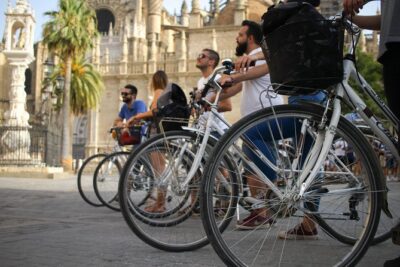 ★ 5.0Seville Highlights Bike Tour (English)From $422,225 reviews
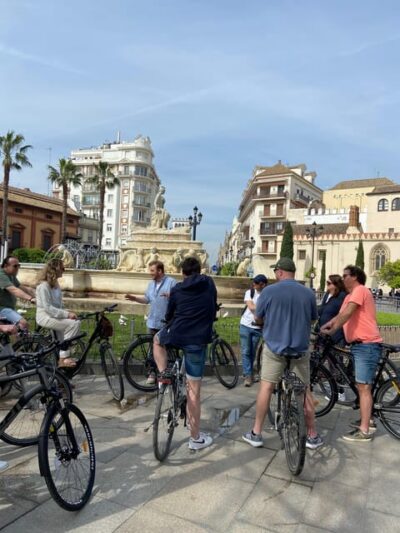 ★ 4.8Highlights City Bike TourFrom $382,168 reviews
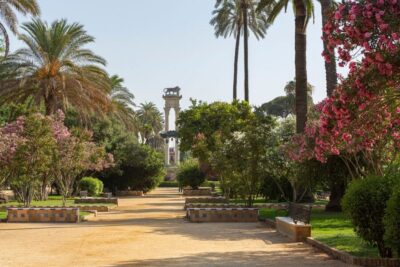 ★ 4.8Relaxing City Bike Tour with a Tour GuideFrom $351,588 reviews
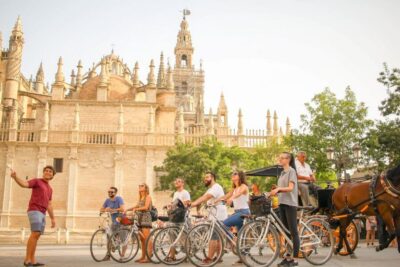 ★ 4.9City Sightseeing and Local Culture Bike TourFrom $311,120 reviews
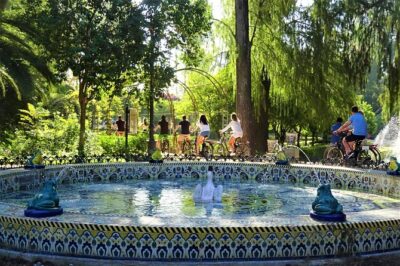 ★ 5.0Seville Electric Bike Tour – Small GroupFrom $58841 reviews
 ★ 4.8Guided Tour by Electric BikeFrom $50712 reviews
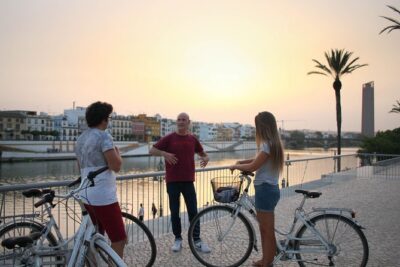 ★ 5.0Sunset Guided Bike Tour in SevilleFrom $36438 reviews
 ★ 4.9Guided Sunset Bike TourFrom $41332 reviews
Browse the lists this tour appears in