
Review · FLAMENCO IN SEVILLE
Flamenco Behind The Scenes: Sit in on a Rehearsal in Seville
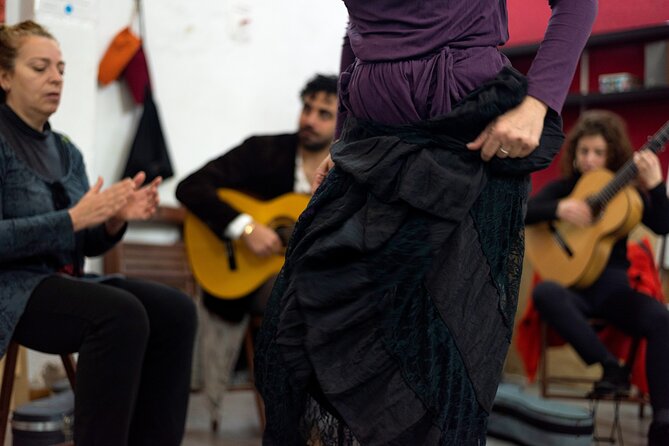
Flamenco hits harder when you sit inside it. This is an up-close rehearsal in Seville’s old artisan area, where dancers, guitarists, and a singer work the footwork and songs as they build them. I love how the floor vibrates when the rhythm locks in, and you’re right there for the energy and the small, real moments that never make it into a stage show.
I also like the way the artists explain what they’re doing while it’s happening. You’ll get guidance in English, Spanish, Dutch, or French, and you can ask questions so the music and movement actually start to make sense.
One caution: this is not a polished performance with costumes and makeup. If you’re expecting a full theater-style show, the no-stage, no-costume setting might feel a bit more raw than you want.
In This Review
- Key points you’ll notice fast
- Plaza San Marcos to a studio workshop vibe
- What you’re actually sitting in on: dancers, guitar, and song
- Up-close flamenco means you feel it in your body
- How the explanations work (and why you should ask questions)
- The language mix: English, Spanish, Dutch, French
- Group size of 6 to 8: the upside and the tradeoff
- Price and value: a low-cost ticket for the real craft
- What to expect from the flow of the hour
- Who this fits best (and who might prefer something else)
- Practical tips so you enjoy every minute
- Weather check: plan around it
- Should you book Flamenco Behind The Scenes in Seville?
- FAQ
- Where does the tour start?
- How long is Flamenco Behind The Scenes?
- What will I see during the rehearsal?
- What languages are the explanations available in?
- How big is the group?
- Is the rehearsal location easy to reach?
- What happens if the weather is bad?
Key points you’ll notice fast
- A short walk from Plaza San Marcos to a rehearsal studio tucked off the beaten path
- Rehearsal, not a show: no makeup, no costumes, no stage
- Small group size (max 6 to 8) for real eye contact and real questions
- Multilingual explanations (English, Spanish, Dutch, French) during and before the practice
- You hear and see the full triangle: singing, guitar, and dancing in the same room
- High-energy, spontaneous work as artists search for the right moment together
More nights of guitar and heel on the boards
- Seville: Live Flamenco Dancing Show Ticket at the Theater★ 4.7 · 16,396 reviews
- Seville: Puro Flamenco Show with Optional Museum Ticket★ 4.8 · 6,088 reviews
- Seville: Live Flamenco Show at “Teatro Flamenco Triana”★ 4.6 · 3,290 reviews
Plaza San Marcos to a studio workshop vibe
Your experience starts at Plaza San Marcos in the Casco Antiguo (old town) area of Seville. From there, you’ll follow the group to a rehearsal studio that’s just about a two-minute walk away. The catch is it’s not on the main tourist route, so you’ll feel like you’ve slipped into a working corner of the city rather than a prepared attraction.
This tiny transfer matters more than it sounds. In an hour-long experience, you want the time spent in the room actually watching the craft happen, not losing it on logistics. And because the studio is nearby, you can arrive calm, settle in quickly, and focus on what the artists are building.
What you’re actually sitting in on: dancers, guitar, and song
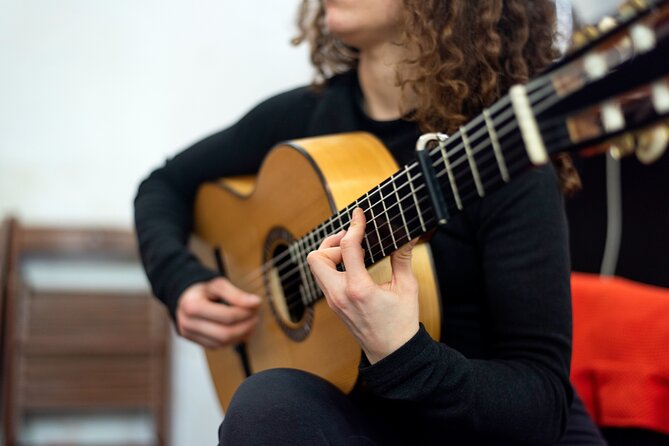
You’ll be watching a rehearsal with a group that includes flamenco dancers, guitarists, and a singer. They work together on their compositions—footwork, choreographies, singing, and more—so the session feels like creative problem-solving rather than a finished routine.
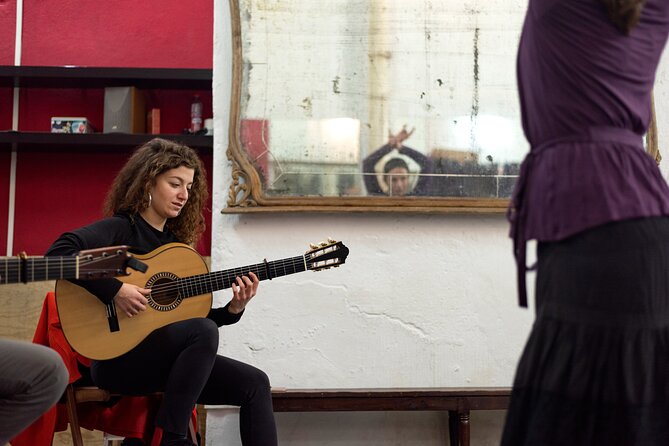
The room setup is part of the experience. It’s an authentic flamenco studio in an old artisan quarter, and you’ll see it without costumes, makeup, or a stage separating performers from audience. That means you’re not only listening—you’re also watching how they communicate through rhythm, timing, and body cues.
I like that the pacing stays active. Rehearsals don’t always mean sitting still; you’ll see the group adjust and test things, then lock into a moment that suddenly sounds and looks right. That’s the real value here: you get the “in-progress” version of flamenco, which is often where the most personality shows up.
Up-close flamenco means you feel it in your body
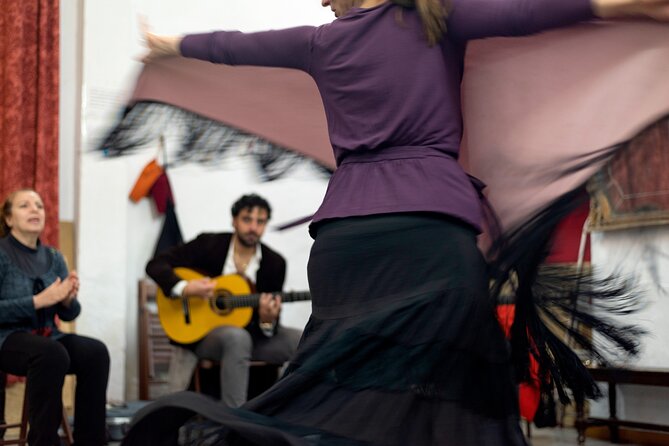
In many flamenco experiences, you get a distant view and a clean audio setup. Here, you get something different: no barrier, no stage, and you can feel the intensity through movement and sound. The floor vibrating is not a metaphor. When footwork lands in the same pattern the guitarist and singer are shaping, the whole space responds.
Also, the session is described as full of spontaneity. That matters because flamenco isn’t just about executing steps—it’s about reacting in real time. When artists adjust tempo, emphasize a rhythm, or change how long they hold a note, you see the decision-making happen in front of you.
You’ll probably notice details you’d miss in a show setting. Even if you’ve seen flamenco before, watching the rehearsal version helps you understand how much of the dance is timing with the guitar and voice, not just a sequence of moves.

How the explanations work (and why you should ask questions)
Before the rehearsal and during it, the artists provide explanations so you’re not left guessing. They share context about rhythms and styles in flamenco, and they talk about how singing, guitar, and dancing interact as the group works.
This is also where the experience becomes personal. You’re welcome to ask questions, and because the group is small (max 6 to 8 people), your questions won’t get swallowed by the crowd noise. If you’re curious about why a particular rhythm changes, or how a dancer “reads” the guitarist, this is the moment to ask.
I’d treat questions like part of the ticket value. If you ask one or two good ones, the hour turns into more than entertainment—you leave with a clearer sense of what you just watched and how it’s constructed.
The language mix: English, Spanish, Dutch, French
The explanations are available in English, Spanish, Dutch, or French, depending on the session. That’s a big plus in Seville, where a lot of performances assume you either already know the language or you’re there purely for the vibe.
In practice, this matters for understanding rhythm and structure. You can hear flamenco and still miss the meaning if you don’t catch the names of patterns or what changes between styles. Having explanations in your language makes it easier to follow the “why,” not just the “what.”
If you’re the type who learns by asking, you’ll likely enjoy this format. Being able to communicate directly helps you turn vague curiosity into actual comprehension.
Group size of 6 to 8: the upside and the tradeoff
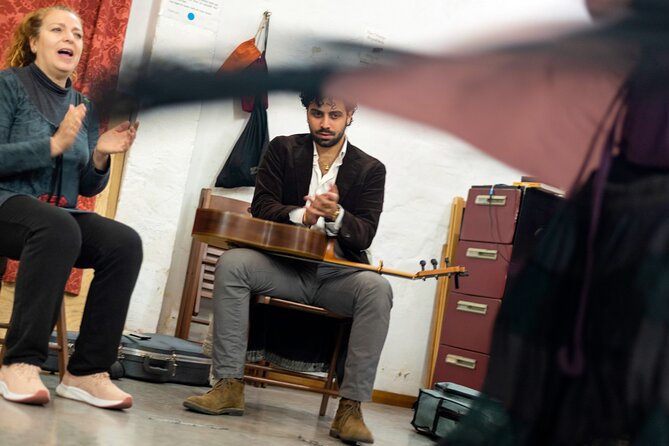
A maximum of 8 travelers (and often fewer) is the whole point of doing this behind the scenes. In a studio, even small differences in where you sit can change your view of footwork, hand motion, and who’s leading the rhythm at a given moment. Smaller groups make those details easier to catch.
The tradeoff is simple: there’s limited space. If you want your best chance at a seat, book ahead and don’t wait for the last minute. Also, because you’re so close, you’ll want to be comfortable with the intensity of a rehearsal space—this is not quiet museum viewing.
For me, that’s exactly why it’s worth it. Flamenco energy doesn’t translate well through distance. Here, you’re part of the room.
Price and value: a low-cost ticket for the real craft
At $17.36 per person for about one hour, this is priced like a small cultural experience rather than a big show. That’s the value angle. You’re not paying for a stage production machine; you’re paying for access to the working side of flamenco—dancers, guitarists, and a singer rehearsing together.
You also get explanation time and question time, which can turn a “watch and forget” evening into one where you learn what you’re seeing. Even if your Spanish is basic, the offered language options and the artist explanations make the learning part practical, not theoretical.
If you’re traveling on a budget, it’s a strong choice. If you’re not on a budget, it’s still a good one because it feels different from the typical flamenco dinner package. This is nearer to craft and conversation than a scripted entertainment block.
What to expect from the flow of the hour
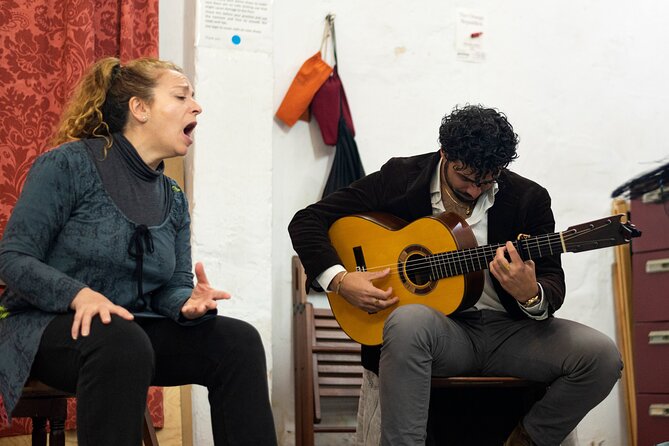
The overall experience lasts about 1 hour. You’ll meet at Plaza San Marcos, then move to the rehearsal studio nearby. Once inside, you sit close while the group practices—footwork, choreographies, singing parts, and guitar lines—while explanations happen before and throughout.
You can expect moments where the artists repeat something, adjust it, and then try again. That might sound boring on paper, but in flamenco it’s how they find the right feel. When it clicks, you’ll feel it in the room.
There’s no mention of formal breaks or long lecture segments. The session is described as high energy and spontaneous, so it’s best to think of it as a living rehearsal rather than a classroom.
Who this fits best (and who might prefer something else)
This works especially well if you:
- Want an authentic studio experience in Seville rather than a stage show
- Like explanations and having a chance to ask questions
- Enjoy seeing how art is made, not just how it looks finished
- Prefer small groups
It may be less ideal if you:
- Only want a fully staged performance with costumes and makeup
- Need a lot of downtime in your schedule (this is active and close-up)
If you’ve already seen flamenco and want a fresh angle, this is a smart follow-up. Rehearsals show how difficult and precise the work is—without the protective layer of theater lighting and final polish.
Practical tips so you enjoy every minute
Keep your expectations aligned: you’re there to watch practice. That mindset helps you appreciate the repetition and experimentation instead of waiting for a “best-of” performance moment.
Arrive a few minutes early so you can find the studio calmly. The meeting point is Plaza San Marcos, and the walk to the studio is short, but off-the-beaten-path spots can still take a moment to locate if you’re rushing.
Wear comfortable shoes. You’ll be sitting close and staying engaged for about an hour, and you’ll likely feel the rhythm more when you’re comfortable.
Finally, if you’re tempted to keep quiet, don’t. The experience is set up so you can ask questions. One good question can make the whole hour click.
Weather check: plan around it
The experience needs good weather. If it’s canceled due to poor conditions, you’ll be offered a different date or a full refund. That’s worth factoring in if you’re scheduling your Seville day tightly.
Because it’s only about an hour, weather risk is less disruptive than with longer tours—but it’s still something to keep in mind.
Should you book Flamenco Behind The Scenes in Seville?
Yes, you should book if you want flamenco with context, up-close energy, and a small-group feel. For the price, you’re getting studio access, explanations in multiple languages, and the chance to ask questions while dancers, guitarists, and a singer work through the music in real time.
Skip it only if you’re mainly chasing a polished show with costumes and makeup. If you can enjoy something more raw and more human—where you see how artists search for the right moment—this rehearsal-style experience is exactly the kind of Seville stop that turns into a story you’ll tell later.
FAQ
Where does the tour start?
It starts at Plaza San Marcos, Casco Antiguo, 41003 Sevilla, Spain, and it ends back at the meeting point.
How long is Flamenco Behind The Scenes?
It lasts about 1 hour.
What will I see during the rehearsal?
You’ll watch a rehearsal with flamenco dancers, guitarists, and a singer working on compositions, footwork, choreographies, and singing.
What languages are the explanations available in?
Explanations are available in English, Spanish, Dutch, or French.
How big is the group?
The experience allows a maximum of 6 to 8 people.
Is the rehearsal location easy to reach?
Yes, it’s a nearby two-minute walk from the meeting point and it’s described as near public transportation.
What happens if the weather is bad?
It requires good weather. If it’s canceled due to poor weather, you’ll be offered a different date or a full refund.
More Tour Reviews in Seville
- Seville: Live Flamenco Dancing Show Ticket at the Theater
★ 4.7 · 16,396 reviews - Seville: Alcázar, Cathedral & Giralda Skip-the-Line Tour
★ 4.8 · 11,525 reviews - Seville: 1-Hour Guadalquivir River Sightseeing Eco Cruise
★ 4.2 · 10,281 reviews - Seville: Setas de Sevilla Entry Ticket
★ 4.6 · 8,901 reviews - Seville: Cathedral, Giralda & Alcazar Entry With Guided Tour
★ 4.6 · 8,560 reviews
Flamenco, One More Night
- Seville: Live Flamenco Dancing Show Ticket at the Theater
★ 4.7 · 16,396 reviews - Seville: Puro Flamenco Show with Optional Museum Ticket
★ 4.8 · 6,088 reviews - Seville: Live Flamenco Show at “Teatro Flamenco Triana”
★ 4.6 · 3,290 reviews - Seville: Flamenco Show Ticket at Tablao Flamenco Las Setas
★ 4.8 · 2,214 reviews - Authentic Flamenco Show with Tapas & Wine Guided Tour
★ 5.0 · 1,476 reviews
Just added to the Seville list


Flamenco in Seville, compared.
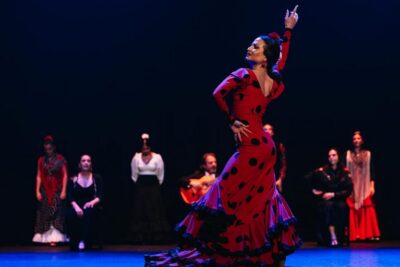 ★ 4.7Live Flamenco Dancing Show Ticket at the TheaterFrom $2716,396 reviews
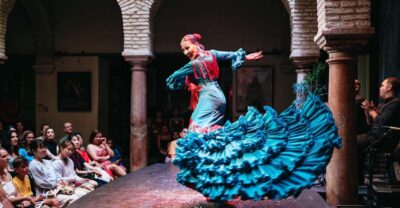 ★ 4.8Puro Flamenco Show with Optional Museum TicketFrom $346,088 reviews
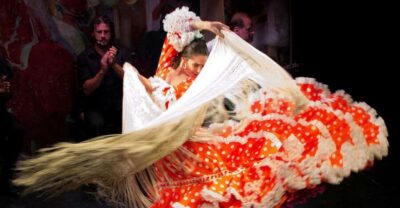 ★ 4.6Live Flamenco Show at “Teatro Flamenco Triana”From $283,290 reviews
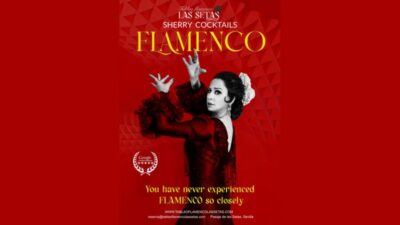 ★ 4.8Flamenco Show Ticket at Tablao Flamenco Las SetasFrom $332,214 reviews
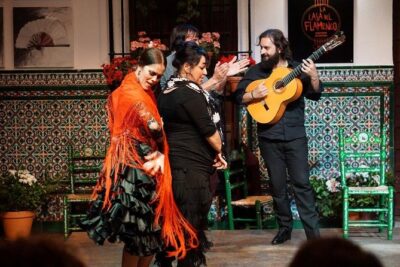 ★ 5.0Authentic Flamenco Show with Tapas & Wine Guided TourFrom $951,476 reviews
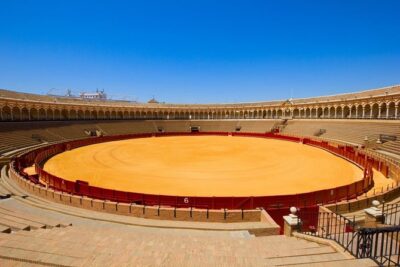 ★ 4.5Flamenco Show at Tablao El Arenal with Drink and Optional Dinner or TapasFrom $591,415 reviews
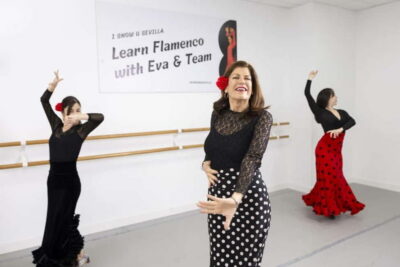 ★ 4.9Flamenco Dance Class with Optional CostumeFrom $331,350 reviews
 ★ 4.5Ticket to Flamenco Show at La Casa de la GuitarraFrom $231,321 reviews
Browse the lists this tour appears in