
Review · SEVILLE OLD TOWN WALKS
Enchanted Seville Walking Tour
Night stories in Seville hit different. This 2-hour evening walk starts at Plaza del Triunfo and threads together legends, history, and cultural change in a way that feels like you’re walking with the city’s memory instead of reading it off a plaque.
I especially like two things: the stop-by-stop storytelling through the Judería (Seville’s old Jewish quarter) and the way the route adds texture with eerie house tales, then pivots into real street history right down to the Roman column area and the streets tied to Cabeza del Rey Don Pedro. A good guide helps a lot here, and names like Valentine and Emilio come up for a reason—clear answers, a friendly vibe, and genuine effort to keep the pace fun.
One drawback to consider: while the tour is listed as about 2 hours, the walk can be adjusted (like ending in a different spot or running shorter), so if you’re trying to line up a tight night schedule, give yourself a little buffer.
In This Review
- Key highlights you’ll care about
- Plaza del Triunfo at night: the 1755 earthquake, the square’s name, and three buildings
- The Judería route: Patio de Banderas, Doña Elvira, Susona, Alfaro, and Calle Aire
- Why the Judería stops feel valuable
- Calle Mármoles and the Roman columns: when the past shows up in plain sight
- A quick reality check
- Plaza de la Alfalfa and Alfalfa: underground passages and Muslim-period shops
- Las Setas at Plaza de la Encarnación: finishing with modern Seville
- Price, pace, and logistics that actually affect your night
- Guide style: why Valentine and Emilio’s names keep popping up
- Should you book the Enchanted Seville Walking Tour?
- FAQ
- How long is the Enchanted Seville Walking Tour?
- Where does the tour start?
- What languages are available?
- What’s included in the price?
- Is food or drinks included?
- Is the tour accessible for wheelchair users?
Key highlights you’ll care about
- Plaza del Triunfo earthquake legend: why the square matters after the 1755 Lisbon earthquake was felt in Seville
- Judería street walkthrough: narrow lanes, small squares, and stories tied to life there from 1248 onward
- Haunted-house atmosphere: ghostly local legends told with enough context to make them land
- Calle Mármoles and Roman columns: a quick hit of older layers you can spot on the street
- Alfalfa underground passages: Muslim-period history you can connect to what’s around you
- Las Setas at Plaza de la Encarnación: ending with a modern landmark in the middle of everything
Seville on foot, a few more walks
- Seville: Small-Group City Highlights Walking Tour★ 5.0 · 1,204 reviews
- Cultural Walking Tour of Seville Monumental★ 5.0 · 861 reviews
- Seville: Tapas, Taverns, and History Walking Tour★ 4.9 · 676 reviews
Plaza del Triunfo at night: the 1755 earthquake, the square’s name, and three buildings
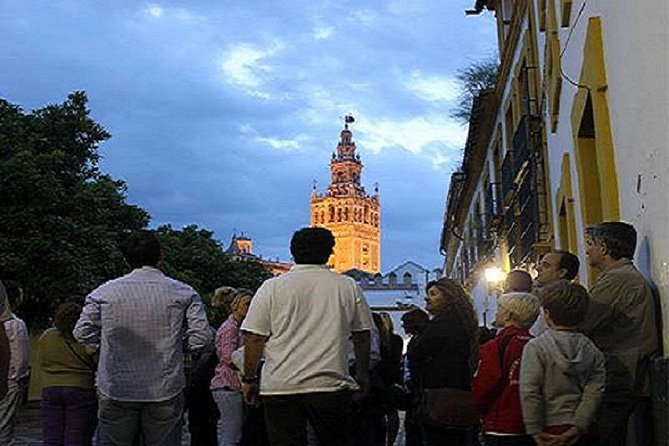
The tour begins where Seville likes to do big history up close: Plaza del Triunfo, at the Immaculate statue. This is a smart starting point because the square isn’t just pretty at night—you get a reason for its importance early on, before you even move one street over.
You’ll hear how the 1755 Lisbon earthquake was felt in Seville, and how that event fed into the square’s identity. That matters because the rest of the walk works like a chain: one moment of shock, then centuries of rebuilding, reshaping, and reinterpreting.
You’ll also get the story behind the square’s name and the history of three different buildings you’ll find around it. Even when you’re not taking photos, this is the moment where you start noticing details you’d normally walk past: where a building sits, how the street lines up, and why the same place can hold multiple eras without looking like a museum.
Practical note: it’s a night walk, so watch your footing when you’re settling in at the start. Comfortable shoes are non-negotiable here, since the tour is built as steady walking for about two hours.
The Judería route: Patio de Banderas, Doña Elvira, Susona, Alfaro, and Calle Aire
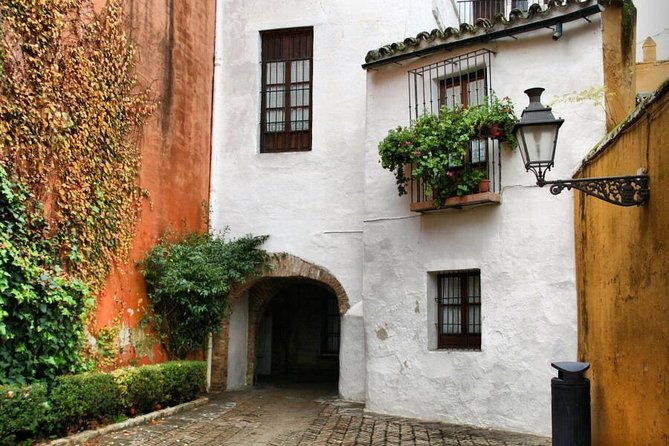
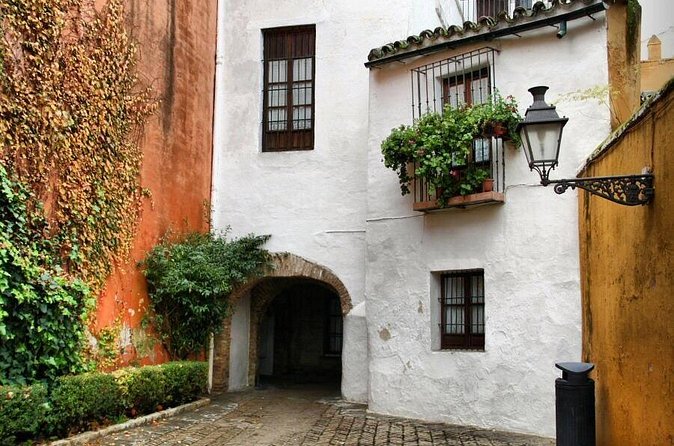
After the opening square, the walk slides into Seville’s old lanes, known as the Judería. This is where the tour’s “enchanted” vibe really earns its name. You’re not just hearing generic medieval facts—you’re getting a cultural timeline built into street corners and small open spaces.
One of the first stops is Patio de Banderas. It’s brief, but it sets the rhythm: short pieces of context, then move on so you’re always connecting the story to a place. From there you’ll work through a sequence of squares and streets that are easy to miss on your own, including Plaza de Doña Elvira, Calle Susona, and Plaza de Alfaro.
What I like about this part is the tour treats these places like lived-in environments, not just “points of interest.” You’ll hear about happenings linked to the community there from 1248 until now, which gives you a sense of continuity—even when the city’s rulers and cultures changed around it.
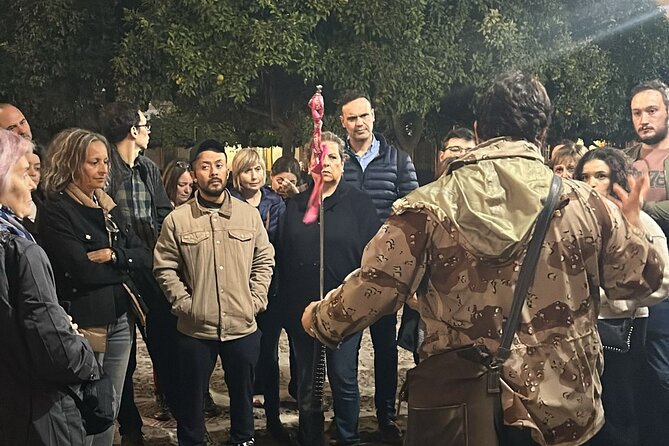
Then comes the side of the Judería that feels like Seville at night: stories tied to haunted houses. You’re not asked to suspend reality and join a séance. Instead, the legends are explained in a way that turns “spooky” into local color you can use to read the neighborhood. If you’ve ever wondered why certain alleys feel tense after dark, this is the answer, told through old narratives.
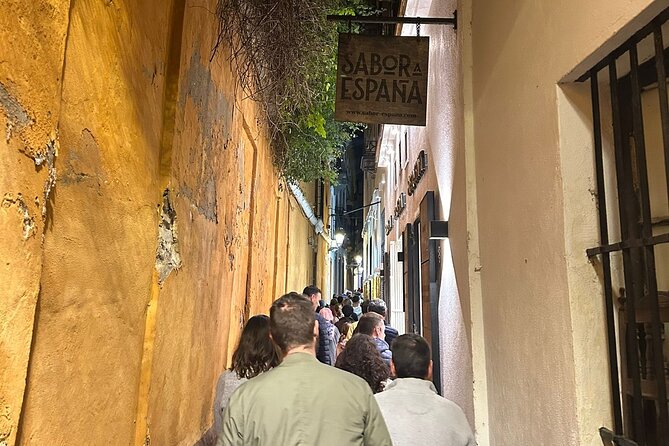
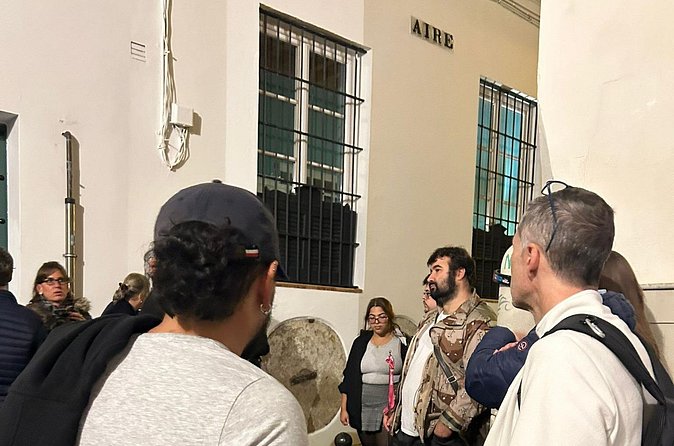
A later stop along the way is Calle Aire, with a slightly longer guided moment. That extra time is often helpful here because it’s the type of street where you can physically feel why legends might stick: narrowness, shadows, and the way sound carries differently when streets pinch together.
Why the Judería stops feel valuable
If you only see Seville in daylight, you’ll still catch beauty—but you’ll miss the way the city communicates at night. The Judería portion helps you understand Seville as a layering city: Jewish life, later transformations, and the way stories keep getting retold. It’s also the part of the route where a good guide makes the biggest difference, because the tour lives in interpretation—turning architecture and geography into meaning.
Still deciding? A few more Seville picks worth a look.
Calle Mármoles and the Roman columns: when the past shows up in plain sight
Once the Judería portion winds down, you head toward calle Mármoles, where you’ll see the Roman columns area. This is a nice pivot because it changes the texture of what you’re hearing. Instead of focusing mostly on legends and community stories, the guide points your attention to something physical and older—Roman elements that belong to a different chapter of the city.
The stop is designed to be quick (about 10 minutes), but the payoff is in training your eyes. After a couple of stops in the Jewish quarter, you’ll start noticing how the city reuses space and materials across time. You’ll also appreciate why Seville never feels “one-layer only.” Even when you think you’re looking at medieval streets, you’re actually looking at the result of many rebuilds.
The tour then continues to Calle Cabeza del Rey Don Pedro, where you’ll hear the incredible story connected to that street. Again, the theme is street-level history—how a name can carry a narrative, and how walking can make that narrative feel more believable. A street name isn’t just a label; it’s a footnote to power, conflict, or myth-making.
A quick reality check
Roman fragments and street legends won’t replace museum time. But they can do something museums sometimes can’t: show you how history is woven into daily movement—where you stand, what you can see from the corner, and how a city’s identity hides in ordinary routes.
Plaza de la Alfalfa and Alfalfa: underground passages and Muslim-period shops
Next you reach Plaza de la Alfalfa, and the tour’s focus shifts again—this time toward Alfalfa and what’s happening below street level. You’ll hear about underground passages and the idea of small shops created during the Muslim period.
This section is valuable because it makes the neighborhood feel three-dimensional. You’re not just reading about Islamic-era Seville as a chapter in a textbook. You’re connecting it to actual urban features and how commerce and movement shaped the area.
The underground passage element is also what gives the walk some of its “watch your step” energy. You’ll be thinking about what might be under your feet, and that changes the whole experience. It’s not about fear—it’s about understanding how people used architecture to solve practical problems: storage, movement, and survival in a city that has never been static.
This is also a good moment to pause internally and ask yourself: if Seville could protect and support daily life through hidden passages and local trade spaces, why did legends about haunted houses survive too? The tour nudges you to notice how storytelling often grows where the built environment is complicated.
Las Setas at Plaza de la Encarnación: finishing with modern Seville
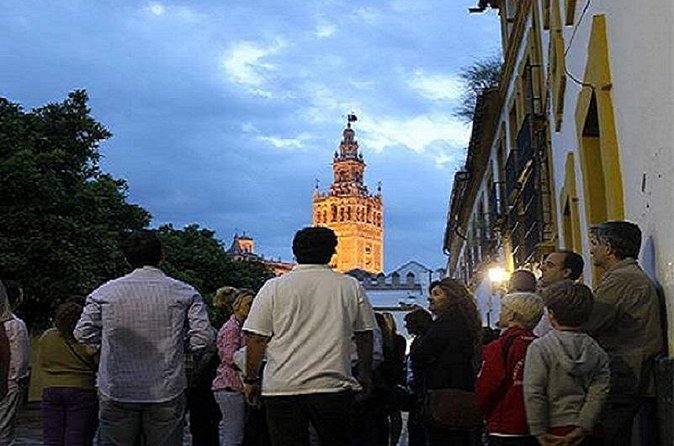
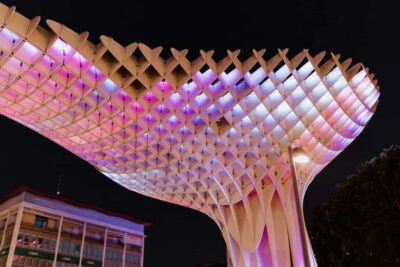
The walk ends at Plaza de la Encarnación, where you’ll arrive near las Setas—a modern structure sitting in the middle of the plaza. This final stop works because it’s contrast. You spend the earlier portion moving through older cultural layers and older narratives; then you close with a landmark that represents what Seville builds now.
The guided time here is about 15 minutes, which is enough to let the modern setting click into the story without turning it into a separate sightseeing mission. If you’re the type who only wants “old stones,” this still gives you something useful: you see how modern Seville reclaims public space and how the city keeps reinventing itself right in the open.
The tour finishes at Calle Laraña, 5 (41003 Sevilla). Plan an easy next step—grab a drink, continue on foot, or simply slow down so your brain can absorb what you just walked through. Night tours move fast in your memory even when the physical walking feels manageable.
Price, pace, and logistics that actually affect your night
The price is $17 per person for a 2-hour guided walk. For Seville, that’s a straightforward value deal because what you’re paying for isn’t just access to sights—it’s interpretation. You’re getting a local guide, Spanish or English narration, and a route that connects culture layers instead of listing them.
What’s included:
- Guided walking tour in Spanish or English
- Professional local guide
- All taxes
What’s not included:
- Food and drinks
So if you’re doing this right after dinner or before dinner, bring your own plan. You might want a snack beforehand if you know you get hungry. The tour is short enough that you won’t spend hours hungry, but it’s also not designed to be a meal replacement.
A few practical points from the tour details:
- Bring comfortable shoes
- It’s suitable for all ages
- Tips aren’t included
- It’s not suitable for wheelchair users
Because it’s a night walk, I also suggest you treat it like a stroll with purpose. Keep your phone light discipline on (screen brightness down), and keep one ear ready for the guide’s next turning point. The best part is when you don’t feel like you’re chasing information—you feel like you’re following a trail.
One more scheduling note: the tour is listed as 2 hours, but program changes can happen. If you’ve got a show, a late reservation, or a hard departure time (airport, train, or a strict dinner slot), give yourself a buffer after the walk.
Guide style: why Valentine and Emilio’s names keep popping up
Good guides turn a walking tour from facts into a story you can hold. In the case of this Seville walk, I’ve seen a pattern in how it’s described: guides like Valentine are praised for being informative and answering lots of questions using their research. Emilio is described as friendly and engaging, and that kind of guide energy matters on a night tour, where you’re walking and listening at the same time.
Here’s the practical takeaway for you: if you’re the type who asks questions, this route gives you plenty of chances. The stops are short and frequent enough that you can steer your curiosity—Jewish history, Lisbon 1755 earthquake aftermath, Roman details, Muslim-era underground passage questions, or simply how the city changed.
If you prefer quiet, very structured lectures, you can still get value from the route, but you’ll want to lean into the guide’s pace. This is a walking narrative, not a silent headset audio guide.
Should you book the Enchanted Seville Walking Tour?
Book it if:
- You want a night version of Seville, not just daytime monuments
- You like your history explained through neighborhoods—especially the Judería, Alfalfa, and the street names that carry stories
- You want a relatively affordable guided experience (that $17 price) where the guide matters more than the location list
Skip it or reconsider if:
- You need perfect timing with no buffer after the tour, since the length and exact ending can vary
- You have mobility needs and need a wheelchair-friendly route, since it’s not suitable for wheelchairs
- You’re looking for food-focused sightseeing; this walk doesn’t include food and drinks
My decision rule is simple: if you want Seville to feel like a living story—earthquake aftermath, layered cultures, and a modern finale at las Setas—this tour fits. Put on your comfiest shoes, plan a relaxed next hour afterward, and let the city’s timeline play out street by street.
FAQ
How long is the Enchanted Seville Walking Tour?
The tour lasts about 2 hours. It’s designed as a focused night walk through several key neighborhoods and streets.
Where does the tour start?
The meeting point is Plaza del Triunfo, by the Immaculate statue in Seville.
What languages are available?
The guided tour is offered in Spanish or English.
What’s included in the price?
The tour includes a walking tour with a professional local guide, offered in Spanish or English, and it includes all taxes.
Is food or drinks included?
No. Food and drinks are not included, so you’ll want to plan your own snack or meal.
Is the tour accessible for wheelchair users?
No. The tour is not suitable for wheelchair users.
More Tours in Seville
- Seville: Alcázar, Cathedral & Giralda Skip-the-Line Tour
★ 4.8 · 11,525 reviews - Seville: Cathedral, Giralda & Alcazar Entry With Guided Tour
★ 4.6 · 8,560 reviews - Seville: Priority Access Cathedral, Giralda & Alcázar Tour
★ 4.8 · 7,563 reviews - Seville: Alcázar and Cathedral Entry Ticket and Guided Tour
★ 4.6 · 5,056 reviews - Seville: City Sightseeing Hop-On Hop-Off Bus Tour
★ 4.0 · 4,633 reviews
More Tour Reviews in Seville
- Seville: Live Flamenco Dancing Show Ticket at the Theater
★ 4.7 · 16,396 reviews - Seville: Alcázar, Cathedral & Giralda Skip-the-Line Tour
★ 4.8 · 11,525 reviews - Seville: 1-Hour Guadalquivir River Sightseeing Eco Cruise
★ 4.2 · 10,281 reviews - Seville: Setas de Sevilla Entry Ticket
★ 4.6 · 8,901 reviews - Seville: Cathedral, Giralda & Alcazar Entry With Guided Tour
★ 4.6 · 8,560 reviews
More Walks Through the Old Town
- Seville: Small-Group City Highlights Walking Tour
★ 5.0 · 1,204 reviews - Cultural Walking Tour of Seville Monumental
★ 5.0 · 861 reviews - Seville: Tapas, Taverns, and History Walking Tour
★ 4.9 · 676 reviews - Seville: Tapas, Taverns and History Guided Walking Tour
★ 4.9 · 515 reviews - Seville: Small-Group Jewish Quarter Discovery Walking Tour
★ 4.9 · 499 reviews
Just added to the Seville list


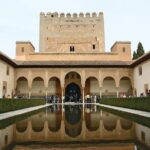
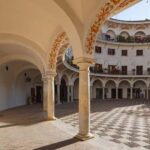


Seville Old Town Walks, compared.
 ★ 5.0Small-Group City Highlights Walking TourFrom $271,204 reviews
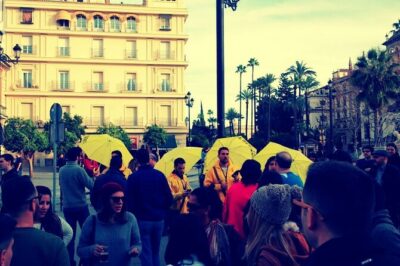 ★ 5.0Cultural Walking Tour of Seville MonumentalFrom $8861 reviews
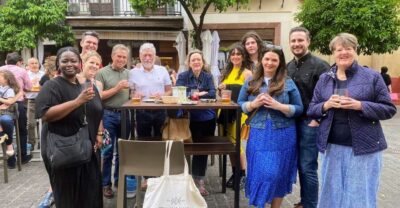 ★ 4.9Tapas, Taverns, and History Walking TourFrom $84676 reviews
 ★ 4.9Tapas, Taverns and History Guided Walking TourFrom $99515 reviews
 ★ 4.9Small-Group Jewish Quarter Discovery Walking TourFrom $29499 reviews
 ★ 5.0Seville Guided Small-Group Walking TourFrom $21435 reviews
 ★ 4.7Paranormal and Legends Guided Walking TourFrom $15336 reviews
 ★ 5.0Seville Private Walking Tour with Alcazar & Cathedral TicketsFrom $276332 reviews
Browse the lists this tour appears in