
Review · SEVILLE BIKE TOURS
Bike tour through the monumental area of Seville
Two wheels make Seville click. This bike tour threads together the historic center’s big sights with smaller lanes and legends, so you feel like you’re seeing more of the city than you would on foot. I like that the ride is timed to keep you rolling while the guide connects each stop to what made Seville what it is.
I’m especially taken with the way the tour pairs landmark architecture with specific stories: the Plaza de España and the 1929 Ibero-American Exposition, the port defense past at Torre del Oro, and the Triana neighborhood legends sparked by the Puente de Isabel II. One possible drawback: the stops are brief, so the Cathedral exterior and the Alcázar areas are best if you want an efficient overview rather than lingering for hours.
It’s a private, mobile-ticket tour with only your group, starting at Sevilla Moving in central Seville and ending back at the same spot. Expect mostly free-entry encounters like gardens, viewpoints, exteriors, and guided walk-through areas—ideal for getting your bearings fast in a compact afternoon.
In This Review
- Key highlights you’ll feel right away
- Why this Seville bike tour is a smart “first-city” move
- Jardines de Murillo: the Alcázar gardens turned park
- Plaza de España: why 1929 still echoes in Seville
- Montepensier Palace stop: a quick orientation moment
- Torre del Oro: Seville’s port defense story in 10 minutes
- Puente de Isabel II and Triana legends: walking off the beaten path
- Real Maestranza view: architecture and culture from a key vantage
- Catedral de Sevilla exterior: getting the scale without a long inside detour
- Real Alcázar and Santa Cruz access: royal grandeur plus neighborhood context
- Archivo General de Indias: the trade-record building that explains the Americas link
- Real Fábrica de Tábacos: entering the former tobacco factory turned university
- Price and pace: $47.71 for a 2.5-hour monument circuit
- Should you book this Seville monumental bike tour?
- FAQ
- Where is the meeting point?
- What time does the tour begin?
- How long does the bike tour last?
- Is this a private tour?
- Do I need to purchase entry tickets?
- Is there a mobile ticket?
- What sights are included?
- What happens if the weather is bad?
- Can I get a refund if I cancel?
Key highlights you’ll feel right away
- A time-smart Seville loop that mixes major monuments with backstreets
- Free, easy-entry stops at multiple iconic sites (many exterior-focused)
- Stories tied to place, from 1929 expo impacts to maritime defense history
- Triana included via Puente de Isabel II, plus context and legends
- Real Alcázar and Santa Cruz access for a quick, guided orientation
- A short, guided interior moment at Real Fábrica de Tabacos (University of Letters)
Seville by bike, a few more routes
- Seville Highlights Bike Tour (English)★ 5.0 · 2,225 reviews
- Seville: Highlights City Bike Tour★ 4.8 · 2,168 reviews
- Seville: Relaxing City Bike Tour with a Tour Guide★ 4.8 · 1,588 reviews
Why this Seville bike tour is a smart “first-city” move
Seville can be a bit of a maze—beautiful, but easy to lose time. This tour solves that with a compact route through the monumental core. You get the feel of the city without spending your whole morning zigzagging between far-flung sights.
The real win is the pairing of movement and explanation. Instead of treating each stop like a separate sightseeing project, the guide keeps telling you why the place matters as you glide from one point to the next. That makes the tour feel like one connected story: gardens and palaces, a trade-and-expo era, defense and ports, and then the cultural layers of neighborhoods like Triana and Santa Cruz.
It also helps that most stops are free or exterior-focused. You’re not constantly deciding whether tickets are worth it. You can just show up at each place, get the context, take the photo you actually want, and roll onward.
Private tour format matters too. Your timing stays consistent, and you’re less likely to feel like you’re being swept along with strangers. It’s built for your group only, with a route that lasts about 2 hours 30 minutes and starts at 10:00 am.
Jardines de Murillo: the Alcázar gardens turned park
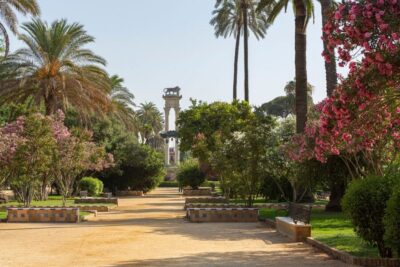
You start at Jardines de Murillo, a park today with roots in the old Alcázar gardens. Even if you only spend about 5 minutes here, the quick historical framing matters. You start learning how Seville’s royal spaces shaped the city’s later layout and public areas.
In practice, this first stop is a setup. It helps you understand the tone of the tour: this isn’t just postcard sightseeing. It’s a guided walk-and-ride through how Seville evolved from power centers and planned spaces into accessible city landmarks.
If you’re the type who likes to connect dots, you’ll enjoy this start. You’re essentially given a theme right away—how one kind of space (royal gardens) became another (a public park). Then the tour keeps that approach as it moves into bigger monuments.
Plaza de España: why 1929 still echoes in Seville
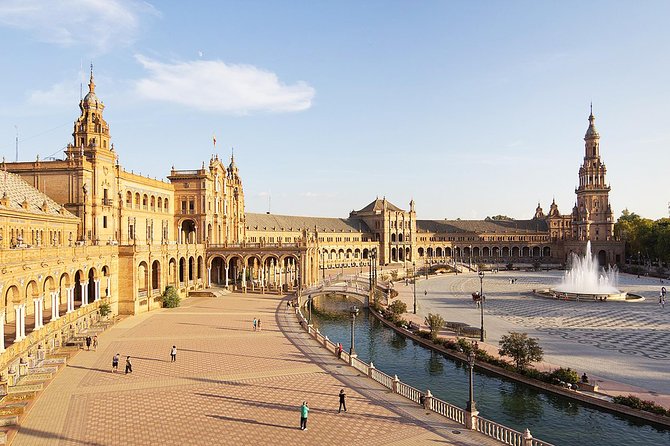
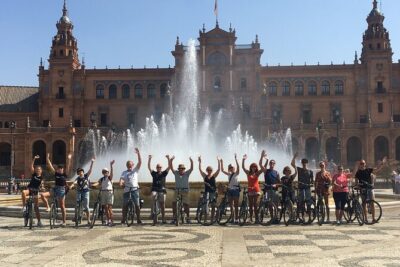
Next you reach Plaza de España, and it’s the kind of stop that makes the rest of the day easier. It’s iconic, yes—but more importantly, the guide explains what the Ibero-American Exposition of 1929 meant for the city. That context turns the plaza from scenery into a historical turning point.
You’ll have around 30 minutes here, so it’s not just a quick picture stop. You can walk the area, absorb the architecture, and use the time to reset your energy before the tour continues.
What I like about this stop is the payoff. Once you understand the expo idea—how Seville used that moment to showcase itself—you start noticing the plaza’s intention. It’s not random grandeur. It’s a planned statement meant to be seen and remembered.
Tip: if your group wants photos, this is where you’ll want to concentrate them. Save your best “time” for this one and then treat the later stops more like guided orientation.
Still deciding? A few more Seville picks worth a look.

Montepensier Palace stop: a quick orientation moment
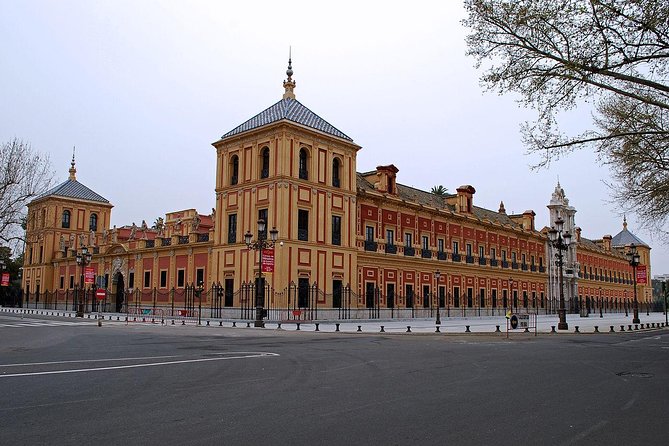
Along the way, the route includes a stop at the Palace of the ancient Dukes of Montepensier. The tour doesn’t flag it as a long sit-down visit, so treat it as an orientation stop: a chance to see the building from the outside and get the guide’s context so it doesn’t feel like a random name on a map.
This kind of stop is useful because Seville is full of stately buildings tucked into the city fabric. A short guided moment can help you recognize what you’re looking at—rather than just passing by.
Torre del Oro: Seville’s port defense story in 10 minutes
Then it’s on to Torre del Oro, the famous tower that once served as a defense structure for the port. You’ll spend about 10 minutes here, and that brevity works because the story is clear: Seville wasn’t only about palaces and plazas. It was also about shipping, wealth, and protection.
When the guide frames the tower as part of the city’s maritime history, it changes how you interpret it. It’s not just a pretty skyline feature. It’s a piece of coastal defense logic.
For a first-timer, this is a good speed-learning stop. You get a key symbol of Seville’s connection to the sea, then you move on before you can start overthinking it. If you’re short on time but want the city’s big themes, that’s a good trade.
Puente de Isabel II and Triana legends: walking off the beaten path
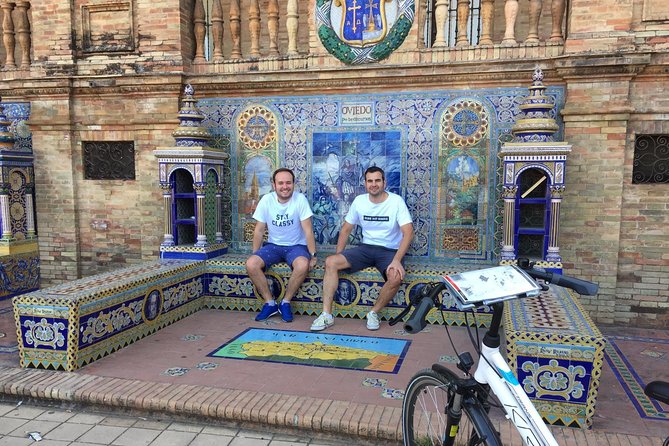
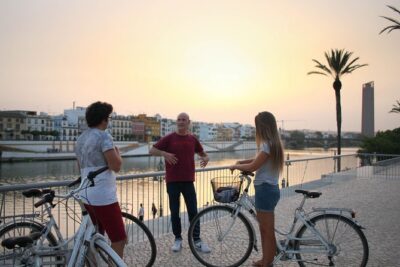
Crossing to the Triana side starts with the Puente de Isabel II (Puente de Triana). The guide points out that this bridge was built by the disciples of Gustave Eiffel, and then the tour uses it as a gateway to Triana’s history and legends.
You’ll have about 15 minutes focused here, and that’s enough time for the guide to explain what Triana is known for and why people talk about it. Even if you don’t spend a full day in the neighborhood, you come away with a sense of identity. Triana isn’t just a place you pass through; it’s a neighborhood with its own stories layered over time.
This stop also helps your navigation later. After you’ve stood by this bridge and heard the context, you’ll understand why Triana feels distinct from Seville’s central monuments. You’ll likely be more curious to return on your own after the tour ends.
Real Maestranza view: architecture and culture from a key vantage
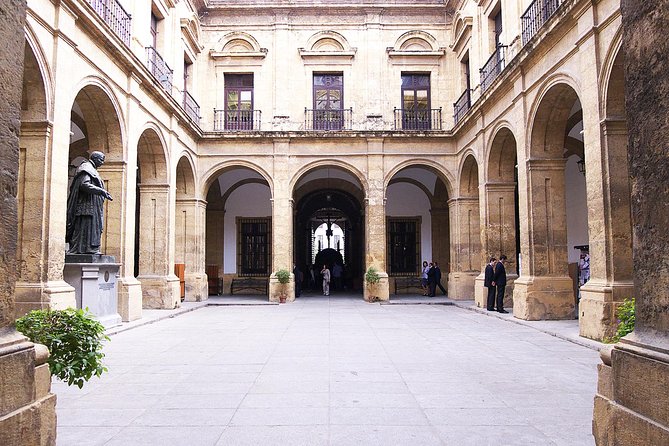
Next you’ll get a view connected to the Real Maestranza de Caballeria de Sevilla—including the Plaza de la Maestranza—with about 10 minutes of architectural and cultural explanation.
This stop feels different from the others because it’s oriented toward seeing how the city organizes cultural spaces. You’re standing where the building’s presence shapes what people notice around it. The guide helps you connect the architecture to its social role.
Even if you’re not focused on specific building details, you’ll still come away with a clearer sense of where cultural life sits in Seville’s layout. It’s one of those “I get it now” moments.
Catedral de Sevilla exterior: getting the scale without a long inside detour
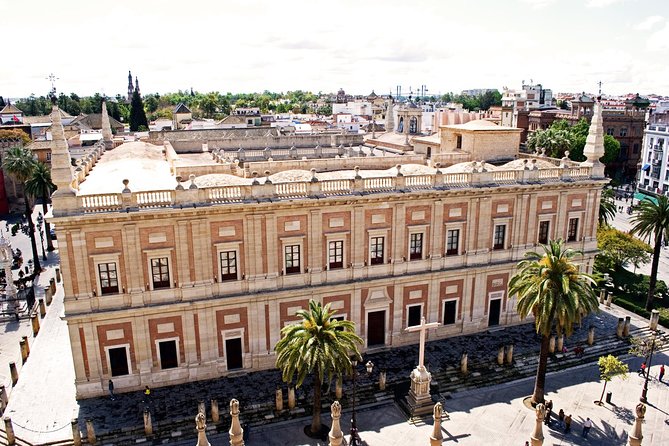
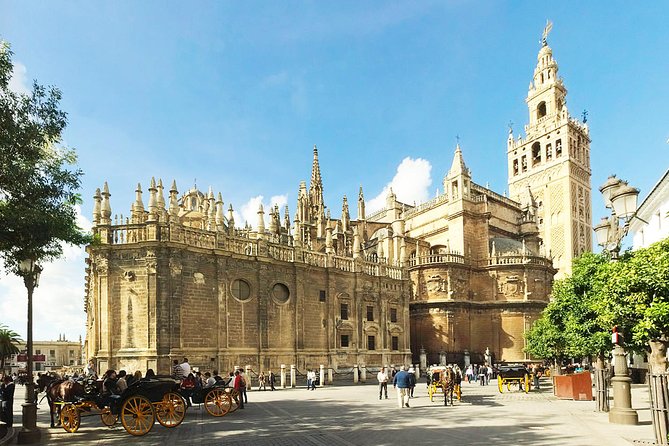
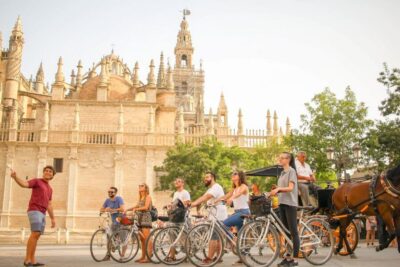
The tour then spends about 30 minutes around Catedral de Sevilla, focusing on the exterior. You’ll see the main doors, key sculptures, and the surroundings.
This approach is practical. Not every traveler wants to commit to long interior sightseeing during a 2.5-hour bike plan. With the exterior focus, you still get the cathedral’s scale and visual clues. You’re basically learning the building from the outside—how it announces itself in the city.
A quick note: because it’s an exterior circuit, if your main goal is to see specific interior artworks or chapels, you may want additional time elsewhere after the tour. But as part of a monument overview, it’s effective.
Use this stop to notice doorways and façade details. Once you’ve heard what the guide points out, it becomes much easier to look thoughtfully rather than just glance.
Real Alcázar and Santa Cruz access: royal grandeur plus neighborhood context
The tour then moves to the Real Alcázar de Sevilla, where you visit outside areas, the Patio de Banderas, and get access linked to the Jewish quarter of Santa Cruz. You’ll spend about 15 minutes total here.
This is a strong stop for orientation. The Alcázar is famous, but it can feel like a lot to process if you’re trying to do everything yourself. In this format, you get guided direction to the right kinds of spaces, and you connect the palace setting to the neighborhood layers around it—especially through the Santa Cruz context.
Because the time is limited, aim to treat this as a “set your compass” visit. You’re not going to absorb everything in 15 minutes. Instead, you’re learning where the important areas sit and how the stories connect to the streets.
If you want to return later, this stop usually makes you pick a more focused plan. You’ll know what part you care most about, rather than guessing.
Archivo General de Indias: the trade-record building that explains the Americas link
Next is the Archivo General de Indias. You won’t have an interior visit here; the tour provides an external explanation of the building and what it holds: the historical documentation of commercial transactions between Spain and America in the years following the conquest.
This is one of the most useful stops for travelers who like the “why” behind the city. It turns Seville’s global connections from a vague idea into something you can point to. The building becomes proof that the city’s role wasn’t just symbolic. There were records, systems, and trade networks driving real outcomes.
Even in about 15 minutes, you’ll likely feel that the tour’s theme tightens: expo-era pride, maritime defense, and then the paperwork and documentation side of empire.
Real Fábrica de Tábacos: entering the former tobacco factory turned university
The final interior moment is at the Real Fábrica de Tábacos. The tour has you enter the interior of the University of Letters of Seville, explaining that the building was formerly the Real Fábrica de Tábacos.
You’ll spend about 20 minutes here, which is a great length for an interior stop in a short tour. It’s not rushed to the point of confusion, and it’s not so long you fall behind on the rest of the itinerary.
What makes this stop valuable is how it shows reuse. You see how industrial or commercial power structures can shift into educational ones over time, and you get a guided story about the place itself. It’s a different kind of monument than plazas and palaces, but it still matters to Seville’s identity.
Price and pace: $47.71 for a 2.5-hour monument circuit
At about $47.71 per person for roughly 2 hours 30 minutes, this tour is priced like a focused overview rather than a full-day deep dive. That works in your favor if you’re trying to fit Seville’s biggest names into a limited schedule.
The value comes from the mix of:
- multiple major Seville icons (Plaza de España, Torre del Oro, Catedral exterior, Real Alcázar areas)
- neighborhood context (Triana and Santa Cruz)
- a guided narrative that connects them
And the “free-entry” nature of many stops helps your budget. Several stops are listed as free admission, and even where you’re not going inside (like the cathedral exterior and the archive explanation), you’re still getting real guidance at the points that matter.
The pace is also a consideration. Most stops are 5 to 30 minutes. That means you’ll leave feeling informed, but not fully satisfied if you prefer slow, linger-style sightseeing.
Should you book this Seville monumental bike tour?
Book it if you want a fast, structured way to see major Seville landmarks without spending your whole day piecing together routes and explanations. I’d also recommend it if you like your history delivered while you move—so you connect plazas, towers, bridges, and neighborhoods into one coherent picture.
Skip it or plan extra time if you know you want long, independent time inside specific places. This tour is designed for an exterior-and-orientation style approach at several big sites. You’ll get the essentials and context, then you can choose what deserves deeper attention after.
If your schedule is flexible, aim for good weather since the experience requires it. And if you’re a first-timer, this is the kind of tour that can save you time on your next day by showing you where you’ll want to return.
FAQ
Where is the meeting point?
The tour starts at Sevilla Moving, at C. Luis Montoto, 19, Local Bajo, 41003 Sevilla, Spain.
What time does the tour begin?
The start time is 10:00 am.
How long does the bike tour last?
It runs for about 2 hours 30 minutes.
Is this a private tour?
Yes. It is private, so only your group participates.
Do I need to purchase entry tickets?
Many stops are listed as free admission, including Jardines de Murillo, Plaza de España, Torre del Oro, and more. The tour also includes exterior visits and brief stops rather than full-ticket attractions at every point.
Is there a mobile ticket?
Yes. The tour includes a mobile ticket.
What sights are included?
You’ll pass through stops such as Jardines de Murillo, Plaza de España, Torre del Oro, Puente de Isabel II (Puente de Triana), Real Maestranza viewpoint area, Catedral de Sevilla (exterior), Real Alcázar areas including Patio de Banderas and access related to Santa Cruz, Archivo General de Indias (external explanation), and Real Fábrica de Tábacos interior.
What happens if the weather is bad?
This experience requires good weather. If it’s canceled due to poor weather, you’ll be offered a different date or a full refund.
Can I get a refund if I cancel?
Cancellation is free up to 24 hours in advance for a full refund. If you cancel less than 24 hours before the start time, the amount paid is not refunded.
More Tours in Seville
- Seville: Alcázar, Cathedral & Giralda Skip-the-Line Tour
★ 4.8 · 11,525 reviews - Seville: Cathedral, Giralda & Alcazar Entry With Guided Tour
★ 4.6 · 8,560 reviews - Seville: Priority Access Cathedral, Giralda & Alcázar Tour
★ 4.8 · 7,563 reviews - Seville: Alcázar and Cathedral Entry Ticket and Guided Tour
★ 4.6 · 5,056 reviews - Seville: City Sightseeing Hop-On Hop-Off Bus Tour
★ 4.0 · 4,633 reviews
More Tour Reviews in Seville
- Seville: Live Flamenco Dancing Show Ticket at the Theater
★ 4.7 · 16,396 reviews - Seville: Alcázar, Cathedral & Giralda Skip-the-Line Tour
★ 4.8 · 11,525 reviews - Seville: 1-Hour Guadalquivir River Sightseeing Eco Cruise
★ 4.2 · 10,281 reviews - Seville: Setas de Sevilla Entry Ticket
★ 4.6 · 8,901 reviews - Seville: Cathedral, Giralda & Alcazar Entry With Guided Tour
★ 4.6 · 8,560 reviews
Pedalling Round Seville
- Seville Highlights Bike Tour (English)
★ 5.0 · 2,225 reviews - Seville: Highlights City Bike Tour
★ 4.8 · 2,168 reviews - Seville: Relaxing City Bike Tour with a Tour Guide
★ 4.8 · 1,588 reviews - Seville: City Sightseeing and Local Culture Bike Tour
★ 4.9 · 1,120 reviews - Seville Electric Bike Tour – Small Group
★ 5.0 · 841 reviews
Just added to the Seville list



Seville Bike Tours, compared.
 ★ 5.0Seville Highlights Bike Tour (English)From $422,225 reviews
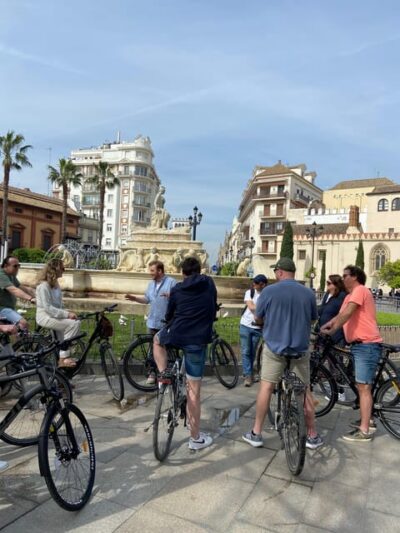 ★ 4.8Highlights City Bike TourFrom $382,168 reviews
 ★ 4.8Relaxing City Bike Tour with a Tour GuideFrom $351,588 reviews
 ★ 4.9City Sightseeing and Local Culture Bike TourFrom $311,120 reviews
 ★ 5.0Seville Electric Bike Tour – Small GroupFrom $58841 reviews
 ★ 5.0Sunset Guided Bike Tour in SevilleFrom $36438 reviews
 ★ 4.9Guided Sunset Bike TourFrom $41332 reviews
 ★ 5.03-hour Guided Bike Tour along the Highlights of SevilleFrom $39315 reviews
Browse the lists this tour appears in